

Baiyang Medicine Files for Hong Kong IPO Amid Deepening Pharma Industry Specialization: Prospects for Health Brand Commercialization Platform

Baheal Medical
Health Brand Commercialization Platform
On June 30, Baheal Medical was officially listed on the ChiNext board. On its listing day, Baheal Medical’s market capitalization briefly approached RMB 30 billion.
The ability to sustain such a market capitalization is closely tied to Baheal Medical’s positioning as a “Health Brand Commercialization Platform.”As a leading commercialization platform for health brands in China’s A-share market, Baheal Medical’s core business includes providing comprehensive marketing services to pharmaceutical companies, encompassing brand management, wholesale distribution, and pharmaceutical retail.By linking pharmaceutical companies with consumers, Baheal Medical has achieved rapid self-development: its revenue grew quickly from RMB 3.652 billion in 2018 to RMB 5.879 billion in 2020. In 2020, the company’s net profit reached RMB 277 million.
What Sets Baheal Medical Apart as a Health Brand Commercialization Platform Entering the Capital Market? What Prospects for Health Brand Commercialization Does Its IPO Reveal?
70% of Gross Profit Comes from Brand Operations: What Kind of Company Is Baheal Medical?
Baheal Medical primarily operates three business segments: brand operation, wholesale distribution, and pharmaceutical retail.
Brand operation is its core business., primarily referring to shaping consumer perception of pharmaceutical brands and products by providing value-added services such as comprehensive consumer education, academic product promotion, marketing planning, product distribution, business liaison, flow tracking, and supply chain management, ultimately achieving the delivery of high-quality pharmaceutical products to target populations. It has successfully incubated and operated flagship products including Caltrate, Biet, and Harnal, and is gradually building a multi-category pharmaceutical brand matrix encompassing prescription drugs, over-the-counter (OTC) drugs, dietary nutritional supplements, and medical aesthetics products.
Its brand operations business is characterized by retail channel brand management, with an offline retail network covering 300,000 retail pharmacies across China.Taking the Diqiao (Vitamin D Calcium Chewable Tablets) series as an example, during the reporting period, the Diqiao series generated revenues of RMB 1.256 billion, RMB 1.252 billion, and RMB 1.183 billion, respectively, accounting for 75.15%, 62.80%, and 54.63% of the brand operation business revenue for the respective periods, and representing 34.52%, 25.90%, and 20.18% of Baheal Medical’s total main business revenue for the corresponding periods.
In fact, Baheal Medical throughBased on pharmaceutical wholesale distribution and retail as foundational servicesBrand operations provide customized, in-depth services that cover every stage of pharmaceutical product sales. By addressing the distinct needs of different manufacturers, product types, and sales channels, it offers comprehensive marketing solutions for pharmaceutical products. As a commercialization platform for health brands, it delivers end-to-end solutions—from factory gate to consumer awareness, acceptance, and purchase—thereby driving revenue growth for Baheal Medical.
The ChiNext board imposes more stringent requirements on corporate profitability. Baheal Medical has maintained relatively rapid growth over the past three years; even in 2020, when it was impacted by the COVID-19 pandemic, the company still achieved revenue of RMB 5.879 billion and a net profit of RMB 277 million.
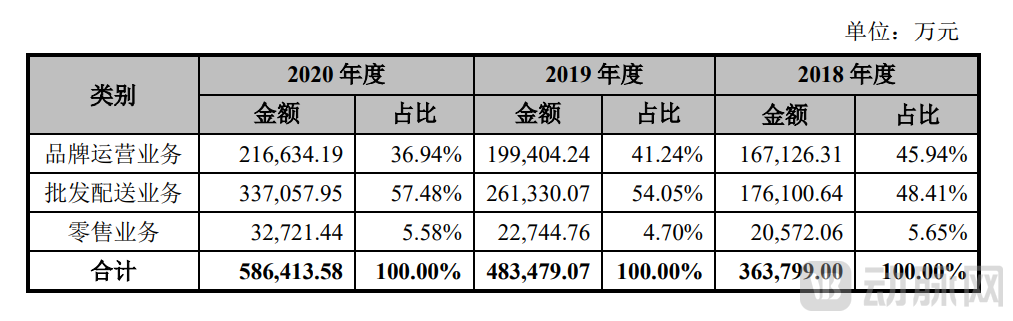
Brand operations and wholesale distribution accounted for over 90% of total revenue, serving as the primary income source for Baheal Medical.
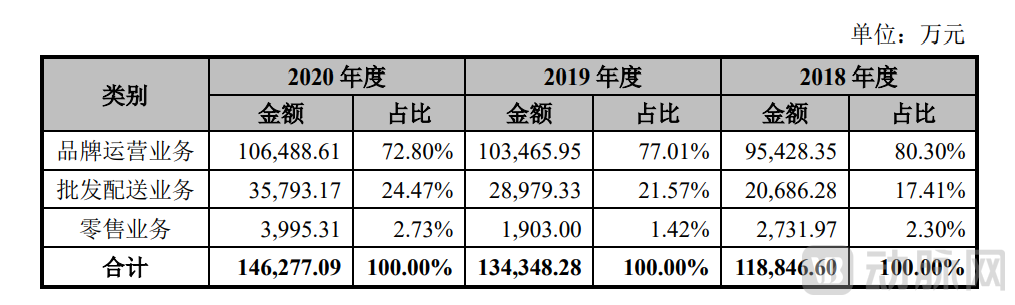
With gross profit from brand operation services accounting for over 70%, this segment serves as Baheal Medical’s primary source of profits. This also explains why Baheal Medical places such significant emphasis on its brand operation business.
How Did Baheal Medical Grow from Operating Two Brands to Dozens?
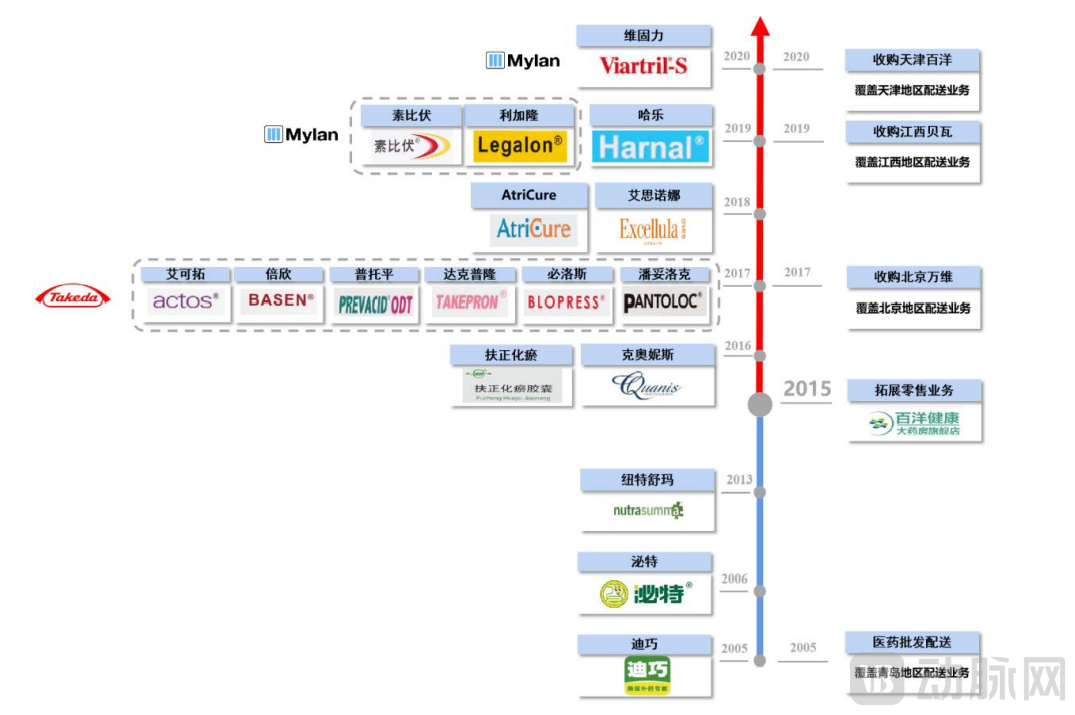
Baheal Medical, formerly known as Baheal Limited which was established in 2005, was restructured into a joint-stock company and renamed Baheal Medical in 2016. This year can thus be regarded as a key milestone in its development:
1. 2005–2015: Model Exploration Phase
During this phase, Baheal Limited’s core business primarily revolved around operating the products of two brands: D-Cal and Bite. Decades of operational expertise transformed these brands from startups into well-known names in China. From 2015 to 2017, D-Cal Vitamin D Calcium Chewable Tablets ranked second in the comprehensive statistical ranking of over-the-counter (OTC) products in the vitamins and minerals category in China. Meanwhile, annual sales of the Bite series of prescription drugs exceeded 10 million boxes nationwide.
By managing the operations of two brands from their inception to maturity, we have developed brand management capabilities tailored to different life cycles and types of brands (D-Cal as an over-the-counter drug and Mite as a prescription drug) and different channels (the former promoted and sold through retail pharmacies, the latter sold through hospitals).In this process, Baheal Medical directly and indirectly covered more than 12,000 hospitals and over 300,000 pharmacies, thereby completing the initial exploration and accumulation for its brand operation business.
2. 2015 to Present: Phase of Model Replication

With its brand operation business model relatively mature, Baheal Medical has shifted from its previous approach of identifying downstream consumers for high-quality clients to a new model of providing high-quality upstream products to downstream clients.By collaborating with upstream pharmaceutical companies and conducting brand selection, we rapidly achieved the commercialization of partner brands, continuously expanding the variety and number of brands under operation, thereby establishing a brand portfolio that includes prescription drugs, over-the-counter (OTC) medicines, dietary nutritional supplements, and medical aesthetic products.Its partners include globally renowned pharmaceutical companies such as Roche, Takeda, and Astellas.
CXO Companies’ Market Cap Exceeds RMB 100 Billion: What Is the Value of Their Commercialization Platforms?
With the deepening of industry specialization, pharmaceutical manufacturing enterprises are gradually transitioning from the traditional integrated business model encompassing R&D, production, and sales toward a more specialized and platform-oriented approach. This has initially fostered a CXO industry landscape characterized by the symbiotic development of R&D platforms, production and processing platforms, and promotion and sales platforms—namely, what we commonly refer to as the CRO, CDMO/CMO, and CSO sectors.The rise of third-party platforms is a manifestation of the industry's maturation and the formation of specialized division of labor.
To better understand the positioning of Baheal Medical’s health brand commercialization platform, we can deconstruct the term: First, compared with other fast-moving consumer goods (FMCG) brands, health brands have a longer lifecycle. In cases where patients have confirmed the efficacy of a medication, they typically use it for an extended period. This meansHealth brands demonstrate strong sustainable profitability. Furthermore, commercialized companies differ from traditional commercial enterprises; they do not merely facilitate more convenient consumer purchases but also engage in brand operation and promotion to enhance visibility and awareness, stimulate demand, and drive product sales. Meanwhile, a platform entails the construction of a comprehensive sharing mechanism.
To understand the development potential of similar commercialization platforms, we may need to gain a general understanding of the cost structure of pharmaceutical manufacturers across the research and development, production, and sales stages.
In the 2021 Global Top 50 Pharmaceutical Companies list published by the U.S. magazine *Pharmaceutical Executive*, companies were ranked based on their prescription drug sales revenue reported in their 2020 financial statements. Five Chinese companies made the list, including Yunnan Baiyao, Hengrui Medicine, Sino Biopharmaceutical, Shanghai Pharmaceuticals, and CSPC Pharmaceutical Group. We have also compiled statistical data on the financial performance of some of these companies for reference: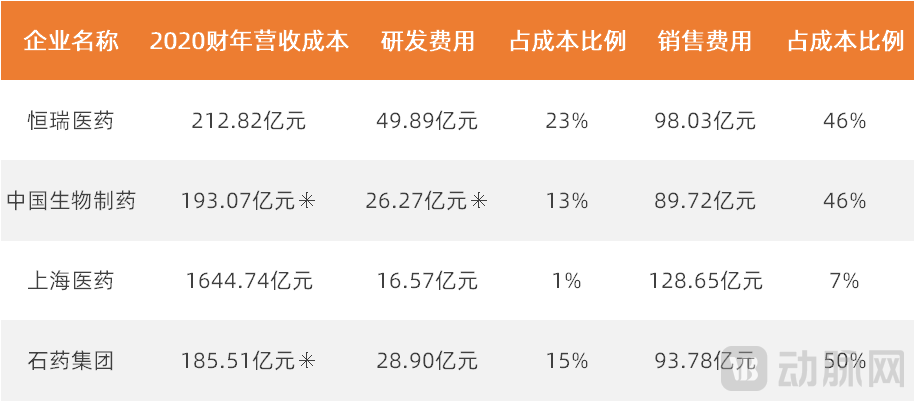 Note: 1. For Sino Biopharmaceutical, other expenses (including R&D expenses) amounted to RMB 2.627 billion; this figure is used in the text to simulate the R&D ratio. 2. The total cost of revenue for Sino Biopharmaceutical and CSPC Pharmaceutical Group is derived retrospectively by subtracting net profit from revenue, which may differ slightly from actual figures. 3. Data are sourced from the companies’ 2020 annual reports.
In fact, whether examining the data in the list or looking at global pharmaceutical giants, the R&D expenditure ratio of pharmaceutical companies generally fluctuates around 20%. For the aforementioned companies, the sales expense ratio mostly hovers around 50%. The data indicates that sales expenditures constitute the largest portion of pharmaceutical companies’ revenue costs. In 2020, 71 pharmaceutical companies listed on China’s A-share market had sales investments exceeding RMB 1 billion, which sufficiently demonstrates the robust demand for sales across the overall market.
Having examined the proportion of R&D and sales within enterprises, we now turn to the development of third-party specialized platforms driven by industrial chain specialization.
For a company, attempting to handle everything in-house from scratch makes it difficult to maintain reasonable control over costs and efficiency.Third-party platforms can enhance efficiency and reduce corporate costs, which has driven the rapid development of specialized third-party platforms.Taking CRO/CDMO companies, which serve as third-party specialized platforms for pharmaceutical R&D and production in the upstream segment of the industry chain, as an example: WuXi AppTec, which focuses on small-molecule compound research, has a market capitalization exceeding RMB 450 billion, while WuXi Biologics, which specializes in large-molecule compound research, has reached a market capitalization of over RMB 480 billion.
Let us further examine the market capitalization comparison between third-party commercialization platforms and pharmaceutical wholesale enterprises, which may serve as an illustrative example: Reckitt, a UK-based company with over 200 years of history specializing in the commercialization of health brands, may not be a household name itself; however, dozens of brands under its portfolio are widely recognized, such as Durex and Dettol.In 2020, its revenue was less than one-tenth of that of McKesson, the pharmaceutical wholesale giant, amounting to under £14 billion; yet its market capitalization exceeded £40 billion, twice that of McKesson.To a large extent, this model has gained recognition from the international capital market due to the longer lifecycle and better return on investment of health brands themselves.
The Undervalued Commercialization Market for Health Brands: How Can Baheal Medical Break Through?
Based on the differing proportions of corporate investment in R&D versus sales, the commercialization market should theoretically be larger in scale than the CRO and CDMO markets. However, according to the research report “2020–2025 China Pharmaceutical Sales Industry: Market Outlook and Future Investment Strategy Analysis Report” by Zhongyan Puhua, the size of China’s CSO market is projected to approach RMB 70 billion in 2023. Meanwhile, data from Frost & Sullivan indicates that the domestic CRO market alone reached USD 8.3 billion (approximately RMB 53.3 billion) in 2020, with an expected compound annual growth rate of 27.49% over the following three years. It can be observed that the scales of these two markets are quite similar.
The underlying reason may be that mature and professional commercialization platforms have yet to fully develop, leaving most enterprises in a fragmented state of operating independently. Indeed, the sales expenditures of just 81 A-share pharmaceutical companies alone exceeded RMB 70 billion.From another perspective, this also means that the current brand commercialization market is severely undervalued: This is related to the CSO industry being flooded with companies focused on low-price bundled services and labor outsourcing, while the mature development model of commercialization platforms remains obscured within it.
To truly make the value of commercialization platforms visible, it may be necessary to examine how Baheal Medical’s health brand commercialization platform operates and what capabilities it possesses. Insights can perhaps be gleaned from its prospectus and historical materials:
1. Leading category insights and brand operation capabilities.Baheal Medical possesses professional market research and brand selection capabilities, enabling it to closely track and conduct real-time analysis of policies, industry trends, and market dynamics in the pharmaceutical sector both domestically and internationally. By integrating marketing promotion insights with its own competitive advantages, the company identifies new business areas and directions that align with its strategic layout, having developed a unique model for category insight and brand management. Based on this model, Baheal Medical can systematically allocate resources according to the different stages of the brand lifecycle and adopt differentiated operational strategies to unlock brand value, backed by its extensive experience in operating multiple successful brands.
2. Customer Management Capabilities of the All-Data Platform.Baheal Medical possesses a comprehensive data platform built on channel information from retail pharmacies, mainstream hospitals, and other outlets. This platform provides pharmaceutical brands with a clear “market map,” effectively helping them formulate precise customer selection and promotion strategies for different categories and products. By enabling data-driven market strategies, Baheal Medical offers commercialization support services to various brands and enterprises.
3. Mechanism capabilities to support long-term operations.Building pharmaceutical and healthcare brands requires long-term, in-depth operational efforts, characterized by high investment costs and numerous uncertainties. This is closely tied to Baheal Medical’s stable management team, its talent incentive mechanisms, and its expertise in managing brand lifecycle operations, thereby ensuring the stability of its brand and platform operations.
What is the potential market outlook for the commercialization platform of the Future Health brand?
With societal development and the further specialization of pharmaceutical companies, professional brand commercialization platforms have become an important component of the pharmaceutical industry. The industry value of Baheal Medical’s health brand commercialization platform may well be reflected in the market demand for its services:
Multinational CorporationsDue to insufficient understanding of foreign markets, companies are often more willing to invest funds to mitigate risks by entrusting the marketing of their products to professional firms;
Traditional Pharmaceutical CompaniesInfluenced by factors such as centralized procurement and the outflow of prescription drug sales from hospitals, greater emphasis will be placed on retail channels that were previously overlooked. This shift aims to achieve differentiated promotion strategies for hospital and retail channels, ultimately leading to two potential development models: self-built channels and collaborative partnerships.
Enterprises with needs for personalized marketing and sales of pharmaceutical productsAs traditional pharmaceutical wholesalers and retailers struggle to meet their needs, they will require the support of health brand commercialization platform enterprises;
Innovative Pharmaceutical CompaniesDue to low brand recognition, the need for comprehensive consumer education and academic promotion in market operations, and a lengthy brand development cycle requiring high operational costs, companies may also turn to third-party commercialization platforms.
For health brand commercialization platforms such as Baheal Medical, this signifies not only increased demand but also their market value within the pharmaceutical industry chain.