

China-Made Joint Replacement Surgical Robot Accelerates Domestic Substitution and Breaks Import Monopoly

Jianjia Medical
Intelligent Orthopedic Surgery Robot Developer
Recently, at the newly concluded 9th National Academic Conference on Knee Surgery, Jianjia Robot unveiled China’s first joint replacement surgical robot capable of multi-application use in both hip and knee procedures. This product is also the first domestically produced single-platform joint replacement surgical robot compatible with both hip and knee applications.
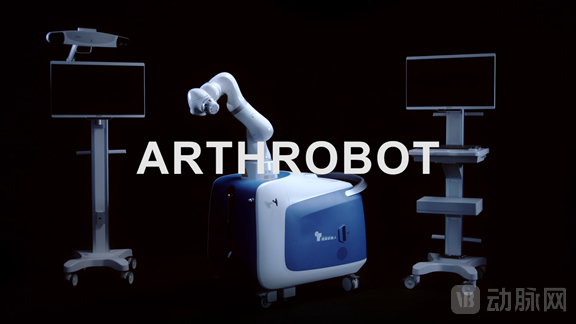
Hangzhou Jianjia Robot Co., Ltd., established in 2018, is a high-tech medical device company integrating research and development with proprietary intellectual property rights. In addition to its already developed joint surgery robots, the company is concurrently developing multiple robotic systems for hard tissue applications. Its R&D team comprises experts from prestigious domestic and international institutions, including Tsinghua University, Peking University, Fudan University, Shanghai Jiao Tong University, Zhejiang University, the Massachusetts Institute of Technology (MIT), and University College London (UCL), bringing decades of collective experience in surgical robot development.
Currently, with the continuous advancement of social modernization in China, there are over 40 million cases of joint diseases annually, making artificial joint replacement surgery one of the important treatment methods. Traditional joint replacement surgeries rely heavily on doctors' experience, resulting in significant trauma, high risks, and low precision. There is an urgent need for innovative treatment concepts and equipment to improve the effectiveness of orthopedic disease treatments. Meanwhile, as centralized procurement for orthopedic joints approaches, substantial price reductions for products have become a near certainty. The orthopedic market size will shrink significantly, and industry reshuffling is inevitable.
Under the dual stimulus of this macro environment, orthopedic companies are actively deploying and adjusting their market strategies, making joint surgery robots the next critical battleground in the orthopedic industry. Judging from the current usage and installation of joint surgery robots in China, the sector remains in an early ramp-up phase with substantial growth potential.
Prior to the launch of Jianjia Robot’s ARTHROBOT joint surgery robot, the only option available in China was Stryker’s Mako system. However, the Mako system is characterized by its high cost and closed data ecosystem, which fails to meet physicians’ needs for comprehensive patient-specific treatment planning. In contrast, Jianjia Robot’s ARTHROBOT is an open-data surgical robotics platform. The company has consistently aligned its R&D efforts with the clinical needs of Chinese physicians, striving to provide a joint surgery robot that offers doctors greater autonomy in decision-making. Looking ahead, the company plans to offer integrated solutions combining AI with surgical robotics, aiming to deliver smarter joint surgery robots through this synergistic approach.
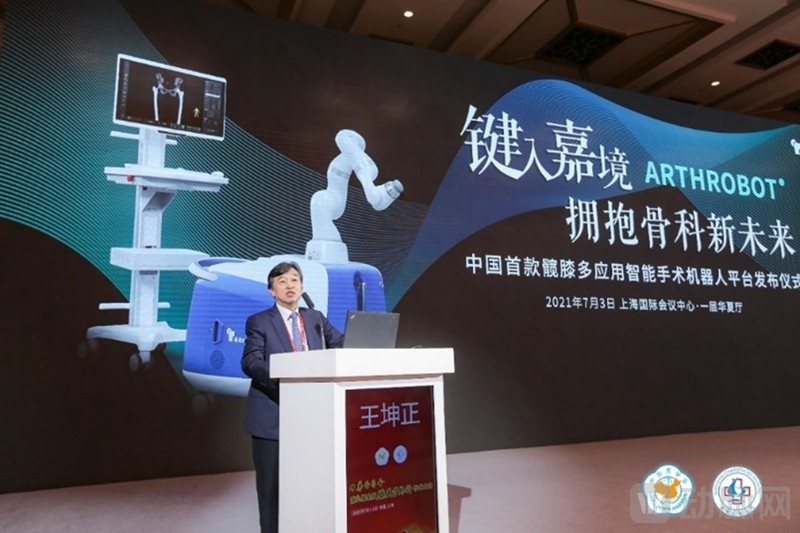
As Professor Wang Kunzheng, the incoming Chairman of the Orthopedic Branch of the Chinese Medical Association, mentioned in his address at the launch ceremony of the 9th National Academic Conference on Knee Surgery: “In recent years, surgical robots have been rapidly promoted in China. Compared with imported surgical robots, those produced in China offer the advantages of design involvement by domestic experts and greater compatibility. Current medical policies will help boost the rapid development of domestically produced surgical robots.”