

Maimo Vacuum Completes Series B+ Financing of Hundreds of Millions of RMB, Signaling the Rise of Domestic CT X-ray Tubes

sherpa
Venture Capital Institution

Fortune Capital
Venture Capital Institution
VCBeat (WeChat ID: vcbeat) has learned that on July 12, 2021, Raymemo (Wuxi) Co., Ltd. (hereinafter referred to as “Raymemo”), a leading manufacturer of CT scanner X-ray tube assemblies (hereinafter referred to as “CT X-ray tubes”), announced the completion of a financing round amounting to hundreds of millions of RMB. The round was led by Fortune Capital, with participation from existing and new investors including Sherpa Healthcare Partners and Zeyu Capital. The proceeds will be primarily used for the development of new static CT X-ray tube products and the expansion of existing platform products. Bairong Capital served as the exclusive financial advisor for this financing round.
In 2019, the global installed base of CT scanners was approximately 410,000 units, primarily concentrated in the Americas, Europe, and the Asia-Pacific region. Based on the average utilization frequency in hospitals worldwide, the annual demand for X-ray tube replacements in the existing CT market is estimated at 120,000–140,000 units. Additionally, approximately 20,000–30,000 new CT scanners are added globally each year. Overall, the global annual demand for CT X-ray tubes is approximately 140,000–170,000 units.
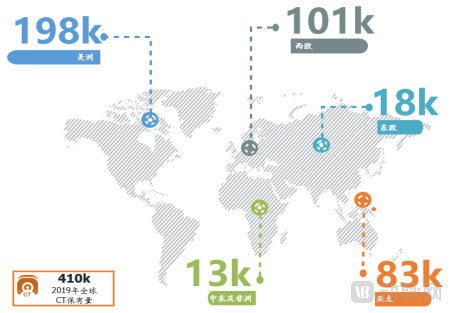
Source: Mordor Intelligence-International Trade Administration
According to data disclosed by Frost & Sullivan, China’s per capita CT scanner ownership in 2019 was only 18 units per million people, far lower than Japan’s 111 units per million and the United States’ 44 units per million during the same period. This has resulted in significantly higher utilization loads for existing equipment compared with developed countries abroad, thereby shortening the average replacement cycle. Currently, it is estimated that the average replacement interval for CT X-ray tubes in the Chinese market is only 22 months or even shorter.
“CT X-ray tubes generally need to be replaced every 2 to 4 years. In China, the replacement cycle of CT X-ray tubes can be frequent as every 6 to 12 months due to high utilization of imaging equipment.”
-“Varex Imaging 2020 annual report”
According to Varex Imaging’s 2020 financial report, CT X-ray tubes are typically replaced every 2–4 years on average. However, in China, due to the excessively high utilization rates of CT scanners, some hospitals even replace up to two X-ray tubes per year. Furthermore, influenced by the global pandemic, the number of newly installed CT systems in China has been growing at an annual rate of approximately 20% in recent years, indicating that the replacement market for CT X-ray tubes will become even more expansive in the future. Overall, the current total annual market size for CT X-ray tubes in China reaches tens of billions of RMB.
As the only consumable component among the core accessories of CT equipment that requires frequent replacement, CT X-ray tubes generate a replacement demand in hospitals every 1–2 years. This creates sustained orders for tube suppliers, making them a rare product in the medical market that combines the sales advantages of both equipment and consumables.
The global CT X-ray tube market is essentially monopolized by CT system manufacturers GE, Philips, and Siemens Healthineers, as well as third-party X-ray tube vendors Dunlee and Varex; the Chinese market is no exception.
In May 2015, the State Council issued the Made in China 2025 action plan, which explicitly called for enhancing the innovation capacity and industrialization level of medical devices, with a focus on developing high-performance diagnostic and therapeutic equipment such as imaging systems. This provided strong support for the premiumization and industrialization of domestic manufacturers of medical imaging equipment. The 14th Five-Year Plan, released in March 2021, further explicitly stated the need to “develop large-scale medical equipment such as high-end imaging and radiotherapy systems, as well as their key components.”
Led by Raymemo, Chinese CT X-ray tube manufacturers have gradually launched various models of domestically produced CT X-ray tubes for commercial sale after years of dedicated research and development, making significant contributions to reducing China’s reliance on foreign brands.
Raymemo was established in September 2017. It secured Series A funding from Sherpa Healthcare Partners and Nanovision Imaging by the end of 2018, and completed its Series B financing in 2020, introducing institutional investors such as Zeyu Capital and Proxima Ventures. Raymemo’s 3.5 MHU and 5.0 MHU products have both obtained Class II Medical Device Registration Certificates and Manufacturing Licenses, passed ISO 13485 and ISO 9001 system certifications, and achieved large-scale mass production and sales. The company expects to obtain two to three additional product registration certificates annually in the future, further expanding its product portfolio coverage.
Raymemo is the only CT X-ray tube manufacturer globally that possesses both mainstream CT X-ray tubes and static CT X-ray tubes as its two major product lines, adopting a dual-drive strategy:
In the mainstream CT X-ray tube sector, Raymemo now covers two major product platforms, 3.5M and 5.0M, compatible with Siemens, Philips, GE, and leading Chinese brands. The company is continuously expanding to other platforms, and upon completion, it is expected to meet the majority of X-ray tube replacement demands for CT systems currently on the market.
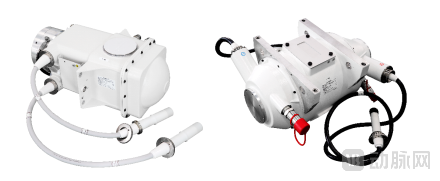
Legend: Raymemo 3.5M and 5.0M CT X-ray Tubes
In the field of static CT X-ray tubes, Raymemo has developed multiple tube products specifically designed for ring-array X-ray source CT (sixth-generation CT) for NanoVision Imaging, a leading manufacturer of static CT systems, and has become the exclusive X-ray tube supplier for NanoVision Imaging’s static CT products. Compared with conventional CT, current 24-source static CT systems can improve temporal resolution by 10-fold and spatial resolution by 64-fold, thereby addressing the challenges faced by conventional CT in cardiac scanning.
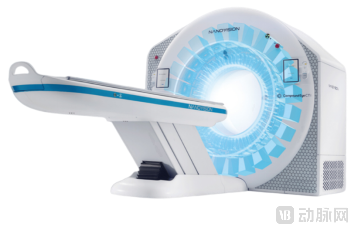
Figure Legend: Schematic Diagram of the Sixth-Generation Static CT
The manufacturing of CT X-ray tubes involves multiple technical challenges. Taking the common fourth-generation spiral CT X-ray tube as an example, the core of each tube must maintain a vacuum level of 10⁻⁸ to prevent arcing caused by high voltage from damaging the tube. During operation, the target disk reaches temperatures as high as 2,000–3,000°C. While emitting intense thermal radiation, the bearings also drive the anode target to rotate at a frequency of 150 revolutions per second (150 Hz). This imposes extremely stringent requirements on vacuum maintenance, welding techniques, assembly processes, and error control capabilities during the manufacturing of the X-ray tube.
Raymemo has independently customized, developed, and manufactured various types of production equipment for X-ray tubes to meet the process requirements and performance specifications of the entire manufacturing workflow. The tube manufacturing equipment, designed closely around parameter requirements and process flows, enables scalable mass production of stable and reliable products, thereby enhancing product competitiveness.
Over the past two years of sales, Raymemo’s X-ray tube products supplied to major hospitals have achieved an average service life exceeding 300,000 seconds, reaching the top tier of international counterparts, with hospital customers highly recognizing the quality of these tubes.
Raymemo has established a 5,000-square-meter supporting production line in Wuxi, with its core component assembly workshop meeting Class 100,000 cleanroom standards. Raymemo’s current production capacity has expanded to 2,000 X-ray tubes per year, sufficient to meet the rapidly surging domestic order demand. Meanwhile, Raymemo’s supporting production line retains room for further capacity expansion, with annual output projected to reach 8,000 X-ray tubes in the future.
In November 2020, Raymemo was recognized as a High-Tech Enterprise in Jiangsu Province. In September and August 2020, it received honorary titles including “Jiangsu Province Dual Innovation Talent” and “Wuxi Taihu Lake Talent,” respectively. In December 2019, Raymemo secured government subsidies such as the Jiangsu Province Innovation and Entrepreneurship Category B Funding, the Wuxi Science and Technology Activity Project Selective Funding, and the Huishan District “Pioneer Talent Program” Special Funding for Overseas Talent Introduction. Additionally, in 2019, the company won the Excellence Award at the Wuxi Innovation and Entrepreneurship Competition, ranking first in the Biomedical Group and being included in the Wuxi Gazelle Enterprise Incubation Pool.
Raymemo currently holds one invention patent, over 30 utility model patents, eight software copyrights, one design patent, and registered trademarks. For its existing X-ray tube products with thermal capacities of 3.5 MHU and 5.0 MHU, Raymemo has achieved breakthroughs in key technologies such as dual-cathode focusing, grid-controlled focal spot size, magnetically controlled azimuthal flying focal spot, and grid-controlled azimuthal flying focal spot. Furthermore, the company has a comprehensive R&D plan for future production line upgrades.
Raymemo, with its focus on high-end technology research and manufacturing, has laid a solid foundation for the company to reach international first-class standards in a short period of time. At the same time, it has effectively established a sufficiently high technical barrier, enabling Raymemo to maintain a leading advantage in the current market competition landscape of X-ray tubes, and to occupy the future market high ground by relying on its layout in static CT X-ray tubes.
Following this successful funding round, Ye Huawei, founder of Raymemo, stated, “Since its inception, Raymemo has consistently adhered to a strategy of independent R&D for CT X-ray tubes. Leveraging the core team’s extensive experience in the CT X-ray tube industry, we have independently designed and built production equipment, integrating tube manufacturing process requirements into the entire production workflow. This has enabled true mass production and industrialization of CT X-ray tubes, breaking the monopoly held by foreign companies in China’s market for core CT components.”
Wei Gang, Partner at Fortune Capital, stated: “The CT X-ray tube is a rare core component of imaging equipment in the medical industry that also possesses consumable attributes. In the past, this market was monopolized by foreign brands. Fortune Capital has been actively seeking Chinese enterprises with core technologies and independent R&D capabilities in related fields. As a leader in China’s CT X-ray tube industry with forward-engineering R&D capabilities, Raymemo is committed to product quality and technological innovation, continuously refining its products and accelerating the localization of CT X-ray tubes. We believe that Raymemo will expand beyond China and represent the country by making its mark in the global CT X-ray tube market.”
Cai Daqing, Founding Managing Partner at Sherpa Healthcare Partners, stated, “The trend of domestic substitution in China’s CT core components industry is unstoppable. Ambitious, R&D-driven Chinese companies are bound to emerge, and Raymemo stands out as a prime example. Leveraging the founding team’s decade-plus industry expertise, Raymemo has devoted itself to the development of domestically produced X-ray tubes with proprietary core technologies, breaking the monopoly held by foreign enterprises and establishing significant competitive advantages. As Raymemo’s earliest institutional investor, Sherpa Healthcare Partners has consistently spared no effort in supporting ambitious, technologically advanced, and committed Chinese enterprises like Raymemo.”
About Fortune Capital
Fortune Capital was established on April 19, 2000, with its headquarters in Shenzhen. It is one of the first local venture capital firms in China to operate on a market-oriented basis. Since its inception, Fortune Capital has grown alongside China’s rapid economic expansion and the continuous improvement of its multi-tiered capital markets. With the care and support of all sectors of society, the firm has focused on key sectors including information technology, intelligent manufacturing, energy conservation and environmental protection, healthcare, mass consumption and enterprise services, cultural media, and the defense industry. It has developed into one of the largest, most capable, and most influential venture capital institutions in China today. Fortune Capital serves as a vice-chairman unit for several professional associations, including the Equity and Venture Capital Professional Committee of the Investment Association of China, the Asset Management Association of China (AMAC) – specifically noted here as the China Private Equity Fund Association, the Shenzhen Private Equity Industry Association, the Shenzhen Venture Capital Trade Association, the Shenzhen Investment Fund Trade Association, and the Shenzhen Entrepreneurs Confederation.To date, Fortune Capital manages 25 funds with a total assets under management (AUM) of RMB 36 billion. The firm has invested in over 580 companies, achieved successful exits from 205 portfolio companies, including 112 IPOs and 93 exits through mergers and acquisitions or share buybacks. Additionally, a cumulative total of 95 portfolio companies have been listed on the National Equities Exchange and Quotations (NEEQ).
About Sherpa
Sherpa Capital was founded in 2018. Its founders previously worked together at a renowned Chinese venture capital firm, where they established and led the healthcare investment team in 2011, overseeing healthcare investments and managing healthcare funds. United in purpose and resilient through challenges, the Sherpa Capital team has emerged as an influential venture capital institution in China’s healthcare sector, investing in multiple industry leaders across key segments such as life sciences, pharmaceuticals, medical devices and diagnostics, and healthcare services. Over the decade from 2011 to 2021—honed through four fund vintages and more than 120 healthcare projects—we have had the privilege of partnering with numerous outstanding entrepreneurs, growing together along the way.
About Bairong Capital
Bairong Capital is a research-driven financial advisory firm focused on the healthcare and medical sector. It aims to facilitate the rapid growth of healthcare enterprises through its extensive transaction experience, while providing investment institutions with insights into valuable investment opportunities through rigorous and in-depth research. Bairong Capital’s areas of focus cover multiple healthcare sub-sectors, including healthcare services, medical devices and consumables, in vitro diagnostics (IVD) and precision medicine, biopharmaceuticals, and healthcare informatics. The firm’s core team members all come from top-tier consulting firms, renowned investment banks, and accounting firms.