

The Rise and Fall of China's CRO Industry: A Saga of Setbacks, Ascent, and Euphoria
This article is republished from DeepBlue View, authored by Gao Yi, with authorization granted to VCBeat for republication.
On April 26, 2010, Li Ge, founder of WuXi AppTec, arrived at the conference room in the headquarters of Charles River Laboratories, a CRO (Contract Research Organization) company located in downtown Wilmington, Massachusetts. In addition to the three senior executives from Charles River who were present in person, top-tier Wall Street funds—including Wells Fargo, Capital One, Merrill Lynch, as well as Morgan Stanley and JPMorgan Chase—joined via conference call. A landmark deal negotiation was underway.
In the aftermath of the financial crisis, a wave of mergers and acquisitions swept across the globe. Industry giants sought to enhance efficiency through M&A and restructuring, while also aiming to expand during the economic downturn. Notable transactions during this period included Pfizer’s acquisition of Wyeth and Roche’s takeover of Genentech. However, for the first time, Chinese companies emerged as participants in these world-class deals.
The negotiations proceeded smoothly. After brief introductions to each party’s business operations and revenue performance, the two companies got straight to the point: Charles River Laboratories directly proposed an acquisition price of $1.6 billion for WuXi AppTec’s subsidiary, WuXi Clinical (WuXi Kangde)—representing 70% of Charles River’s market capitalization at the time. If completed, this deal would not only set a new benchmark for M&A transactions in the CRO sector but also break the record for overseas acquisitions of Chinese companies, while simultaneously creating the world’s largest CRO firm.
However, the deal ultimately fell through. The opposition came primarily from three major shareholders of Charles River, who argued that a 38% premium was excessively high for a Chinese company.
Charles River Laboratories sought to leverage the rise of emerging Chinese forces to unlock its largest overseas market, while Li Ge aimed to harness the capabilities of a top-tier global CRO to break into the ranks of leading multinational corporations. The collapse of this deal has stalled both parties’ strategic objectives.
In 2015, five years later, Ge Li took WuXi AppTec private from the NASDAQ and quickly listed it on the A-share market. Buoyed by the domestic capital market, the “WuXi Group” (WuXi AppTec + WuXi Biologics + WuXi Jienuo), which he built single-handedly, now has a combined market capitalization approaching RMB 1 trillion. Meanwhile, although Charles River Laboratories has maintained steady growth in recent years, it is visibly slipping out of the top ten rankings.
One wonders what the Charles River shareholders who opposed the $1.6 billion acquisition of WuXi AppTec are thinking now, as they witness the widening gap between the two companies.
CRO (Contract Research Organization), or outsourced research organization, is also known as the “shovel-seller” industry in pharmaceutical R&D. Just as miners must pay for shovels regardless of whether they strike gold, pharmaceutical companies incur expenditures during the drug development process irrespective of its ultimate success. CROs generate revenue from these essential outlays.
Amid the overarching trends of heightened drug safety regulation, increasing cost pressures on originator drugs, and the rising prominence of asset-light biotech companies, contract research organizations (CROs) have increasingly become one of the core pillars of the pharmaceutical industry.
WuXi AppTec, Tigermed, Asymchem, Pharmaron... The names of these Chinese CRO giants that have risen in recent years are constantly mentioned in the routine meetings of R&D and strategy departments at pharmaceutical companies. Their rapid growth has also increasingly attracted the attention of the capital market. The CRO sector has long been one of the hottest segments in China’s A-share pharmaceutical industry. Whether well-known or lesser-known brokerage firms, various private equity institutions, or even finance commentators on Bilibili, have all begun to discuss this sector.
From Charles River’s failed acquisition of WuXi AppTec to the “WuXi” group’s ascent into the global top 10 CRO companies, this trajectory reflects not only the gradual shift of R&D outsourcing demand from the United States to China, but also the rise of domestic CROs in China.
Since 2015, the pool of overseas-educated pharmaceutical talent accumulated since China’s reform and opening-up and its accession to the WTO has coincided with breakthroughs in a series of major policies, including drug regulatory reforms. This has ushered in an era of vigorous growth for China’s innovative drugs, with contract research organizations (CROs) serving as “accelerators” for the R&D of various innovative drugs in China. In recent years, a surge of capital has flowed into the innovative drug sector. Some CROs have transformed innovative drug development from a “niche business” into one where “no drug is too difficult to develop.” These CROs have accompanied China’s innovative drug industry from its inception to its current state, witnessing its evolution through different stages—from a clustering of “Me-too” drugs (derivative drugs designed to circumvent patents) to the emergence of “We-too” drugs.
To a certain extent, it is a witness to the historical evolution of China’s pharmaceutical industry.
-01-
Opening Ceremony:
The Origin, Rise, and Strategic Shift of CROs
Less well known is that the birth of CROs was driven neither by medical professionals nor by biologists/chemists, but originated from an ancient profession—veterinary medicine.
Shortly after World War II, a young veterinarian named Henry Forster recognized the surging demand for small animals in university laboratories. He acquired thousands of mouse traps from a farm and transported them to the Charles River area in Boston, where he began large-scale breeding operations, supplying researchers with mice tailored to their specific disease studies. The business later expanded into toxicology and clinical testing, ultimately evolving into Charles River Laboratories, one of the world’s largest clinical CROs.
Covance, another CRO company, first gained global notoriety for importing a batch of monkeys carrying the Ebola virus from the Philippines. Riding the wave of the global biopharmaceutical boom in the 1990s, Covance gradually expanded its business into drug R&D services such as clinical development and cell culture, before eventually being acquired by Labcorp, the world’s largest CRO.
Prior to the 1990s, a new NCE (New Chemical Entity) in the pharmaceutical industry meant new patents, with both revenue and valuation experiencing dual growth. Therefore, large pharmaceutical companies were willing to invest heavily in establishing their own mature research departments.
However, the extensive licensing requirements and complex management associated with operating animal facilities have led pharmaceutical companies to outsource this function. As a result, the earliest generation of CROs primarily built their businesses on laboratory animal services, having little to no connection with biological or chemical technologies.
However, starting in the 1990s, the U.S. biopharmaceutical industry experienced a surge of momentum, coinciding with the stock market boom that had been underway since the 1980s. This environment gave rise to a large number of small biotech companies. These firms were typically incubated from academic ideas, focusing on specific technologies and pathways. They operated on a relatively small scale, and their corporate lifespans were often predetermined—usually culminating in acquisition by major pharmaceutical companies after successful incubation.
In such circumstances, small companies had no reason to dedicate resources to establishing in-house research laboratories and conducting clinical trials. Consequently, this wave of small biopharmaceutical enterprises began leveraging contract research organizations (CROs) for laboratory research and clinical testing, thereby suddenly driving new demand for pharmaceutical R&D outsourcing.
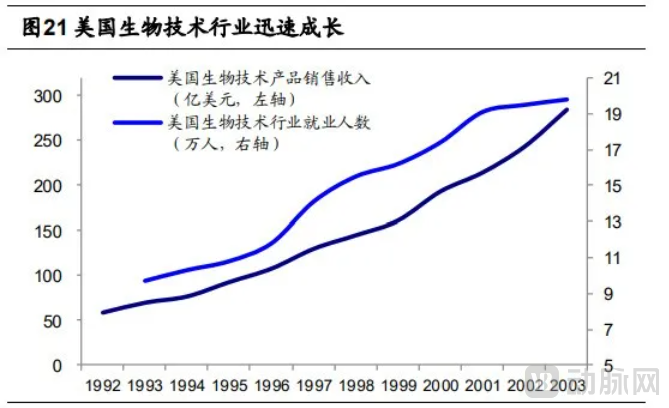
△History of Changes in the U.S. Biopharmaceutical Industry in the 1990s Image Source: Haitong Securities
Meanwhile, a technological revolution in the field of drug discovery emerged at this very time. The advent of encoded combinatorial compound libraries expanded the scale of traditional drug synthesis from mere dozens to hundreds of billions—a figure exceeding the number of stars in the entire Milky Way—thereby significantly enhancing the efficiency of drug development.
The technology was developed and optimized by Clark Still of Columbia University and Michael Wigler of Cold Spring Harbor Laboratory. Together with John J. Baldwin, a former senior researcher at Merck & Co., they founded Pharmacopeia, a company focused on drug discovery, in 1993. It was one of the earliest contract research organizations (CROs) worldwide dedicated to early-stage drug research.
For large pharmaceutical companies, as the number of known molecules and conquered therapeutic areas continues to grow, the return on investment (ROI) for new drug R&D has been steadily declining. As returns from new drugs diminish, it becomes increasingly cost-ineffective to build R&D teams and infrastructure according to previous standards, with the high costs of recruiting and maintaining these teams remaining persistently elevated. Consequently, pharmaceutical companies are increasingly turning to R&D outsourcing as a strategy to control costs.
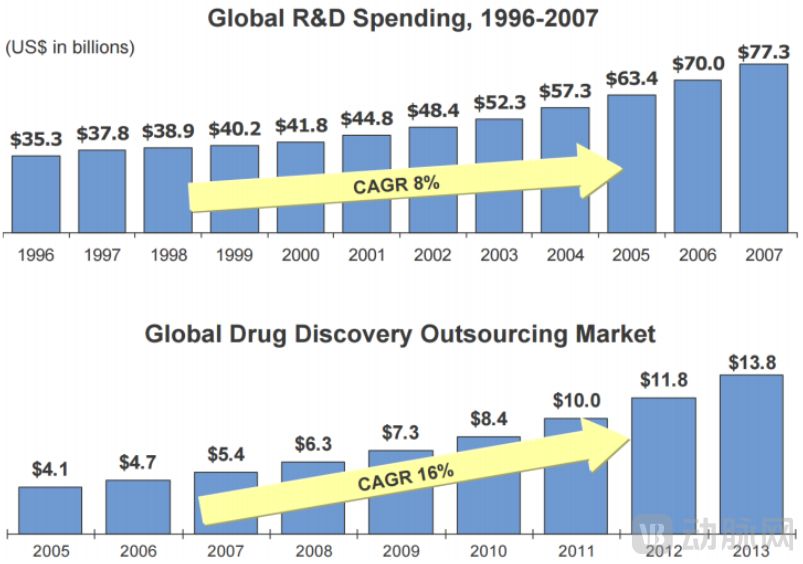
△Changes in Global R&D Total Investment and the CRO Market
Image source: Kalorama Information
Therefore, as pharmaceutical companies of all sizes increasingly find themselves compelled to rely on CROs for operations, this once-niche sector is gradually taking center stage.
Thus, bolstered by its high-profile founding team, the company quickly secured contracts with major multinational pharmaceutical firms such as Schering-Plough, Sandoz, and Bayer. Two years later, in 1995, it listed on the NASDAQ, becoming a sought-after emerging contract research organization (CRO) on Wall Street.
As R&D at pharmaceutical companies became increasingly hyper-competitive, contract research organizations (CROs) emerged to enhance efficiency. However, as CROs flocked into the market, the trend of intense competition quickly spread to the CRO industry itself. In response, various CRO companies began seeking to relocate operations to countries with lower labor costs.
Thus, Quintiles (one of the largest clinical CROs) relocated its clinical research center to India in 1997 and established offices in Bulgaria and Croatia; AstraZeneca set up an R&D facility in Bangalore (commonly known as India’s Silicon Valley); and Parexel opened an operations center in Lithuania...
Alongside Baldwin and others, a Chinese scientist from Still’s Laboratory at Columbia University—Li Ge, who had just earned his Ph.D. from Columbia and later founded the entire WuXi AppTec group—also helped establish the United States Pharmacopeia (USP). Therefore, in its search for new markets, the USP naturally has another viable option besides India and Eastern Europe: China.
Soon, in 1999, Bodian and Li Ge traveled to China for an exploratory visit, where they engaged with a state-owned enterprise called Wuxi Taihu Water Group (hereinafter referred to as “Taihu Water”). Also a diversified conglomerate, the company maintained certain business ties with the United States, boasting a strong international presence. Moreover, Taihu Water demonstrated keen interest in collaborating with the United States Pharmacopeia (USP).
Consequently, Borden and Li Ge promptly drafted a project presentation for establishing a Chinese subsidiary in partnership with Taihu Shui. However, at that time, Pharmaron’s senior management had shifted its focus from chemical discovery to life sciences software and materials, leaving them unmoved by the duo’s proposal. Unwilling to give up, the two returned to China for further research, gaining insights into the labor cost differential between China and the United States and conducting a feasibility analysis.
Thus, with everything in place, Li Ge submitted his resignation to the United States Pharmacopeia in 2000 and, together with Baldwin (in his capacity as a board member), joined forces with two local business figures, Liu Xiaozhong and Zhang Zhaohui, to establish WuXi AppTec (WuXi) with financial backing from Taihu Water.
In the early stages, CRO client acquisition relied entirely on the personal influence of key individuals. Because new drug development involves the sharing of intellectual property, any leakage at the CRO stage would constitute a significant loss for pharmaceutical companies, which also serves as a major barrier to entry for CRO firms. Therefore, WuXi AppTec’s rapid expansion in its early years was inseparable from the strong professional networks of Li Ge, Mark Boger, and other key figures.
Later, recognizing the immense value of newly discovered new molecular entities, Baldwin once again decided to strike out on his own by establishing a pharmaceutical company, while Li Ge chose to continue expanding along the path of outsourcing.
WuXi AppTec successively acquired JoinStone (a clinical CRO) and established WuXi STA (for small-molecule manufacturing), extending its CRO services from drug discovery to preclinical testing, clinical trials, and commercial manufacturing, thereby becoming an integrated end-to-end pharmaceutical R&D service provider.
Similar to the “risk-averse” nature of government procurement, pharmaceutical companies’ procurement teams also maintain their own preferred vendor lists. Typically, if a pharma company is satisfied with a particular service from a provider, it tends to procure additional services from the same company to ensure stability—highlighting the importance of integrated services in the CRO industry.
Meanwhile, in the early 1990s, a group of small and mid-sized biopharmaceutical companies in the United States completed the drug development and clinical trial phases, with their projects gradually advancing toward late-stage commercialization. Consequently, these companies’ outsourcing needs expanded from early-stage R&D to include manufacturing services. From a macro perspective, companies in the biopharmaceutical industry were progressively extending their operations across the entire product lifecycle, encompassing R&D, clinical trials, regulatory approval, and commercial manufacturing.
In other words, U.S. companies that previously focused heavily on drug discovery and testing now have new demands for late-stage clinical development and commercial-scale manufacturing. Consequently, the term “CRO” has gradually expanded to encompass SMOs (which assist in the execution of clinical studies) and CDMOs (Contract Development and Manufacturing Organizations), ultimately leading to the broader umbrella term “CXO” (outsourcing of pharmaceutical R&D and manufacturing). WuXi AppTec has also begun to meet these subsequent outsourcing needs of such pharmaceutical companies.
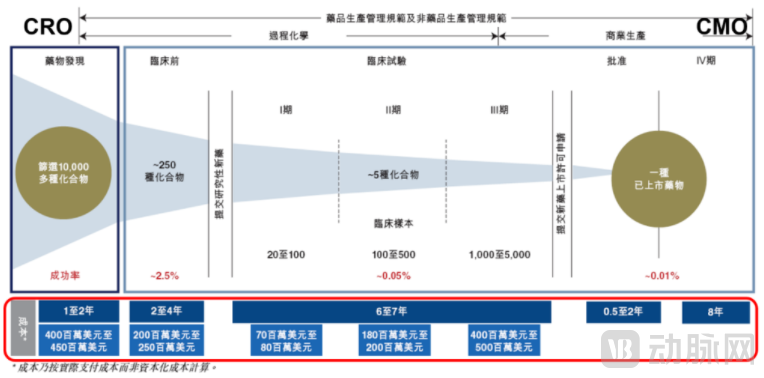
△ Drug development cycle and corresponding expenditures. Source: Zheshang Securities
Li Ge brought the CRO model back to China. It was also during those years that Pharmaron, Tigermed, Asymchem, and others were successively established, marking the first appearance of the concept of pharmaceutical outsourcing in China.
Similar to the situation of WuXi AppTec, although these CRO companies were based in China, the domestic pharmaceutical quality regulatory system had not yet aligned with European and American standards in the early 21st century, and Chinese local pharmaceutical companies had not matured to the point of needing CRO assistance for drug development. At that time, despite the presence of over 6,000 pharmaceutical manufacturers in China, most were engaged only in low-quality generic production and predatory pricing strategies, leaving no room for the “R” (research) component of CROs to survive in the local market.
In 2007, buoyed by the dual advantages of “U.S. clients” and “Chinese costs,” WuXi AppTec made a high-profile debut on the NASDAQ. However, it would take another catalyst for these China-based CRO companies, whose businesses were still predominantly overseas-oriented, to truly engage with China’s biopharmaceutical enterprises.
-02-
Sai Weng Lost His Horse:
Prelude to Returning to China for Development
In Li Ge’s journey from drug discovery to integrated CRO services, the most significant acquisition was that of APP Tech (a clinical trial CRO company). Unexpectedly, this move became an unforeseen starting point for shifting WuXi AppTec’s strategic focus to China.
WuXi AppTec primarily targets the world’s top 10 pharmaceutical companies, while Apptec serves long-tail clients such as small and mid-sized biotech firms in the United States, creating a complementary relationship between the two. The partnership appeared perfect, with one unfortunate caveat: it was launched in 2008.
The 2008 financial crisis significantly slowed financing across the industry, plunging the pharmaceutical sector into a period of severe downturn. Many small and mid-sized U.S. biotechnology companies that were not yet profitable quickly faced cash flow crises, leading to a sharp decline in their outsourced R&D demand. Consequently, the business volume from AppTec, which WuXi AppTec had recently acquired, experienced a precipitous drop.
Small pharmaceutical companies are facing widespread funding shortages, and large pharmaceutical companies cannot remain unaffected.
Amid the financial crisis, many pharmaceutical companies have initiated business restructuring and M&A reforms. During this period, Pfizer merged with Wyeth, and Roche acquired Genentech. While these moves appear to be expansionary strategies by large pharmaceutical firms, they were underpinned by tens of thousands of layoffs and the closure of manufacturing facilities worldwide, reflecting a defensive cost-cutting measure adopted by pharmaceutical giants to weather the economic downturn.
As a result, all internal projects at pharmaceutical companies were required to restart their approval processes, rendering existing CRO orders from key accounts entirely void and disrupting the demands of established clients. Not only did Apptec, the newly acquired entity, face insufficient workload, but WuXi AppTec, which heavily relied on large pharmaceutical companies for revenue, quickly found itself mired in similar difficulties.
At the end of 2008, WuXi AppTec was forced to shut down Apptec’s biologics manufacturing capacity in Philadelphia. The following year, WuXi PharmTech’s revenue plummeted by nearly 50%. Coupled with goodwill impairment from the acquisition of Apptec, the company’s stock price went into free fall, dropping from a high of $40 to $3.60.
At this point, Li Ge also seemed to sense the company’s development bottleneck. In 2010, Charles River Laboratories, a clinical CRO giant that built its fortune on selling laboratory mice, extended an olive branch to WuXi AppTec, leading to the $1.6 billion negotiation scenario described at the beginning of this article.
It always seems somewhat inappropriate for a Chinese company to ultimately “sell itself out” to an international giant. As soon as the transaction was announced, domestic media reportedly launched harsh criticisms against Li Ge, asking, “We finally have a respectable, internationally competitive company; why on earth should it be sold to the United States?” In response, Li Ge helplessly explained, “We were not sold off; we have found a partner to jointly realize our vision.”
Charles River focuses on preclinical testing and clinical services, while WuXi AppTec leans toward drug discovery and biologics manufacturing. Li Ge’s desire to merge the two companies stems from their strong complementarity. On the other hand, Charles River has its own strategic considerations: amid the financial crisis, it needed to extend its business into developing countries, shifting operations from the United States to China to reduce costs and tap into new markets.
However, the high-premium acquisition of Charles River sparked significant dissatisfaction among shareholders, while cultural barriers also raised concerns among investors. Ultimately, the $1.6 billion dream of “integration” fell through, with WuXi AppTec receiving only a $30 million breach-of-contract penalty from Charles River.
This unsuccessful acquisition has inadvertently thrust WuXi AppTec, a Chinese company, into the global pharmaceutical spotlight, but it also raises a critical issue: Charles River’s high premium has established an anchor price for WuXi on NASDAQ. For subsequent investors, this presents a stark reality: Why should WuXi be valued higher than Charles River?
This incident has placed a ceiling on WuXi AppTec’s market capitalization on the Nasdaq.
Over the subsequent four years, from 2011 to 2015, Li Ge was aggressively expanding production capacity. He first relocated the production base of WuXi AppTec’s small-molecule manufacturing division to the United States. Next, he acquired BioGenes to secure biological research reagent services; purchased Illumina’s HiSeq X10 sequencing system and established a cell therapy manufacturing facility in Philadelphia, while also acquiring NextCODE to make a significant entry into the genomics sector; and acquired MedNova Laboratory to expand testing operations...
However, this aggressive expansion did not translate into significant stock price gains for WuXi AppTec. Coupled with a series of short-selling campaigns against Chinese concept stocks by various U.S. short-sellers during that period, the company’s stock ratings were downgraded repeatedly in 2014, resulting in a 16% decline for the year.
Meanwhile, Tigermed, the domestic clinical CRO giant, listed on the ChiNext board, with its valuation hovering around 70x P/E. Thus, Li Ge found himself in a dilemma: on one hand, he had to endure the torment of low valuations in the U.S. stock market; on the other, he recognized the immense potential of the Chinese market as new biotech companies continued to emerge around 2015.
This may have finally prompted Li Ge to make the decisive move to truly relocate his business back to China.
-03-
Expansion and Fission:
From “Selling Shovels” to “Becoming the Miner”
Upon returning to China, WuXi AppTec’s first move was to recruit a large cohort of biomedical talent from top domestic and international universities to expand its presence in the Chinese market. However, this CRO leader, backed by strong professional expertise and privileged origins, did not have a smooth start upon its return.
It is said that when WuXi AppTec’s first domestic promotion team was pitching their projects, they often encountered clients who would ask with a tone of disdain, “Oh, isn’t WuXi AppTec supposed to be working with global top-10 pharmaceutical giants like Pfizer and Merck? Since when did you start targeting small companies like us?”
Domestic pharmaceutical companies’ rejection is not without reason. First, WuXi AppTec has always served overseas clients, where high standards come with high prices. Before 2015, fabrication of clinical trial data was rampant in China, and CRO firms could falsify data at extremely low costs, making WuXi uncompetitive on price. Second, in terms of geographic distribution, it focuses more on the Yangtze River Delta region. Compared with Pharmaron, which has long been rooted in northern China, and Boji Medicine, based in southern China, WuXi actually holds little competitive advantage.
Although it had a rough start, it unexpectedly caught a favorable wave.
Since Bi Jingquan left his post as Deputy Secretary-General of the State Council in 2015 to assume the role of Director of the China Food and Drug Administration (CFDA), bridging the gap between regulatory authorities and the industry, a sweeping supply-side reform in the pharmaceutical sector was launched. In 2015, following the “July 22 Data Verification” campaign, some contract research organizations (CROs) implicated in data fabrication faced challenges in conducting self-inspections, creating a window of opportunity for standardized CRO companies.
Furthermore, with the implementation of a series of policies—including the standardization of clinical trials, accelerated approval processes for innovative drugs, and China’s accession to the ICH to align with international standards—the Chinese pharmaceutical industry has entered a new phase of growth. The threshold for drug approval has been raised directly to match FDA standards: drug evaluation has shifted from in vitro testing to human clinical trials. The substantial pressure exerted by consistency evaluations has prompted pharmaceutical companies to seek out CROs that adhere to strict regulatory standards.
Every supply-side reform is a process of increasing industry concentration, with the greatest beneficiaries being a group of established CRO companies with deep-rooted expertise.
WuXi AppTec’s small-molecule manufacturing division is named Hequan Pharmaceutical, a name derived from a straightforward and blunt concept: “synthesizing everything for you.” After a series of acquisitions across the upstream and downstream segments of the CRO industry, WuXi AppTec has largely completed its preclinical testing layout. It is said that Li Ge and several senior executives once considered naming the entire division “Cequan Pharmaceutical” (implying “testing everything”), but ultimately abandoned the idea, possibly due to its unappealing sound.
As a wave of innovative drugs emerges across China, testing demands throughout the R&D process have surged, pushing WuXi AppTec’s testing capacity to its limits. However, for fundamental assays such as chromatography and mass spectrometry, there is not only outsourced demand but also internal usage. While external orders generate revenue, internal projects constitute costs, frequently leading to interdepartmental conflicts.
This resolved the final contradiction: “I don’t care how you compete internally; what matters most is generating profits efficiently.” Consequently, WuXi AppTec ultimately lifted its restrictions: if internal scheduling capacity was insufficient, it would directly engage external outsourcing providers, provided that service quality was assured.
At that time, the domestic biopharmaceutical sector was gaining momentum, with capital entering the market aggressively. Consequently, speed became the most critical factor for new drug projects aiming to rapidly advance through clinical trials and reach the market. WuXi AppTec’s strong brand equity, combined with its “subcontracting model,” which significantly accelerated project timelines, naturally made it the preferred vendor for pharmaceutical companies.
Thus, during the years of WuXi AppTec’s expansion, a common scene would unfold: when pharmaceutical companies finally settled payments for CRO projects, the room would be bustling with a large crowd, yet only one person would be from WuXi AppTec, with all the others representing other CRO vendors.
Large CROs engaging smaller CROs as subcontractors has significantly accelerated corporate expansion. However, this “contractor” model is insufficient for ambitious CROs, nor does it meet the needs of Chinese pharmaceutical companies that are seeing a continuous influx of hot money following regulatory breakthroughs.
WuXi AppTec originated as an outsourced provider of “drug discovery” services. Drug discovery refers to the process whereby a client provides an idea or a potential molecule, and the contract research organization conducts screening and testing to identify the candidate with the greatest potential for development into a marketable drug. However, against the backdrop of the rise of innovative biologics, China’s “me-too” drugs—derivative medications designed to circumvent intellectual property rights—have emerged prominently. Under previously studied mechanisms of action, identifying new ideas has become exceedingly easy, with opportunities seemingly abundant everywhere.
Thus, WuXi AppTec established a standalone Domestic Discovery Service Unit (DDSU) within its drug discovery platform. Rather than waiting for pharmaceutical companies to approach with specific needs, the unit proactively develops hit compounds and then seeks out licensing partnerships with pharmaceutical firms on a case-by-case basis, transforming the CRO from a service provider into a project seller.
This approach rests on a prerequisite: China’s implementation of the Marketing Authorization Holder (MAH) system, which allows for the separation of drug development and manufacturing. The establishment of dedicated divisions by CRO companies to develop their own pharmaceutical products represents more of a pilot effort toward a new business model in the wake of China’s reforms in innovative drug development.
On its proprietary drug screening platform, WuXi AppTec began to churn out new small molecules in bulk. At that time, traditional large pharmaceutical companies, lacking mature new drug development platforms, were also frantically searching for new molecular entities. As a result, WuXi’s laboratories once became one of the primary sources of “me-too” drugs in China.
This “innovative” approach by the CRO gained immediate popularity upon its launch. Among the paying clients were not only well-known domestic traditional generic drug manufacturers but also established Chinese proprietary medicine companies actively seeking transformation, all of which acquired numerous new small molecules from WuXi AppTec. A southern “innovative pharmaceutical company” purchased ten small molecules from WuXi. Since 2015, in clinical trial applications submitted to the Center for Drug Evaluation (CDE), drugs with names containing “WX-” or “KL-” have been predominantly sourced from WuXi, corresponding to WuXi and Key Lab (@WuXi DDSU), respectively.
Thus, WuXi AppTec has evolved from a “shovel seller” into a “mine builder.” Moreover, most pharmaceutical companies in this cohort lack drugability testing capabilities; the quality of their developed candidates ultimately must be validated by WuXi AppTec. In essence, WuXi creates the “mines” for others to excavate, while the “shovels” are still purchased from WuXi itself.
WuXi AppTec achieved rapid expansion and fission under two systems, submitted its IPO application in February 2018, and successfully passed the review in March, taking only 50 days from application to approval, setting a new record.
Meanwhile, WuXi AppTec, listed on the A-share market, quickly became a favorite among investors.
-04-
New Game:
China's CRO 3.0
In 2020, the annual performance reports of companies such as WuXi AppTec, Tigermed, Asymchem, Pharmaron, and Joinn Laboratories brought the CXO (pharmaceutical R&D and manufacturing outsourcing) sector to the attention of nearly all investors in the secondary market.
Nowadays, leveraging new technological platforms such as gene therapy, nucleic acid drugs, and multispecific antibodies, contract research organizations (CROs) like WuXi AppTec, Tigermed, Pharmaron, and Asymchem—previously focused on specific segments of R&D services—are capitalizing on the buoyant investment climate to expand across the entire upstream and downstream drug development value chain.
China’s biopharmaceutical sector is also experiencing a deferred industry cycle, spanning from R&D to clinical trials, and then to manufacturing and commercialization. Pharmaceutical companies that initially sought outsourced R&D services are now in need of manufacturing capabilities, signaling the arrival of the window of opportunity for CDMOs (contract development and manufacturing organizations).
Since the introduction of industry-transforming policies in China after 2018, such as centralized drug procurement, profits at pharmaceutical companies primarily focused on generic drugs have plummeted, prompting a rush into the innovative drug sector. The momentum behind innovative drugs continues to build: the number of healthcare-related financing and investment deals in China’s primary market has steadily increased each year, remaining at a high level. This indicates that contract research organizations (CROs) will continue to experience a period of rapid growth in their R&D outsourcing business.
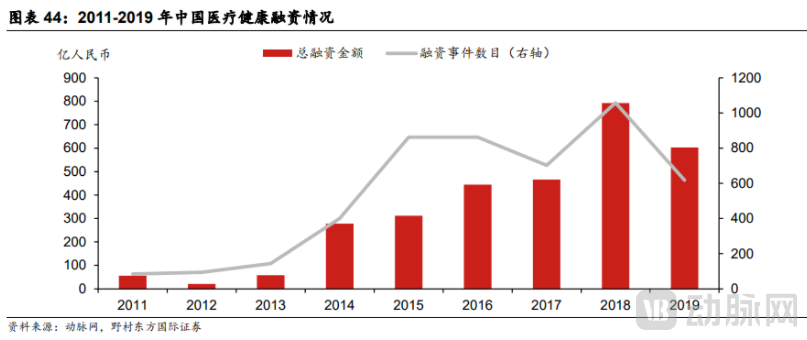
△ Investment and Financing in the Primary Healthcare Market | Image Source: Nomura Orient Securities
Yet, much like the biopharmaceutical bubble that emerged in the United States in the late 1990s, the overarching trend of intense domestic competition has quietly taken hold among local CROs. Consequently, some observers have noted that pharmaceutical outsourcing companies are aggressively hiring and expanding capacity, with each vying to secure a larger share of the remaining market pie. Even active pharmaceutical ingredient (API) manufacturers are striving to transform into contract development and manufacturing organizations (CDMOs).
Beyond these, leading CRO companies are increasingly adopting a strategy that is both time-honored and novel: investment.
CROs engage in advancing projects for small biopharmaceutical companies, leveraging their informational advantages derived from core business operations to participate across both primary and secondary markets. By acting as service providers, they enable their affiliated funds to secure early-stage equity investments in client companies. Funds with CRO affiliations consistently gain faster and deeper insights into the future prospects of their portfolio companies compared to other public or private investment funds.
In a hotly contested sector, forecasting the likelihood of a project’s success and making substantial early bets with one’s own capital—this new game is more thrilling than joining the herd in the CRO space and competing with latecomers.
In the first quarter of this year, WuXi AppTec released its performance report. Notably, WuXi’s investment income from equity investments in Q1 reached RMB 1.063 billion—while its total profit was only RMB 1.5 billion, meaning that earnings from investments accounted for two-thirds of the company’s overall revenue.
In addition to WuXi AppTec, Tigermed, a latecomer, is also aggressively accelerating its strategic layout in this area. Data from Tianyancha shows that since 2016, Tigermed has publicly invested in 60 companies within the broader healthcare sector, covering virtually the entire landscape—from medical services and biologics to cell therapy and internet-based healthcare. Recently, it even proposed investing RMB 9.8 billion to acquire a stake in a biomedical industry fund with a total size of RMB 20 billion—remarkably, Tigermed’s liquid assets in the first quarter of this year amounted to only RMB 9.712 billion.
As for Asymchem, Pharmaron, and Pharmablock Sciences... although they entered the scene later, they have been striving to join this capital feast. Together, they have propelled China’s CRO industry into a new phase of growth.
-05-
Epilogue:
The Bubble in Biologic Innovative Drugs
Many industries in China often undergo disruptive transformations due to the emergence of one or two new technologies and business models.
For instance, new media has transformed the entire content production landscape—individuals no longer need publishing houses or television stations to make their voices heard. Similarly, live-streaming platforms combined with logistics have revolutionized the circulation of goods, enabling everyone to open their own small online stores.
Pharmaceutical R&D and manufacturing outsourcing is, in essence, such a platform that enables anyone with an idea to engage in drug development—once the exclusive domain of traditional large pharmaceutical companies—and monetize their innovations. With the prevalence of the VIC (VC + IP + CRO) model, Contract Research Organizations (CROs) have become one of the most significant driving forces. In other words, to some extent, CROs have fueled the current wave of biopharmaceutical bubble in China.
So, does China’s biopharmaceutical sector actually need a bubble?
Of course, no one needs the foam, but everyone wants to find the real wine beneath it. From reforms in the approval process for innovative drugs, to the opening of capital market channels and the high-profile entry of hot money, as well as various special science and technology programs and talent introduction policies, China needs to use the “wine” beneath the foam to build its own Pfizer and Novartis.
Top-level design has also been seeking the right balance between hype and substance: On July 2, the Center for Drug Evaluation (CDE) of the National Medical Products Administration issued a “Notice on Publicly Soliciting Comments on the Guiding Principles for Clinical Development of Antineoplastic Drugs with a Focus on Clinical Value,” cooling down the proliferation of me-too drugs.
Unexpectedly, the CRO companies involved took a sharp tumble in the secondary market, reacting like startled birds (though they bounced back the very next day). This seems to echo an old adage in the investment community: “Those who fear high valuations are destined for hardship.”
However, a review of the history of these Chinese CROs reveals that the rise of the entire industry has largely mirrored the trajectory seen in the United States: both were driven by the emergence of new technologies (small-molecule encoded compound libraries in the past versus large molecules today); both rose amidst biotechnology waves (the U.S. tech wave versus China’s policy, capital, and talent advantages); and both expanded along the full lifecycle of biopharmaceutical products (R&D → clinical trials → regulatory approval → manufacturing).
The Bible contains a verse: “There is no new thing under the sun,” which translates to: “There is nothing new under the sun.”
What WuXi AppTec, Tigermed, Asymchem, and others have done is to recreate in China the heyday of the U.S. biopharmaceutical industry in the 1990s, leveraging a range of new technologies.
This time, the joys and pains, trust and deception, achievements and destruction, as well as the wealth appreciation realized during industrial upgrading throughout the entire process of industry transformation—the players participating in this game have shifted from the United States to millions upon millions of Chinese people.
References:
1. WuXi AppTec Prospectus
2. Charles River’s Proposed Acquisition of WuXi AppTec Conference Call
3、A Chinese Pharmaceutical Startup Acquires an American Firm to “Go Global”,Paulson Institute
4. Behind RMB 10 Billion in Revenue and a RMB 250 Billion Market Cap, WuXi AppTec Is “Firing on All Cylinders” – VCBeat
5. Pfizer Mired in Passive Acquisition Trap, Times Media
6. A-Share Glory Fades: Why Is WuXi AppTec Still Eager to Return? Yicai
7. The Pharmaceutical Goddess’s Audacity, The End of the CXO Feast, and Archimedes Biotech