

Three Wuhan University Alumni Ring the Bell at HKEX: How Cano-Bio Supports a HK$20 Billion Valuation?

Keymed Biosciences
Innovative Biopharmaceutical Developer
On July 8, 2021, Keymed Biosciences (02162.HK) officially listed on the Hong Kong Stock Exchange. During this IPO, Keymed Biosciences offered a total of 58.2645 million shares. The stock opened 46.34% higher at HK$78 on its first day of trading, and closed at HK$68, giving it a market capitalization of HK$18.43 billion. The IPO was priced at HK$53.30 per share, with the public offering oversubscribed by 429.97 times.
Keymed Biosciences has assembled a prestigious lineup of cornerstone investors for its IPO. Morgan Stanley, CICC, and Huatai International serve as its joint sponsors. Fifteen cornerstone investors have joined this IPO, including Invesco, UBS Group, Aranda Investments (under Temasek), Hillhouse, Boyu Capital, Jiaxi Holdings (under CSPC Pharmaceutical Group), Lilly Asia Ventures, Hudson Bay Master Fund, Janchor Partners, Octagon Capital, Sage Partners, Springhill Master Fund (under Qiming Venture Partners), and E Fund.
InChen Bo, CEO/Founder of Keymed BiosciencesDr. [Name] has always carried the indelible label of “co-founder/former CEO of Junshi Biosciences,” which has drawn additional external attention to the development of Keymed Biosciences.
Keymed Biosciences, with its strong capability in advancing innovative pipelinesWithin less than five years of its establishment, the company has had more than 10 drug candidates in development, with five advancing to clinical stages.CM310 (IL-4Rα), the company’s most advanced core product, is currently in Phase IIb clinical trials and is expected to submit a New Drug Application (NDA) to the National Medical Products Administration (NMPA) in 2023. The company demonstrates strong foresight in its selection of drug targets, with all candidate drugs that have entered clinical stages ranking among the top three domestically or globally in terms of development progress.
Keymed Biosciences, founded in 2016 and headquartered in Chengdu, Sichuan, is a biotechnology company dedicated to innovative biological therapies. It focuses on addressing unmet clinical needs in the fields of autoimmune diseases and oncology, having established an integrated, independently developed R&D platform spanning monoclonal antibodies, antibody-drug conjugates (ADCs), and bispecific antibodies. Backed by its highly renowned founding team and strong capability in advancing innovative pipelines, the company has attracted significant attention from the industry both before and after its initial public offering.
Keymed Biosciences’ entire executive team boasts extensive professional backgrounds and industry experience, with deep expertise in research and development as well as operations.
Dr. Chen Bo, CEO and Founder of Keymed Biosciences, earned his bachelor’s degree in Biology from Wuhan University and later obtained his M.D. from the Albert Einstein College of Medicine in the United States. He has previously served as a Professor at Fudan University, a Researcher at Eli Lilly and Company, a Senior Scientist at Trellis Bioscience, and a Senior Scientist at a stem cell therapy biopharmaceutical company. He has held leadership roles in the development of biotech drugs at Trellis Bioscience and StemcentRx (AbbVie).
Dr. Chen Bo’s most prominent title in the industry was as a co-founder and former CEO of Junshi Biosciences, where he led the development of toripalimab, the first domestically produced PD-1 monoclonal antibody approved in China. Dr. Chen founded Junshi Biosciences in 2012. From January 2013 to March 2015, he served as General Manager and Executive Director of Junshi Biosciences, and subsequently held the position of Chief Scientist until December 2016. He also served as a Director of Junshi Biosciences until March 2018. The other two core team members also boast highly impressive backgrounds, which will be detailed individually below.
Why Founder Chen Bo Left Junshi Biosciences on the Eve of Its IPO Has Sparked Widespread Speculation. However, apart from Junshi’s response to an inquiry from the Shanghai Stock Exchange in October 2019—which stated that Chen Bo’s primary reason for leaving was his belief that he was better suited to managing early-stage startups, prompting him to depart and launch his own venture—Chen Bo himself has not issued any public statement regarding his departure.
The other two members of Keymed Biosciences’ core team, while not engaging in as much robust external “quantum entanglement” as Chen Bo, possess formidable capabilities and boast highly impressive backgrounds.
Dr. Wang Changyu, Executive Director and Senior Vice PresidentWith over 23 years of experience in the biopharmaceutical industry. Prior to joining Keymed Biosciences, he served as a Senior Scientist at Chiron Corporation and Bristol Myers Squibb (BMS), where he led the development of Opdivo, the world’s first PD-1 monoclonal antibody (approved for commercialization in 2014). He also held the position of Director of Cancer Immunology at Pfizer, a renowned international pharmaceutical company. He is a pioneer and one of the world’s leading experts in oncology immunotherapy.
Dr. Xu Gang, Executive Director and Senior Vice PresidentWith 15 years of deep expertise in biopharmaceuticals, Dr. Xu previously served as a Senior Scientist at Roche R&D (China) and as General Manager of Suzhou Bojuhua Biopharmaceutical Technology Co., Ltd. Dr. Xu has published academic articles on immune system recognition, antibody display, and bispecific antibodies in internationally renowned journals such as *Nature Immunology* and the *Proceedings of the National Academy of Sciences of the USA*.
The strength of the three founders is evident. For biotechnology companies characterized by high capital investment and elevated risk, having founders with exceptional professional backgrounds is a significant advantage. Furthermore, innovative drug development is a long-term endeavor with slow returns, requiring the founding team to collaborate closely in terms of both technical expertise and personality, thereby achieving multifaceted complementarity.
The bond connecting the three founders of Keymed Biosciences is their shared status as alumni of Wuhan University. Chen Bo, Wang Changyu, and Xu Gang graduated with bachelor’s degrees from the Department of Biology, the Department of Microbiology, and the Department of Genetics at Wuhan University, respectively. The mutual understanding, trust, and appreciation cultivated over many years will directly propel Keymed Biosciences forward against the headwinds, perfectly embodying the “human factor” that investors value most.
Therefore, prior to its listing on the Hong Kong Stock Exchange, Keymed Biosciences had already attracted significant interest from numerous capital institutions. From its inception until its IPO, the company successively completed an angel round of RMB 16.5 million, a Series A financing of approximately USD 25.2 million, a Series B financing of approximately USD 59.1 million, and a Series C financing of approximately USD 130 million.
We learned from public reports that Legend Star, the angel investor in Keymed Biosciences, took only about one week to complete the entire investment decision-making process after deciding to invest in the company. Leng Yan, a partner at Legend Star, described Chen Bo as a founder with strong comprehensive qualities and “fire in his eyes and light in his heart.” Hillhouse Capital expressed similar views when speaking to VCBeat about their impression of Chen Bo, calling him “an exceptionally hardworking individual” who “often slept in the office during busy periods.”
Dr. Xu Gang, a core member of Keymed Biosciences, was a classmate of Yi Nuoqing, Co-Chief Investment Officer and Partner at Hillhouse Capital. In 2012, when the concept of innovative drugs was still largely unrecognized in China, Yi Nuoqing gained access to Junshi Biosciences through Xu Gang and provided continuous support for Junshi’s development. When Dr. Chen Bo founded Keymed Biosciences, with the company having only preliminary clinical trials underway, Yi Nuoqing led its Series A financing and progressively increased his investment in subsequent rounds. Prior to the company’s IPO, he held a 12.18% stake, making Hillhouse Capital the largest investor.
Recalling Junshi Biosciences’ earlier response to Dr. Chen’s departure, which stated that “Dr. Chen believes he is better ‘suited to the operation and management of start-ups,’” we may surmise that Dr. Chen is precisely the kind of entrepreneur who is wholly devoted to managing innovative ventures, relentlessly striving and pushing boundaries, and dedicating the majority of his energy and passion to the development of innovative drugs. It is evident that “people” constitute a core factor in the decision by both Hillhouse Capital and Legend Star to make substantial investments in Keymed Biosciences.
Before founding Junshi Biosciences and Keymed Biosciences, Chen Bo, who returned to China in 2011, also established Wuhan Huaxin Kangyuan Biopharmaceutical Co., Ltd. in the same year. In other words, the establishment of Keymed Biosciences was actually the fruit of Chen Bo’s third entrepreneurial venture. With Keymed Biosciences now going public, 47-year-old Chen Bo has chosen not to continue “tinkering” on the entrepreneurial path, but instead personally brought the fruits of his and his team’s labor to the Hong Kong Stock Exchange for the IPO bell-ringing ceremony.
Empowered by an exceptional team, Keymed Biosciences’ fertile ground continuously yields a robust technological R&D platform and innovative drug “fruits” with great promise and distinctive features.
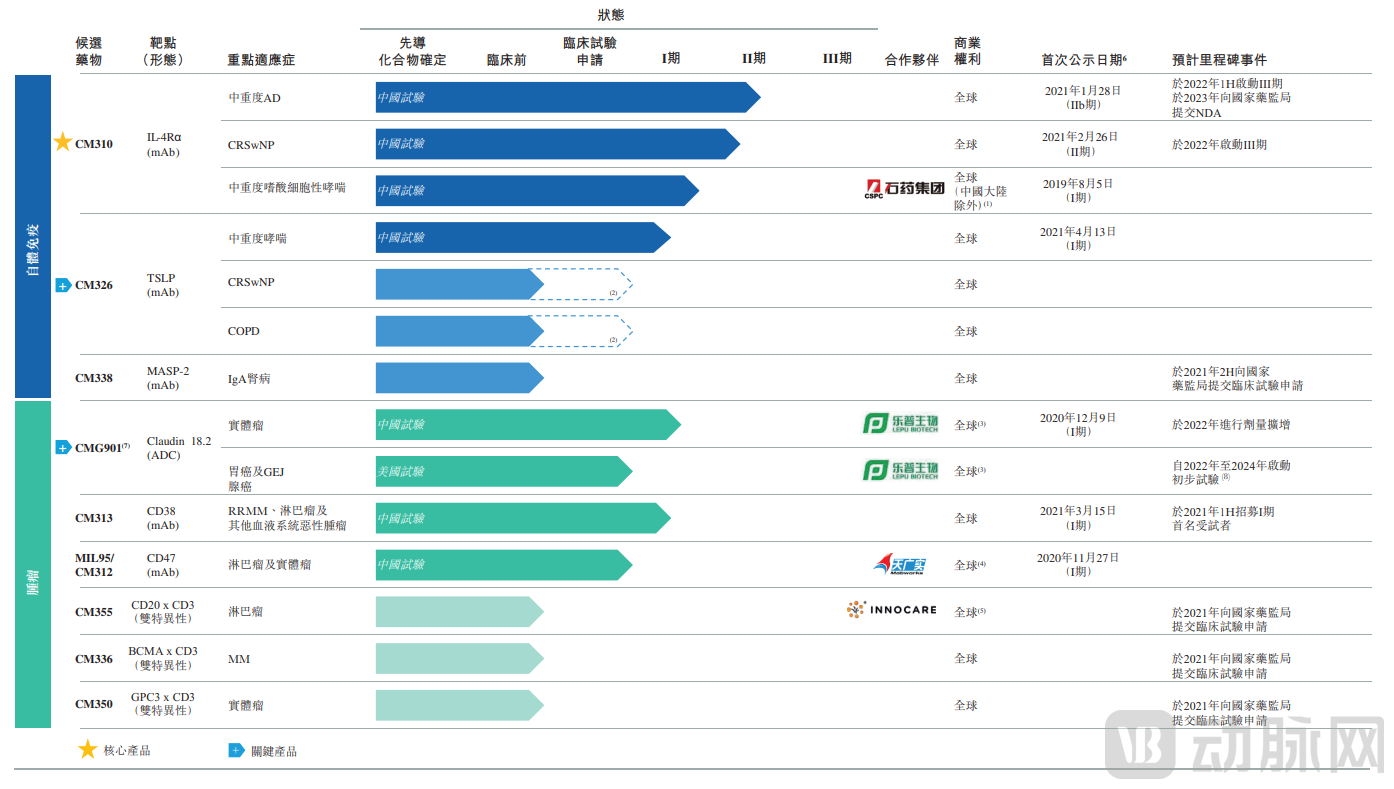
Leveraging its foundation in biomedical research, Keymed Biosciences focuses on innovative biological drugs, inMonoclonal Antibodies, ADCs, Bispecific Antibodiesestablished an integrated, independent R&D platform in the field; within less than five years since its inception, Keymed Biosciences has more than 10 drug candidates in development, with five having entered clinical trials. Among domestically produced drugs of the same class or targeting the same indications, these five candidates all rank among the top three in obtaining IND approval either in China or globally.
(Image source: screenshot from the prospectus)
Currently, Keymed Biosciences’ most core products are CM310 targeting IL-4Rα, CM326 targeting TSLP, and CMG901 targeting Claudin18.2.
First Core ProductCM310 is a fully human monoclonal antibody that targets IL-4R to antagonize the IL-4/IL-13 signaling pathway.By targeting IL-4Rα, CM310 can dual-block the signaling of interleukin-4 (IL-4) and interleukin-13 (IL-13). IL-4 and IL-13 are two key cytokines that trigger type 2 inflammation. CM310 is intended to be developed for the treatment of various type 2 allergic diseases in adults, adolescents, and children, such as moderate-to-severe atopic dermatitis, moderate-to-severe eosinophilic asthma, chronic rhinosinusitis with nasal polyps (CRSwNP, a disease affecting the nose and head), and potentially chronic obstructive pulmonary disease (COPD, a lung disease).
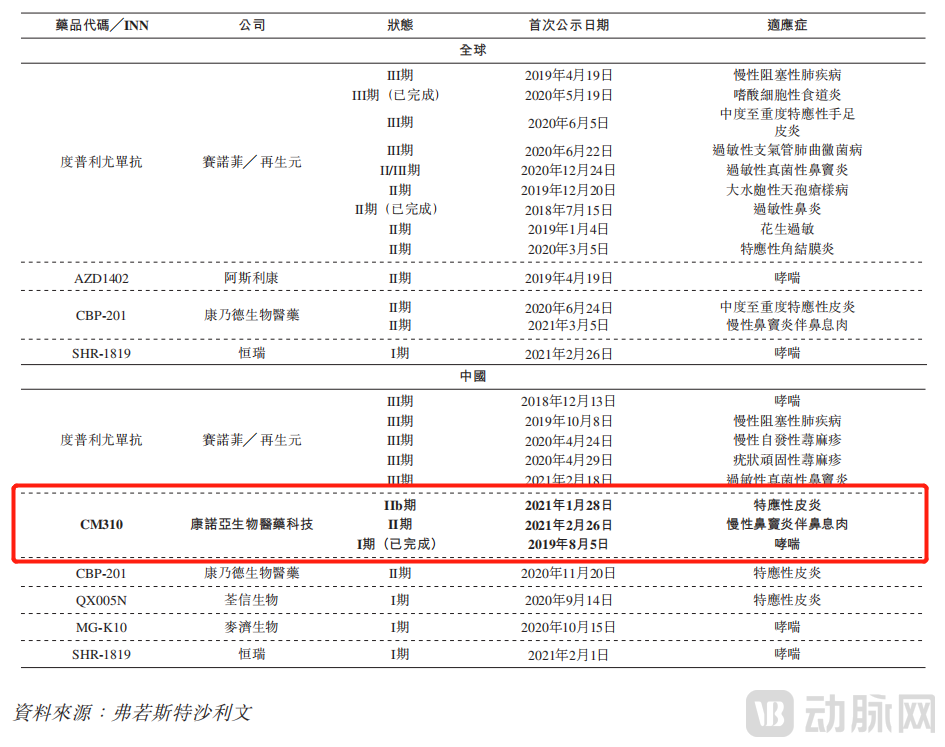
Currently, the candidate drug is undergoing Phase II clinical trials for moderate-to-severe atopic dermatitis in adults and for chronic rhinosinusitis with nasal polyps in adults, with approval for the first indication expected as early as 2024.Furthermore, the drug has also been approved in China for clinical studies targeting moderate-to-severe asthma.
(Image source: screenshot from the prospectus)
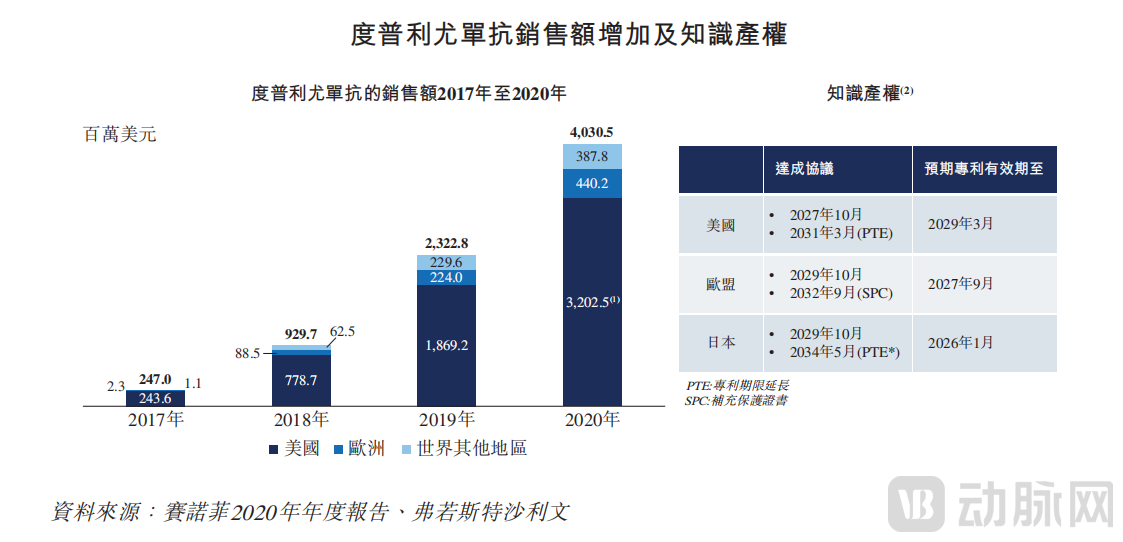
CM310 is positioned to compete with Sanofi/Regeneron’s dupilumab (Dupixent), the first and only IL-4Rα antibody currently available on the global market. Over the three years since its commercial launch, dupilumab’s global sales surged from $200 million in 2017 to $4 billion in 2020, representing a compound annual growth rate (CAGR) of 153.9%, indicating substantial market potential. AndAs the first domestically produced IL-4Rα antibody to receive clinical trial application approval from the National Medical Products Administration, CM310 stands to benefit more significantly from the expansion of market capacity.
(Image source: screenshot from the prospectus)
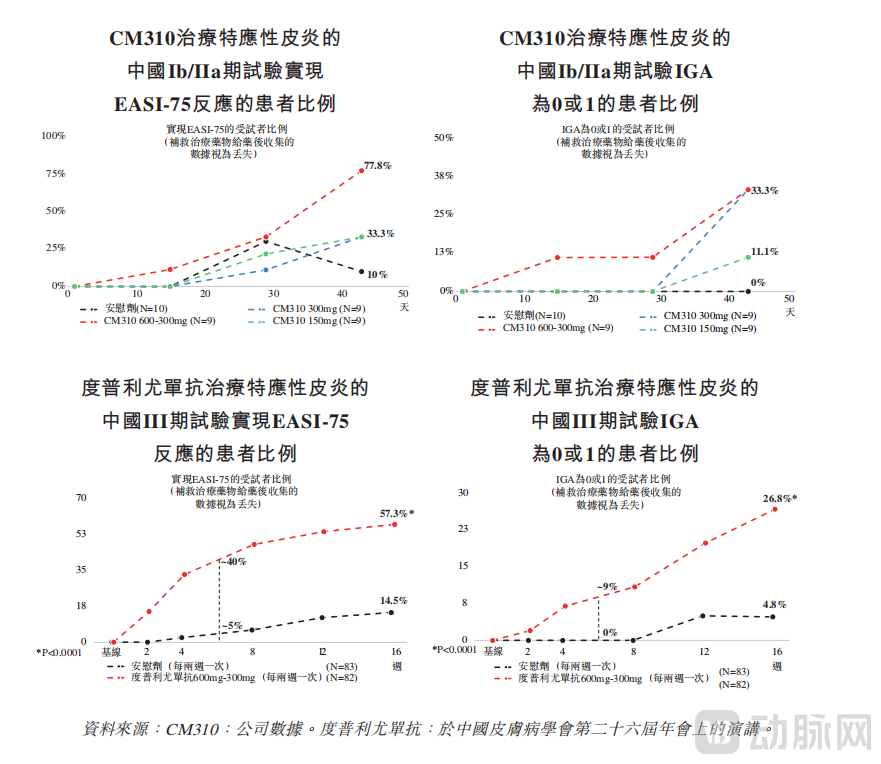
Based on the initial trial results disclosed in the prospectus, CM310 demonstrates potential comparable to dupilumab. It is a highly anticipated potential “best-in-class” product. Looking ahead, as the leading domestically produced IL-4Rα antibody in the Chinese market, CM310 is expected to achieve annual sales exceeding RMB 1 billion over the long term.
(Image source: screenshot from the prospectus)
CM326, another highly potent, humanized monoclonal antibody product targeting thymic stromal lymphopoietin (TSLP), also a drug targeting autoimmune diseases,YesThe First Domestically Developed TSLP-Targeting Antibody Product in China and the Third Worldwide to Receive Clinical Trial Application Approval。
TSLP is a critical upstream cytokine that mediates multiple inflammatory pathways, driving eosinophilic (including allergic), neutrophilic, and other forms of inflammation. By targeting TSLP, CM326 inhibits aberrant inflammatory responses underlying allergies and other diseases. CM326 is being developed for the treatment of various allergic conditions, including moderate-to-severe asthma and chronic rhinosinusitis with nasal polyps, and holds promise for the treatment of chronic obstructive pulmonary disease.
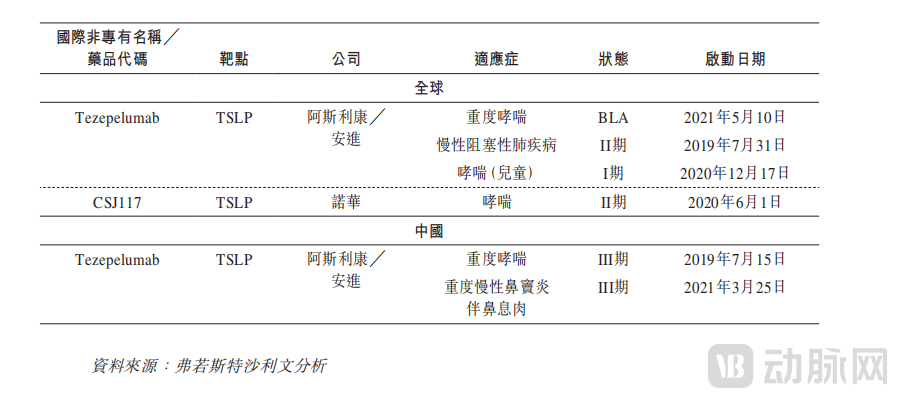
(Image source: Screenshot from the prospectus)
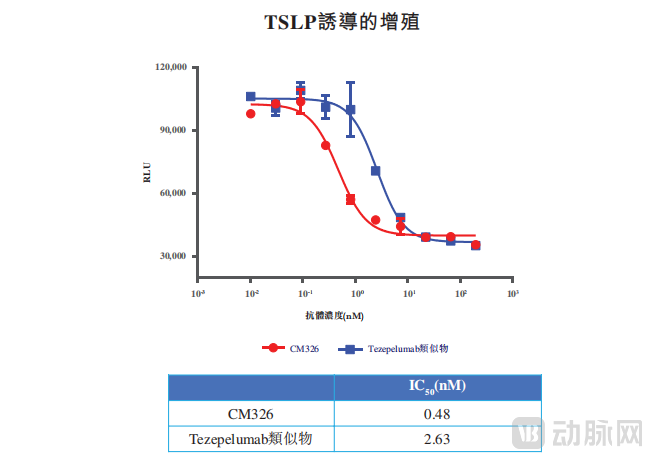
Currently, no TSLP-targeting biologics have been launched globally. CM326 is the first domestically developed TSLP antibody in China to have received approval for its clinical trial application. The prospectus reveals that, compared with its global competitor tezepelumab (developed by Amgen/AstraZeneca), CM326 demonstrated higher efficacy and greater potency in preclinical studies.
As shown in the figure below, although CM326 exhibits affinity for TSLP binding similar to that of the tezepelumab analog, its potency in inhibiting TSLP-induced cell proliferation is approximately 6-fold higher than that of the tezepelumab analog.
Given their shared indication market, CM326 is expected to achieve market performance comparable to that of CM310. Furthermore, the potential for further exploration of combination therapy regimens involving both agents could serve to expand the market opportunity for these two products.
The final core product,CMG901 is an antibody-drug conjugate (ADC) targeting Claudin 18.2.CMG901 comprises a Claudin 18.2-specific antibody, a cleavable linker, and the cytotoxic payload monomethyl auristatin E (MMAE). CMG901 binds to Claudin 18.2 on cancer cells and induces cell death through the release of cytotoxic agents, as well as via antibody-dependent cellular cytotoxicity (ADCC) and complement-dependent cytotoxicity (CDC).
The strength of CMG901 lies in the fact that there are currently no Claudin 18.2 antibody-drug conjugates in clinical stages, either in China or globally.Claudin 18.2 is widely expressed in various cancers, including gastric and pancreatic cancers, making it one of the most promising frontier targets in current oncology therapy. There is a substantial market for gastric cancer, pancreatic cancer, and other malignancies in China, yet effective treatment options remain scarce. Any therapeutic agent capable of improving survival benefits would command a market size starting at billions of yuan.
The development objective of CMG901 is clear: it is intended for the treatment of gastric cancer, pancreatic cancer, and other solid tumors with high Claudin 18.2 expression. Currently, this candidate drug has received clinical trial approval in both China and the United States. CMG901 has the potential to become the world’s first Claudin 18.2 antibody-drug conjugate (ADC). If clinical trials are successful, it will truly qualify as a “first-in-class” therapy.
In addition, Keymed Biosciences has other potential innovative products targeting novel therapies, including CM313, a CD38 antibody primarily for the treatment of hematologic malignancies; CM312, a CD47 antibody targeting lymphoma and solid tumors; CM338, a MASP-2 antibody for various autoimmune diseases; and three bispecific antibodies developed against the CD3 target: CM355, CM336, and CM350.
According to Keymed Biosciences' prospectus, approximately 60% of the proceeds from this IPO will be allocated to the research and development and commercialization of its core and key products, including CM310 (an IL-4Rα antibody), CMG901 (a Claudin 18.2 antibody-drug conjugate), and CM326 (a TSLP antibody). Approximately 15% of the funds will be dispersed for preclinical evaluation and clinical development of other pipeline candidate drugs. The remaining funds will be used to support facility construction for manufacturing and R&D activities, including expansion with an additional 16,000L production capacity, procurement of machinery and equipment, etc., with approximately 10% reserved for general corporate and working capital purposes.
While the Keymed Biosciences team is dedicated to accelerating the advancement of its R&D pipeline, it has also actively engaged with external partners. This demonstrates that the Keymed team possesses not only professional capabilities in academic research and product development but also a keen business acumen.
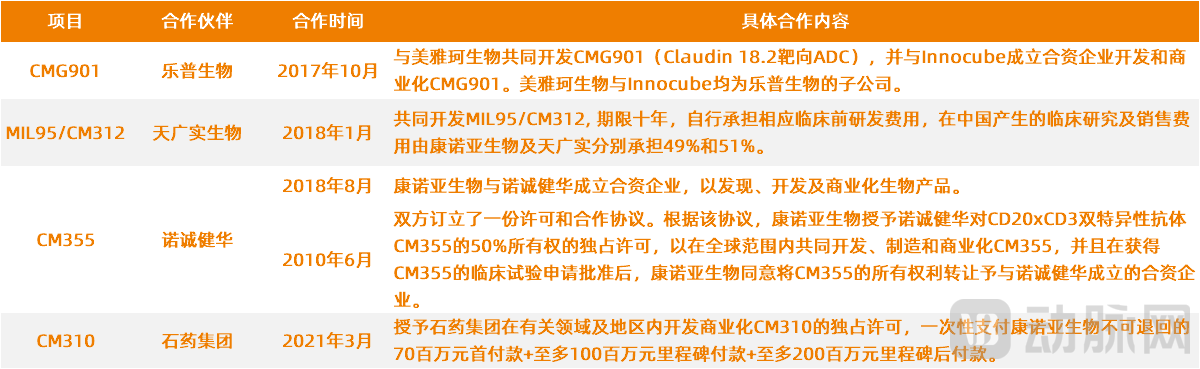
Keymed Biosciences actively engages in external collaborations to support the development and commercialization of its drug candidates. To date, Keymed has established close partnerships with renowned pharmaceutical companies such as Lepu Biopharma, Tian Guangshi Biologics, InnoCare Pharma, and CSPC Pharmaceutical Group. These strategic collaborations have not only facilitated business development (BD) for the company’s products but also generated milestone revenue.
Therefore, in the long term, as a biopharmaceutical enterprise striving on the frontline of frontier innovation, Keymed Biosciences has a higher ceiling than many of its peers. The highly capable “capability source” team can continuously bring the company a rich pipeline of products with differentiated competitiveness, while the participation of numerous star shareholders endows the company with strong industry resources. The existence of its technology platform ensures the diversity and certainty of the company’s revenue, and any further business development (BD) activities will catalyze the company’s value.
We look forward to Keymed Biosciences delivering stronger performance in the secondary market, “providing patients with better products at more affordable prices.”