

From Aesthetics to Nutrition: Sodium Hyaluronate's Expanding Frontier in the Food Industry
On July 9, the “Symposium on New ‘Food’ Opportunities and Vitality: Prospects for the Application of Sodium Hyaluronate in the Food Sector,” hosted by the China National Food Industry Association and the China Economic Media Association, and co-organized by Bloomage Biotechnology, was held in Jinan, the “City of Springs.” More than 200 authoritative experts, industry professionals, and representatives from central and local media gathered to discuss the new era of sodium hyaluronate in food applications.
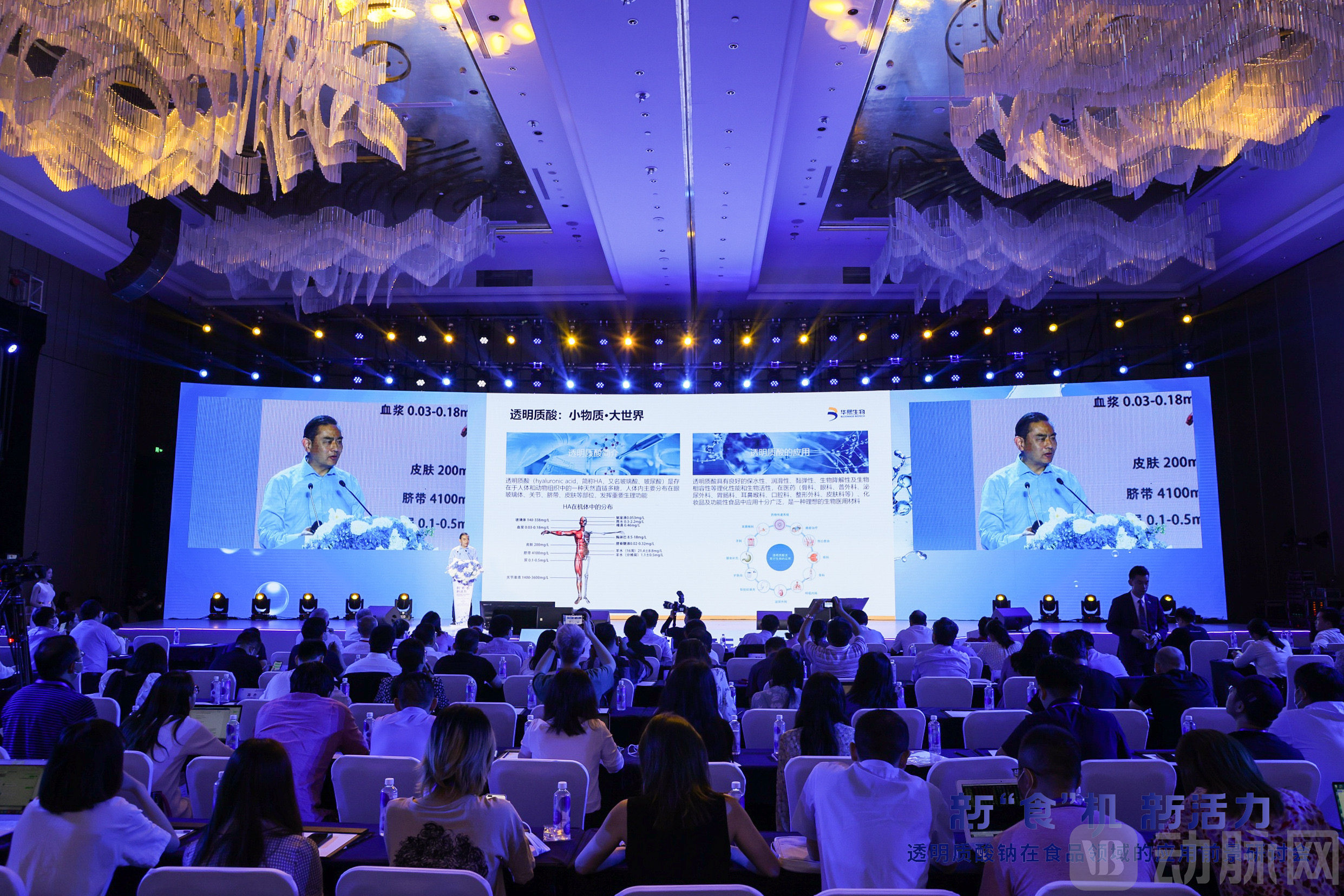
At the conference, Shen Chi, Executive Vice President of the China National Food Industry Association; Zhao Jian, President of the China Economic Media Association; Wang Ling, Director of the Food Production Division of the Shandong Provincial Administration for Market Regulation; Zhang Weiguo, Deputy Secretary of the Party Working Committee and Executive Deputy Director of the Administrative Committee of the Jinan Comprehensive Bonded Zone, as well as Member of the Party Working Committee and Deputy Director of the Administrative Committee of the Jinan High-tech Industrial Development Zone; and Zhao Yan, Chairman and General Manager of Bloomage Biotechnology, delivered speeches on behalf of the host organizations, local government authorities, and co-organizing units, respectively. They congratulated the convening of the symposium and expressed their gratitude to the attendees for their presence.
In her address, Zhao Yan, Chairwoman and General Manager of Bloomage Biotechnology, referred to this year as the “Year One” for the application of sodium hyaluronate in conventional foods, stating that high-quality bioactive ingredients hold significant importance for the upgrading of the food sector. With the development of the national economy, Chinese consumers’ dietary pursuits have shifted from “having enough to eat” to “eating well.” In terms of diet, people’s aspiration for a better life translates into eating healthily and beautifully. This has also been the original intention behind Bloomage Biotechnology’s persistent efforts to apply to the relevant national authorities for the approval of sodium hyaluronate as a new food raw material.
Earlier this year, the National Health Commission officially approved sodium hyaluronate as a new food raw material, permitting its addition to ordinary foods such as dairy products, beverages, and alcoholic drinks. This decision has opened the door for domestic research and production in the related food sector. Held at this juncture, this symposium aims to leverage the conference platform to explore industry trends and development directions for edible hyaluronic acid.
Hyaluronic acid (HA), commonly known as sodium hyaluronate, is an endogenous substance in the human body, widely present in tissues such as joint cavities, skin, and cartilage. Due to its excellent water-retaining and lubricating properties, it holds significant clinical and application value. Research and development of hyaluronic acid-related technologies and industries have always been one of the key biotechnology areas of focus for countries around the world. The application of hyaluronic acid has become widespread across industries including skincare products, healthcare supplies, pharmaceuticals, and food, permeating every aspect of our daily lives. Currently, China has developed into the world’s largest producer and seller of hyaluronic acid raw materials. In 2019, China’s total sales volume of hyaluronic acid raw materials accounted for more than 80% of the global market, with Bloomage Biotechnology alone capturing nearly 40% of the global raw material market share.
China’s global leadership in the production and sales of hyaluronic acid is attributable to the relentless efforts of numerous outstanding domestic biotechnology enterprises and their R&D and production personnel. In 1990, Chinese scientist Guo Xueping led a research team that pioneered the development and implementation of microbial fermentation for hyaluronic acid production in China. This research was subsequently included in the National Key Technologies R&D Program for the 8th and 9th Five-Year Plans, as well as the Torch Program. In 2000, Guo Xueping, serving as Chief Scientist at Bloomage Biotechnology, once again led his team to achieve industrial-scale production of hyaluronic acid. In 2004, Bloomage Biotechnology’s research in the field of hyaluronic acid was awarded the Second Prize of the National Science and Technology Progress Award.
China has also engaged in long-term exploration and application of the use of hyaluronic acid in food products. As early as 2008, China approved sodium hyaluronate as a new resource food, but its use was restricted to ingredients for health supplements. Meanwhile, in countries and regions such as Japan, South Korea, the United States, the European Union, Australia, and New Zealand, sodium hyaluronate and products with it as a main ingredient have been permitted for addition to foods or dietary supplements and are widely used.
International practices regarding the consumption of sodium hyaluronate have also provided important references for China’s eventual opening of this regulatory pathway. Based on its approved use in other countries and by international organizations, sodium hyaluronate was officially approved as a new food raw material in January this year under the “Announcement on 15 ‘New Food Materials’ Including Cordyceps cicadae Fruiting Body (Artificially Cultivated)” issued by the National Health Commission. It may now be added to general food products, expanding its scope of application beyond its previous status solely as an ingredient in health foods to include milk and dairy products, beverages, alcoholic drinks, cocoa products, chocolate and chocolate products (including cocoa butter substitute chocolate and related products), confectionery, and frozen desserts.
During the conference, participating leaders, experts, and industry representatives conducted two highly productive rounds of discussion centered on “Sodium Hyaluronate as a ‘Novel Food Ingredient’” and “The Promising Future of Sodium Hyaluronate in the Food Sector.” Keynote speeches were delivered by Jin Xiaotao, former Deputy Director of the National Health and Family Planning Commission and President of the Chinese Society for Health Information and Big Data; Zhang Zhiqiang, former Deputy Director of the Department of Food Safety Standards, Monitoring, and Assessment under the National Health Commission; Guo Xueping, Chief Scientist at Bloomage Biotechnology; Song Yan, Deputy Director of the Third Evaluation Division at the China National Center for Food Safety Risk Assessment; Song Quanhou, Director of the National Center for Quality Supervision and Inspection of Food Safety; Luo Yunbo, Director of the Research Center for Special Foods and Professor at the College of Food Science and Nutritional Engineering, China Agricultural University; Zhu Changxue, Vice President of the China National Food Industry Association, Vice President of the China Economic Media Association, and President and Editor-in-Chief of China Food Safety News; He Li, Researcher at the National Institute for Nutrition and Health, Chinese Center for Disease Control and Prevention; and Wu Wende, Food and Beverage Industry Analyst at Tianfeng Securities.
Luo Yunbo, Director of the Research Center for Special Foods at China Agricultural University and Professor at the College of Food Science and Nutritional Engineering, stated in his keynote address: After three decades of evolution, regulatory frameworks have become increasingly robust, ushering in new vitality for the development of novel food ingredients. The clear positioning of the food attributes of novel food ingredients, coupled with more in-depth research into their safety and functionality, will propel the advancement of the food industry and the special foods sector.
Wu Wende, a food and beverage industry analyst at Tianfeng Securities, stated, “China is the world’s largest producer and seller of hyaluronic acid raw materials. In 2019, China’s total sales volume of hyaluronic acid raw materials accounted for 81.0% of the global total. China has been supplying food-grade hyaluronic acid raw materials to foreign brands for many years, with a mature upstream industrial chain. This accumulated industrial chain capability serves as the foundation, and following policy liberalization, there is immense potential for the incorporation of sodium hyaluronate into food products in China.”
Liu Zhangming, Deputy Director of the Research Institute and Chief Analyst for Commerce and Society at Tianfeng Securities; Wang Dong, Chief Engineer of Beijing Yiqing Food Group Co., Ltd.; Shi Yudong, R&D Engineer at Mengniu Group; and Zheng Pei, General Manager of the Food Safety Center at Genki Forest (Beijing) Food Technology Group Co., Ltd., along with other industry experts, also participated in the conference discussions.
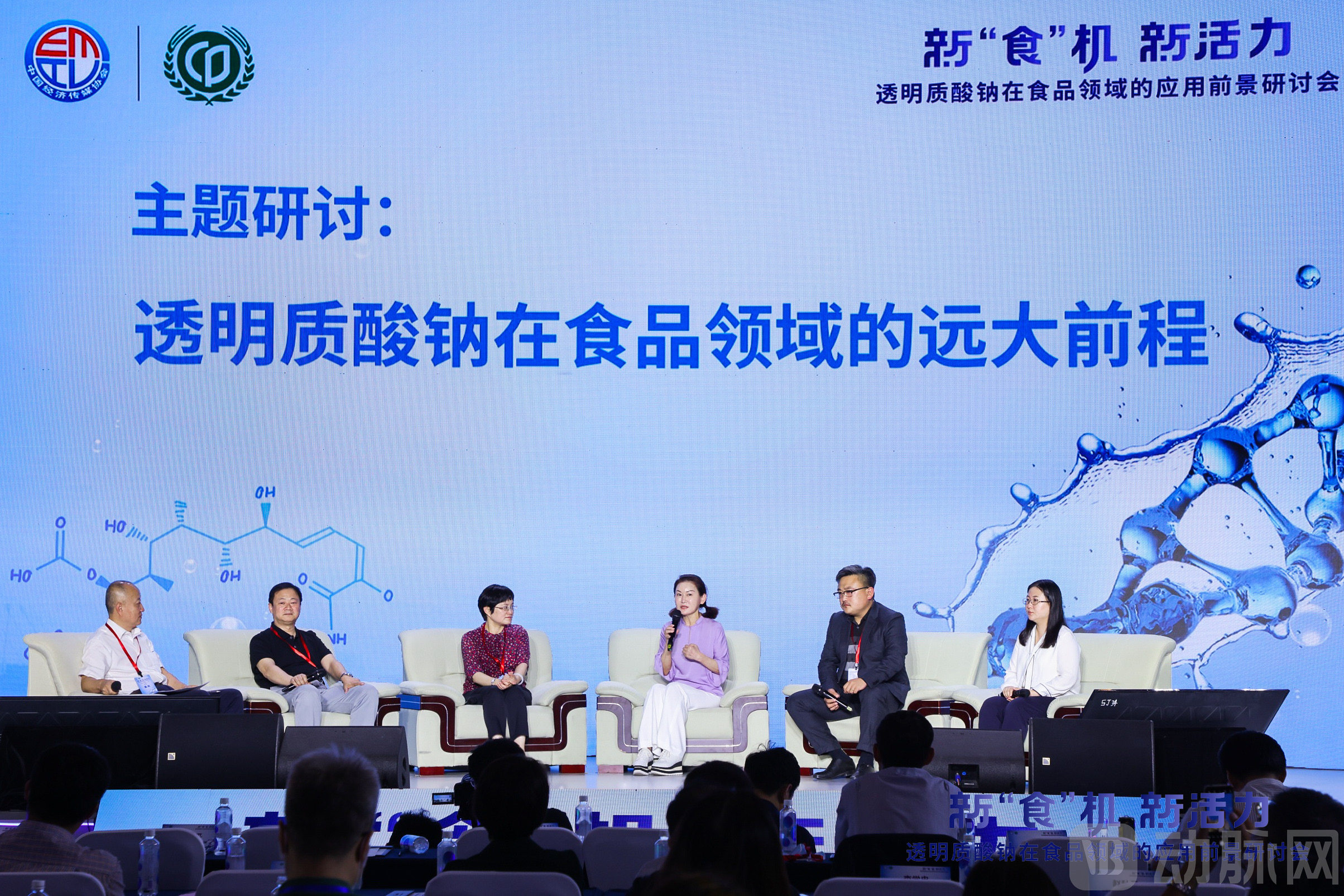
This conference delved into industry ecosystem topics such as research on the applications of sodium hyaluronate in the broader health sector, the development and application of sodium hyaluronate as a novel food ingredient, the assessment of sodium hyaluronate as a novel food ingredient, and the establishment of an effective quality control and testing system for novel food ingredients. Furthermore, participants discussed industry development prospects from multiple perspectives, including how novel food ingredients drive innovation and upgrading in the food industry, the significant potential of novel food ingredients to boost the development of specialized foods, scientific communication regarding hyaluronic acid, and the nutritional and health benefits of hyaluronic acid. The discussion also examined the application prospects of sodium hyaluronate in China’s food sector from the viewpoint of overseas markets.
Sodium hyaluronate has been officially approved as a novel food ingredient in China, presenting both opportunities and challenges for the industry. How to fully leverage China’s existing advantages as the world’s largest producer and distributor of hyaluronic acid raw materials, and to scientifically, safely, and healthily promote the robust development of China’s edible sodium hyaluronate industry, is a shared imperative for regulatory bodies, enterprises, and practitioners across the sector. It is also a matter of significant concern to the general public in their pursuit of a healthy and high-quality life.
Introduction to the China National Food Industry Association
China National Food Industry Association, abbreviated as CNFIA, is a self-regulatory industry management organization for the national food industry, established on October 29, 1981, with the approval of the State Council. Its main functions and tasks are summarized as: overall planning, coordination, guidance, and service. Over the years, CNFIA has maintained close contact with food industry enterprises and has made significant and effective contributions to promoting the sustained, stable, and coordinated development of China's food industry.
The highest authority of the China National Food Industry Association is the Member Representative Congress, with its Council serving as the daily executive body. On July 30, 2019, the Seventh National Member Representative Congress of the China National Food Industry Association elected the 7th Council of the Association.
Introduction to the China Economic Media Association
In 2017, with the approval of five ministries and commissions including the Publicity Department of the Communist Party of China and the Ministry of Civil Affairs, the China Economic Newspaper and Periodical Association was renamed the China Economic Media Association. Its membership structure has transitioned from being dominated by traditional newspapers and periodicals toward integrated media development. Thus, this “home for economic media,” which has grown alongside China’s economic journalism industry, has embarked on a new journey of inheritance and development—from the China Economic Information Newspaper and Periodical Association to the China Economic Newspaper and Periodical Association, and finally to the China Economic Media Association—serving as a bridge and link connecting the government, enterprises, and media outlets.
In November 1987, with the consent of the Publicity Department of the Central Committee of the Communist Party of China and the approval of the General Administration of Press and Publication, the China Economic Information Newspapers and Periodicals Association was established in Beijing. Feng Jixin, former First Secretary of the Gansu Provincial Committee of the Communist Party of China, member of the Central Advisory Commission, and advisor to the State Planning Commission, served as the first president. In the same year, the Association held the first National Selection of Outstanding Articles in Economic Information Newspapers and Periodicals, which is the predecessor of the China Economic News Awards that continue to this day.
In December 2005, the China Economic Information Newspapers and Periodicals Association was renamed the China Economic Newspapers and Periodicals Association.
In August 2017, following consultations with the Publicity Department of the CPC Central Committee, the State Administration of Press, Publication, Radio, Film and Television, the Cyberspace Administration of China, and the State-owned Assets Supervision and Administration Commission, the Ministry of Civil Affairs approved the renaming of the China Economic Newspapers Association to the China Economic Media Association.
The China Economic Media Association is a national, industry-specific social organization formed voluntarily by newspapers, radio, television, online platforms, new media, and other related institutions, media enterprises, and professionals engaged in the dissemination and provision of economic news and information in China. It is a non-profit social organization. The registration and management authority is the Ministry of Civil Affairs, and the party-building leadership authority is the Party Committee of the State-owned Assets Supervision and Administration Commission of the State Council. The “China Economic News (Competition) and Economic News Figures Selection,” hosted annually by the Association, is a nationally retained evaluation, compliance, and commendation project approved by the central government. It is also the only economic news award among the 11 national journalism awards announced by the All-China Journalists Association.
In April 2018, the China Economic Media Association underwent its leadership transition. A cohort of highly influential mainstream media outlets, including Economic Daily, joined the association, with representatives from emerging media constituting 20% of the council members. As a social organization established in accordance with the law, operating autonomously, committed to service-oriented principles, governed by standardized practices, and adhering to self-discipline, the Association’s 300 member units are guided by Xi Jinping Thought on Socialism with Chinese Characteristics for a New Era. With the mission of promoting high-quality economic development and fostering innovation in economic media endeavors, the Association is dedicated to advancing the deep integration of media platforms, strengthening economic journalists’ “footwork, insight, intellect, and writing prowess,” and enhancing the dissemination power, guidance capability, influence, and credibility of economic public opinion. It strives to provide professional services that continuously help fulfill the people’s aspirations for a better life.
About Bloomage Biotech
Bloomage Biotech (688363) is a renowned biotechnology and bioactive materials company, primarily focusing on functional sugars and amino acid substances that contribute to human health. It is committed to bringing humanity new life experiences characterized by health, beauty, and happiness.
The Company is an integrated platform enterprise covering the entire hyaluronic acid industry chain, encompassing research and development, production, and sales, with a leading position in microbial fermentation technology for hyaluronic acid production. Leveraging its two core technological platforms—microbial fermentation and cross-linking—the Company has established a comprehensive business system spanning bioactive materials from raw materials to medical end-products, functional skincare products, and functional foods. It serves manufacturing enterprises, medical institutions, and end-users worldwide in the pharmaceutical, cosmetics, and food industries.
Bloomage Biotechnology has always firmly believed that a company’s vitality stems from its continuous innovation and sustained profitability. By establishing a core position across the industrial chain, supply chain, and value chain, the company ensures the realization of its medium- to long-term strategic goals. Leveraging its two core technology platforms—microbial fermentation and cross-linking—and relying on its technological and product strengths, Bloomage Biotechnology is committed to becoming a setter and leader of industry standards. By capitalizing on its market presence and brand power, it aims to serve as a key link controlling intermediate segments within the supply chain. Furthermore, by integrating its technological, product, and brand strengths to build corporate competitiveness, the company strives to become the central hub for optimized resource allocation along the value chain.
Technology and innovation are the guarantees for Bloomage Biotech’s healthy development and serve as new drivers for the company’s rapid growth. Over the past two decades, Bloomage Biotech has adhered to building brand strength through technological prowess, actively enhancing its capabilities in scientific and technological innovation. On November 6, 2019, Bloomage Biotech successfully listed on the STAR Market, ushering in a new chapter of innovative development.