

Shukun Unveils 'Digital Human' at World AI Conference, Paving the Way for AI Commercialization in Healthcare

SHUKUN
Provider of Intelligent Products and Innovative Solutions
Since the advent of medical artificial intelligence, Chinese researchers have been accelerating their explorations in the field of medicine.
Initially, algorithm specialists began with pulmonary nodules, which offer the most abundant data, developing programs capable of extracting pixel-level shadows from CT images. Automated nodule detection thus became their first achievement.
Moving beyond the narrow scope of computer vision, a cohort of medical AI companies has begun to address specific clinical pain points by grounding their approaches in medical logic, thereby integrating artificial intelligence to deliver effective solutions. Taking SHUKUN as an example, this AI imaging company entered the market by focusing on coronary computed tomography angiography (CTA), developing an intelligent CTA solution. This solution seamlessly integrates into existing hospital CTA workflows, reducing examination time from 40 minutes to just 5 minutes.
Following the widespread adoption of CTA in thousands of hospitals, SHUKUN further deepened its research. On one hand, SHUKUN collaborated with authoritative institutions such as Beijing Friendship Hospital, Beijing Anzhen Hospital, and the Eastern Theater General Hospital to establish multiple nationwide multi-center CT-FFR networks. On the other hand, leveraging its original innovations and leadership advantages, SHUKUN expanded into head and neck CTA, enabling multi-task workflows and ultimately achieving a one-stop solution for stroke management, thereby advancing medical imaging into the AI 3.0 era. In 2021, SHUKUN extended its intelligent imaging capabilities to the highly complex field of hepatic lesion MRI, providing comprehensive auxiliary analysis focused on the liver.
Due to its inherent complexity, the liver is susceptible to a variety of complex pathologies, which necessitates that artificial intelligence learn the MR characteristics of diverse lesions. Constructing such an AI system is highly challenging; however, these current challenges constitute future competitive barriers for enterprises. Today, SHUKUN has achieved intelligent automation in the realm of complex multi-task and multi-workflow scenarios. A single examination can automatically detect lesions, perform lesion analysis, and generate reports. This signifies that medical imaging has entered the AI 4.0 era, characterized by cross-modality integration, complex tasks, and composite workflows.
As AI continues to iterate and has reached a certain level of maturity, it is now capable of making comprehensive assessments of various types of medical images. Building on this foundation, SHUKUN has begun to explore new concepts. At the 2021 World Artificial Intelligence Conference, Mao Xinsheng, Chairman of SHUKUN, unveiled its latest achievement under the name “Digital Human.”
"Digital Human" is SHUKUN Technology's platform-oriented vision for AI in medical imaging. In previous explorations, Mao Xinsheng found that coronary CTA, one-stop stroke solutions, and liver MR all achieved breakthroughs in specific scenarios. The next generation of artificial intelligence must break through the limitations of single departments and single modalities, starting from patients' physiological functions and providing more precise and convenient smart medical services from a holistic perspective.
Using this as an entry point, SHUKUN has integrated its digital products for the heart, brain, chest, abdomen, and musculoskeletal system—namely “Digital Heart,” “Digital Brain,” “Digital Chest,” “Digital Abdomen,” and “Digital Musculoskeletal”—to establish the “infrastructure” of the “Digital Human.”
To date, SHUKUN’s Digital Human platform leverages multimodal imaging engines—including non-contrast cardiac CT with CT angiography, non-contrast chest CT, non-contrast and contrast-enhanced head and neck CT, cerebral CT perfusion imaging, and non-contrast and contrast-enhanced liver MRI—to deliver AI-powered imaging solutions for multiple anatomical regions, such as the cardiovascular system, cerebrovascular system, lungs, liver, and musculoskeletal system. These capabilities are applicable to a wide range of clinical scenarios, including coronary artery disease, cerebral infarction, tumors, trauma, chest pain centers, stroke centers, and specialized cardiology departments, thereby forming a comprehensive, hospital-wide intelligent imaging solution.
Through this integration, the solution combines morphological and functional approaches to detect diseases, generate disease risk predictions, and leverage structured databases for anatomy, physiology, and pathology to establish a multidisciplinary diagnosis and treatment model supported by an imaging platform. In practical application, patients need only undergo a single scan of a specific organ to screen for a wide range of common conditions, effectively reducing diagnostic and screening costs and utilizing AI to achieve true “preventive care.”
Currently, SHUKUN’s research achievements in Digital Heart, Digital Brain, and Digital Chest have been published in top-tier scientific journals, with imaging factors exceeding 12. SHUKUN’s contribution to hospital-based research capabilities has gained recognition from the academic community. The company is also actively leveraging its AI capabilities to explore medical research, enabling physicians to uncover more valuable insights from hospital data through AI empowerment.
From AI 1.0 to AI 4.0, we can clearly observe the evolution of AI capabilities; more importantly, however, lies the significance behind this progression.
Since patients typically cannot anticipate their disease symptoms prior to examination, and in some cases, tissues have already undergone pathological changes without the patient experiencing any symptoms, AI during the AI 1.0 era could only perform a “yes or no” judgment on the presence of pulmonary nodules, based on the presupposition that such nodules exist.
In contrast, AI 4.0 solutions, represented by SHUKUN’s Digital Abdomen, can perform comprehensive screening of abdominal tissues. By way of analogy, if routine examinations suggest potential liver issues, analyzing MR images with Digital Abdomen enables the AI to simultaneously help determine whether the patient suffers from common hepatic conditions such as liver cysts, hemangiomas, focal nodular hyperplasia (FNH), liver cancer, cirrhosis, fatty liver disease, or iron overload. The key logical distinction lies in the fact that the AI does not require pre-specified diagnostic hypotheses; instead, it can assist in evaluating multiple potential diagnoses based on a single imaging study, thereby offering more comprehensive clinical value.
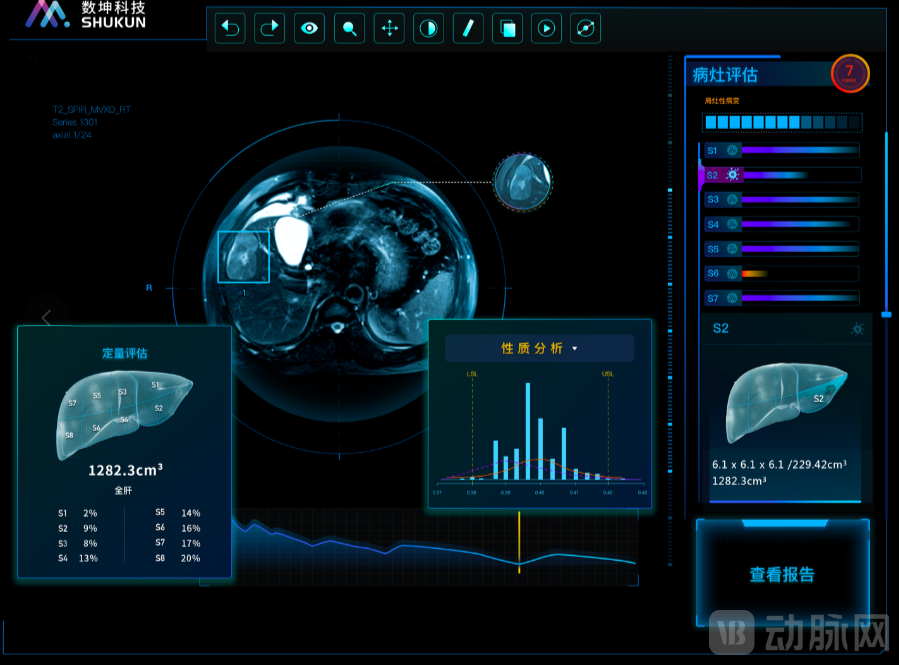
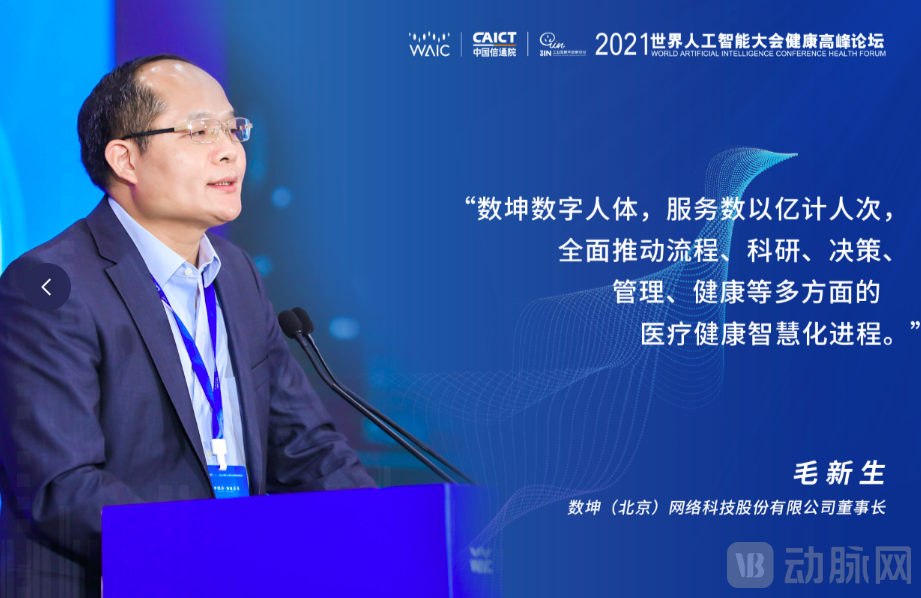
Of course, achieving cross-modal processing for complex tasks requires a fundamental technological leap. In his speech at the 2021 WAIC Health Summit Forum, Mao Xinsheng stated, “The AI 1.0 era was typically characterized by single-modal, single-task AI capable of processing fewer than 200 images, with deep learning models comprising approximately 300 million neurons. However, as targets become increasingly complex, the required artificial intelligence architectures continue to evolve. Taking SHUKUN’s MR Liver algorithm as an example, it features over 4 billion neurons and can process more than 4,000 images in a single pass. Building such capability is extremely challenging and has become one of SHUKUN’s core competitive barriers.”
Mao Xinsheng further stated, “By leveraging AI to connect CT and MR equipment, systems, and personnel, we ultimately generate standardized, automated, and intelligent imaging data. This facilitates the transition toward disease- and patient-centric smart hospitals, achieving a synergistic effect where ‘doctors + AI’ outperform doctors alone, and ‘hospitals + AI’ surpass traditional hospitals. This has established a new workflow for physicians, spanning from target detection and automated processes to multidimensional imaging and precision diagnosis and treatment. This represents SHUKUN’s next strategic direction, although its realization is by no means simple. In the coming years, we will continue to explore the ‘Digital Human’ initiative, expanding digital coverage to more anatomical regions.”
SHUKUN has consistently driven industry progress through original technological innovation. From redefining intelligent workflows in cardiology with "Scan2Report," to pioneering multi-departmental application scenarios for stroke centers in neurology with "Scan2Decision," and establishing a new model of AI-imaging-guided clinical treatment in abdominal imaging with "Scan2Therapy," SHUKUN has continuously refined its product portfolio, ultimately leading the era of integrated imaging AI with its Digital Human solution. Over the years, the advantages derived from these technological explorations have accumulated, enabling SHUKUN to steadily widen its competitive lead in the AI sector.
SHUKUN’s commercialization has accelerated significantly. On one hand, it collaborates with ecosystem partners to leverage medical equipment already deployed in hospitals, thereby expanding the reach of its products among physicians. On the other hand, it can tap into market opportunities through its proprietary “Digital Human” platform, creating new value by integrating multimodal imaging data.
As the number of Class III medical device certifications for AI healthcare products continues to grow and pricing catalogs are gradually approved, the industry’s willingness to pay has become clearly established. At this stage, localized deployment, per-use charging, and platform-based models may all be viable options for SHUKUN. With strong capabilities in technology, product development, and marketing, SHUKUN is leading the commercialization process of the industry.