

GE Healthcare Launches Edison Magic Box: A Unified AI Platform for Integrated Medical Imaging Solutions
To address the significant challenges posed by the current strain between supply and demand in medical resources, imaging artificial intelligence applications based on deep convolutional network technology and big data learning have rapidly developed, helping hospitals improve diagnostic accuracy and efficiency.
However, among end users—specifically, hospital radiology departments—the genuine adoption and implementation of AI remain fraught with challenges: compact reading rooms are cluttered with various AI workstations, forcing physicians to constantly switch between workstations, hardware, and user interfaces to complete their tasks.
How to efficiently conduct one-time procurement, avoid redundant installation of multiple software and hardware components during implementation, and maintain the capability for application upgrades in future use are real-world pain points.
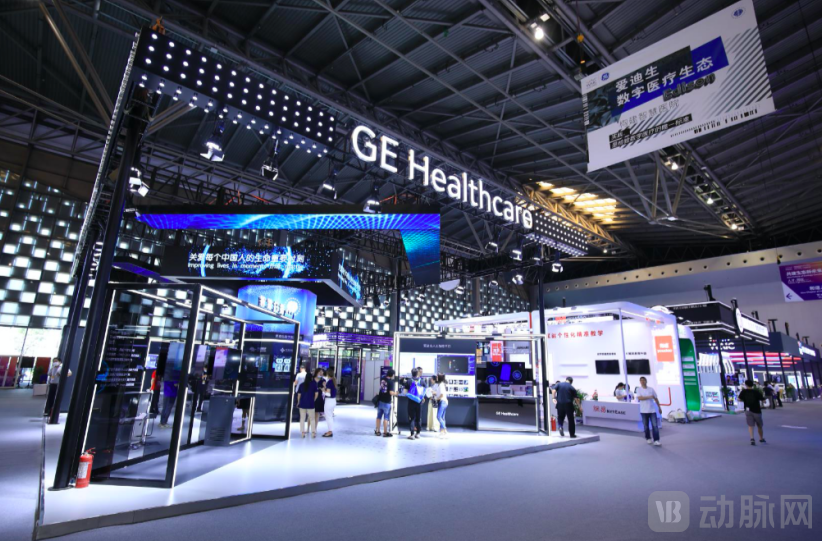
At the 2021 World Artificial Intelligence Conference, GE Healthcare may have provided an effective solution to the aforementioned pain points—the Edison Magic Box.
In simple terms, the Edison Magic Box can be regarded as an integrated imaging AI platform. It aggregates leading domestic artificial intelligence applications and delivers multi-disease AI solutions to hospitals in a bundled manner. With unified interfaces and user interfaces, the “Edison Magic Box” serves as a key to unlocking AI applications—enabling centralized lifecycle management and access for applications either on-premises or in the cloud, while ensuring continuous updates and upgrades. This effectively avoids resource waste caused by fragmented, standalone deployments and redundant development. Currently, the platform offers three key features:
One-time deployment enables AI applications across multiple radiology domains: The "Edison Magic Box" offers a selection of leading artificial intelligence applications in areas such as pulmonary nodules, fractures, cardiac imaging, neurology, breast imaging, and liver imaging, along with GE Healthcare’s proven AWS post-processing software. All can be implemented through a single platform procurement and installation, eliminating redundant hardware and software investments. Deployment can be either on-premise within the department or cloud-based, accessible via web login.
A workflow integrating AI software from multiple vendors: During use, the platform leverages a unified Edison AI pop-up tool to intelligently recognize the patient ID in the current report and provide links to processing results. Physicians can conveniently access the result pages of multiple applications with a single click.
An interface opens up an ecosystem: The “Edison Magic Box” provides an online marketplace where customers can access introductions to multi-domain applications and submit purchase intents, with all applications available for centralized procurement through the Edison platform. Applications within this marketplace are continuously added, updated, and expanded, all without requiring changes to existing workflows. In the future, the Edison AI platform will further extend its services to other departments.
Since 2019, GE Healthcare has partnered with multiple Chinese AI companies to jointly develop imaging-based computer-aided diagnosis applications for various diseases. The launch of the Edison AI platform establishes a comprehensive ecosystem foundation, incorporating functionalities such as image transmission, storage, display, algorithm integration, resource orchestration, and data security. This further streamlines development processes and reduces costs for AI companies, thereby accelerating the development of AI algorithms.
Meanwhile, with the continuous innovation of GE’s imaging equipment, partners can acquire a sufficient volume of high-quality images in a shorter timeframe while benefiting from richer imaging information. This lays a solid foundation for the development of AI applications in post-imaging analysis and the implementation of precision medicine.
Building a platform is the first step in constructing an ecosystem, followed by activating it through applications. In this regard, Dai Ying, Vice President of GE Healthcare China and Chief Innovation Officer, stated, “We believe that practical application is the sole criterion for validating digital healthcare. GE Healthcare aims to create an open, integrated, empowering, and service-driven ecosystem paradigm.” Currently, partners in the Edison Ecosystem include AI developers specializing in disease imaging algorithms—Yizhun Smart, Shukun Technology, Qianglian Zhichuang, Ande Yizhi, Deepwise Medical, Infervision, and Keya Medical; cloud service provider Tencent Cloud; industry organizations such as the Yangtze River Delta Smart Healthcare Development Alliance, which provides development and application standards; and Sinovation Ventures, which established an Artificial Intelligence Engineering Institute and pioneered the “technology investment + artificial intelligence” model. All the aforementioned AI developers have achieved integration with GE Healthcare’s advanced imaging equipment, including CT, MR, DSA, and X-ray systems, on the Edison platform, forming multi-disease solutions such as precise lung screening, precise breast cancer screening, precise diagnosis and treatment of stroke, precise coronary artery diagnosis, precise liver imaging, and intelligent fracture analysis.
Taking the collaboration with Shukun Technology as an example, both parties jointly developed the first “Full-Cycle AI Solution for Liver” based on MRI images, breakthroughly expanding the application of AI technology in the field of magnetic resonance to the image interpretation and assisted diagnosis stages. Leveraging the source high-definition data generated by GE’s MRI equipment, combined with the precise data on scanning speed and image reconstruction provided by GE Healthcare’s Intelligent AI Platform for MRI, and the “Full-Cycle Liver MRI AI Solution” co-developed with Shukun, GE recently launched the new “IntelliAI+” platform. This platform achieves a tripartite integration of AI across the MRI imaging chain, imaging platform, and clinical applications, further unlocking the potential of AI in magnetic resonance technology.
During the development process, the collaborating parties integrated medical data into the “Edison Magic Box,” leveraging it more efficiently within the development workflow. Subsequently, the developed AI applications were connected to medical devices, enabling real-time upgrades and transforming intelligent medical equipment into true smart terminals. These terminals feature automatic recognition of multi-sequence non-contrast and multiphase contrast-enhanced liver MRI scans, automated lesion detection, automatic identification of imaging signs, and ultimately, intelligent characterization of lesions. The volume of images processed by the AI engine has scaled dramatically, advancing from 200+ single sequences, to 250–700 single sequences, then leaping to 1,000–2,000 multi-sequences, and finally reaching 2,000–3,000 multi-parameter, multi-sequence datasets.
By connecting imaging equipment, systems, and people through the “Edison Magic Box” and AI, standardized, automated, and intelligent imaging data are generated, ultimately enabling disease- and patient-centered smart departments. This achieves a leap from “Scan to Report” to “Scan to Clinical,” establishing a workflow that progresses from target detection to automated processes and multi-dimensional imaging, and finally to precise diagnosis and treatment, thereby introducing a new way of working for smart departments. This AI application was first implemented at the National Clinical Research Center for Digestive Diseases / Beijing Friendship Hospital, Capital Medical University.
In terms of research support, the wide variety of liver diseases, the rich information contained in MRI images, and the need to recognize more than 50 types of imaging signs contribute to the high complexity of liver MRI AI. Currently, a global review of published literature reveals that only a few studies have addressed liver MRI AI, and these have been limited to single-task applications. In contrast, the Edison liver MRI AI platform offers a comprehensive diagnostic solution, holding promise for breakthroughs in the intelligent MRI-based diagnosis of focal liver lesions.
The purpose of the collaboration with Yizhun Intelligent is to achieve mutual data benefits and empower grassroots healthcare. From the perspective of AI developers, success is determined 50% by data and 50% by algorithms; for algorithm teams, the greatest challenge lies in data quality rather than quantity. Therefore, following the establishment of this partnership, GE Healthcare’s tens of thousands of diverse end-user hardware devices provide Yizhun Intelligent’s algorithm team with high-quality imaging data. This enables Yizhun Intelligent to rapidly design, develop, manage, protect, and distribute advanced applications, services, and AI algorithms. Both the development of AI-assisted tools and the post-deployment performance of these tools can deliver accurate diagnostic capabilities. Furthermore, GE Healthcare’s robust localized service team safeguards Yizhun Intelligent’s technological innovation capabilities.
Furthermore, GE Healthcare provides more granular and targeted insights into clinical needs, while Yizhun Intelligence drives precise AI technological innovations based on equipment user requirements. This robust ecosystem, formed through bidirectional data acquisition and practical application, has to some extent facilitated the integration of AI products with hardware devices. As imaging technologies continue to advance, they not only deliver richer imaging information but also enable the rapid acquisition of sufficient high-quality data. This lays a solid foundation for the development and deployment of post-imaging AI applications, thereby accelerating the commercialization of AI products. Since March 2020, the AI-assisted diagnostic system developed through this partnership has completed lung cancer screening for 1.2 million cases.
During the 2021 World Artificial Intelligence Conference, GE Healthcare announced the signing of a strategic cooperation memorandum with several local software development enterprises—Yizhun Smart, Shukun Technology, Qianglian Zhichuang, Ande Yizhi, Deepwise Medical, Infervision, and Keya Medical—as well as with Sinovation Ventures, a leading technology-focused venture capital firm, and the Yangtze River Delta Smart Healthcare Development Alliance, which provides standardization guidance and quality control. This agreement aims to further expand the Edison Ecosystem. The platform-based ecosystem will not only drive the deep integration of AI into clinical practice and accelerate the development and commercialization of advanced algorithms, but also leverage cross-industry collaboration to build a digital healthcare infrastructure tailored to the needs of Chinese patients and physicians, thereby facilitating the large-scale adoption of precision medicine at the grassroots level.
GE Healthcare’s Edison Ecosystem Partner—Kai-Fu Lee, Chairman and CEO of Sinovation Ventures and Dean of Sinovation Ventures’ AI Institute, stated: “Now is the optimal time for the development of ‘AI + Healthcare.’ The integration of vast amounts of long-accumulated data with AI generates valuable algorithms that assist physicians in diagnosis and treatment across disease early warning, diagnosis, therapy, monitoring, and long-term management. However, the challenge in transitioning AI from technology to practical application lies in the incompleteness of existing data and the unsuitability of current implementation scenarios for both clinical and commercial use. The ‘Edison Magic Box’ initiative stems from global healthcare leaders like GE Healthcare, which has installed over 300,000 devices in the Chinese market. Such resources enable more real-world application scenarios and generate larger volumes of deep learning data. Meanwhile, GE’s robust commercialization capabilities will provide highly effective support to medical AI companies.”
However, from the current perspective, the challenges facing Edison Box are not technical but rather pertain to partnership issues. To date, only 15 AI products in China have obtained Class III certification from the National Medical Products Administration (NMPA). The industry has yet to establish a comprehensive competitiveness model, and further market penetration is required across the entire AI sector to reach this stage.