

Medical AI Finds Its Path Forward: 15 NMPA Class III Approvals Within 18 Months Highlighted at WAIC 2021
From July 8 to July 10, the 2021 World Artificial Intelligence Conference (WAIC) was held as scheduled along the Huangpu River. Top AI scientists, entrepreneurs, and investors from around the world flocked to the event, embodying this year’s WAIC theme: “Intelligent Connectivity of the World, Collective Wisdom for a Better City.”
Compared with previous years’ WAIC, this year’s conference was dominated by medical AI companies specializing in imaging AI. VCBeat observed that the number of exhibitors along Shibo Avenue was relatively limited, with displays primarily focused on next-generation AI innovative technologies and business models. More companies chose to engage in intellectual exchanges at the West Bund Health Summit Forum.
Amidst the clash of ideas, the future trajectory of medical artificial intelligence is becoming increasingly clear. Within this context, regulatory review and approval, commercialization, and technological pathways remain the focal points of discussion at the conference. Nevertheless, even long-debated issues can yield new insights, and this is precisely where the value of the World Artificial Intelligence Conference (WAIC) lies.
The Long Road for Medical AI: Regulatory Review and Approval as an Inescapable Hurdle for PioneersTwo key stakeholders play pivotal roles in this process: the Center for Medical Device Evaluation, responsible for formulating laws and regulations, and medical AI developers, who are pioneering approval pathways from scratch. The former must establish a safe, reasonable, fair, and precise approach to ensuring the effectiveness of medical AI, while the latter must cooperate by submitting requisite data and carefully planning clinical trials. Only through their joint efforts can this significant challenge be gradually overcome.
On July 8, the first day of the World Artificial Intelligence Conference (WAIC), the National Medical Products Administration (NMPA) released on its official website the “Notice of the National Medical Products Administration on Issuing the Guiding Principles for Classification and Determination of AI-Based Medical Software Products (No. 47 of 2021),” formally issuing the “Guiding Principles for Classification and Determination of AI-Based Medical Software Products” (hereinafter referred to as the “Guiding Principles”), which clarified the classification and determination criteria for AI-based medical software products. At the Health Summit Forum of the World Artificial Intelligence Conference held the following day, Guo Zhaojun, Deputy Director of Division II of the Center for Medical Device Evaluation under the National Medical Products Administration, addressed the definition of medical AI products and key points in product approval during his speech. VCBeat has summarized his remarks as follows.
Part I: Definition and Scope. Medical device software is typically categorized into standalone software and software components. Standalone software refers to the 21 types of medical software listed in the "Medical Device Classification Catalog," while software components are software elements that form part of a medical device. Artificial intelligence (AI) may exist either as standalone software or as a software component.
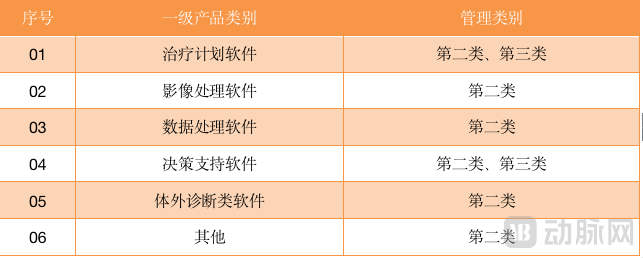
Software Management Classification
So, what kind of AI software can become the object of review by the Center for Medical Device Evaluation? Guo Zhaojun stated that the attributes of AI products depend on the nature of medical device data.
“Medical device data refers to ‘objective data generated by medical devices for medical purposes; under special circumstances, it may include objective data generated by general-purpose equipment for medical purposes.’ Determining whether an AI product qualifies as a medical device primarily involves three criteria: first, whether the generated data originates from medical devices; second, whether the core function of the device involves processing, investigating, measuring, or analyzing medical device data; and finally, whether the product itself is intended for medical use.”
“For example, some AI products process not medical device data but rather patient chief complaints or the conclusions of laboratory test reports. Although these products are used for medical purposes, they are not regulated as medical devices.”
So, what category does an AI algorithm fall into when it is part of a product regulated as a medical device? This depends on whether the algorithm’s maturity for medical use is high or low.
For AI-based medical software with low maturity in healthcare applications (i.e., not yet marketed or with insufficiently demonstrated safety and effectiveness), if used for decision support—such as providing clinical diagnosis and treatment recommendations including lesion feature recognition, determination of lesion nature, medication guidance, and formulation of treatment plans—it shall be regulated as a Class III medical device. If used for non-decision-support purposes—such as data processing and measurement to provide clinical reference information—it shall be regulated as a Class II medical device.
Clear determination of management categories helps AI companies choose the approval category for their products. For instance, if some companies' AI software does not fully meet the requirements for Class III medical devices, they can first apply for a Class II certificate to ensure smooth commercialization, and then apply for a Class III certificate after completing processes such as clinical trials. Through this compromise approach, AI companies can begin commercial deployment somewhat earlier.
Part II: Regulation of AI Products. Effective regulation is a crucial safeguard for the robust development of the medical artificial intelligence market.
Guo Zhaojun stated, “Medical devices are a special category of products subject to a unique regulatory framework. Internationally, regulation is typically divided into pre-market and post-market phases, and China’s regulatory mechanism adopts the same approach.”
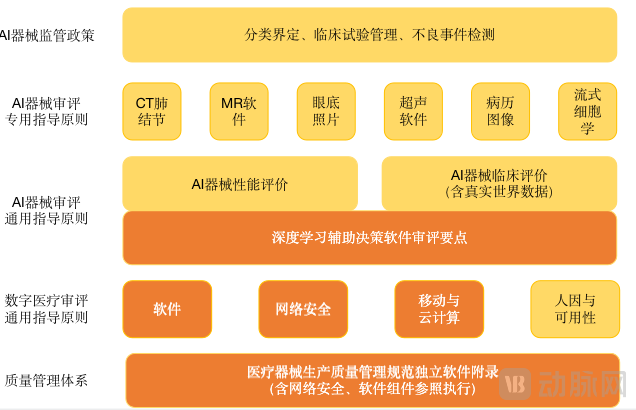
Specific Regulatory Requirements for the Premarket Approval of AI Medical Devices
“Regarding the regulation of medical devices, we have consistently emphasized lifecycle regulation. The full lifecycle spans from the establishment of a product’s basic concept to the point where the product is no longer maintained or used. Within this lifecycle regulatory framework, we must integrate quality management systems and conduct risk management throughout the entire process.” For emerging technologies such as artificial intelligence, stringent regulation will effectively safeguard patient interests and thereby mitigate risks associated with these products.
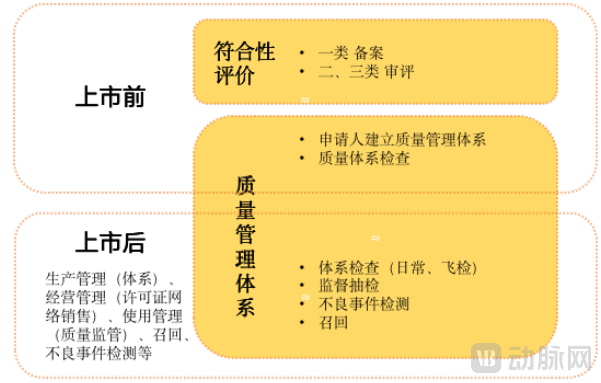
Full Lifecycle Regulation
Through the joint efforts of the National Medical Products Administration (NMPA) and enterprises, 15 AI products have successively received regulatory approval for artificial intelligence medical devices within 18 months after Keya Medical’s CT-FFR product, “DeepVessel FFR,” obtained NMPA approval in January 2020. Shukun Technology, Ande Yizhi, Deepwise Healthcare, Infervision, Huiyi Huiying, United Imaging Intelligence, Lepu Medical, Airdoc, Yitu Healthcare, and Guiji Intelligence have all had their products approved.
Furthermore, as of June 2021, a total of 10 standalone AI software products had entered the innovation channel, including one CT-FFR solution, one for CT pulmonary nodule detection, one for CTA, three for fundus examination (two for diabetic retinopathy and one for glaucoma), and three for digestive endoscopy.
The Center for Medical Device Evaluation has cumulatively accepted a total of 25 standalone software applications, including 7 for CT-based pneumonia diagnosis, 5 for CT pulmonary nodule detection, 3 for CTA analysis, 2 for CT fracture detection, and 5 for fundus imaging. Additionally, more than 20 software components have been accepted, primarily involving automatic CT positioning, MR imaging denoising, ultrasound workflow optimization, and real-time lesion recognition in digestive endoscopy.
In terms of cumulative approvals, 12 standalone software products have been approved, including those for ECG, CT-FFR, CT pneumonia, CT pulmonary nodules, CTA, diabetic retinopathy fundus imaging, and CT bone analysis; several software components have also been approved, primarily for CT automatic localization, MR imaging denoising, and ultrasound workflow optimization.
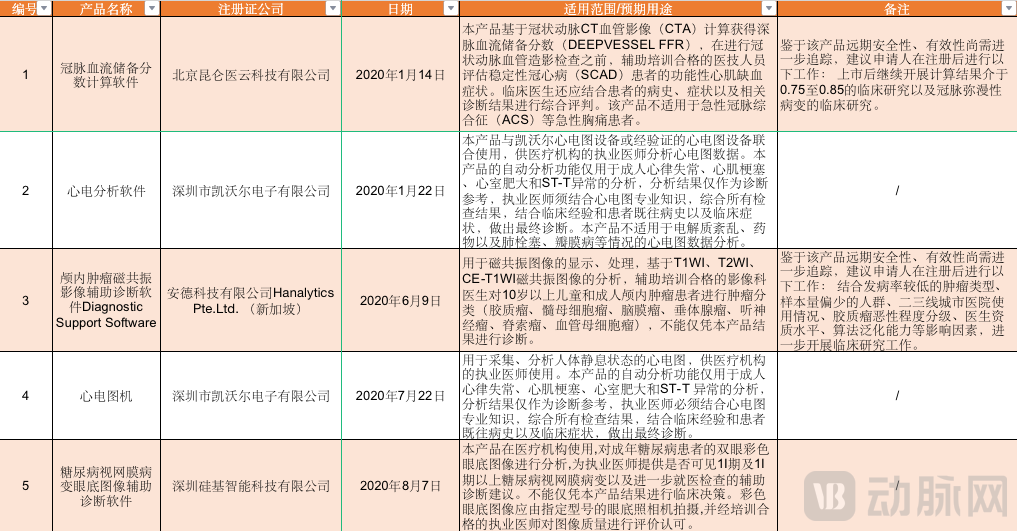
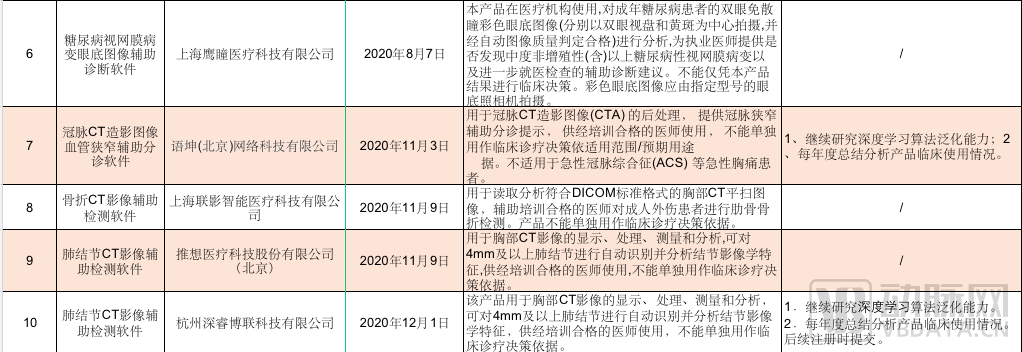
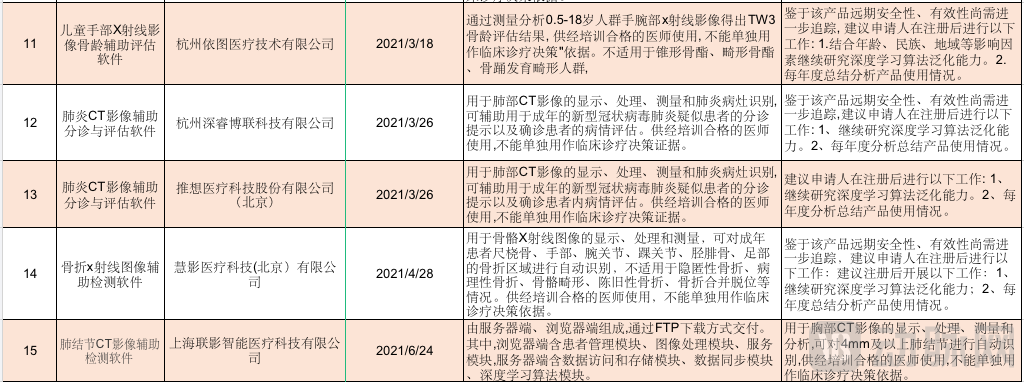
Status of Class III AI Medical Device Approvals
In contrast to the bustling health summits, the 2021 WAIC exhibition hall presented a distinctive scene. Upon entering the pavilion, exhibitors were predominantly focused on industrial AI, while the medical sector appeared somewhat deserted.
GE Healthcare, AstraZeneca, and Merck occupied the largest exhibition booths at the venue. AstraZeneca’s exhibit featured Shenzhi Technology’s handheld smart ultrasound system, Jinse Medical’s MR mixed-reality clinical solutions, and Xin’an Medical’s Tricog big-data ECG diagnostics. At the center of GE Healthcare’s booth stood an octagonal pillar showcasing eight companies: Shukun Technology, Keya Medical, Ande Yizhi, Deepwise Medical, Infervision, Qianglian Zhichuang, Kebao Medical, and Yizhun Intelligent.
All eight companies showcased by GE Healthcare are partners of its imaging AI integration platform, the “Edison Cube.” GE Healthcare’s physician users can access the Edison Cube during diagnosis to directly obtain AI services provided by its partners, a model reminiscent of an “App Store.”
Taking the collaboration with Shukun Technology as an example, the two parties jointly developed the first “AI Solution for the Full Lifecycle of Liver Care” based on MRI images, extending the application of AI technology in the field of magnetic resonance imaging to image interpretation and the assisted diagnosis cycle.
During the development process, both collaborating parties integrated medical data into the Edison Box, leveraging it more efficiently within the development workflow. Subsequently, the developed AI applications were connected to medical devices, enabling real-time upgrades and transforming these devices into true intelligent terminals. This integration facilitates automatic recognition of multi-sequence non-contrast and multi-phase contrast-enhanced liver MRI scans, automated lesion detection, automatic identification of imaging features, and ultimately, intelligent characterization of lesions.
During this process, the order of magnitude of images processed by the AI engine escalated from over 200 single sequences, to 250–700 single sequences, then surged to over 1,000–2,000 multi-sequences, and ultimately reached over 2,000–3,000 multi-parameter, multi-sequence datasets.
The partnership with Yizhun AI aims to achieve mutual data benefits and empower primary healthcare institutions. From the perspective of artificial intelligence developers, success is determined 50% by data and 50% by algorithms; for algorithm teams, the greatest challenge lies in data quality rather than quantity. Through this collaboration, GE Healthcare’s tens of thousands of diverse terminal hardware devices provide Yizhun AI’s algorithm team with high-quality imaging data. This enables Yizhun AI to rapidly design, develop, manage, protect, and distribute advanced applications, services, and AI algorithms, ensuring accurate diagnostic performance both during the development of AI-assisted tools and in their post-deployment use.
Furthermore, ecosystem builders can provide more granular and targeted clinical requirements, enabling Yizhun Intelligence to carry out precise AI technological innovations based on equipment users’ needs. This robust ecosystem, formed through bidirectional data acquisition and practical application, has to some extent facilitated the integration of AI products with hardware devices. From March 2020 to the present, the AI-assisted diagnostic system developed through this collaboration has completed lung cancer screening for 1.2 million cases.
GE Healthcare is not the first medical imaging company to build an AI ecosystem; in fact, other imaging equipment manufacturers such as Siemens, Philips, and Neusoft Medical are also establishing their own platforms, striving to gain a competitive edge in the AI ecosystem.
For physicians, the ecosystem model is indeed highly attractive. As the medical artificial intelligence industry matures and AI solutions deployed in hospitals become increasingly competitive, it is impractical to integrate an excessive number of medical AI workstations into a single PACS system. Therefore, hospitals require a platform-based tool to consolidate and manage these AI applications.
To provide a concrete example, a radiologist may need to use two separate applications during image interpretation. While each application offers its own specific functionality, each requires its own dedicated client, which is inherently cumbersome. A radiology department director once complained that five different applications were simultaneously open on his reporting workstation, making switching between them extremely laborious.
Therefore, automation and customer experience are both critical for users. As a result, many ecosystem builders are attempting to streamline these complex workflows and enhance the intelligence of data recognition.
A conference attendee told VCBeat, “After analyzing a patient’s electronic medical record, the system automatically identifies which artificial intelligence (AI) models may be applicable and then lists the available AI modules within the system. In this way, physicians can access various AI tools through a single interface.”
Beyond convenience, the ecosystem model can also help hospitals reduce procurement and implementation costs to some extent, thereby enhancing the ease of deploying AI applications. After all, no hospital department wishes to see its facility cluttered with AI workstations; a demand-driven, on-demand access model clearly better aligns with physicians’ needs.
Currently, the biggest drawback of the ecosystem is that only a limited number of medical devices have obtained Class III device approval from the NMPA, resulting in insufficient competition among AI products from various companies. As more products gain regulatory clearance, AI ecosystems that are recognized by hospitals and possess extensive partner networks will achieve a competitive edge that others will find difficult to match.
However, even if the ecosystem model becomes the mainstream approach for AI commercialization in the future, it does not mean that startups will lose their independence or must rely solely on ecosystems to survive. In fact, startups such as Shukun Technology are building their own AI platforms and developing “cross-modal” imaging AI products. This indicates that AI will not depend on a single imaging device but will require the combined capabilities of multiple devices. Therefore, even if medical device companies can establish complete ecosystems, AI startups can still carve out a market niche by leveraging their analytical capabilities.
Reviewing the speeches at the WAIC Health Summit Forum, most participating companies were AI enterprises originating from radiology departments, focusing on conditions such as pulmonary nodules and pneumonia. However, whether it is Shukun Technology’s “Digital Human” or Ande Yizhi’s MR Brain, current developments in artificial intelligence are no longer confined to radiology. In fact, many AI solutions have become indispensable assistants in cardiology and thoracic surgery, expanding from standalone software to software components and extending from diagnostic imaging to surgical navigation.
In addition, two other companies brought their respective AI products to the exhibition hall. What makes them particularly notable is that it is difficult to find direct competitors for them in the current market.
Hangzhou Zhiwei Information Technology Co., Ltd. is a startup that has been deeply engaged in the AI field for five years. The company showcased a one-stop solution for cellular morphology at the conference, which can automatically digitize bone marrow smears, classify nucleated cells using artificial intelligence algorithms, and generate clinical reports for pathologist review. This system has been validated in 19 hospitals across China and the United States, leveraging 9 million cell images annotated by experienced pathologists, and has obtained both the CE mark and certification from Japan’s Pharmaceuticals and Medical Devices Agency (PMDA). In the future, this device can be expanded to cover the entire field of cytopathology.
Zhiyun Technology, a TCM AI enterprise, leverages image-based AI applications founded on deep convolutional neural networks and big data learning to help medical institutions improve diagnostic accuracy and efficiency. At the exhibition, Zhiyun Technology primarily showcased the application of its TCM Intelligent Mirror in TCM health scenarios.
The TCM Smart Mirror establishes effective feature parameters by precisely identifying and analyzing characteristics such as the color and luster of the user’s face and tongue. After collecting digital information from “inquiry,” “facial diagnosis,” and “tongue diagnosis,” the AI employs various methods—including cluster analysis, latent class analysis, neural networks, and multi-label learning—to conduct feature selection and weight analysis. This process builds diagnostic models for different health states, enabling targeted health assessments that categorize individuals into one of three states: healthy, sub-healthy, or potentially diseased. Based on the assessment results, the smart mirror generates personalized health plans that include TCM regimen adjustments, herbal prescription recommendations, and skincare product suggestions. By integrating artificial intelligence with the expertise of TCM specialists, the TCM Smart Mirror achieves comprehensive coverage from health monitoring to therapeutic regulation.
iFlytek, Lepu Medical, Fourier Intelligence, Chu Jingling, Senyi Intelligence, and Qiyi Medical also exhibited at the showcase. iFlytek released the White Paper on Innovative Applications of Intelligent Healthcare, while the other companies presented solutions including AI-ECG systems, AI-powered surgical robots, AI-driven endoscopic robots, AI-based informatics solutions, and AI-enabled comprehensive management solutions for chronic respiratory diseases. The emergence of these applications further demonstrates that AI has become an integral component of healthcare scenarios.
To date, it has become rare to see medical startups founded with AI as their core technology, while AI companies that have been deeply entrenched in the industry for several years have progressively advanced to Series C, D, and E funding rounds. In the first half of the year, Keya Medical and Airdoc even filed prospectuses, positioning themselves to potentially become among the first AI enterprises to enter the secondary market.
The current issue is that although the product maturity of AI has been widely recognized by a large number of doctors, there is still no clear answer regarding its core business model—it may take another year to move from exploring pricing structures to executing large-scale procurement.
In this light, the most significant change in medical AI compared to the same period last year lies in the deepening of products and the expansion of application scenarios. Rather than focusing on commercial monetization, building core technological capabilities may be more conducive to the long-term development of medical AI.
The road ahead is long and arduous; advancing medical AI requires concerted efforts from enterprises, hospitals, and regulatory authorities. We look forward to witnessing further progress in this industry at next year’s WAIC.