

Yang Yunxia of Sequoia China on Brain Science: Bridging Frontier Technology and Industrialization
From the science fiction of the 1970s, to the preliminary scientific validation in the 1980s and 1990s, and then to the technological explosion in the 21st century, humanity’s exploration and research into brain science have never ceased. Many romantic fantasies that seemed inconceivable or even heretical just a few decades ago have, in fact, become reality today.
On July 10, 2021, a forum on “Brain-Inspired Intelligence and the Integration of Brain and Machine Intelligence” was in full swing at the World Artificial Intelligence Conference (WAIC) held at the Shanghai Expo Center. Organized by the WAIC Organizing Committee and co-organized by the Institute of Science and Technology for Brain-inspired Intelligence at Fudan University, the event featured speakers and panelists who were nearly all leading experts in the fields of artificial intelligence, brain science, and deep learning. These included Michael Levitt, member of the U.S. National Academy of Sciences and the Royal Society (UK), and recipient of the 2013 Nobel Prize in Chemistry; Dacheng Tao, Dean of JD Explore Academy and fellow of the Australian Academy of Science and the Royal Society of New South Wales; Shimon Ullman, Director of the AI Center at the Weizmann Institute of Science and member of the American Academy of Arts and Sciences; Timothy Denison, Professor of Engineering Science and Professor of Clinical Neuroscience at the University of Oxford; Hong Bo, Deputy Director of the Institute for Artificial Intelligence at Tsinghua University; and Valerie Voon, Senior Investigator at the Medical Research Council of the University of Cambridge, among others.
In addition, Yang Yunxia, Partner at Sequoia Capital China, also participated in the roundtable discussion.As frontier hotspots in today’s international science and technology, brain science and artificial intelligence have seen the rapid rise of brain-inspired intelligent algorithms developed by integrating principles of neurobiology. These advancements have clearly become the core of a new round of technological revolution and industrial transformation, naturally attracting the attention of top-tier investment institutions worldwide.Sequoia China has been actively investing in the brain science-related industrial chain and has backed leading companies in the brain-computer interface (BCI) sector, such as NeuroXess.As a bridge connecting academia and industry, how investors view a technology can be gleaned from the discussions on site.
In Yang Yunxia’s view, the interaction and integration of human brain intelligence with artificial intelligence is undoubtedly a crucial pathway to achieving more advanced forms of intelligence, holding broad prospects for future development. However, regarding the translation of cutting-edge technologies from academic research into truly viable industrial products, at least two key issues warrant attention.
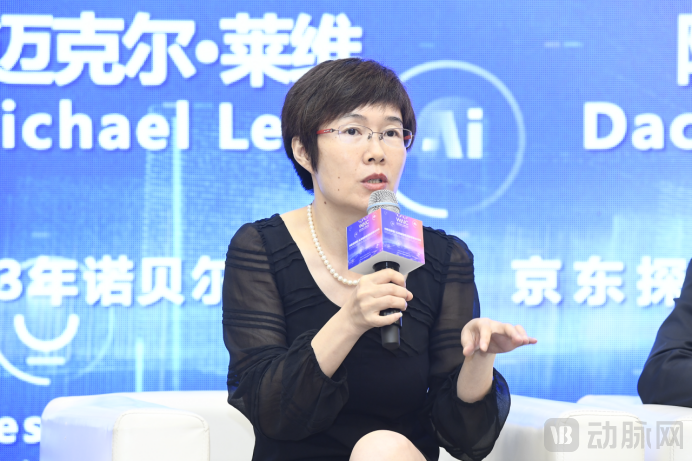
Figure: Yang Yunxia, Partner at Sequoia Capital China Fund
How can artificial intelligence technologies be translated and applied to real-world domains such as drug discovery, clinical practice, brain-computer interfaces, and robotics? How should the gap between cutting-edge research and industrialization in the field of brain-inspired intelligence be bridged?
“Ultimately, whether it is artificial intelligence or machine learning, it remains a tool—a tool that helps us better decode the human body’s operational systems.” This is how Yang Yunxia described the role of AI and machine learning in facilitating the industrialization of brain science.
As an investor with many years of experience as a physician, Yang Yunxia tends to approach issues from the perspective of the fundamental nature of the human body. In her view, the emergence of gene sequencing two decades ago has gradually enabled the digital analysis of the human body, underscoring that we are all products of genetic coding. Proteins, the smallest functional units of the human body, are likewise products of genetic coding.
“Proteins interact through two types of signals: electrical signals and chemical signals. These signals guide our brain tissue, heart, and other bodily organs to function in a coordinated manner. Meanwhile, there are billions of cells within our bodies. How do we identify the interconnections between signals and proteins, among proteins themselves, and between cells? How do we explore the mechanisms by which these components work efficiently together to form an integrated system? What are the relationships among different types of signals? Addressing these questions requires substantial computational power. AI assistance can provide more efficient means to elucidate this process.”
Translating a technology from the frontier of academic research into a viable product is undoubtedly a challenging process. However, with brain-computer interface (BCI) technology, there is reason for optimism, as we are already witnessing specific scenarios where it holds promise for practical implementation in healthcare and medical services.
At the forum, the White Paper on the Application of Brain-Computer Interface Technology in the Medical and Healthcare Sector, released by the China Artificial Intelligence Industry Alliance (CAIIA), was officially launched. The document outlines at least five key areas where brain-computer interfaces (BCIs) can be applied in medical and healthcare settings: diagnosis and treatment of motor impairments, disorders of consciousness and cognitive impairment, mental illnesses, sensory deficits, and epilepsy and neurodevelopmental disorders. These applications are grounded in the technical advantage of BCI devices to acquire and analyze patients’ brain signals, thereby directly assessing their motor intentions, consciousness, cognition, emotions, and the status of sensory regions.
However, it is worth noting that when the same technology is applied in different fields, the key factors to consider may be entirely different.
“Translating technology from academic research into a commercially viable product is, in fact, what we focus on every day. From an academic perspective, the most important aspects of a discovery or invention are likely its originality and novelty; we value who the first discoverer is. However, from a commercialization standpoint, two factors may be more critical: first, accessibility driven by relatively low costs, which allows broader populations to benefit; and second, ease of use, ensuring a gentler learning curve for end users to master,” stated Yang Yunxia.
This is why Yang Yunxia believes that investors, as the link between academia and industry, need to play a more active role. “There is still a gap between frontier technology and industrialization. Investors can do much to better bridge this gap, shorten the distance, and accelerate the translation of scientific discoveries into everyday life.”
Yang Yunxia noted that a highly positive development is the emergence of many outstanding scientists who are strongly motivated to translate their cutting-edge technologies into commercial products for the benefit of society. This may signal that a more promising future is accelerating toward us.