

Baidu Health Authoritative Medical Education Upgraded: Baidu Health Encyclopedia Collaborates with Over 1,500 Top Medical Experts
The Internet is a remarkable phenomenon. Though silent, intangible, and formless, it wields the power to transform everything. Today, it is reshaping the way people access medical information.
On July 11, the 2021 Baidu Health Tribute to Medical Professionals Ceremony was successfully held in Beijing. Over 300 government officials and experts from the healthcare sector gathered together, including Mao Qun’an, Director of the Department of Planning, Development and Informatization of the National Health Commission; Zhao Beihai, Deputy Director of the News and Publicity Center of the National Medical Products Administration; Zhao Jizong, Academician of the Chinese Academy of Sciences and neurosurgeon; Liu Lisheng, founding Chairman of the Chinese Hypertension League and cardiovascular disease expert; Shen Dou, Executive Vice President of Baidu Group; Yang Minglu, General Manager of Baidu Health; and Li Ning, Head of Ecosystem Cooperation at Baidu Health and Deputy General Manager of Baidu Health Medical Encyclopedia. They convened to jointly discuss the development trends of “Internet + Healthcare.”
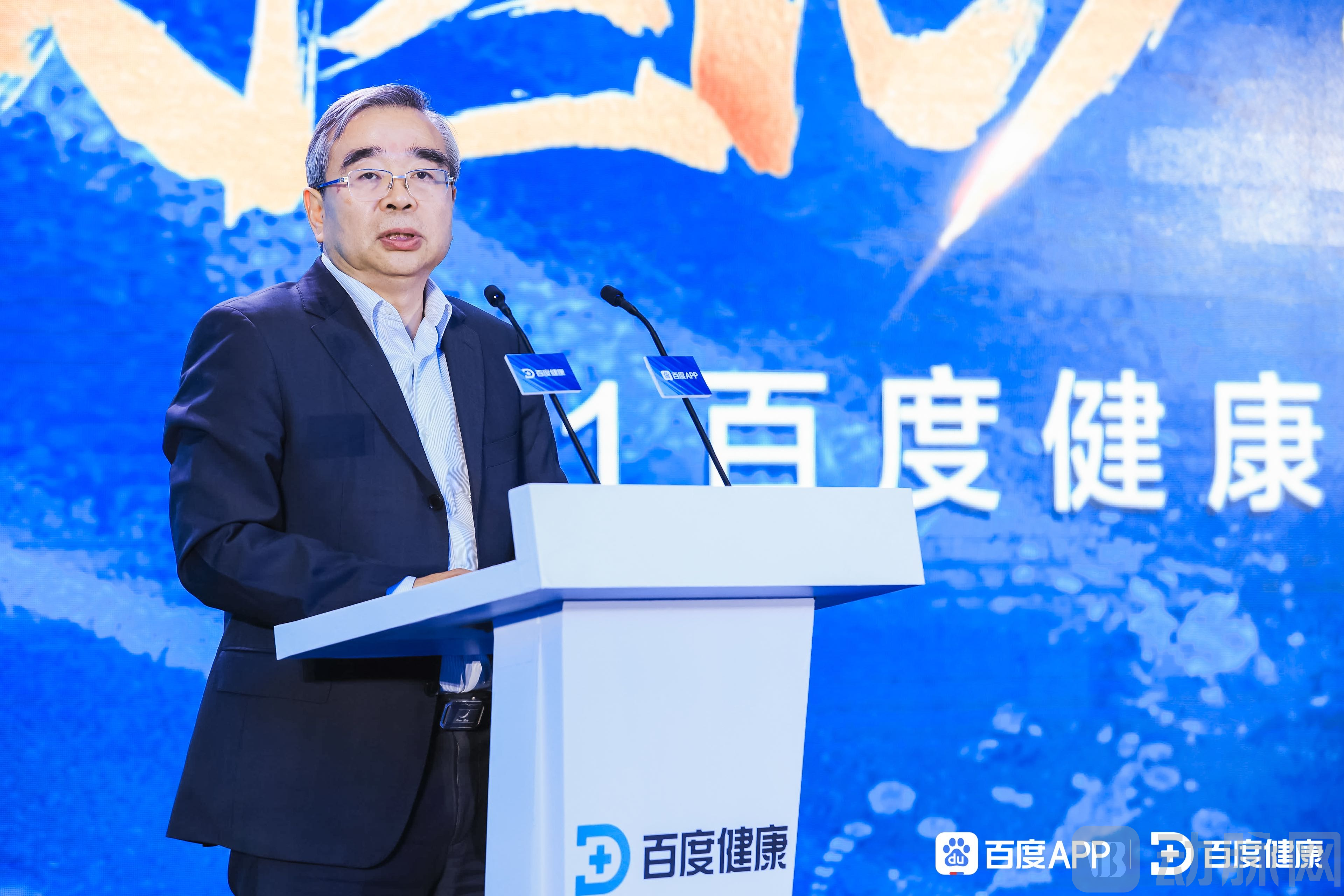
Mao Qun’an, Director of the Department of Planning Development and Informatization, National Health Commission
At the conference, medical science popularization became the focal point. Mao Qun’an stated that China is currently advancing two core national strategies: Healthy China and Digital China. In implementing the Healthy China strategy, it is essential to leverage the advantages of digital technologies. Healthcare professionals should actively engage in health communication efforts, and it is hoped that more high-quality platforms will pay attention to and deeply participate in this meaningful endeavor.
Medical science popularization is a key means of enhancing the scientific literacy of the public and promoting disease prevention. High-quality science communication can help shift the current medical paradigm from “treating established diseases” to “preventing diseases before they occur,” which is of great significance for improving the health status of China’s residents. With the rapid advancement of internet technology, medical science popularization is no longer confined to traditional channels such as newspapers, television, and offline lectures; instead, it is increasingly migrating online, capitalizing on the opportunities presented by the era of digital health.Before this trend, brimming with imagination and a strong sense of mission, gained momentum, Baidu Health was already at the forefront.
I. Why Medical Science Popularization Is Needed in This Era
The history of human progress has eloquently demonstrated that science and technology are powerful historical drivers of human advancement and social development, while science popularization, serving as a bridge connecting science and technology to human society, remains an enduring theme throughout human history.
In the field of medicine, its high degree of seriousness and strong academic nature make it relatively unfamiliar to the general public, creating a sense of distance. On the other hand, it is closely linked to human life and remains an unavoidable topic for everyone. In light of this, medical science popularization is extremely important, serving as a bridge that facilitates effective engagement between the public and medicine. Specifically, why is medical science popularization necessary?
First, the barrier to medical knowledge is very high and cutting-edge.Medicine is a discipline that employs scientific and technological methods to address various diseases and pathological conditions of life. It features high knowledge barriers and encompasses a vast array of specialized terminology, the complexity of which often poses significant challenges for medical students. Furthermore, medicine is a field characterized by continuous knowledge updates; practitioners must keep pace with the times and remain at the forefront of technological advancements to avoid becoming obsolete.
Second, to prevent the public from “seeking medical help in desperation when ill.”Medical practice concerns human lives, yet incidents of unregulated medical care continue to occur, particularly in remote areas. Lacking support from professional medical knowledge, patients’ desperation—often described as “seeking any available help in times of urgent illness”—becomes the most compelling factor driving their decisions, thereby leading to some irreversible medical accidents.
Third, it buys more time for emergency care.Emergency care is a race against time; even a one-second delay can mean missing the optimal window for resuscitation. For the vast majority of acute conditions, timely medical intervention during the early stages of onset can significantly increase the likelihood of successful patient rescue.
Fourth, enhance public health literacy and build an invisible communication "bridge" between patients and doctors.The most vexing challenge in clinical practice is engaging in endless, yet largely ineffective, communication with patients’ families using limited energy. Medical science popularization offers an effective solution to this problem. By enhancing the public’s health literacy, it enables patients to better cooperate with physicians during future medical encounters, thereby maximizing benefits for both healthcare providers and patients.
II. Build a Precision Doctor-Patient Matching Engine to Enhance Connection Efficiency
As a key component of its five major service systems, Baidu Health has consistently invested in and innovated within the realm of health science popularization.
Baidu Health is driven by user needs, building an authoritative medical content ecosystem in collaboration with top-tier domestic and international medical resources. It features in-depth, authoritative healthcare content from approximately 300,000 physicians and medical experts, along with self-developed products such as the Baidu Health Medical Encyclopedia. By leveraging platforms like Baijiahao, smart mini-programs, and live streaming to connect with physicians and numerous public hospitals across China, Baidu Health matches users with attending physicians and their affiliated hospitals.
 Shen Dou, Executive Vice President of Baidu Group
Currently, Baidu Health has engaged in diverse science popularization collaborations with industry institutions such as the National Health Commission, the China Anti-Cancer Association, the National Clinical Research Center for Skin and Immune Diseases, the News Center of the National Medical Products Administration, the China Population Education and Communication Center, and the People’s Daily Health Client. These partnerships leverage the advantages of mainstream authoritative organizations in health education to provide professional content guidance and health resource support for Baidu Health.
In addition, Baidu Health is building a live-streaming platform for health science popularization, inviting top authoritative medical experts and influential online doctors across China to host live sessions on Baidu Health. These broadcasts disseminate health knowledge and enable real-time interaction with users to address their health concerns. Baidu Health has also pioneered the new “Live Consultation” model, integrating “expert live streaming + mic-linked consultations + rapid online diagnosis” to provide end-to-end services covering both medical education and full-pathway consultation and medication guidance.According to statistical data, Baidu Health hosts over 3,000 live-streaming sessions per month, with cumulative online viewership reaching 350 million.
Baidu Health was not the first internet company to enter the health science popularization sector, but it has undoubtedly been the fastest-growing. Its ability to achieve such remarkable results in a short period is inseparable from its core competitiveness, which distinguishes Baidu Health from similar enterprises.On one hand, it is precisionSpecifically, the content provided by Baidu Health Medical Encyclopedia is guided by hundreds of millions of user search queries. In other words, each health entry is driven and produced based on high-priority questions raised by users on Baidu, enabling the content to better align with user needs and comprehensively address their concerns.
The other aspect is authority.Medical knowledge is characterized by its professionalism and specificity; therefore, it is not feasible to build content through User-Generated Content (UGC), a model that struggles to ensure quality. Public information indicates that Baidu Health Medical Encyclopedia has established an expert-centric content production system. In terms of team structure, experts are categorized into three tiers. The first tier (S-tier) comprises academicians, such as Academician Zhong Nanshan and Academician Li Lanjuan. The second tier (A+-tier) includes hospital presidents and chairpersons, typically those serving as chairmen of specialized branches within the Chinese Medical Association and the Chinese Medical Doctor Association. The third tier (A-tier) consists of department directors and doctoral supervisors from the top-three ranked departments in major hospitals, as listed in authoritative hospital rankings.
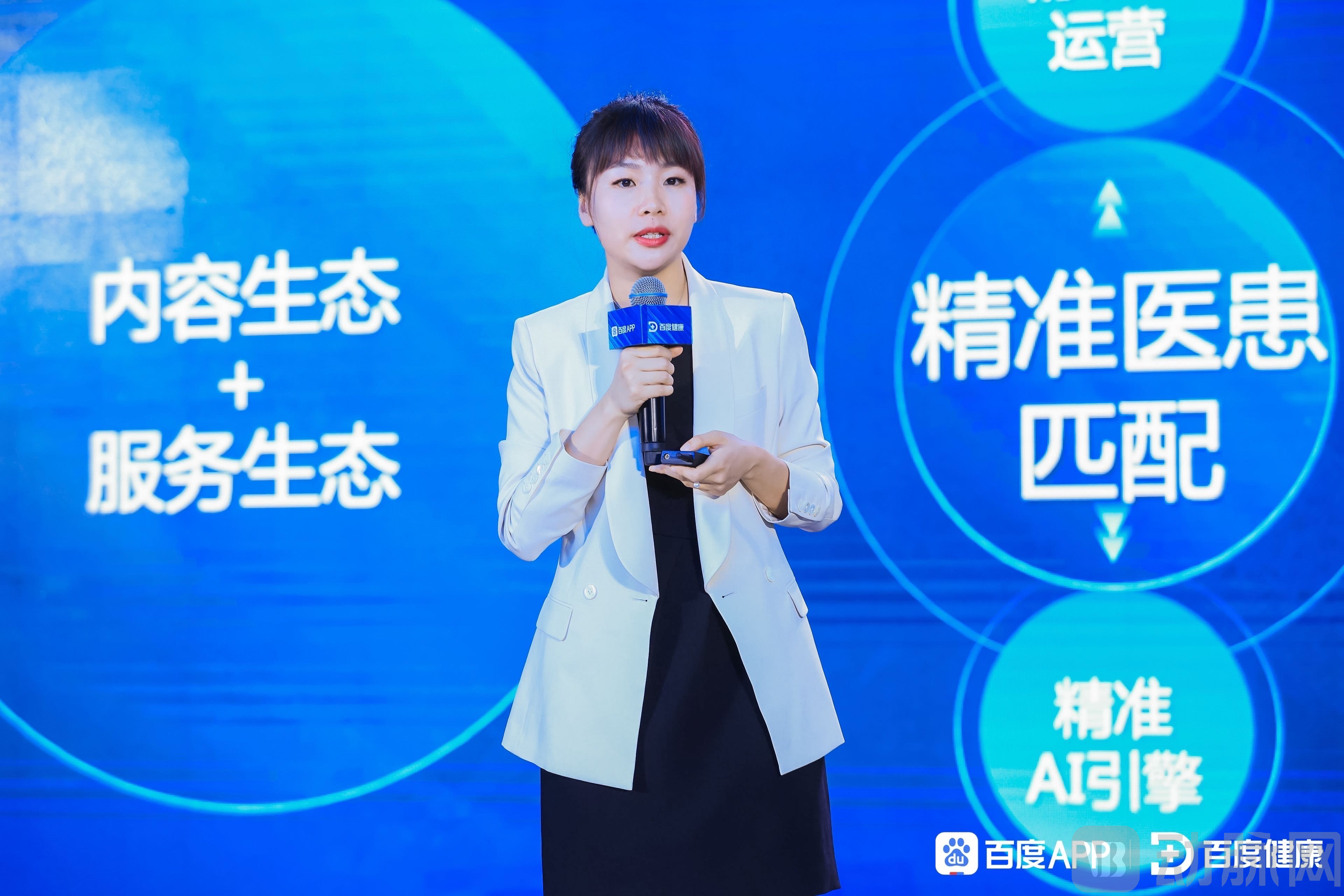 Yang Minglu, General Manager of Baidu Health
Overall, a user-need-oriented approach combined with abundant expert resources has established Baidu Health Medical Encyclopedia’s “moat” in the field of medical science popularization. Yang Minglu, General Manager of Baidu Health, stated that due to limitations in public awareness and healthcare-seeking behaviors, the utilization of medical resources in China is currently suboptimal. Patients often seek care from specialists for minor ailments, while doctors and hospitals are unable to reach patients with truly matching needs. Against this backdrop, Baidu Health is committed to leveraging its strengths to build a precise doctor-patient matching engine, using AI to accurately identify and facilitate precise connections between users and hospitals or physicians.
On one hand, Baidu Health leverages AI technology to analyze and identify user needs, enabling precise targeting by integrating user profiles, geographic location, disease types, severity levels, and medical consultation preferences. On the other hand, Baidu collaborates with public hospitals and physicians to establish a comprehensive information database for doctors in public hospitals, creating a tagging system that highlights each hospital’s and physician’s areas of expertise. Building on this foundation, Baidu Health achieves efficient and precise matching between patients and healthcare providers, facilitating “precise patient triage and referral” and enhancing the connectivity between high-quality medical resources and patients in need.
III. Over 1,500 collaborating experts; Baidu Health Medical Encyclopedia entries receive over 20 million page views per day on average
In April 2020, Baidu Health became an independent business unit. Within nearly a year, leveraging its robust resource advantages and broad user base, Baidu Health achieved “overtaking on the bend” in the field of health science popularization, emerging as an authoritative medical and health education platform co-built with top-tier medical resources both domestically and internationally.As of now, Baidu Health sees an average of 200 million daily content searches, serves over 100 million users per day, and has built a comprehensive service chain spanning from health education to online consultations and chronic disease management. Currently, Baidu Health hosts 500 million pieces of authoritative health education content, attracts more than 300,000 licensed physicians, and handles over 2 million online medical consultations daily.
According to reports, Baidu Health Medical Encyclopedia focuses on top-tier authoritative medical experts in the industry. Since its launch in June 2019, it has collaborated with more than 1,500 leading medical experts and over 200 prestigious institutions. The expert panel of Baidu Health Medical Encyclopedia includes renowned specialists such as Li Lanjuan, Dong Jiahong, Ge Junbo, Wang Jun, and Fan Jia. Currently, the daily average page views for its entries exceed 20 million.
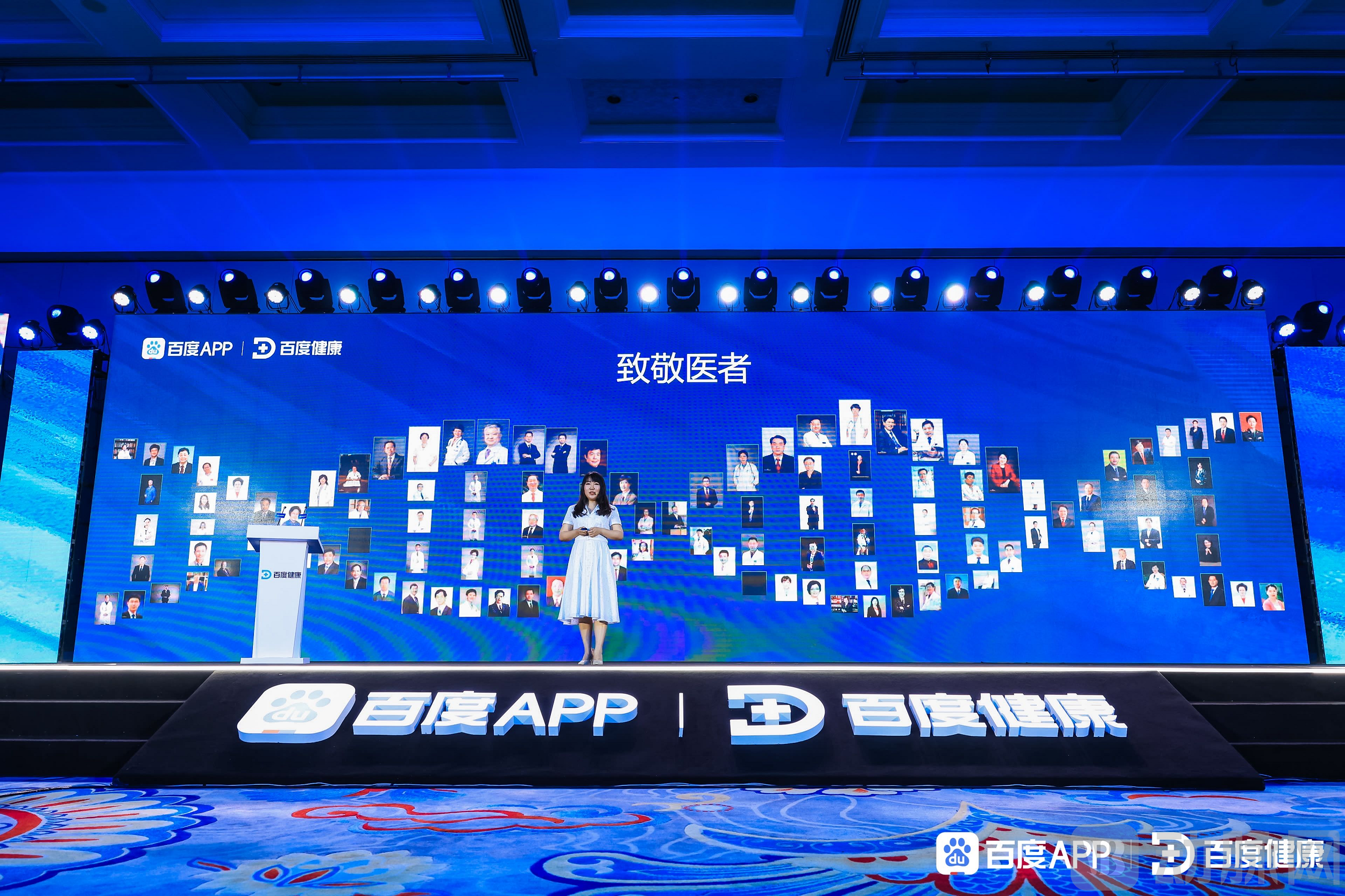 Li Ning, Head of Ecosystem Partnerships at Baidu Health and Deputy General Manager of Baidu Health Medical Encyclopedia
Baidu Health Medical Encyclopedia continues to innovate in the format of popular science communication, successively introducing diverse formats such as long-form infographics, thematic series, and 3D videos to create rich, vivid, and accessible content. Li Ning stated that with this upgrade to an open platform, Baidu Health Medical Encyclopedia will freely share its authoritative health knowledge with ecosystem partners. “We are empowering the entire industry with the health education content co-created by leading experts and our team, meeting both online and offline needs, amplifying the impact of health literacy initiatives, and maximizing support for the advancement of public health education.”
“Achieving the aforementioned goals will be a long and arduous journey. We will continue to leverage our platform’s resource advantages, collaborate with the public healthcare system, fully utilize the connecting role of internet platforms, and help enhance industry efficiency,” said Yang Minglu. Looking ahead, Baidu Health will continue to amplify the industry value of the internet, providing more precise and efficient services to doctors, hospitals, and patients, thereby contributing to the realization of the Healthy China initiative.