

WeDoctor's Growth Trajectory and China's Digital Healthcare Evolution
This article is reprinted from Health News, authored by Jiang Tianyi, and republished with authorization from VCBeat.
Recently, the General Office of the State Council issued the “Key Tasks for Deepening the Reform of the Medical and Health Care System in 2021,” listing the promotion of medical consortiums (hereinafter referred to as “medical consortia”) as a key priority for healthcare reform in 2021.
The “Tasks” propose to “advance pilot programs for county-level medical communities and urban medical groups,” “improve policy guidance for county-level medical communities,” “promote global budget payment for closely integrated medical consortia, strengthen supervision and assessment, allow retention of surpluses, and ensure reasonable sharing of deficits,” as well as enable “socially funded medical institutions to lead or participate in the formation of county-level medical communities and urban medical groups.”
Since 2017, the development of medical consortia has been rolled out across China, partially addressing the public’s difficulties in accessing medical care. However, several key issues remain to be resolved:
● How can we further alleviate the uneven distribution of medical resources, reduce the burden on large hospitals, enhance the diagnostic and treatment capabilities of primary care institutions, and effectively implement tiered diagnosis and treatment?
● How can we improve the efficiency of basic medical insurance fund utilization, unleash the vitality of commercial health insurance, and build a diversified payment and protection system to meet the public’s growing healthcare needs?
● How can we break down information silos, unlock the value of big data in healthcare, and establish a people-centered accountable care system?
As internet-based healthcare and the development of medical consortia continue to deepen, digitally enabled online medical consortia offer a novel approach to resolving the aforementioned challenges.
In fact, as early as 2017, when the state proposed to “comprehensively launch the construction of medical consortia in various forms,” it already required the realization of information interconnectivity within medical consortia.
After more than four years of development, internet healthcare and the construction of medical consortiums have become fully integrated, playing an unprecedented role in healthcare reform through the model of internet-based medical consortiums.
Where did internet healthcare and medical consortium development first intersect? In what forms have they integrated and evolved? What are the future possibilities? To explore the answers to these questions, we need to go back to 2015.
In 2015, Wuzhen, the permanent host city of the World Internet Conference, was approved as a National Comprehensive Pilot Zone for Internet Innovation and Development, attracting the implementation of numerous “Internet Plus” projects.
As a pilot initiative in the healthcare sector, Wuzhen Internet Hospital was unveiled on the eve of the Second World Internet Conference and was described in the conference’s keynote report as “a microcosm of China’s innovative development in the internet industry.”
On December 10 of the same year, Professor Wang Jian’an, then President of the Second Affiliated Hospital of Zhejiang University School of Medicine, issued the first online follow-up prescription via the Wuzhen Internet Hospital to Ms. Huang in Hangzhou. Within two days, Ms. Huang received the prescribed medications delivered by a courier.
This small step in online medical consultation has become a giant leap forward for digital healthcare. By breaking down the walls of traditional hospitals, internet hospitals have pioneered integrated innovations such as online prescriptions, online follow-up visits, and remote consultations. This has enabled the interconnectivity of medical service data across the entire healthcare process, making it possible to form a closed-loop system that integrates online and offline medical services. In other words, internet hospitals have provided the necessary foundational conditions and preliminary exploration for the development of internet-based medical consortia.
On the other hand, by circumventing regulations on medical institution approval, prescription management, and physician practice restrictions, internet hospitals have had an explosive impact. It took more than five years for the industry to move from skepticism to scrutiny, then to acceptance, and finally to a rush of enthusiasm.
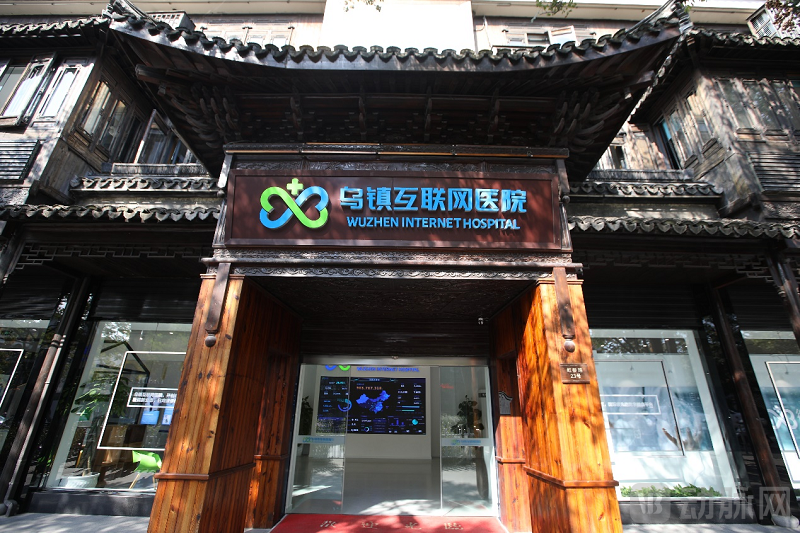
(Wuzhen Internet Hospital)
Liao Jieyuan, founder of WeDoctor and a former expert in speech recognition technology, may not be remembered for his role in co-founding iFlytek, but he has secured a prominent place in the healthcare sector as the pioneer of internet hospitals. His prediction from years ago that “every hospital will want to have an internet hospital” is gradually becoming a reality.
However, what Liao Jieyuan did not anticipate was that a sudden pandemic would press the fast-forward button for the development of internet healthcare.
In early 2020, to address the public’s healthcare needs during the COVID-19 pandemic and reduce crowding in hospitals, the National Health Commission, the National Healthcare Security Administration, and other departments successively introduced policies to further encourage and support internet-based healthcare. As a result, many people tried “cloud consultations” for the first time. While internet-based healthcare established an “aerial barrier” safeguarding lives and health, it also surged into the spotlight as a high-growth sector.
Data shows that as of March 2021, there were more than 1,100 internet hospitals across China, making them a “must-have” for medical institutions to deliver healthcare services in the new era. For healthcare reform, which has entered its most challenging phase, internet-based medical services anchored by internet hospitals have evolved from being merely an added bonus to providing critical support where it is needed most.
“Whether or not we achieve a moderately prosperous society depends crucially on our rural residents.” A major weakness in China’s healthcare sector lies at the grassroots level. After achieving a series of breakthroughs and innovations with internet hospitals, Liao Jieyuan chose to extend internet-based medical services downward, bringing them to the vast rural areas of China.
In 2017, the Pingdingshan Municipal Government of Henan Province entered into a strategic agreement with WeDoctor on the “Internet + Health Pingdingshan” initiative, selecting Jia County as a pilot site to build an intelligent tiered diagnosis and treatment system across county, township, and village-level medical institutions, leveraging the platform and resources of its internet hospital.
WeDoctor’s self-developed “Mobile Hospital” empowers primary healthcare institutions through a novel combination of “vehicles, kits, and stations” (including cloud-based mobile clinic vehicles, cloud-based mobile clinic kits, and medical and health workstations), providing family doctor contracting and medical health services to grassroots populations.
A mobile cloud-based medical examination vehicle can assist in completing 53 specific tests and examinations across seven major categories, provide standardized diagnosis and treatment protocols for 100 diseases, and effectively bring the capabilities of a secondary hospital to residents’ doorsteps. It also offers robust support to local family doctor contract service teams: residents’ health data can be instantly synchronized to the “Internet + Healthcare” big data platform, and primary healthcare institutions can directly initiate remote consultation requests with higher-level hospitals.
“Let data do the running, so people need to run less.” Internet-based healthcare, deeply rooted in local communities, has made “consultations at the village level and diagnosis via the cloud” a reality. The “Jiaxian Model” was featured in a special report by the State Council’s Leading Group for Comprehensive Deepening of Reforms in 2018 and promoted nationwide. In October 2019, the Pingdingshan Municipal People’s Government and WeDoctor upgraded their cooperation to further build the Pingdingshan Health Community.
In 2020, the number of health management service visits in Jia County increased by 13.5% year-on-year. The signing rate for family doctor contracts among key populations rose by 6.3% year-on-year, the contract fulfillment rate increased by 7.5% year-on-year, and the standardized management rate for patients with chronic diseases grew by 3.08%. The health literacy level among permanent residents in the county rose from 12.14% at the beginning of 2018 to the current 25.8%. Jia County has also been successfully designated as a National Health Promotion County.
In 2019, Liao Jieyuan was honored with the National Innovation Award for Poverty Alleviation. In an interview, he stated that WeDoctor would continue to explore the digital health sector by leveraging new technologies to facilitate the efficient and convenient flow of high-quality urban medical resources to impoverished areas. Additionally, the company would increase investment and tailor its approach to local conditions to build internet-based grassroots medical consortia, helping less developed regions consolidate their poverty alleviation achievements and support rural revitalization.
By the end of 2020, WeDoctor’s mobile hospital services had reached a population of 28 million across 69 counties in 12 provinces of China. Internet hospitals are helping to bridge the “last mile” gap in healthcare access for an increasing number of rural and remote areas.
Data show that chronic diseases have become the primary disease burden for Chinese residents, accounting for more than 70% of the total disease burden. Consequently, there has been a high and rapidly growing proportion of health insurance expenditures on major chronic conditions, placing significant pressure on the operation of health insurance funds and giving rise to a series of persistent challenges, such as difficulties faced by the public in accessing medical care and obtaining medications. Against this backdrop, although numerous explorations of chronic disease management models have emerged within the industry, they have yet to address the core issues.
In 2019, Tai’an City in Shandong Province launched an innovative chronic disease management service integrating “Internet + health insurance + healthcare + pharmaceuticals.” This marked the first practical implementation of WeDoctor’s Internet-based Chronic Disease Medical Consortium, built upon its internet hospital platform, and represented a model innovation in which municipal health insurance authorities directly purchased digital chronic disease management services.
This model encompasses the entire online-to-offline workflow of chronic disease management, establishing a closed-loop, full-lifecycle system that integrates prevention, diagnosis, treatment, management, and health promotion. It provides patients with services such as follow-up consultations, medication procurement, insurance reimbursement, data management, and digital intervention strategies. Furthermore, through standardized, end-to-end digital management, it strengthens health insurance supervision and cost containment.
The “Taian Model” advances major reforms through targeted, incremental measures, creating a multi-party win-win scenario in which patients, hospitals, and the government are all satisfied, thereby establishing itself as a benchmark for innovative digital chronic disease management services. Within just one year, the average per-visit time for local chronic disease patients was reduced from 2–3 hours to 30 minutes, and the average cost per prescription decreased by 12.7% compared with 2019.
On June 18 last year, an on-site meeting for innovative chronic disease management services under the “Internet + Medical Insurance + Healthcare + Pharmaceuticals” model was held in Shandong Province, bringing together the principal heads of medical insurance bureaus from all cities across the province to Tai’an. At the meeting, Zhang Ningbo, Director of the Shandong Provincial Medical Insurance Bureau, stated that efforts should be made to further summarize and promote Tai’an’s innovative experience in chronic disease management, and to comprehensively advance the development of an integrated support system encompassing “Internet + Medical Insurance + Healthcare + Pharmaceuticals.”
Currently, the Internet-based Medical Consortium for Chronic Diseases is being rapidly implemented in cities such as Jinan, Dezhou, and Weifang, serving local patients with chronic conditions.
For a long time, China’s healthcare services have suffered from the problem of having a single payer. As the primary payer for healthcare services, basic medical insurance covers more than 95% of China’s population.
“Currently, the healthcare security authorities are making every effort to advance reforms in healthcare payment methods to better align with the intrinsic nature of medical services. This holds significant value for public health management,” stated Ying Yazhen, Vice President of the China Healthcare Security Research Association and Deputy Director of the National Healthcare Security Academy, during this year’s “Two Sessions.” She noted that in the future, healthcare providers, patients, and healthcare payers will jointly assume responsibility for patient health. This approach will be piloted in selected representative regions before being rolled out on a broader scale.
Shandong Province, with a population exceeding 100 million, faces the urgent challenge of leveraging health insurance as a strategic lever to mobilize cross-industry resources and collaboratively reshape the integrated processes of medical care, elderly care, insurance coverage, and health management.
On April 25, 2020, the Shandong Internet Medical Insurance and Big Health Service Platform officially commenced operations. As the primary initiator and operator of the platform, WeDoctor issued the first electronic medical insurance settlement statement for an internet hospital in Jinan on the launch day, thereby integrating the entire process of medical care, pharmaceuticals, and medical insurance—the “Three-Medical Linkage.”
Driven by medical insurance payment, the platform has established a comprehensive healthcare security service system integrating “Internet + Medical Insurance + Healthcare + Pharmaceuticals,” and pioneered reforms in medical insurance payment, intelligent supervision, and public-benefit initiatives in Jinan.
The intelligent medical insurance monitoring system developed by WeDoctor has achieved full-process supervision through pre-event alerts, in-process controls, and post-event audits. This represents a shift from pure regulation to an integrated approach combining supervision, management, and services, while redirecting the focus of oversight from merely controlling medical costs to dual control of both medical expenses and healthcare quality, thereby enhancing the operational efficiency of local medical insurance funds.
Digital healthcare delivers substantial value to payers, including public medical insurance and commercial health insurance. Leveraging intelligent monitoring systems for public medical insurance and comprehensive digital health services, the platform is gradually establishing full-lifecycle digital health profiles for insured individuals within public medical insurance pooling areas.

(The Shandong Internet Medical Insurance and Big Health Service Platform Establishes Digital Health Profiles for Insured Individuals)
Digital health profiles empower healthcare providers on one hand, enabling physicians to deliver more precise diagnoses and treatments and formulate targeted health intervention strategies based on a comprehensive understanding of patients’ health status; on the other hand, they help patients gain a thorough understanding of their own health conditions, facilitating effective self-health management under medical guidance.
Meanwhile, digital health profiles effectively address key challenges faced by commercial insurers, such as the lack of applicants’ health data, insufficient post-underwriting health management resources and services, and complex claims processes. With user authorization or upon application, commercial insurance institutions can leverage residents’ digital health profiles to develop customized, cost-effective health insurance products, accompanied by health management services that improve users’ health outcomes. For example, WeDoctor’s regional health insurance product, “Qilu Bao,” provides supplementary commercial health coverage to residents enrolled in basic medical insurance, alleviating financial pressure on the basic medical insurance fund and reducing patients’ out-of-pocket burdens. This initiative helps establish an integrated medical security framework combining basic medical insurance with commercial insurance, thereby promoting the deep integration of insurance and health management.
Digital technology has enabled “hyperlinks” among the supply side, demand side, and payers. After improving infrastructure and service experience, digital healthcare models have begun to challenge integrated healthcare delivery scenarios. On January 6, 2020, Tianjin Municipality signed the “Strategic Cooperation Agreement on Digital Health” with WeDoctor Group, reaching an agreement to jointly establish a Digital Health Community, among other collaborative initiatives.
In a breakthrough development, an internet hospital has served as the lead entity in local reforms for the first time during the construction of Tianjin’s Primary Care Digital Health Community. Led by Tianjin WeDoctor General Hospital (Tianjin WeDoctor Internet Hospital), this initiative collaborates with 267 primary healthcare institutions across the city to form a closely integrated internet-based medical consortium.
By implementing the “Four Clouds” platforms—cloud-based management, cloud services, cloud pharmacy, and cloud diagnostics—the medical consortium achieves unified management, shared responsibility, benefit sharing, and standardized service delivery. It establishes a health maintenance system that covers residents’ entire life cycle and full spectrum of health needs, effectively improving population health indicators and reducing health insurance expenditures.
From the perspective of model innovation, Tianjin’s closely integrated Internet-based medical consortium can be regarded as an upgraded version of traditional medical consortia and closely integrated medical communities. From the standpoint of health insurance payment reform, this model enables payers to cover health outcomes at predetermined costs.
Within this health maintenance system, the operational model of medical institutions is gradually evolving. A reestablished performance evaluation mechanism, oriented toward health outcomes and incentivized by the retention of surplus funds, is building a new framework of accountability. This provides a practical model for the shift from a "disease-treatment-centric" approach to a "health-centric" one.
Specifically, the Tianjin Primary Digital Health Community empowers primary healthcare institutions through digital means. Leveraging a digital engine platform, it standardizes clinical pathways to provide patients with standardized and intelligent chronic disease management services. With diabetes management as the entry point, within a closely integrated medical consortium supported by an internet hospital, this health community explores payment models such as “global bundled payment” and “capitated bundled payment” under the medical insurance scheme. Furthermore, based on assessments of healthcare quality and management performance, it implements an incentive and constraint mechanism characterized by “retention of surplus funds and no additional compensation for deficits.”
Driven by the combined forces of digital chronic disease management and new health accountability mechanisms, various health indicators of enrolled patients have shown continuous improvement. Taking Tianjin Huanghe Hospital, a member of a tightly integrated medical consortium, as an example, statistics on management outcomes from February to June this year indicate that the rate of achieving target glycated hemoglobin (HbA1c) levels among enrolled diabetic patients increased by 14%, while the standardized management rate rose by 15% compared to the local average.
The recently released "Key Tasks for Deepening the Reform of the Medical and Healthcare System in 2021" has prioritized the promotion of the Sanming healthcare reform model. In an interview, Zhan Jifu, Director of the Standing Committee of the Sanming Municipal People's Congress, stated that the Sanming healthcare reform has entered its Phase 3.0. During Phase 1.0, the reform targeted pharmaceuticals and medical consumables as a breakthrough point to address chaos and curb waste, thereby overcoming the entrenched problem of being "profit-driven." In Phase 2.0, by establishing regulations and systems, healthcare was steered back onto the correct track of being "disease-treatment-centered." In Phase 3.0, the focus is on transforming the healthcare service system from being "disease-treatment-centered" to being "health-centered."
WeDoctor’s exploration and practice in Tianjin align closely with the goals and direction of Phase 3.0 of the Sanming Healthcare Reform. In this regard, Zhan Jifu stated, “Establishing tightly integrated medical consortia led by internet hospitals, and implementing a health accountability system centered on family doctor contracts and focused on chronic disease management, constitutes the objective of Phase 3.0 of the Sanming Healthcare Reform. The related practical experience demonstrates strong exemplary value, and its outcomes merit close attention.”
At the Boao Forum for Asia Global Health Forum held recently, Dr. Gauden Galea, WHO Representative in China, commented, “WeDoctor’s practice in Tianjin represents an active exploration of digital health innovation.” He noted that the World Health Organization has also listed digital health as a key area for development.
From initially being “misunderstood,” to being “looked down upon” for taking on the most arduous and labor-intensive tasks, and finally to rapidly scaling after establishing a closed-loop service ecosystem, WeDoctor has been navigating the waves of the internet healthcare boom for more than a decade.
A decade has passed in the blink of an eye. Countless industries have been swept up by the wave of digitalization, yet digital healthcare remains notably “resistant.” This precisely demands that explorers possess both ambition and perseverance.
Seeking solutions to pain points, improving efficiency, and enhancing overall well-being are the aspirations of all professionals in the internet industry. Among these practitioners and explorers, WeDoctor’s dual DNA of “Internet” and “Healthcare” enables it to more accurately gauge the direction of industry development and make bolder attempts:
Establishing internet hospitals to extensively connect medical resources, fostering synergistic coexistence between internet-based medical consortia and physical healthcare institutions, and building tightly integrated internet medical consortia to drive reforms in health insurance payment methods... the path of advancement in digital healthcare is becoming increasingly broad.
As tides ebb and flow, some watch the surface waves, while WeDoctor chooses to dive beneath, sensing the direction of the currents. Looking back on its journey—from grassroots communities to prefecture-level cities, and from provincial capitals to municipalities directly under the central government—WeDoctor’s practice has demonstrated that the regional digital healthcare model built around internet hospitals possesses significant resilience. This resilience is reflected not only in its horizontal replicability but also in its vertical growth potential. Continued favorable policies, the advancement of payment method reforms, and the release of market demand will all create opportunities for further leaps in this already validated model.
The Future of Digital Health Is Promising.