

JD Health Launches First City-Level Smart Medical Insurance Platform in Suqian, Accelerating Interoperability of Healthcare Information
On July 12, the National Healthcare Security Information Platform was successfully launched and put into operation in Suqian City, achieving full coverage of all 3,347 designated medical institutions and designated pharmacies across the city and serving 5.29 million insured residents. With this milestone, Suqian became the first city in East China to deploy the National Healthcare Security Information Platform, marking a new phase of practical implementation for the platform’s construction in Jiangsu Province.
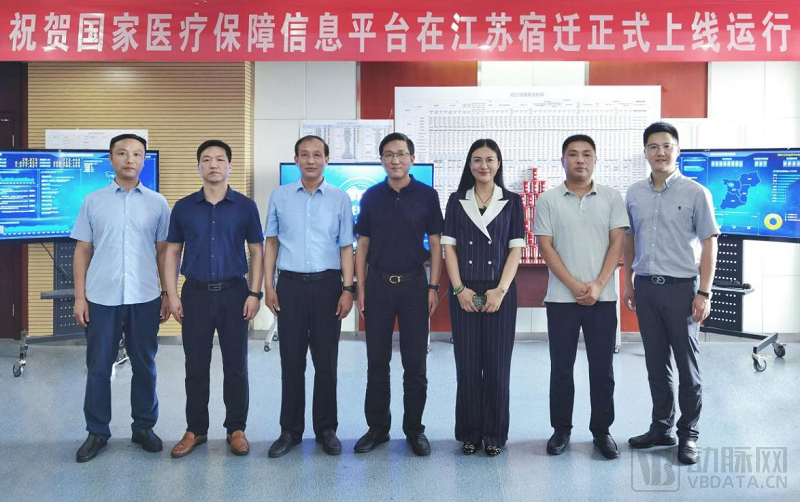
(Representatives from the Jiangsu Provincial Healthcare Security Administration, the Suqian Municipal Healthcare Security Administration, and JD Health jointly attended the platform launch ceremony)
As the overall lead for project development, JD Smart City has integrated internal and external resources across the JD Group to provide guarantee services for the platform’s launch. This effort is built upon JD Technology’s technical framework, leveraging JD Health’s capabilities in integrating medical insurance operations and JD Cloud’s service capabilities. Meanwhile, as the first city-level smart medical insurance platform implemented by JD Health, its successful launch represents another innovative benchmark for JD Health’s practical application in the “smart medical insurance” sector, further advancing its integrated strategy encompassing “smart healthcare, smart pharmaceuticals, smart medical insurance, and smart elderly care.”
In accordance with the unified deployment across Jiangsu Province, and under the guidance of the Jiangsu Provincial Healthcare Security Administration, the Suqian Municipal Healthcare Security Administration has fully implemented the top-level design of the National Healthcare Security Information Platform. Adhering to the principles of security, stability, and precision, it has ensured the solid and effective advancement of the information platform’s development.
It is reported that the preparation for the launch of the medical security information platform lasted two months, with support from 12 ecosystem vendors including JD.com, and 260 engineers providing on-site services around the clock. This effort set a record for the fastest launch in East China, the shortest nationwide network downtime, and the fewest issues encountered during deployment.
The successful launch of the medical insurance information platform will provide robust IT support for the standardization of medical insurance operations, the facilitation of public services, the intelligentization of supervision and management, and the precision of decision-making analysis in Suqian City. It will deliver superior medical insurance services to all medical insurance handling agencies, designated medical and pharmaceutical institutions, insured individuals, and social collaborative organizations across the city, establishing a “one door, one network, one visit” model for public medical insurance services. By enabling “online integration through a single network and offline processing through a single window,” the platform has significantly enhanced the healthcare and medication purchase experience for insured residents.
Next, the Suqian Municipal Healthcare Security Administration will, in accordance with the requirements of the Municipal Party Committee, the Municipal People’s Government, and the Provincial Healthcare Security Administration, ensure the efficient, secure, and stable operation of the platform while promptly summarizing experience from its launch and initial operations. It will conduct acceptance evaluations at appropriate times, continue to advance the standardization of healthcare security informatization, and consistently enhance the city’s healthcare security governance capabilities and public service levels.
It is reported that, in accordance with the National Healthcare Security Administration’s requirements for the construction of medical insurance information systems, the Jiangsu Provincial Healthcare Security Administration launched the public service subsystem “Provincial Medical Insurance Cloud” in June 2019. Building on this foundation, Suqian City, adhering to the National Healthcare Security Administration’s principles of establishing a “unified, convenient, efficient, compatible, and secure” medical insurance information system, and aligning with the Jiangsu Provincial Healthcare Security Administration’s requirements for constructing a medical insurance information platform featuring “one center, one core, and four platforms,” has developed an integrated smart medical insurance solution tailored to its own planning characteristics.
JD Health, under JD.com Group, has joined forces with partners such as JD Smart City and JD Cloud to carry out localized custom development based on the national version during the specific construction process. The project is implemented following a two-tier deployment model at the provincial and municipal levels. Through local needs analysis and design and development, it establishes connectivity between municipal and provincial platforms, enables real-time data synchronization, and allows “zero-latency” access to relevant applications on the provincial platform via the local unified portal system.
Meanwhile, in response to the “bottlenecks” and “pain points” in the current informatization of medical insurance, the Smart Medical Insurance Platform has established intelligent supervision that simultaneously strengthens payment management and regulatory oversight by integrating business processes and data.
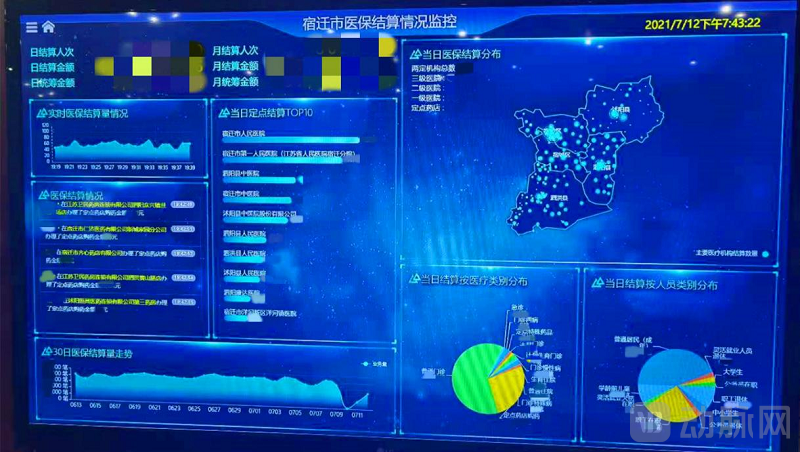
JD Health, in collaboration with partners such as JD Smart Cities and JD Cloud, has jointly built China’s first city-level independently constructed “Open Source Cloud” platform. Leveraging this cloud infrastructure, the initiative advances the standardization and informatization of medical insurance systems, aiming to resolve long-standing issues such as fragmentation, inconsistent standards, and significant disparities in business functionalities across medical insurance information systems, thereby achieving interoperability and seamless data exchange within these systems.
It is understood that JD Cloud, as the technical service brand of JD Group targeting enterprises, governments, and other institutions, is one of the most thoroughly containerized cloud platforms globally, boasting the world’s largest-scale Docker and Kubernetes clusters. Leveraging its full-stack cloud product matrix encompassing public, private, and hybrid clouds, JD Cloud integrates cutting-edge technologies such as artificial intelligence, big data, and the Internet of Things (IoT) to provide customers with a rich array of products and digital solutions across industries including retail, logistics, healthcare, smart cities, and fintech. In this project, JD Cloud actively supported the development of medical insurance infrastructure and peripheral coordination, ensuring the security, compliance, stability, and efficiency of the medical insurance platform, thereby effectively safeguarding the steady and long-term development of Suqian’s medical insurance operations.
In the next phase, JD Health will collaborate with ecosystem partners to develop intelligent management modules, advance monitoring and early-warning mechanisms supported by big data technology, and establish a long-term mechanism for the supervision of medical insurance funds. For the medical insurance sector, this will reduce fund supervision risks and enhance the efficiency and refined management capabilities of medical insurance oversight. For hospitals, it will mitigate internal operational risks and improve the work efficiency and refined management standards of their medical insurance offices.
“As the first city-level smart medical insurance platform implemented by JD Health, this project will also serve as an innovative model for JD Health in the field of smart medical insurance,” said Wang Dongyuan, General Manager of Smart Healthcare at JD Health. In the future, “smart medical insurance,” as an innovative practice and application in the informatization of medical insurance, will accelerate the realization of one “reduction” and two “increases”—namely, reducing medical costs while enhancing service experience and coverage levels—thereby improving the public’s sense of gain in medical security.