

EDDA Health Submits IPO Application to HKEX, Covering Over Half of Top 10 U.S. and Top 100 Chinese Hospitals

OrbiMed
Investment institutions dedicated to the biomedicine and life sciences fields
MPCi
Venture Capital Institutions in High-Tech Startup Fields
Recently, Yida Health Medical Technology Holdings Limited (hereinafter referred to as “Yida Health”) formally submitted its draft prospectus to the Hong Kong Stock Exchange. As an innovative pioneer in intelligent surgical robots and precision surgical solutions, Yida Health has thus entered a new stage of development.
Data shows that Yida Health relies onProprietary Intellectual Property Technology Platform, with intelligent surgical robots as the core,Establish a rich and comprehensiveProduct Pipeline. As a leading enterprise in intelligent and precise surgical solutions, the company holds a significantly advantageous market position. To date, five of the top ten hospitals in the United States—Mayo Clinic (across three campuses), NewYork-Presbyterian Hospital, Massachusetts General Hospital, UCSF Medical Center, and NYU Langone Health—have adopted Yida Health’s solutions. In China, Yida Health has assisted in over 70,000 precision surgeries and its solutions have been deployed in more than 60 of the country’s top 100 hospitals.
So,How is Yida Health gradually building its “moat” within the industry? How will its platform, which integrates precise surgical planning software with intelligent surgical robots (a combination of hardware and software), empower precision surgery, and what are the prospects for this sector?VCBeat (WeChat ID: Vcbeat) aims to provide answers by interpreting Yida Health’s draft prospectus.
Publicly available information indicates that Yida Health is the first company to develop precision surgical planning products and simultaneously obtain approval from both the NMPA and the FDA. After establishing a solid foothold in the liver domain, the company began expanding its product pipeline. It first extended the application scope of the IQQA software platform to cover all thoracic and abdominal organs, including the liver, lungs, and kidneys. Subsequently, through intelligent surgical robots, it expanded its capabilities from preoperative to intraoperative stages, further extending its reach by integrating imaging and video technologies. This culminated in the establishment of a comprehensive portfolio of precision surgery solutions, enabling intelligent preoperative planning, intraoperative navigation, and postoperative assessment required for precision surgery. Currently, Yida Health has established a prominent industry position in the fields of intelligent surgical robots and precision surgical solutions.
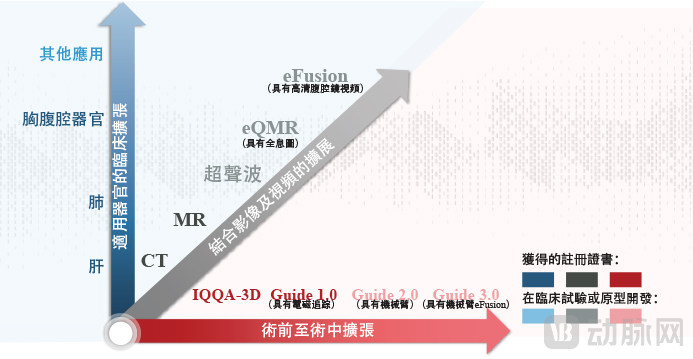
Since 2014, Edan Health has been expanding the clinical applications of its IQQA platform to additional organs. Products represented by IQQA-3D and IQQA-BodyImaging have successively obtained regulatory approvals both domestically and internationally, thereby extending their applications from the liver to thoracic and abdominal organs. Subsequently, Edan Health’s product pipeline has gradually shifted toward intelligent surgical robots to facilitate expansion from preoperative to intraoperative settings.
Compound Annual Growth Rate Nears 57%: Rapid Development of the Percutaneous Surgical Robot Market
Driven by factors such as population aging, strong government support, and the application of emerging technologies to address unmet medical needs, the global surgical robotics market is experiencing rapid growth. In addition to the widely recognized laparoscopic and orthopedic surgical robots, there is vigorous momentum in the development of percutaneous surgical robots, pan-vascular interventional surgical robots, non-invasive surgical robots, and other robotic systems.
Among these, percutaneous surgical robots are primarily used to guide the placement of surgical instruments in various interventional procedures requiring puncture (such as needle biopsy), helping physicians reach the target with fewer attempts, thereby improving surgical efficiency and precision.
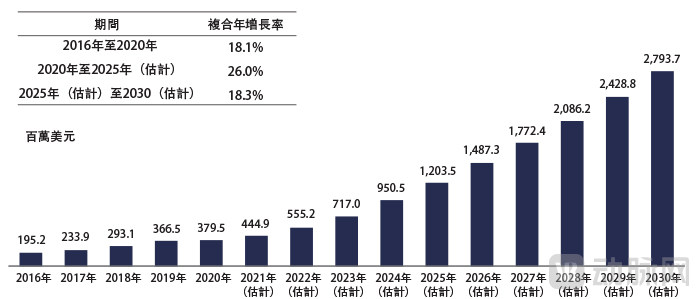
Global Market Size and Forecast for Percutaneous Surgical Robots (Image Source: Prospectus)
The global percutaneous surgical robotics market grew from USD 195.2 million in 2016 to USD 379.5 million in 2020, representing a compound annual growth rate (CAGR) of 18.1%. Driven by increased awareness of precision surgery and technological breakthroughs, the global percutaneous surgical robotics market is expected to reach USD 1.2035 billion by 2025, corresponding to a CAGR of 26% from 2020 to 2025, and ultimately attain a market size of USD 2.7937 billion by 2030.
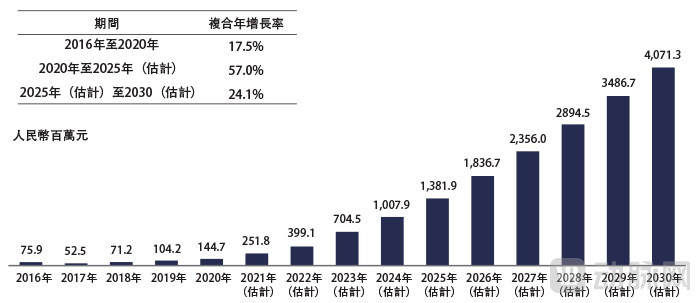
China's Percutaneous Robot Market Size and Forecast (Image Source: Prospectus)
The domestic percutaneous surgical robot market is in its nascent stage. From 2016 to 2020, the compound annual growth rate (CAGR) of percutaneous surgical robots in China was only 17.5%. However, the market is expected to experience rapid growth in the coming years, reaching RMB 1.3819 billion by 2025, which corresponds to a CAGR of 57.0% from 2020 to 2025, and ultimately achieving a market size of RMB 4.0713 billion by 2030.
Leading the Intelligent Development of Surgical Robots, Granted National-Level “Green Channel” Approval for Class III Medical Device Certification
There are still few players in the field of surgical robots. Yida Health entered this field at an early stage and established a subsidiary in Suzhou, a major hub for medical device manufacturing, in June 2015, focusing on intelligent and precise surgical robot solutions.
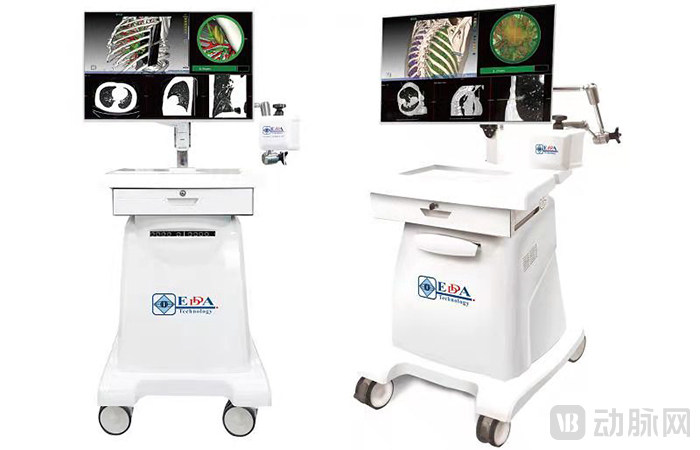
Yida Health IQQA-GUIDE 1.0 Percutaneous Surgical Robot (Class III Certified Product via National "Green Channel")
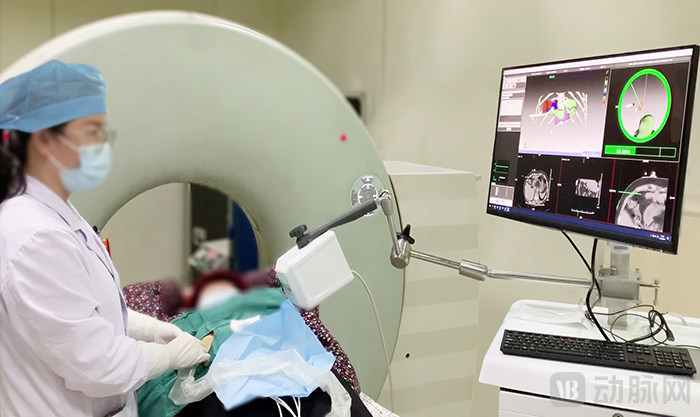
The doctor is operating the Yida Health IQQA-GUIDE 1.0 percutaneous surgical robot.
In August 2017, Yida Health’s IQQA-Guide 1.0 (MII) product entered the expedited review pathway for innovative medical devices and subsequently received Class III medical device certification from the National Medical Products Administration (NMPA) in January 2020. The product has also obtained FDA approval.
The National Medical Products Administration (NMPA) website has given high praise to this product: “This product is the first domestic navigation device for percutaneous procedures targeting solid organs in adult lungs and abdominal soft tissues., compared with conventional CT-guided methods, it can improve puncture accuracy, reduce the number of needle insertions and CT scans, and has significant clinical application value.”
Yida Health’s future development plans are also being intensively prepared. Its future product development will adopt a “dual-wheel drive” model—expanding the indications for existing products while simultaneously developing new follow-on products.
In the highly anticipated field of percutaneous surgical robots for soft-tissue organs, in addition to expanding new indications for IQQA-Guide 1.0, the second-generation product in the IQQA-Guide series, named IQQA-Guide 2.0, is also under development. Building upon version 1.0, it incorporates a new hardware component: a robotic arm. During surgery, the robotic arm can automatically position the surgical needle at the corresponding location and angle according to the needle trajectory planned by the surgeon. Once the surgeon confirms the position and angle, the surgical needle can be inserted by advancing it toward the target lesion.
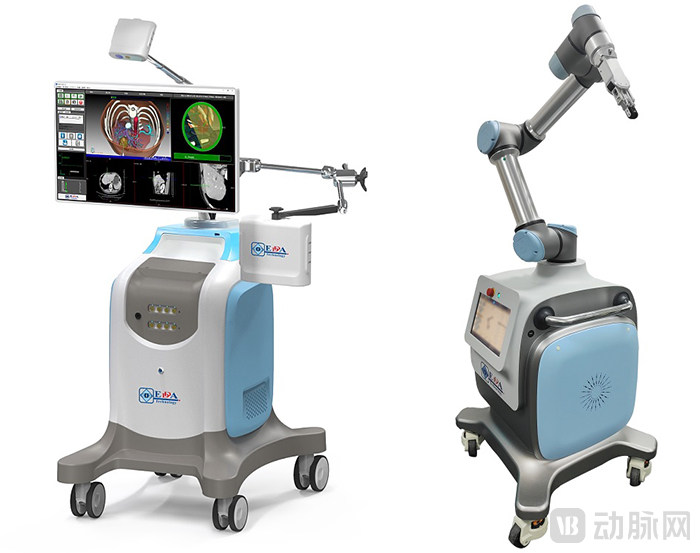
Yida Health IQQA-GUIDE 2.0 Percutaneous Surgical Robot
In addition to percutaneous surgical robots, the third- and fourth-generation IQQA-Guide series products for laparoscopic surgery are also in the early design phase. Both generations will adopt eFusion technology to register and fuse preoperative eOrganMap data and surgical plans with real-time laparoscopic video images, providing real-time analysis, navigation, and positioning for laparoscopic procedures.
Leading Quantitative Surgical Planning: An Essential Tool for Precision Surgery with Widespread Clinical Recognition
In the field of precision surgical planning software,In 2010, Mayo Clinic (formerly known as the Mayo Clinic) introduced IQQA-Liver to provide surgical planning for living donor liver transplantation.IQQA-3D, which received the NMPA Class II medical device registration certificate in February 2014, is undoubtedly Yida Health’s flagship product. Unlike competing products that typically support only one or two organs, IQQA-3D is broadly applicable to thoracic and abdominal organs, offering extensive adaptability.
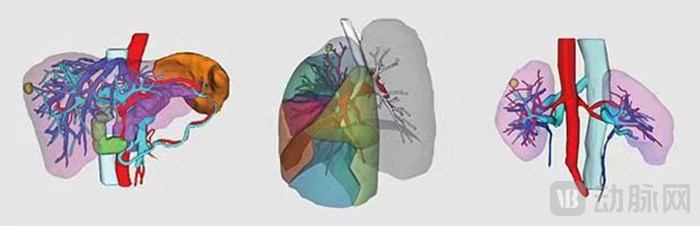
Yida Health IQQA-3D Generated eOrganMap
Meanwhile, by using IQQA-3D, physicians can reconstruct patients’ organ structures into quantified eOrganMaps images and simulate surgical procedures preoperatively, including virtual resection of specific structures or marking those that need to be preserved. IQQA-3D can also be used for postoperative judgment and evaluation to confirm complete resection of the target area and for follow-up assessments.
According to Frost & Sullivan, based on the number of surgical cases completed in 2020, Yida Health is the largest market participant in China’s precision surgical planning market for thoracic and abdominal applications, with a market share of 36.5%, exceeding the combined market shares of the second- and third-largest participants.
The IQQA-3D-based precision surgical planning solution has garnered widespread acclaim from leading physicians in the field, with more than 500 independent clinical papers published to date. The authoritative academic monograph Precision Hepatic Surgery, edited by Academician Dong Jiahong of the Chinese Academy of Engineering and co-edited by Academician Fan Jia of the Chinese Academy of Sciences along with other academicians, and compiled through the collaborative efforts of over 100 top hepatobiliary experts, highly recognizes the role of IQQA-3D in precision liver surgery and features multiple images generated by IQQA-3D to illustrate precision surgical techniques.
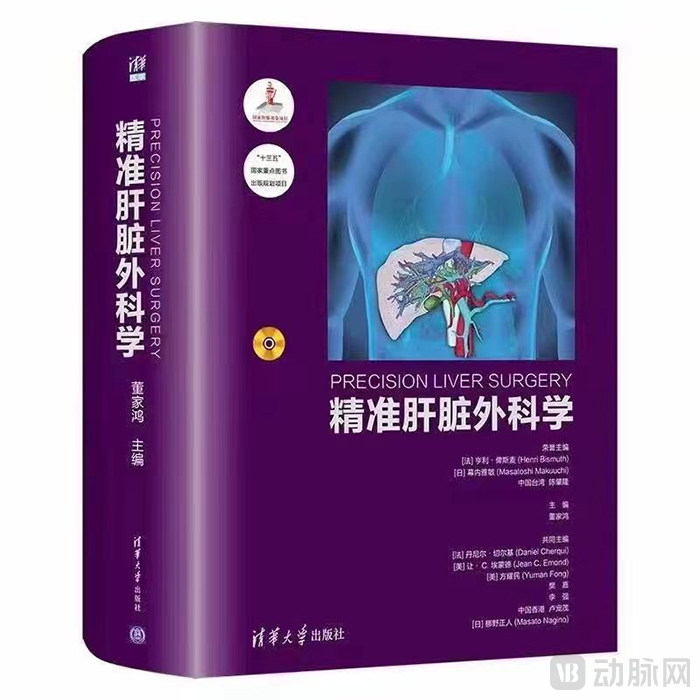
The Academic Masterpiece *Precision Liver Surgery* Highly Recognizes the IQQA-3D Solution
Precision Surgical Planning Software is primarily applied in thoracic and abdominal surgeries. This is a rapidly growing sector—in 2020, only 31,700 thoracic and abdominal surgical cases in China were supported by precision surgical planning, with this number projected to reach 141,600 by 2025, representing a compound annual growth rate (CAGR) of 34.9% from 2020 to 2025. It is ultimately projected that 639,200 thoracic and abdominal surgical cases will be supported by precision surgical planning by 2030.
Product Pipeline Continues to Expand, Leading the Development of Intelligent and Precision Surgical Solutions
Data indicates that Yida Health is expanding the indications for IQQA-3D to include pelvic organs (including the cervix and prostate), while early-stage R&D for neurosurgical applications is underway. Meanwhile, building on IQQA-3D, the company is also developing IQQA-eQMR, a quantitative mixed reality-assisted system.
eQMR technology integrates the IQQA-eQMR software application with head-mounted mixed reality devices, projecting eOrganMap surgical planning results into holograms with an immersive 3D experience. This enables physicians to rotate, zoom, or reposition the holographic display to examine spatial relationships among different anatomical structures. Users can manipulate the holographic images via voice commands, gestures, or a spatial mouse. Measurement tools on the interface also allow for real-time 3D quantification of distances, angles, and other metrics. Additionally, users can simulate surgical procedures using virtual surgical instruments.
IQQA-eQMR will be released in two versions: one for medical school training and the other for clinical application in hospitals. The hospital version’s 3D holographic display can even intelligently overlay holograms onto actual patients. If all goes well, this exciting product is expected to launch in 2021–2022, marking another killer app.
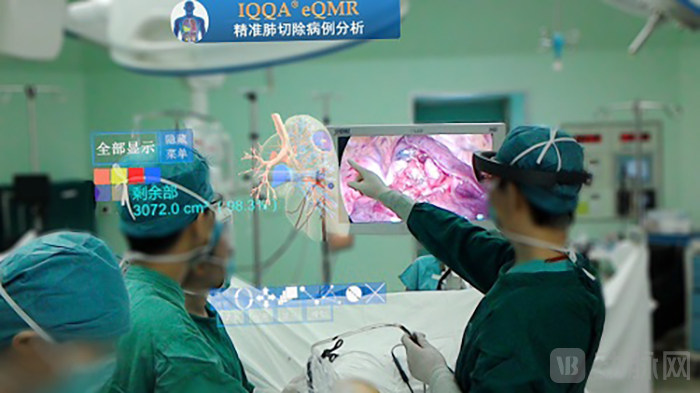
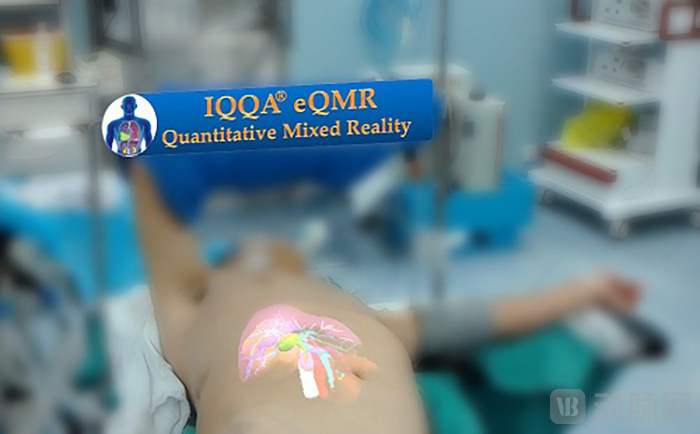
Yida Health IQQA-eQMR Fully Quantitative Real-Virtual System
At this point, Yida Health has established a complete closed-loop solution for precision surgery. Its main products include the IQQA-Guide series of intelligent surgical robots, the IQQA series of precision surgical planning software suites, and supporting medical consumables. In addition, Yida Health has launched the “IQQA Cloud Platform,” which integrates the core functionalities of IQQA-3D, enabling physicians to collaborate in real time on intelligent surgical planning remotely. Given the depth and breadth of clinical support solutions provided by the IQQA technology platform and product portfolio across the preoperative, intraoperative, and postoperative phases, the company has twice received awards from Frost & Sullivan.“Science and Technology Innovation Award”and the “Product Innovation Leadership Award”.
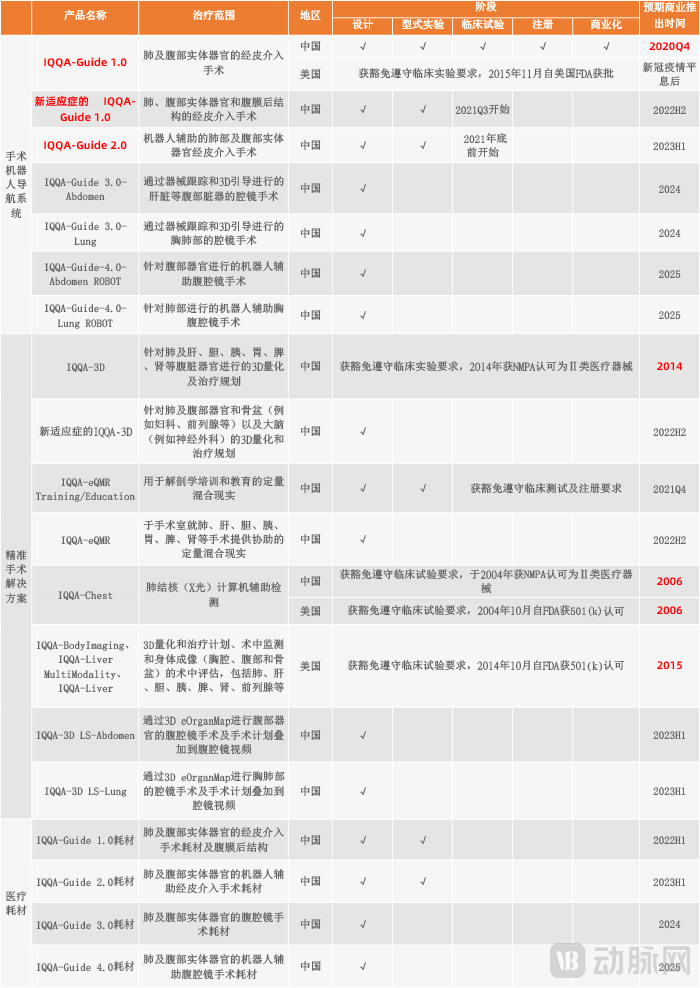
Yida Health Product Pipeline Chart (Core or Commercialized Products Highlighted in Red)
It is evident that Yida Health’s product strategy is well-defined. After establishing a solid foothold in the liver disease sector, the company began to expand its product pipeline. Initially, it gradually broadened the application scope of the IQQA software platform from organs such as the liver, lungs, and kidneys to other areas.
Subsequently, dilation from preoperative to intraoperative phases is performed using an intelligent surgical robot, with extended capabilities integrated through imaging and video technologies. This ultimately establishes a comprehensive portfolio of intelligent precision surgery solutions, enabling the intelligent preoperative planning, intraoperative navigation, and postoperative assessment required for precision surgery.
Thus, by focusing on and proactively refining its product pipeline with a forward-looking approach, Yida Health has established its own "moat" in precision surgery through the integration of software and hardware. Currently, Yida Health holds 130 granted invention patents across major international markets, including China, the United States, and Europe. The competitiveness of its products is reflected not only in their broad range of indications but also in the depth of their clinical applications.
Such a clear and visionary strategic roadmap is evidently closely linked to the core team of Yida Health. The core team of Yida Health, which also serves as the company’s central R&D unit, boasts extensive experience in research and development. In particular, Dr. Qian Jianzhong, the Founder and Chairman, is a Fellow of the American Institute for Medical and Biological Engineering (AIMBE). He previously served as a Senior Scientist and Distinguished Researcher at Siemens, where he received the Siemens Global Inventor of the Year Award for his outstanding achievements and innovations in technological invention. He holds more than 200 technical patents in the field of intelligent medical diagnostic imaging.
Dr. Zeng Xiaolan, Dr. Fan Li, and Dr. Wei Guoqing, the three co-founders of Yida Health, have all served as heads of R&D for innovative products approved by the U.S. Food and Drug Administration (FDA) at internationally renowned medical device companies. The entire team possesses strong capabilities in invention and innovation.
It is precisely for this reason that Yida Health has attracted numerous high-quality investors since its inception. The most recent financing round was a $150 million crossover round completed in March this year, led by SoftBank Vision Fund 2, with participation from OrbiMed and 3W Capital. Other investors in the company include top-tier firms such as SBCVC, Bank of China Group Investment, Matrix Partners China, Trustbridge Partners, Morningside Venture Capital, and DeDing Innovation.
In a previous interview with Yida Health conducted by VCBeat, the founding team of Yida Health mentioned that over one hundred hospitals among its clients have procured and used its products through actual purchases, with no free trials offered, which signifies genuine customer recognition of the product. In the draft prospectus, Yida Health’s financial status was disclosed for the first time.
Given that the industry as a whole is still in its early stages and Yida Health’s independently developed intelligent surgical robot products only began commercialization in late 2020, historical sales volume has not been substantial. However, the company’s gross margin performance has been impressive, making long-term earnings growth prospects promising.
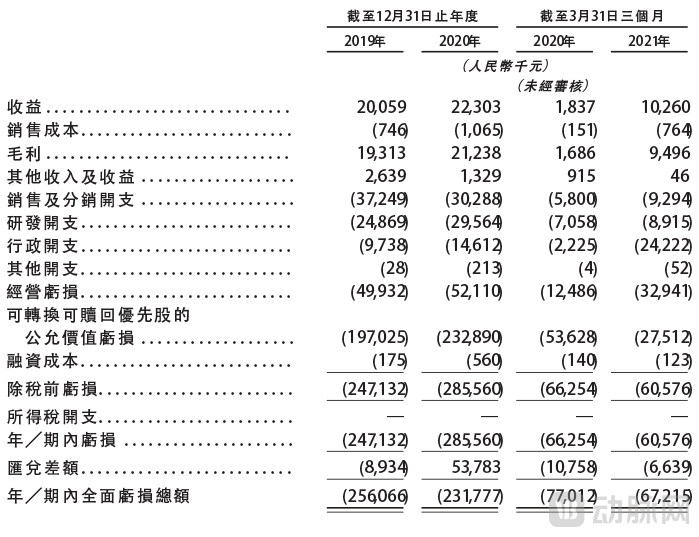
Image from the prospectus
In terms of revenue, the prospectus shows that despite the impact of the COVID-19 pandemic, the company’s revenue in 2020 still saw a slight increase compared to 2019, reaching RMB 22.3 million and RMB 20.06 million, respectively, primarily driven by technical services for IQQA-3D, its precision surgical planning solution. In contrast, revenue in the first quarter of 2021 surged by 4.6 times year-on-year, benefiting from the commercialization of the IQQA-Guide intelligent surgical robot. Regarding gross profit margin, Yida Health’s overall gross margin reached 96.3% and 95.2% in 2019 and 2020, respectively.
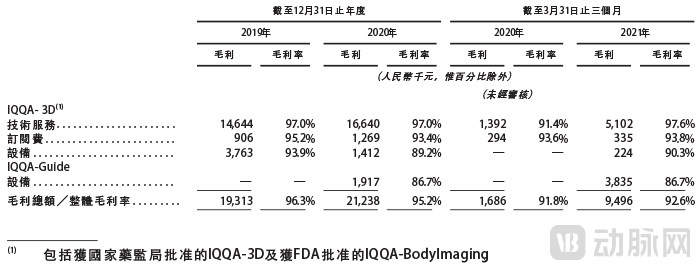
Image from the prospectus
It is worth noting that the financial statements show Yida Health’s pre-foreign-exchange-gain/loss net losses for 2019 and 2020 were RMB 250 million and RMB 290 million, respectively. However, the majority of these losses stemmed from changes in the fair value of preferred shares issued during previous rounds of private financing. After adding back non-operating expenses such as share-based compensation, the adjusted net losses for both years were each under RMB 50 million.
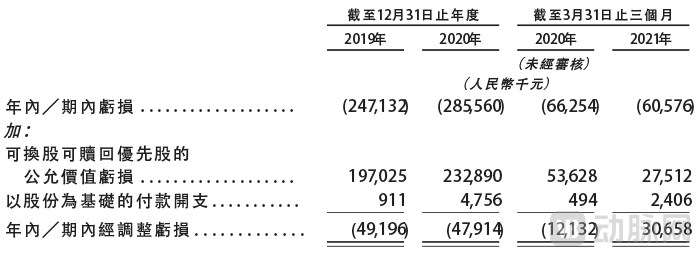
Image from the prospectus
In other words, the actual operating losses incurred by the company are significantly smaller than those reported in the financial statements. Meanwhile, all preferred shares previously issued by Yida Health will be converted into ordinary shares upon its listing, after which they will no longer have any impact on the financial statements.
More importantly, Yida Health holds substantial cash reserves, with over RMB 1 billion in cash on hand as of the end of March 2021. Coupled with the capital raised from this IPO, the company is well-positioned to sustain its development for a considerable period in the future.
Therefore, although Yida Health is currently operating at a loss, the company carries virtually no debt and maintains a sound financial position. As its product commercialization efforts continue to advance, the outlook for turning losses into profits in the future remains optimistic.
As a pioneer in intelligent, precision surgical solutions, Yida Health has established a significant first-mover advantage in the vast and rapidly growing market for precision surgical planning and intelligent surgical robots. Leveraging robust R&D capabilities driven by its core management team, the company provides comprehensive intelligent precision surgical solutions for a wide range of procedures, leading the development of precision surgery and building its own “moat.”
In the future, Yida Health will accelerate the development of its pipeline products through a series of strategies to enhance product diversification; continuously strengthen its R&D capabilities to build a globally leading intelligent precision surgical technology platform; rapidly advance its commercial strategy to solidify its market leadership; and further develop its intelligent precision surgical ecosystem by leveraging new R&D and clinical training centers as well as strategic partnerships.
VCBeat will continue to closely monitor Yida Health’s subsequent developments and provide first-hand coverage.