

Huami Technology Builds a Healthcare Ecosystem through IoT with Self-Developed Chips and Operating System
On July 14, 2021, in Hefei, Huang Wang, CEO of Huami Technology, took the stage at the Global Roadshow Center holding a silicon wafer, thereby kicking off the Next Beat 2021 conference.
Centered on the theme of “The Future of Health,” Huami Technology unveiled its new-generation smart wearable chip, “Huangshan 2S.”
This is Huami's third-generation self-developed chip, which for the first time adopts a dual-core RISC-V architecture wearable AI processor, achieving a combination of ultra-high computing power and ultra-low power consumption.
As demonstrated by Huang Wang, this chip is capable of handling high-load computations such as graphics rendering and UI operations. Its large-core system integrates a Floating-Point Unit (FPU) to support floating-point arithmetic. Compared with the Huangshan 2, computational efficiency has improved by 18%, while operating power consumption has been reduced by 56%, and sleep mode power consumption has dropped by as much as 93%. It took Huami five years to develop this chip.
Some may ask: Is it worth developing an AI chip just for a smartwatch? The answer is obvious.
To date, global shipments of smart wearable devices have surpassed 820 million units. Apple, Amazon, Microsoft—nearly every technology company is eager to enter this market, aiming to equip consumers with new devices and unlock entirely new market opportunities.
Furthermore, poor product usability has hindered the development of this market. Common wearable devices often suffer from numerous shortcomings, such as short battery life, limited functionality, and a lack of ecosystem integration. These deficiencies prevent wearable devices from adapting to user habits, instead requiring users to cultivate new habits for their use.
The various issues mentioned above can be broadly categorized as systemic problems. The mainstream operating systems installed in most wearable devices on the market are either heavily modified versions of smartphone operating systems, which are overly bloated and complex for wearables, or off-the-shelf embedded real-time operating systems that are better suited for industrial control equipment and standard IoT products. As a result, users struggle to achieve a comfortable experience with such devices.
Driven by market demand, the “Zepp OS” system was launched at Next Beat 2021. Through independent design, Huami Technology aims to maximize the compatibility between chips and the operating system, thereby unlocking the full potential of wearable devices.
“Lightweight” is a defining feature of this operating system. Built on the open-source FreeRTOS microkernel, Zepp OS occupies minimal space compared to other general-purpose operating systems. Its system package is only 55 MB, approximately 1/28 the size of Apple’s watchOS and 1/10 that of Amazfit OS, the previous system used by Huami Technology. The system offers seamless compatibility across a wide range of hardware, from low-end microcontrollers to high-performance SoCs, making it suitable for various types of wearable devices.
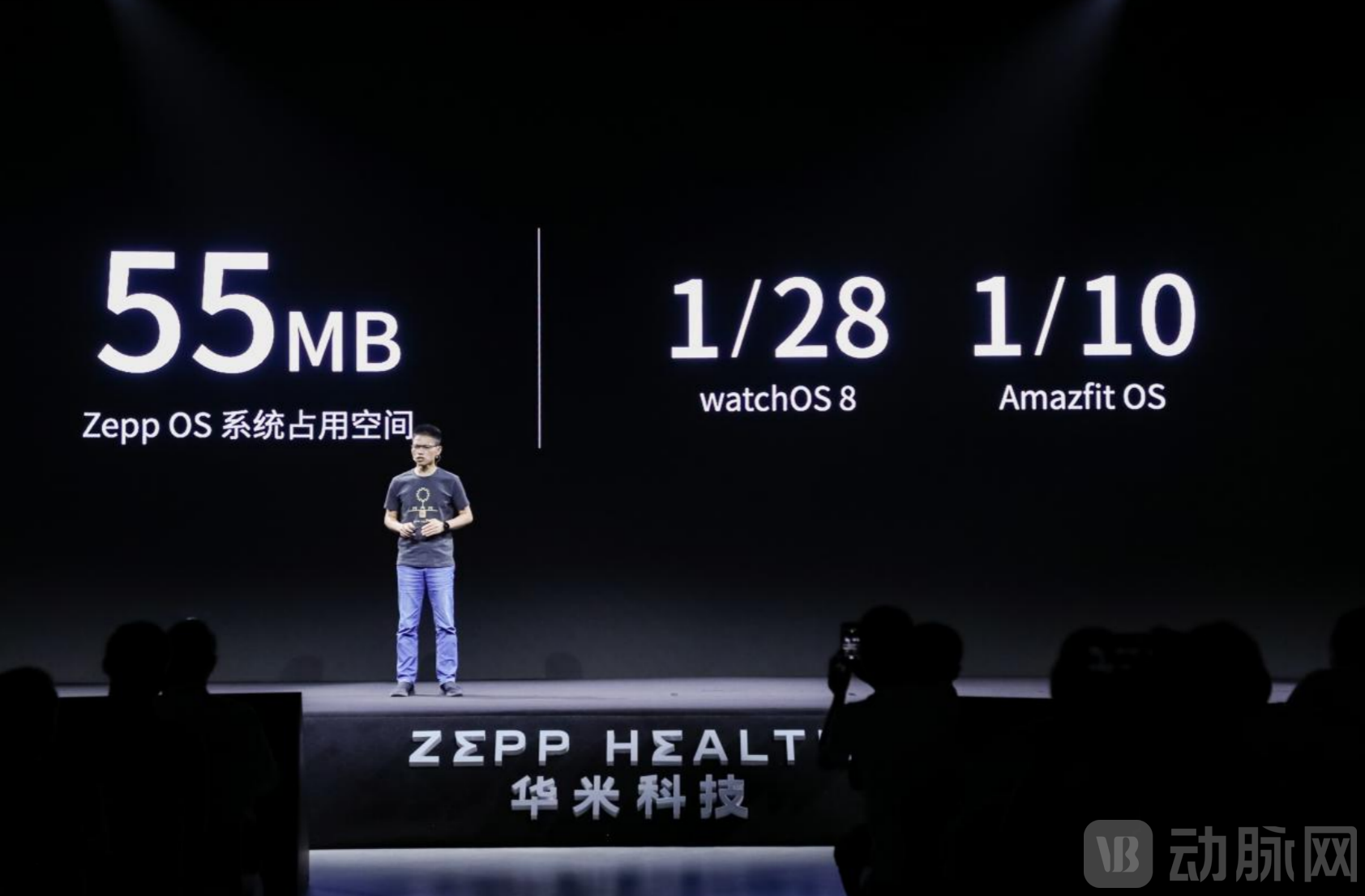
Built on a lightweight codebase and various power-optimization techniques, Zepp OS further extends battery life to ensure continuous 24/7 health data monitoring. The power consumption of Zepp OS is 65% lower than that of the previously used Amazfit OS. Compared with smartwatches running Amazfit OS 2, devices powered by Zepp OS offer a 190% increase in battery life.
Furthermore, Zepp OS natively supports 4G/5G and Wi-Fi connectivity. It integrates a complete TCP/IP protocol stack, enabling smartwatches equipped with eSIM to connect directly to the cloud without relying on a smartphone. This facilitates emergency calls by users in critical situations.
For developers, Zepp OS also features a watch-based JavaScript mini-program framework—the Zeus Mini-Program Framework—enabling low-barrier development of watch mini-programs. A similarly user-friendly graphical development environment for watch face design will be released in the future, allowing even individual users to easily create personalized watch faces.
The vitality of a wearable device depends on the capabilities it delivers to users. Therefore, to create high-quality wearables, companies must equip them with sufficient effective features while providing users with a simple and intuitive experience amidst complexity.
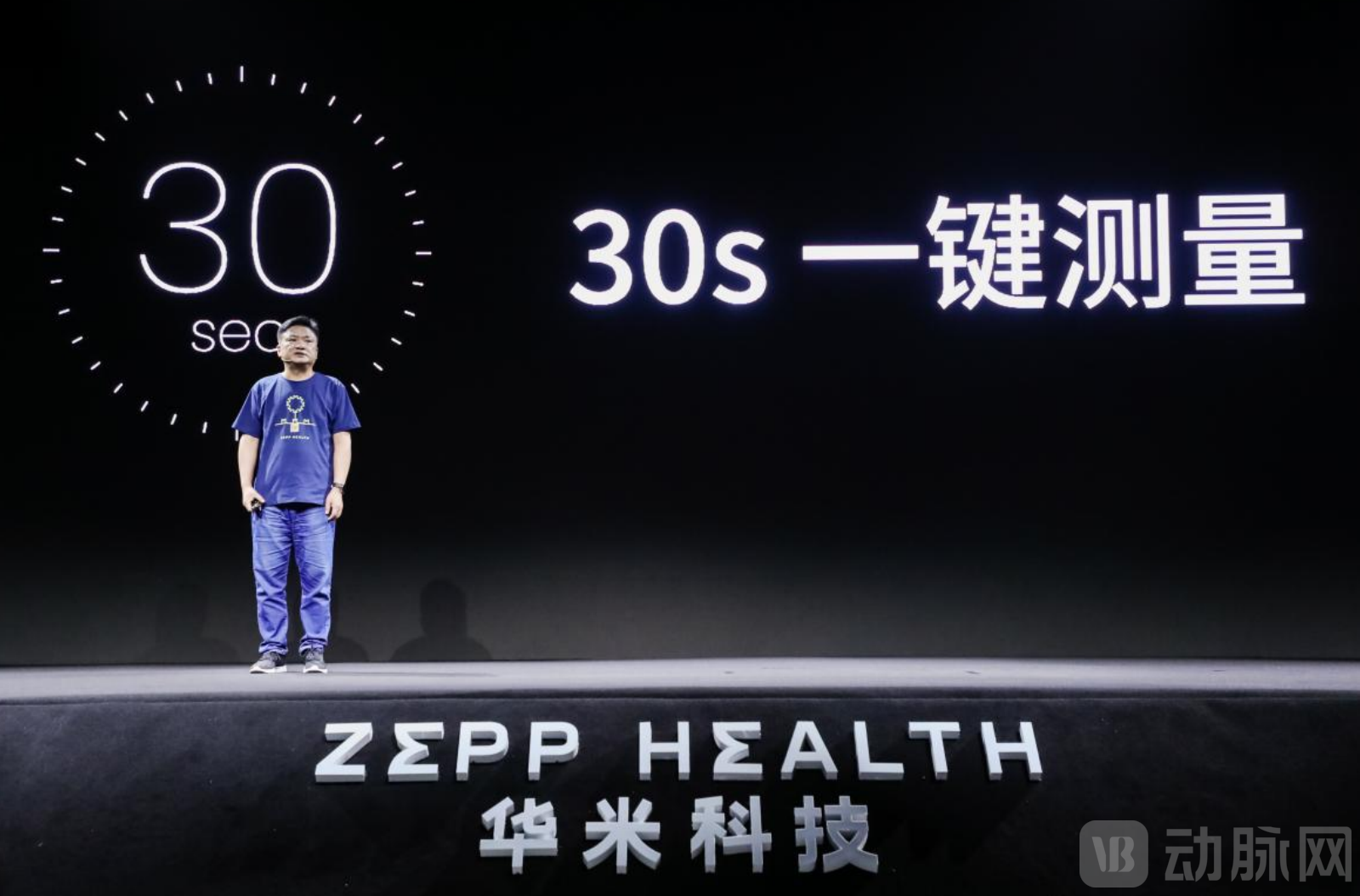
In terms of capabilities, Huami has recognized the potential of wearable devices in cardiovascular health. The PumpBeats blood pressure monitoring engine, released at the conference, enables users to measure their blood pressure anytime and anywhere, with the entire process requiring only a 30-second press. This marks a significant step forward for Huami in the field of non-invasive, cuffless blood pressure measurement technology.
In addition to blood pressure measurement, Huami Technology has also established multiple collaborations with leading hospitals and research institutions both domestically and internationally, conducting in-depth research in disease warning, rehabilitation, and health management. According to Huami, several initiatives are steadily progressing, including the “Follow-up Management of Atrial Fibrillation Patients After Radiofrequency Ablation Using Intelligent Wearable Devices” conducted in partnership with Peking University First Hospital; the “Application of Wearable Devices in the Management of Chronic Obstructive Pulmonary Disease” developed with Academician Zhong Nanshan’s team at the First Affiliated Hospital of Guangzhou Medical University; and the “Application of Wearable Devices in Stroke Patient Rehabilitation” undertaken with the Norwegian University of Science and Technology.
After achieving large-scale user accumulation, Huami clearly aims to enable Zepp OS to play a more significant role in the wearable sector. The current Zepp OS integrates powerful artificial intelligence algorithms, enabling precise measurement of human biometric data such as heart rate and blood oxygen saturation, along with various exercise metrics. Coupled with the aforementioned features—including continuous health data monitoring, connectivity with health devices, direct cloud-based emergency alerts, and support for third-party health mini-program development—Zepp OS has evolved beyond being merely an operating system that drives smartwatch hardware; it is now an open health management platform.
“If one day, MRI equipment can enter households just like PCs did back in the day, then many of our diseases, such as tumors, can be detected early and treated promptly. This has always been our dream.” At the conclusion of the conference, Huang Wang unveiled Huami Technology’s latest exploration in the field of medical technology—investing in and promoting the development of global portable MRI technology.
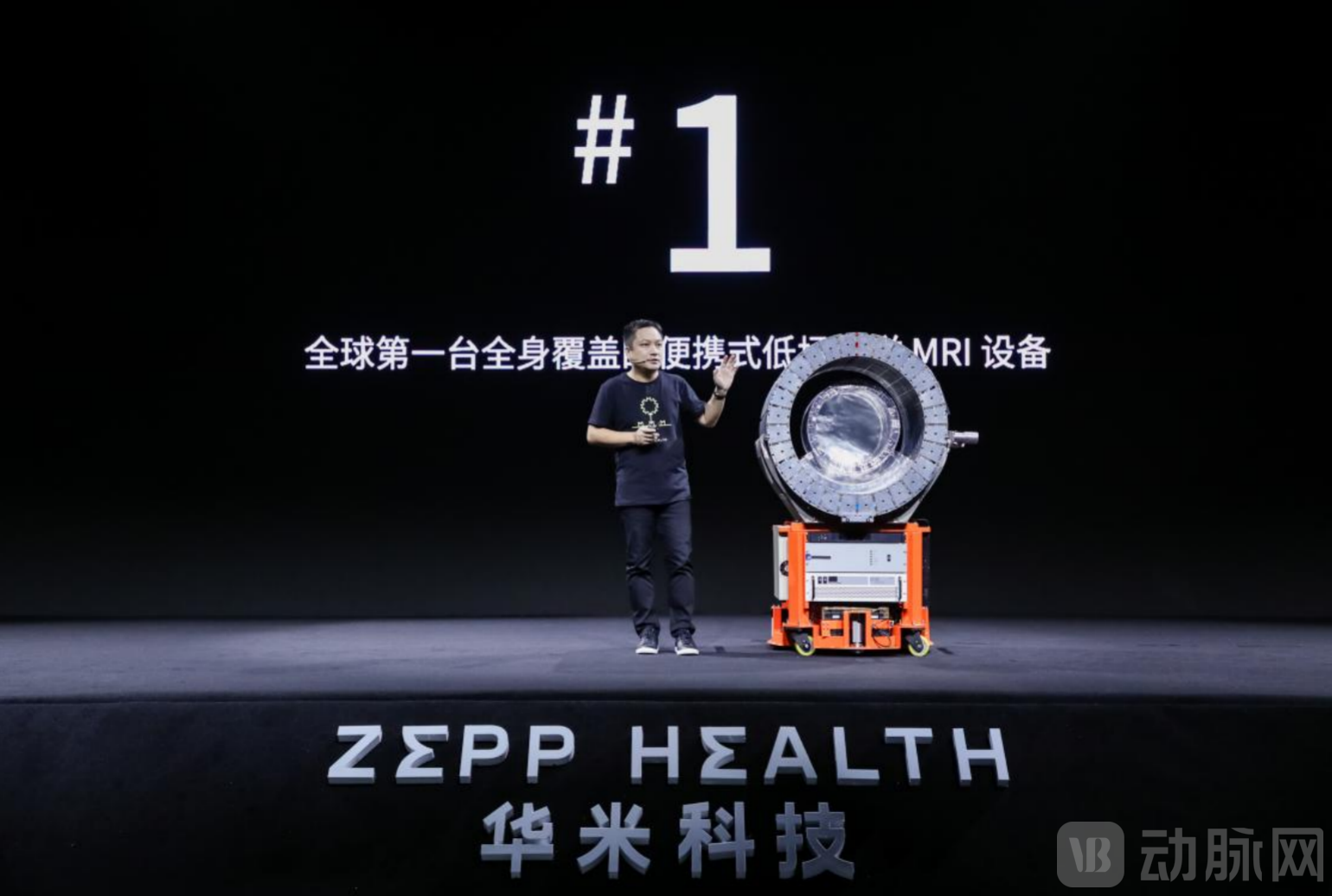
Huang Wang introduced that to realize this technology, Huami Technology has successively invested in Hyperfine and Promaxo, two top-tier next-generation MRI companies globally, and specifically invested in an independent team within China to better cater to the needs of Chinese users.
Traditional large-scale medical MRI systems are costly behemoths, typically weighing 10–13 tons. In contrast, this portable MRI unit is remarkably compact, standing only 1.5 meters tall, occupying less than 2 square meters of floor space, weighing under 0.8 tons, and consuming an average power of less than 1 kW, all without requiring a shielded room. Furthermore, access to traditional MRI scanners is often limited; in many first-tier cities, patients frequently face long wait times to schedule an MRI examination.
Addressing the aforementioned issues was Huami’s original motivation for investing in MRI technology. Huang Wang stated that once portable MRI systems become widely adopted, “we will no longer require specialized rooms with strictly controlled temperature, humidity, and magnetic fields. These devices can be deployed in general outpatient clinics, as well as in hospitals and clinics across towns and rural areas. They can even be integrated into surgical procedures to provide visual guidance, effectively alleviating the shortage of MRI resources and overcoming limitations in usage scenarios.”
However, to achieve such a feat, Huami must still address the cost issue of portable MRI. In Huang Wang’s vision, MRI should be a product priced in the millions, not tens of millions. Only by achieving this cost target can the widespread adoption of MRI become possible in the short term.
At the conclusion of the conference, VCBeat visited the Huami Global Innovation Center, where we gained insight into Huami’s more comprehensive strategic layout.
Huami’s medical ambitions are documented in its Global Innovation Center, which houses a more comprehensive layout of its healthcare initiatives.
Huang Wang stated that R&D investment over the past three years averaged RMB 410 million annually, reaching as high as RMB 538 million last year—equivalent to two or even three times that of some emerging internet companies and IoT smart hardware firms.
As for the number of patents, Huami Technology has filed more than 1,000 patent applications, with 550 already granted.
At the conclusion of the conference, Huang Wang stated that this year’s Next Beat conference, themed “The Future of Health,” was dedicated to conveying the concept of “technology connecting health,” continuously enriching and advancing the “chip-device-cloud” strategy, and sharing insights on the future of the health industry. Of course, this is only just the beginning.