

How the Medical Industry Capitalizes on the $27 Billion Tokyo Olympics Amid a Pandemic
At 7 p.m. Beijing time tomorrow evening, the “2020 Tokyo Olympics,” postponed for one year, will finally unveil its mysterious veil.
It is dubbed “mysterious” because, from the very onset of the global pandemic, the Tokyo Olympics were destined to be anything but “ordinary.” On March 24, 2020, the Tokyo Organizing Committee and the International Olympic Committee jointly announced that the “Tokyo 2020 Olympic Games” would be postponed by one year, marking the first postponement in the century-long history of the modern Olympic Games since their inception in 1896.

Such a “historic moment” has failed to inspire; instead, it has placed considerable pressure on the Japanese government. According to estimates by Katsuhiro Miyamoto, Professor Emeritus at Kansai University, the postponement and holding of the Tokyo Olympics without spectators would result in total investment losses exceeding ¥3 trillion.Losses will reach as high as ¥2.4133 trillion (approximately RMB 145 billion), primarily reflected in the substantial revenues and expenditures associated with ticketing, merchandise sales, international image production and transmission, corporate marketing activities, brand investment promotion, venue maintenance, and epidemic prevention measures.
However, as the most commercially successful sporting event globally, the Olympics is, in essence, a “profitable business.” As early as half a century ago, during the 1964 Tokyo Olympics, Japan already reaped the “benefits,” and since the turn of the new century,The 2008 Beijing Olympics became the most lucrative sporting event, with official data revealing total revenues of RMB 19.54 billion and a surplus of RMB 130 million.
What was once a lucrative business has now become a money-losing venture. The root of this shift can be traced back to the pandemic, making the epidemic prevention measures for these Olympic Games the primary focus of external attention. However, the connection between the Tokyo Olympics and the medical industry extends far beyond this. In other “unexpected” areas, a strong “chemical reaction” is taking place between sports and healthcare.
I. With Over 40,000 Arrivals and Nearly ¥100 Billion Invested, How Is the Strictest Epidemic Prevention in History Being Implemented?
According to Japanese media reports, the number of entrants for the Tokyo Olympics will exceed 40,000, coming from approximately 200 countries and regions worldwide, including about 10,000 athletes and around 32,500 government officials and related staff.
The massive volume of inbound travelers is not the only concern for the Tokyo Organizing Committee; Japan’s deteriorating domestic epidemic situation has further compounded the challenges of epidemic prevention and control. According to the latest data,As of July 21, 2021, there were 33,745 active COVID-19 cases in Japan, with daily new infections remaining above 1,500, indicating a highly severe overall situation.
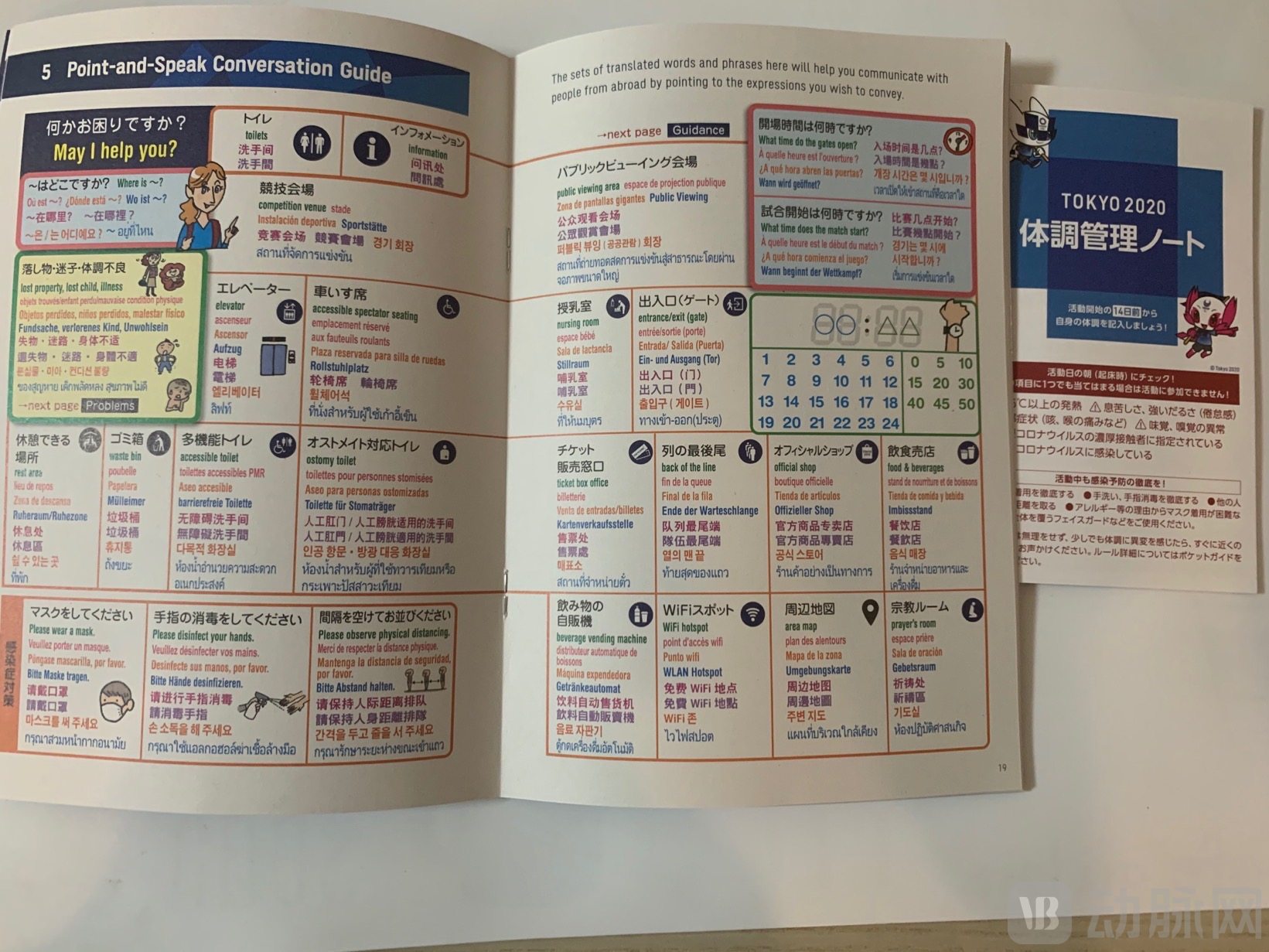
“The Third Edition of the Epidemic Prevention Manual” (Photo provided by a friend of the reporter)
But the Tokyo Organizing Committee stated that it had already made “plans” for this. According to Japanese media reports,The Tokyo Organizing Committee plans to allocate approximately 100 billion yen (about 5.9 billion yuan) for epidemic prevention and control, and released the nearly 70-page “Playbook Third Edition” this June., while announcing specific epidemic prevention measures, it further clarified the specific penalties for those who violate the regulations, including warnings, temporary or permanent revocation of registration, disqualification from competition, fines, and other related measures. This represents the strictest epidemic prevention oversight in global sports events since the resumption of activities post-pandemic.
Specifically, the Tokyo Organizing Committee will fromVaccination, Epidemic Testing, and Contact TracingFocus efforts on epidemic prevention across three dimensions.
Vaccination: A total of 38,000 doses were provided, primarily produced by Pfizer, and administered to volunteers and referees.
The Tokyo Organizing Committee of the Olympic Games had previously stated publicly that it would not provide vaccines to athletes, with athlete vaccination primarily being the responsibility of their respective national delegations and the International Olympic Committee (IOC). It is understood thatThe International Olympic Committee purchased 20,000 doses of vaccines from Pfizer in May this year., primarily provided to the Japanese government and delegations from participating countries and regions.
The Tokyo Organizing Committee has limited vaccination eligibility to staff members who have direct contact with athletes, primarily including volunteers and referees. According to Nikkei, Japan, as the host country,Approximately 18,000 vaccine doses have been purchased from manufacturers such as Pfizer., will be administered at the Ajinomoto National Training Center in Kita Ward, Tokyo, primarily by team physicians from each participating delegation.
Pandemic Testing: Primarily Using Saliva Samples, the Tokyo Zone Implements “Daily Testing,” While Other Zones Adopt “Testing Every Four Days”
In the Third Edition of the Playbook, testing-related content spans four pages, providing detailed regulations on testing for overseas athletes and officials before travel, upon arrival in Japan, during the Olympic Games, and upon departure from Japan.
Furthermore, multiple testing tiers were established based on the competition venues, accommodation locations, and status of athletes and officials. For instance, participants in Tokyo underwent daily testing, whereas attendees with a low likelihood of close contact with athletes were required to be tested only once every four days.
The detection method primarily relies on saliva.To prevent misconduct such as sample tampering, saliva collection will be conducted under staff supervision, similar to doping tests. Compared with the method of using swabs to collect mucus from deep within the nasal cavity, saliva offers the advantage of safe and simple collection, facilitating efficient large-scale screening and expectedly reducing the burden on athletes.
Regarding analytical methods, there is ongoing discussion on whether to adopt antigen testing or PCR testing. According to the current proposal, if a saliva test yields a positive result, a confirmatory retest will be conducted using PCR testing on nasopharyngeal mucus samples.
Epidemic Tracking: “Bubble Model” + “New Devices” for Uninterrupted 24/7 Comprehensive Monitoring
According to the athletes’ epidemic prevention manual, *The Playbook*, during the Olympic Games, athletes are required to remain within a large “bubble,” with their movements primarily restricted to the Olympic Village, competition venues, and training facilities. They are not permitted to visit tourist attractions, external restaurants, or any other public places.
“The Bubble Model” is a competition operational model newly introduced after the pandemic. It refers to confining all personnel involved in the competition, except spectators, within a designated space under strict management protocols for a specified period from the start to the end of the event. The “Bubble Model” has been implemented in numerous major competitions both domestically and internationally, with no reported cases of infection to date.
Compared to athletes, the travel trajectories of media personnel and related staff were far less “straightforward.” To better monitor these “bit players” who shuttled among various competition venues, the Tokyo Organizing Committee of the Olympic Games spared no effort.
According to the Tokyo Metropolitan Police Department, from July 6 to September 6, equipped with high-performance cameras“Balloon Camera”Set to be deployed, the balloons will float at an altitude of approximately 100 meters to monitor crowd density. For trajectory tracking, two mobile applications developed and operated by entities such as Japan’s Ministry of Health, Labour and Welfare and the Tokyo Organising Committee of the Olympic and Paralympic Games will provide 24/7 comprehensive tracking of overseas journalists.
II. Dried Blood Spot Testing Piloted for the First Time: Innovative Technology Becomes a “New Weapon” in Combating Drug Cheating
Doping is an inescapable topic for the Olympic Games. Since Thomas Hicks, a marathon runner at the 1904 St. Louis Olympics (the third edition), injected himself with strychnine before the race, this “nightmare” of doping has persisted throughout the history of the Olympics.

Cover of the 2021 Prohibited List (Source: WADA Official Website)
According to incomplete statistics,From the introduction of comprehensive doping testing at the 1968 Mexico City Olympics to the 2016 Rio Olympics, the World Anti-Doping Agency (WADA) identified more than 1,000 cases of doping violations at the Olympic Games., with the United States and Russia being the two largest "repeat offenders."
However, doping control is not an easy task, as doping agents have been continuously “updated and iterated” alongside advancements in modern medicine. From the late 19th century to the 1950s, doping agents primarily referred to substances such as nitroglycerin esters, caffeine, diethyl ether, heroin, and cocaine.Central Nervous System (CNS) Drugs; from the 1950s to the 1980s,Anabolic Steroids and Blockersbecame the "drug of choice" for doping; from the 1980s to the present,Endogenous HormonesHas become the new “darling” of the doping family.
Looking to the future,Gene Dopingor may become potential targets. Gene doping refers to the introduction of genes that enhance physical constitution into athletes' target cells to gain a genetic advantage, thereby improving oxygen transport, muscle size, muscle fiber type, and even body weight. According to genetic mapping, there are at least 90 genes in the human body that can be modified. These gene-doping agents have diverse functions, including enhancing endurance, increasing explosive power, alleviating fatigue, boosting speed, and reducing body weight. However, it is worth noting that gene doping is not flawless; its harm to the body far exceeds that of traditional doping agents.
Frankly speaking, the development of doping agents and their detection are akin to Tom and Jerry, the protagonists of the famous American animated series *Tom and Jerry*. Tom, representing “detection,” is forever chasing Jerry, symbolizing “development,” but has thus far been invariably unsuccessful. However, this predicament may well be reversed at the Tokyo Olympics.
On May 24, 2021, the World Anti-Doping Agency announced that it would pilot dried blood spot testing at the Tokyo Olympics, an innovative new technology hailed as a powerful new tool in the fight against doping.
Dried Blood Spots (DBS) are a medical sample processing method in which minute volumes of blood are preserved on filter paper and, after drying, utilized for disease screening and diagnostic research.Dried blood spots (DBS) offer numerous advantages, including minimal invasiveness, low cost, simple sampling, convenient transportation, high stability, reduced storage space requirements, athlete-friendliness, and no gender restrictions for sample collectors; therefore, they have garnered significant attention from countries worldwide.
The application of the dried blood spot method in anti-doping will bring about a revolutionary transformation from “spot checks” to “universal screening,” and from “waiting for testing” to “immediate testing.”Witold Bańka, President of the World Anti-Doping Agency (WADA), stated that dried blood spot testing, which is simple and convenient as it involves obtaining blood samples by pricking an athlete’s finger, may herald a new era in anti-doping efforts, ultimately enabling more extensive testing across a larger number of athletes.
The World Anti-Doping Agency has revealed that dried blood spot testing allows for more extensive analysis of unstable compounds and makes it easier to test athletes in remote areas around the world, where traditional blood samples are often difficult to transport.
Olivier Rabin, the Science Director of the World Anti-Doping Agency (WADA), stated that the collection of dried blood spot samples is also more cost-effective. “Currently, when we transport blood samples, we use vials; this time, we only need to transport a single paper card. This also results in significant savings in sample storage, as the volume required for storage is much smaller. Storing cards with dried blood spots is far easier than storing blood vials or even urine samples.”
III. RMB 2 Billion in Financing Over 18 Months: How Big a Wave Can the Sports Rehabilitation Business Make in China?
Prior to the commencement of the Tokyo Olympics, several world-class athletes announced their withdrawal due to injuries, including Swiss tennis legend Roger Federer, top-ranked female tennis player Serena Williams, and NBA superstar James Harden. The early exit of these iconic figures undoubtedly diminished some of the luster of the Tokyo Games; however, behind this trend, we are witnessing the quiet emergence of a multi-billion-dollar market in China.
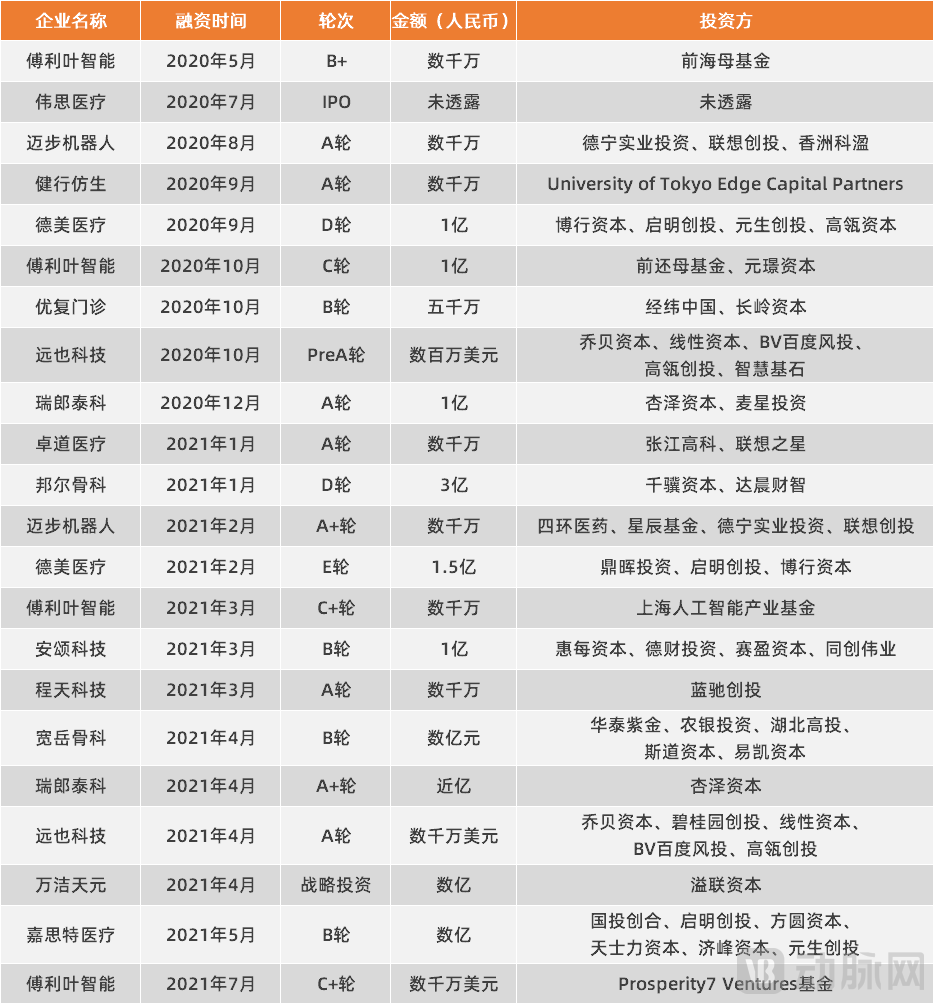
According to the VCBeat database, a total of 22 financing events have occurred in China's sports rehabilitation sector from 2020 to the present, with a total financing amount of approximately RMB 2 billion. Notably, Bang'er Orthopedics secured RMB 300 million in January 2021, marking the largest single financing round in the sports rehabilitation field over the past year and a half.
Overall, the sports rehabilitation industry chain is broadly divided into three major segments. The upstream sector primarily consists of rehabilitation equipment manufacturers, while the downstream sector comprises sports medicine or rehabilitation departments in general hospitals as well as specialized rehabilitation institutions. The end customers are professional athletes and sports enthusiasts.
Upstream: A surge in the number of enterprises and diversification of market forms.
According to the "Special Research and Investment Strategy Analysis Report on China's Rehabilitation Medical Device Industry (2021-2026)," the market size of rehabilitation medical devices in China grew from RMB 11.6 billion in 2014 to RMB 28.2 billion in 2018, with an average annual growth rate of 24.9%, which was higher than that of the overall medical device industry.The market size of rehabilitation medical devices in China is projected to grow at an annual rate of 20%, reaching RMB 58 billion by 2022.
In terms of the number of enterprises, data from the VCBeat Orange Database shows that 34 new medical rehabilitation equipment manufacturers have been established over the past five years, with as many as 17 of them specializing in the field of rehabilitation robotics. As a high-end rehabilitation medical technology, rehabilitation robots are the product of deep integration between robotics and medical technologies. They can replace the mechanical and repetitive tasks performed by rehabilitation therapists, freeing these professionals from burdensome, repetitive training duties. This allows specialists to focus more on optimizing treatment plans, while also enabling remote and centralized rehabilitation care.
Take Fourier Intelligence as an example.As the leader of China's intelligent rehabilitation industry,Four Rounds of Financing Completed by Fourier Intelligence in the Past Two Years, has garnered significant attention from the capital market. In terms of products, Fourier Intelligence possesses globally leading rehabilitation robotics platform technology. The company has independently developed a series of core technologies, including multi-axis force sensors, flexible joints, advanced robot control algorithms, and complex medical-grade interaction technologies. By establishing an open robotics technology platform, Fourier Intelligence continuously develops intelligent rehabilitation products tailored to clinical needs.
To date, Fourier Intelligence has obtained medical device certifications in multiple countries, primarily including FDA, CE, NMPA, TGA, and HSA. It is the first rehabilitation robotics company in China to achieve mass exports to Europe and the United States, with its products deployed in over 1,000 institutions and customers spanning more than 50 countries and regions worldwide.
Downstream: Hospital rehabilitation departments strengthen their responsibilities, while independent rehabilitation institutions showcase their unique strengths.
“Thirty percent depends on treatment, seventy percent on nursing.” As an independent department, Rehabilitation Medicine plays a pivotal role in the rehabilitative treatment of critically ill patients, with its significance and impact by no means to be underestimated. Moreover, as public awareness of health and self-care continues to rise, the Department of Rehabilitation will assume an indispensable and crucial role that cannot be replaced by other specialized therapeutic disciplines.
Guided by policy, rehabilitation medical institutions in China have now taken shape and developed diverse rehabilitation service plans for a wide range of users. According to the “White Paper on China’s Sports Rehabilitation Industry,”As of the end of 2020, the number of sports rehabilitation clinics had approached 400, with a growth rate exceeding 40% over the past three years. In terms of geographic distribution, these facilities are primarily located in economically developed cities such as Shanghai, Beijing, and Guangzhou, where the average cost per treatment session in first-tier cities ranges from RMB 800 to RMB 1,200.
Ranran Sports RehabilitationFounded in 2017, Ranran Sports Rehabilitation is an offline sports rehabilitation medical institution established by Ran Lingjun, a rehabilitation therapist for Olympic champions. To date, Ranran Sports Rehabilitation has opened seven offline rehabilitation centers, all located in Beijing. Its core services primarily include sports injury management, chronic pain treatment, post-orthopedic surgery rehabilitation, postural correction, and specialized physical conditioning.
In addition to strengthening its services, Ranran Sports Rehabilitation also focuses on talent development. In 2019, Ranran Sports Rehabilitation partnered with Beijing Sport University to jointly establish"Beijing Sport University Ranran Sports Rehabilitation Research Center", with a plan to train 800 to 1,000 sports rehabilitation therapists annually over the next three to five years, thereby establishing itself as the “Whampoa Military Academy” of China’s sports rehabilitation sector. In addition, Ranran Sports Rehabilitation has partnered with the University of Hamburg in Germany to offer training and certification for German professional sports rehabilitation therapists, aligning with cutting-edge international technologies and core concepts to strengthen talent development and deepen professional expertise.
End users: The population of individuals engaged in sports and physical activity will reach 430 million.
The growing number of individuals engaging in physical activity and the heightened awareness of rehabilitation will continue to drive the development of the sports rehabilitation industry. According to data from the “White Paper on China’s Sports Rehabilitation Industry,”In 2020, the number of people engaging in physical exercise in China reached 430 million. Based on an estimated sports injury rate of 10%-20%, the number of individuals with sports injuries is projected to reach 100 million, indicating significant potential demand for sports rehabilitation in the future.
From the current perspective, sports rehabilitation is undoubtedly a “hot commodity” in the healthcare industry. However, companies seeking rapid entry into this market still need to overcome multiple challenges, specifically manifested in the following five aspects:First, there is a significant shortage of sports rehabilitation therapists, and the talent ecosystem remains immature. Second, the market structure is imbalanced, with consumer spending concentrated among a small segment of the population. Third, consumers have limited familiarity with the concept of sports rehabilitation. Fourth, medical payment poses a major challenge, with comprehensive health insurance coverage being the key determinant. Fifth, healthcare professionals lack sufficient experience to provide specialized medical protocols.
Clinically, sports rehabilitation is a protracted process that requires close collaboration across multiple disciplines to achieve optimal outcomes. This operational model applies to the entire field of sports rehabilitation. Due to the inherent characteristics of the industry, its growth rate and development cycle are relatively slow, necessitating concerted efforts across various stages. Nevertheless, there is good reason to believe that with the deepening adoption of holistic health concepts, active advocacy by national policies, and the continuous endeavors of enterprises, institutions, and talent within this sector, the field of sports rehabilitation will undoubtedly achieve qualitative improvements in the future. A comprehensive, top-down operational system will be established, thereby delivering high-quality rehabilitation services to patients and enabling them to return to physical activity more effectively.
IV. The Hidden Hundred-Billion-Dollar Industry: Athlete Mental Health Takes Center Stage
Athlete mental health is not a topic that is frequently discussed; indeed, prior to the pandemic, it received virtually no attention. However, as the Tokyo Olympics approached, the issue of athletes’ mental well-being began to be “brought to the table.”
Michael Phelps, a swimming legend and 23-time Olympic gold medalist, once told the media that“The pandemic left me with depression. It was the most overwhelming period of my life; the days spent in isolation at home severely deteriorated my mental health, to the point that I even had suicidal thoughts.”
This is not “alarmist.” In an exclusive interview with the official Tokyo 2020 website, French sports psychology expert Markos Chamalidis stated, “The pandemic abruptly halted all athletic activities, which may lead to social withdrawal or depression among athletes—a serious issue that the sports community must confront. The primary cause is the loss of goals. Unlike injury-related layoffs, which typically require only a few months of rest, the entire sports world has come to a standstill, leaving athletes without any focal objectives. This situation is deeply troubling for athletes.”
However, the pandemic is not the sole cause of mental health issues among athletes.In 2019, the International Olympic Committee released the “Consensus Statement on Mental Health in Elite Athletes,” which found through a 12-month follow-up study that the prevalence of mental health disorders among elite athletes ranged from 5% to 35%.
Mental health symptoms among elite athletes include sleep disorders, depression, suicidality, post-traumatic stress disorder, attention deficits, psychiatric disorders, substance abuse, gambling disorder, and other behavioral addictions. Furthermore, some elite athletes may experience recurrent injuries, surgeries, fluctuating performance, and heightened public scrutiny, thereby subjecting their mental well-being to even greater strain.
Fortunately, the issue has begun to receive attention.In May 2020, the National Football League (NFL) and the NFL Players Association released an addendum to their collective bargaining agreement, requiring each team to hire a clinician focused on players’ physical and mental well-being, who must work at the game venue for at least eight hours per week, and to establish a mental health emergency action plan. Teams in the National Basketball Association (NBA) and the Women’s National Basketball Association (WNBA) are also required to develop plans for responding to mental health emergencies and to provide players with professional mental health services.
The Association of Tennis Professionals (ATP) recently announced a new partnership with “Sporting Chance” and “Headspace” to help its players improve their mental health. Sporting Chance, a professional mental health service provider, offers top athletes a safe and confidential space to discuss emotional and mental health issues. Individuals can contact a triage team of therapists at any time for assistance. Headspace, which specializes in meditation, provides its app and online content services free of charge to ATP players and employees, enabling them to manage negative emotions by accessing relevant resources.
Overseas markets are bustling, while the domestic market is also gathering momentum.As a leading sports nation, China boasts the world’s largest athlete population, with over ten million registered athletes. However, there is currently no enterprise in the country dedicated exclusively to athletes’ mental health. Despite this gap, the potential of this emerging industry remains evident within China’s vast market landscape.
First, there is the epoch-making policy tilt.In January 2020, the General Administration of Sport of China released the "Proposal on Strengthening the Construction of Mental Health Systems for High-Level Athletes," marking the first specialized policy document in China aimed at addressing athletes' mental health. According to the document, the General Administration of Sport of China will focus its efforts on two key dimensions: establishing a mental health education platform and strengthening the construction of mental health service systems. It will also support and encourage mental health service institutions and individuals with relevant professional backgrounds to actively participate in providing these services.
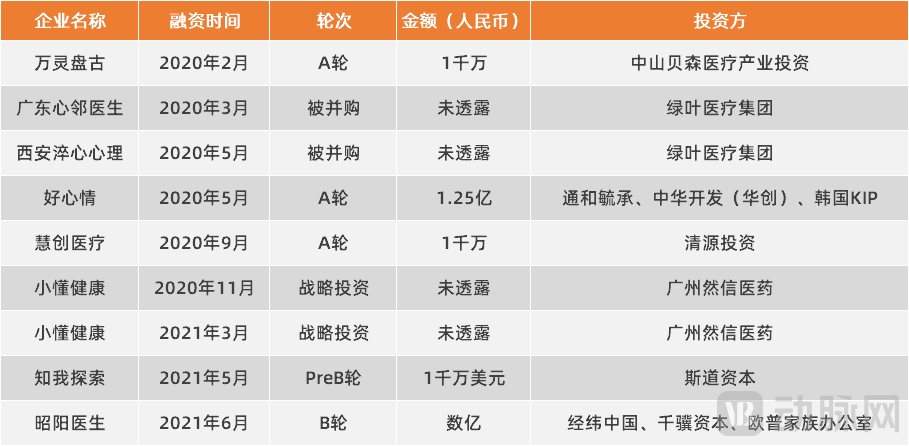
Next is the strong injection of capital.. According to the VCBeat database, a total of nine financing events have occurred in China's mental health sector from 2020 to the present, with the total amount raised reaching approximately RMB 500 million. Among these, Haoxinqing secured RMB 125 million in May 2020, marking the largest single-round financing in the mental health sector over the past year and a half.
Finally, innovative technologies empower the industry.In recent years, digital therapeutics (DTx) have become a hot topic in the healthcare sector, demonstrating significant advantages in providing personalized treatment for patients with psychological disorders. For DTx, mental health represents the second most accessible and important frontier after diabetes, given the limited efficacy of pharmacological interventions in this area. Currently, DTx applications in mental health have achieved notable success; for instance, Pear Therapeutics’ digital therapeutic Somryst has received FDA 510(k) clearance for treating insomnia through algorithm-driven cognitive behavioral therapy for insomnia (CBT-I).
V. Final Remarks
IOC President Bach once described this extraordinary Olympic Games as follows,“The Tokyo Olympics will become the ‘light at the end of the dark tunnel’ of the pandemic, but regrettably, even though this glimmer of light has emerged, it can only be conveyed to the world by media journalists.”
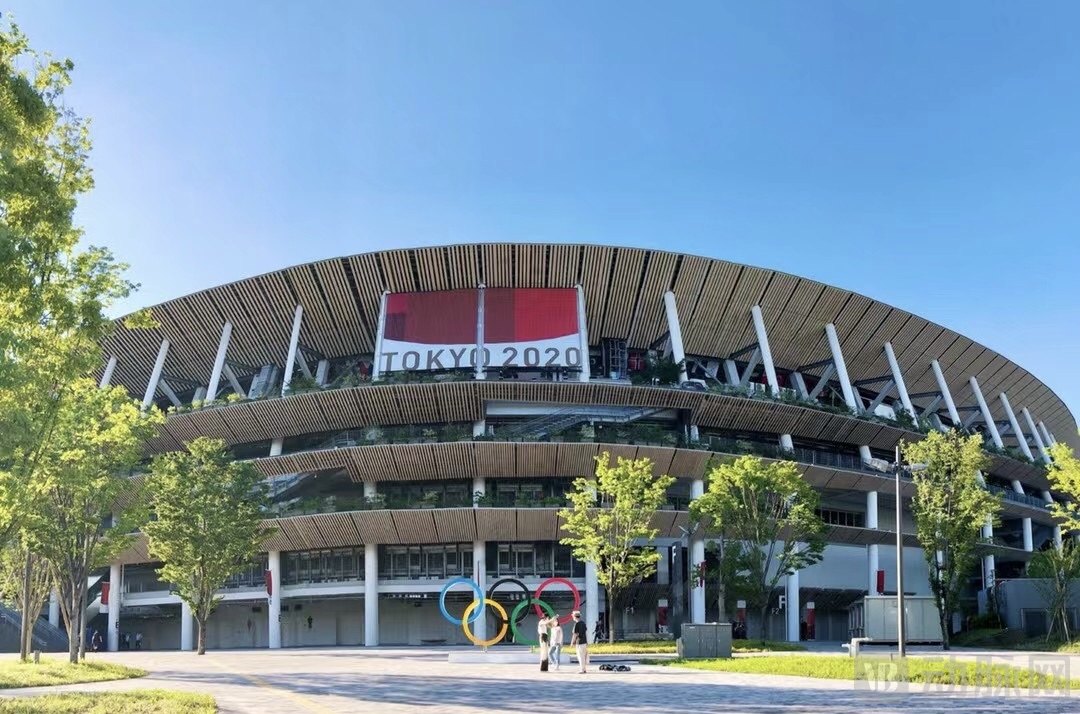
2020 Tokyo Olympics Main Venue – New National Stadium (Photo provided by a friend of the reporter)
The term “transmission” also accurately illustrates the connection between the sports and healthcare industries. Long before Pierre de Coubertin, the “Father of the Modern Olympics,” imbued the modern Olympic Games with their contemporary significance in 1896, the Olympic movement had already been documented in medical literature. As time has progressed, the quadrennial Olympic Games have continued to reflect the profound transformations occurring in both sports and medicine.
Yet, regardless of how the times change, medicine’s exploration of the sports domain remains ever passionate. Research directions have long evolved from initially unlocking human potential to optimizing athletic performance—a topic that will continue to engage the medical field until the end of this century. Within these research endeavors lie successive opportunities for the healthcare industry.