

MGI Tech Launches Portable Gene Sequencer DNBSEQ-E5, Delivering Results in as Fast as 4.5 Hours
On July 15–16, 2021, the 2nd Innovation Forum on Diagnostic Technologies for Infectious Diseases (IDD) was held in Wuhan, where MGI Tech showcased its high-throughput sequencing platform for pathogenic microorganisms. At the forum, MGI Tech officially released for the first time a series of performance data on the DNBSEQ-E5 gene sequencer in both research and real-world clinical settings.
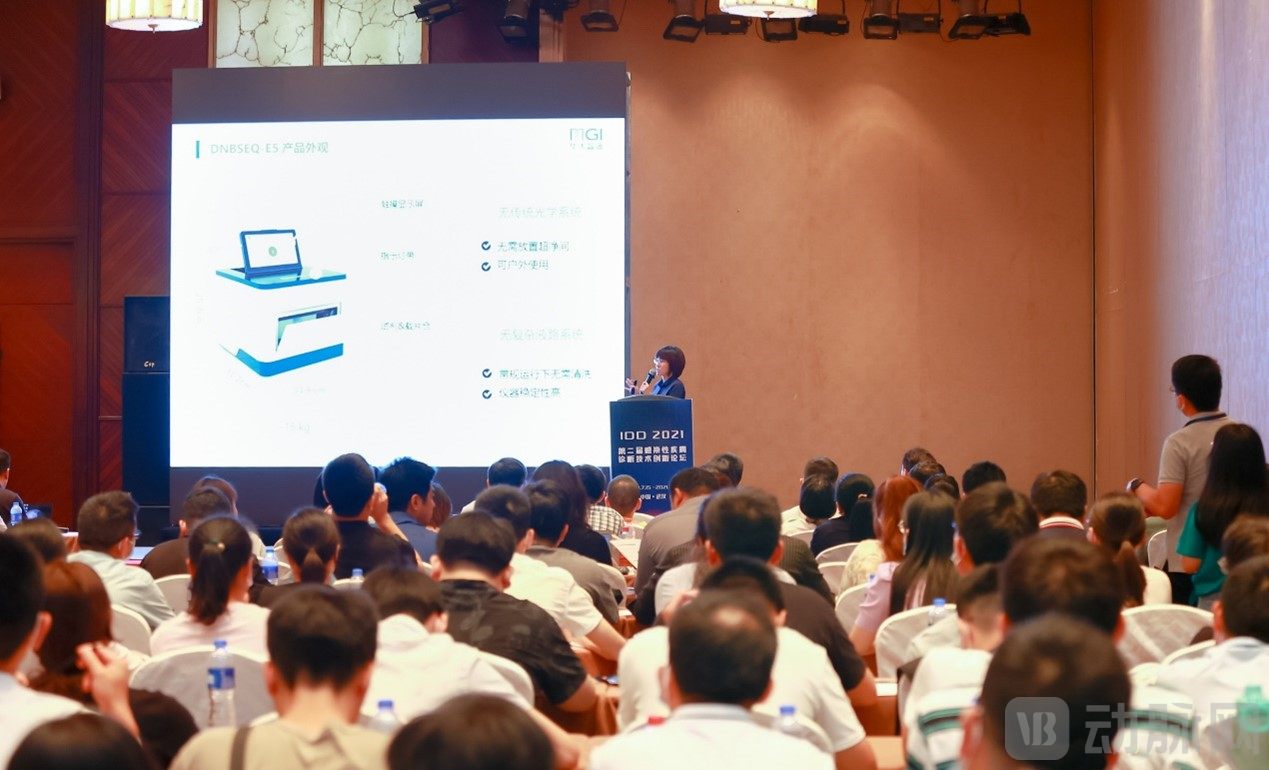
At the event, Dr. Zhang Luqi introduced the new product DNBSEQ-E5 (Image source: provided by the company)
According to Dr. Ni Ming, Senior Vice President of MGI Tech and General Manager of Qingdao MGI Tech, the DNBSEQ-E5 portable gene sequencer brought to the site is the first standardized product in MGI Tech’s DNBSEQ E series launched for end users. It can meet various application needs, such as small-scale whole-genome sequencing and pathogenic microorganism detection.
MGI’s DNBSEQ-E series gene sequencers, launched by MGI in 2019, offer customizable models. The development of this series aims to further lower the entry barrier for gene sequencing, making it a more widely accessible tool—akin to the now-familiar nucleic acid testing technology. “We aim to make gene sequencers a readily available tool for researchers,” said Ni Ming.
Reportedly, each unit in this product series occupies roughly the same desktop footprint as a laptop. It is portable enough for a single researcher to carry by hand, eliminating the need for dedicated laboratory spaces with strict temperature and humidity controls. The operational procedure is straightforward: setup can be completed within ten minutes, enabling immediate on-site sequencing. This capability allows for rapid response to urgent sequencing needs for special samples and quick detection of unknown pathogenic microorganisms, making it well-suited for frontline institutions such as customs and centers for disease control and prevention.
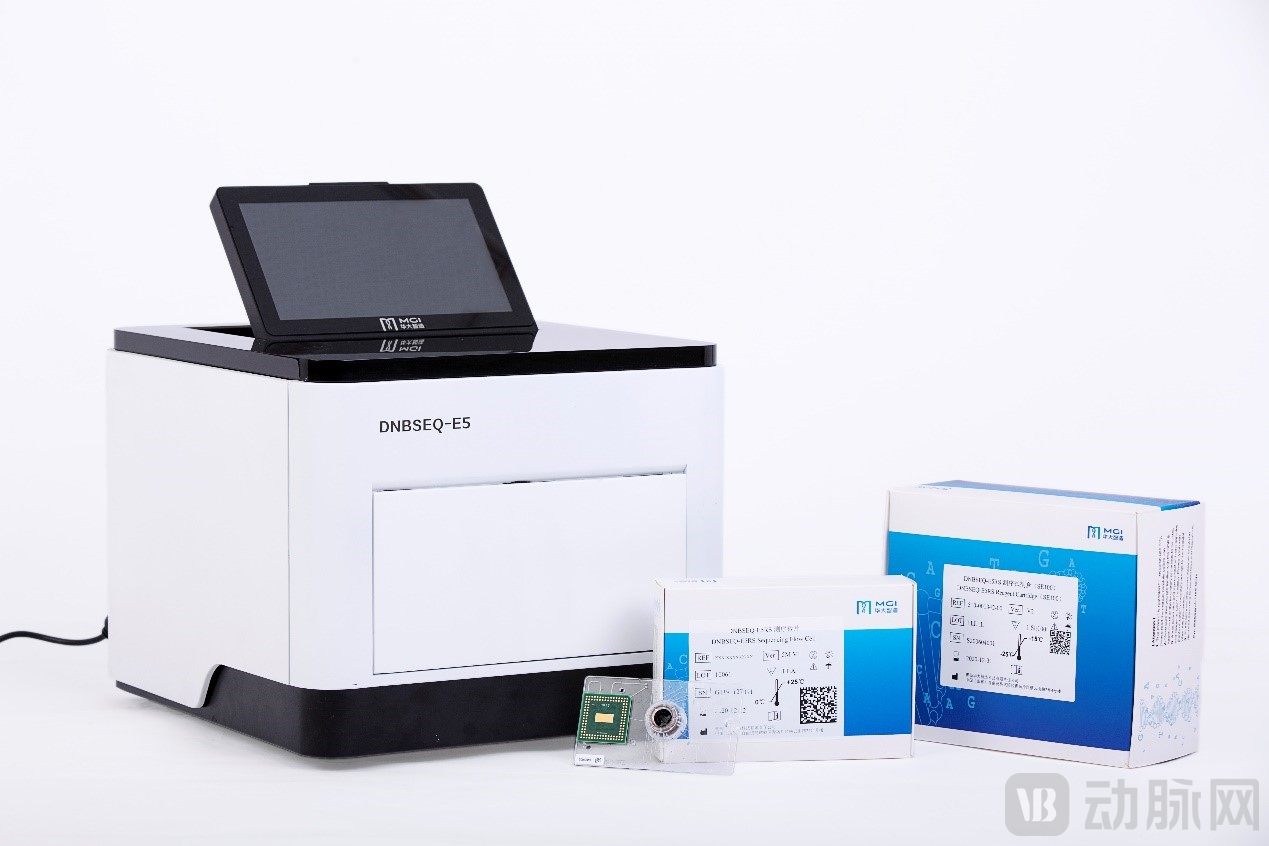
Portable Gene Sequencer DNBSEQ-E5 (Image source: Provided by the company)
For industry clients deeply engaged in the sequencing field, the DNBSEQ-E5 portable gene sequencer, with its compact and flexible design, can serve as a “backup player” to existing models, ready for immediate deployment—plug-and-play, with on-demand testing upon arrival.
Based on the trial run performance of the DNBSEQ-E5 portable gene sequencer, this model can be deployed in conventional nucleic acid testing laboratories. With a footprint comparable to that of a PCR instrument, it enables immediate sequencing upon identification of suspected positive samples, delivering output data in as little as 4.5 hours (sequencing read length: SE50).
Unlike common gene sequencers, the DNBSEQ-E5 gene sequencer in DNBSEQTMIn addition to its core technology, this gene sequencer incorporates MGI Tech’s three innovative technologies, making it portable.
Based on MGI DNBSEQTMCore Technologies: This gene sequencer employs an “integrated signal acquisition module” technology, similar to the image sensors used in smartphones, enabling the instrument to directly read base signals. Additionally, its “microfluidic sequencing chip” technology replaces the traditional fluidic system found in conventional sequencers; when used in conjunction with sequencing kits, it allows sequencing reagents to be loaded directly into the chip without passing through the instrument.
Furthermore, in terms of the biochemical principles of sequencing,The DNBSEQ-E5 gene sequencer adopts a novel self-luminescent system, enabling it to generate optical signals without the need for an excitation light source. Consequently, this MGI gene sequencer no longer requires traditional optical and fluidic systems, allowing it to function as a portable gene sequencer.
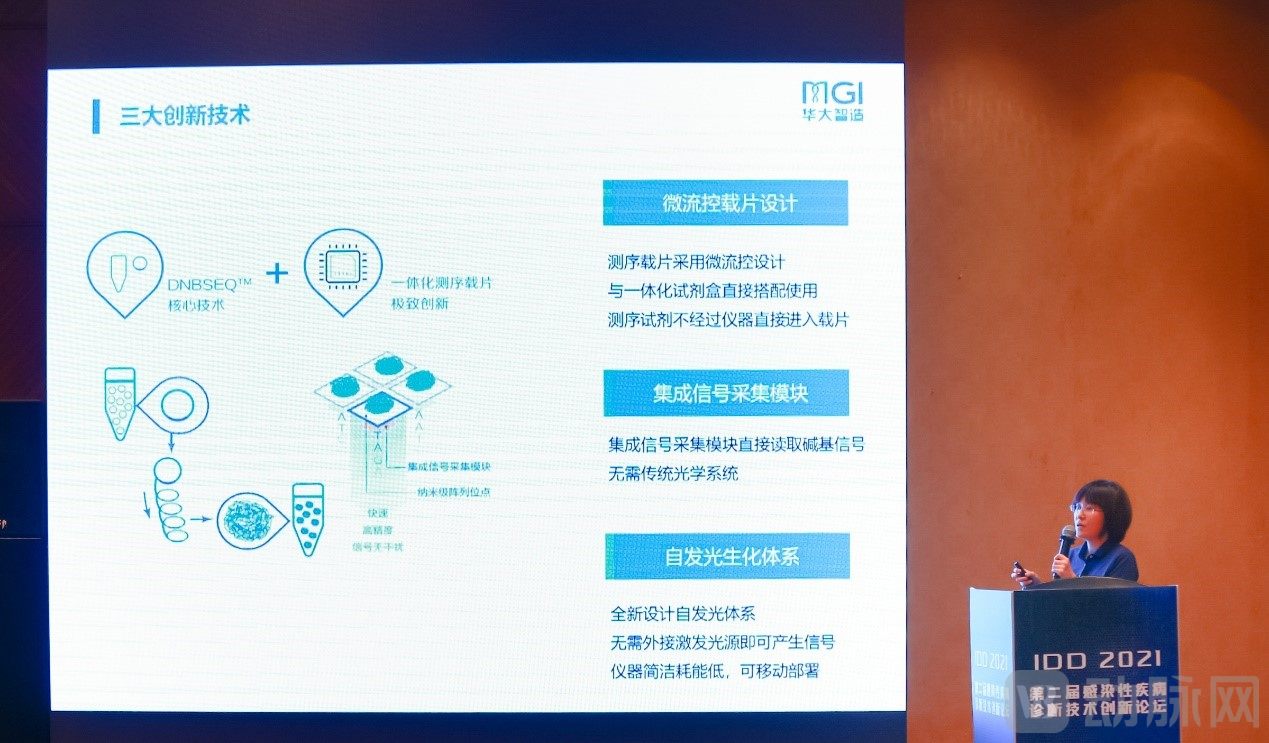
At the event, Dr. Zhang Luqi introduced the three major innovative technologies of the DNBSEQ-E5 (Image source: provided by the company)
At the conference, Zhang Luqi, Senior Product Manager at MGI Tech, also shared for the first time data and case studies on the use of the DNBSEQ-E5 gene sequencer in research settings. Zhang noted that the DNBSEQ-E5 successfully identified potential pathogenic pathogens in bronchoalveolar lavage fluid samples and rapidly generated antibiotic resistance profiling results highly consistent with those from drug susceptibility culture tests. It also assisted a pathogenic microbiology research team in sequencing bacteriophage samples, meeting the need for immediate, on-demand testing in relevant research projects. Furthermore, in a fun metagenomics testing scenario, it accurately predicted participants’ subsequent cold symptoms.
The gene sequencer industry may not be the most profitable, but it holds significant strategic importance and industrial value. Its strategic significance is reflected in the security of human genetic resources, while its industrial value corresponds to the rapid development of the genetic testing industry.
However, for many years, the sequencer industry has been monopolized by a few foreign giants. In recent years, Chinese enterprises, starting with MGI Tech—the leading player in China’s domestic sequencer industry—have been pursuing a path of independent research and development for domestically produced instruments.
Since acquiring CG, MGI Tech has embarked on a path of independent research and development. Through multiple iterations and upgrades, MGI Tech has conducted further R&D based on the technological foundation of CG. According to MGI Tech’s prospectus, as of September 30, 2020, MGI Tech held 364 valid authorized patents domestically and internationally.
MGI Tech previously stated to VCBeat: “In addition to core technologies such as DNA Nanoballs (DNB) and Patterned Arrays, which offer advantages including high sequencing accuracy, low cost, and low duplicate read rates, MGI Tech has continuously developed new technologies, such as CoolMPS, to further increase read length and sequencing accuracy while reducing sequencing costs.” Currently, MGI Tech has established nine R&D centers worldwide, achieving largely independent product development.
As of June 2021, MGI Tech’s gene sequencers had generated a cumulative data output exceeding 50 petabases (Pb), with more than 1,800 related articles published.
Previously, leveraging DNBSEQTMLeveraging its core technologies, MGI Tech has successively launched the DNBSEQ-Tx series of ultra-high-throughput sequencing systems, the DNBSEQ-T7 high-throughput gene sequencer, the MGISEQ-2000 medium-to-high-throughput gene sequencer, and the MGISEQ-200 mid-throughput gene sequencer. By establishing a comprehensive product portfolio with diverse models, these solutions can be applied to various scenarios, including tumor gene sequencing, metagenomic sequencing, whole-genome sequencing for large-scale population genomics, non-invasive prenatal testing (NIPT), and detection of unknown pathogenic microorganisms.