

How Dr. Xue Weicheng of Peking University Cancer Hospital Uncovered the Truth Behind 'Endometrial Stromal' Tissue in a 50-Year-Old Man’s Colon Biopsy
A while ago, Peking University Cancer Hospital received a rather unusual pathological slide.
The patient has been referred to multiple hospitals, yet pathologists have consistently been unable to provide a definitive diagnosis based on the pathological slides.
The patient ultimately chose to bring the pathological slides and travel to Beijing.
On that day, Dr. Xue Weicheng, the director of the Department of Pathology at Peking University Cancer Hospital, was on duty. Upon examining the pathological slides, he experienced a sense of déjà vu. However, when he reviewed the patient’s medical records and noted that the patient was a 50-year-old male, this finding appeared inconsistent with his initial impression.
This pathological sample was obtained from the patient's intestinal mucosal tissue. Unlike normal physiological tissue, spindle cells were observed in portions of this sample.
Since mesenchymal tumors are predominantly composed of spindle cells and can occur in any organ or tissue, some physicians initially suspected a diagnosis of gastrointestinal stromal tumor (GIST) during the patient’s earlier diagnostic evaluation. However, colonoscopic findings and other tests failed to further validate this hypothesis or yield a definitive result.
When observing the pathological samples, Director Xue Weicheng’s immediate thought was “endometrial stromal cells.” But how could biopsy tissue from a male patient’s colonoscopy exhibit histological features characteristic of female patients? Rather than dismissing his initial judgment outright or blindly accepting the previous physicians’ inferences, Director Xue opted to further investigate using technical methods to verify his hypothesis. As expected, the results confirmed his suspicion: these spindle-shaped cells expressed estrogen receptors and CD10, thereby confirming their identity as endometrial stroma.
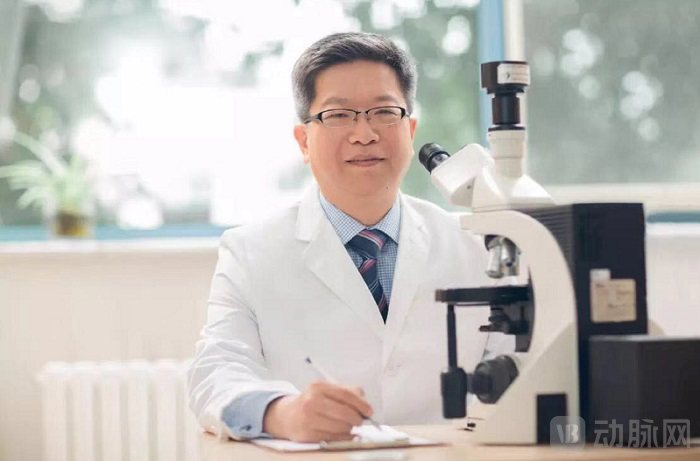
Director Xue Weicheng, Department of Pathology, Peking University Cancer Hospital
It is hardly surprising that, although previous physicians recognized the anomaly, they did not consider this possibility, as it is nearly impossible. As for why this outcome occurred, Director Xue Weicheng provided his explanation: “The sample underwent laboratory contamination.”
Potential sources of contamination include sample debris and contaminated instruments such as scalpels and forceps used in the laboratory. Although this is a low-probability event, it is not impossible. Most pathologists may lack sufficient experience or subconsciously disregard the possibility of laboratory contamination, ultimately preventing them from reaching a definitive diagnosis.
In fact, even Director Xue Weicheng, with his extensive experience, does not frequently encounter such cases. For the most part, like other pathologists, he works behind the scenes. Aside from their signatures on pathology reports, the presence of pathologists often goes unnoticed by the outside world.
Although they work behind the scenes, it is often they who fire the first shot in the fight against cancer.
"Pathological diagnosis is the most objective diagnostic criterion."
Compared to the operating table, where every nerve must remain taut at all times, work in the pathology department is more akin to being on a battlefield without smoke or gunfire.
From the time a patient enters the hospital to receiving a cancer diagnosis, they may undergo numerous tests and analyses. “However, pathological diagnosis is the most objective diagnostic criterion among all diagnostic methods,” stated Director Xue Weicheng.
Whether a patient has cancer often presents with certain clinical signs, such as "lumps" detected by physicians through palpation during physical examinations. Although doctors may hypothesize whether a tumor is malignant or benign based on their clinical experience, such assumptions cannot serve as the basis for treatment; instead, further diagnostic confirmation is required. Imaging modalities such as ultrasound, CT, MRI, and PET-CT can visualize tumors and assess cellular metabolic activity, allowing for preliminary inferences. However, definitive diagnosis still necessitates pathological examination of tissue samples obtained from the lesion site through procedures such as biopsy (e.g., needle biopsy) or endoscopic biopsy (e.g., gastroscopy).
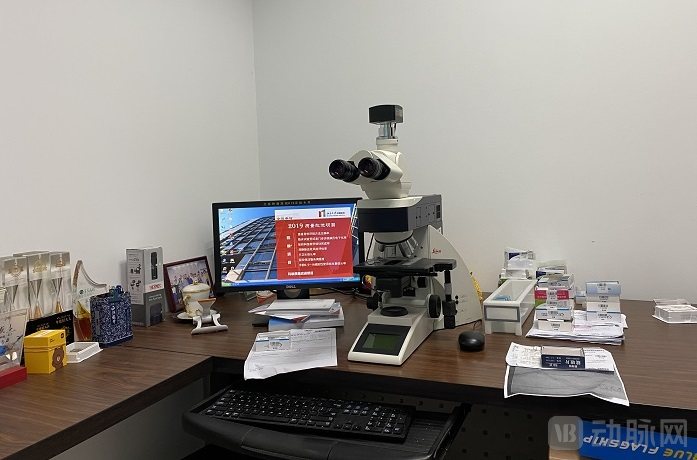
Director Xue Weicheng's Work Environment
Pathology reports issued by the hospital’s Department of Pathology provide diagnostic conclusions regarding whether a patient has cancer or other conditions. Furthermore, during the course of treatment, these reports include comparative analyses of prognostic indicators to assess therapeutic efficacy. From diagnosis through treatment, the value of pathology reports is self-evident.
So, what does a typical day look like for the pathology department on this smokeless battlefield?
Typically, Director Xue Weicheng’s work is divided into two parts: one involves processing pathological samples from within the hospital; since tertiary hospitals are responsible for addressing issues from lower-tier hospitals under the current tiered diagnosis and treatment system, his other responsibility is handling pathological samples referred from these lower-tier institutions. Occasionally, when complex or difficult cases arise within the hospital, he also participates in multidisciplinary expert consultations.
Currently, he primarily practices at three offline locations: Peking University Cancer Hospital, Beijing Jingxi Cancer Hospital, and Beijing Meizhong Airui Cancer Hospital. Online, he also practices on the Haodf platform.
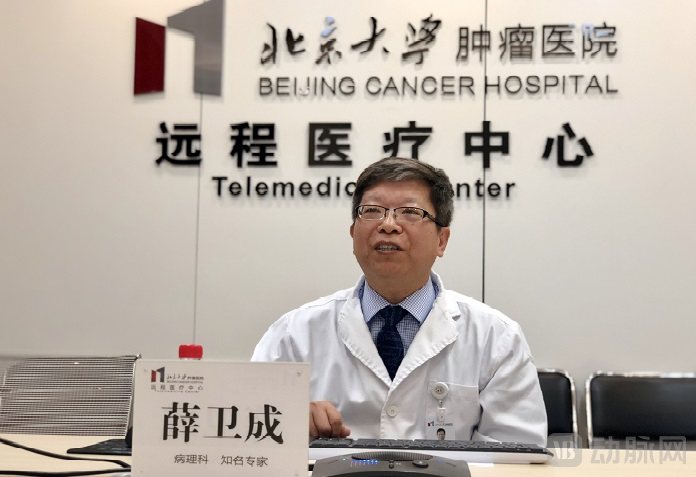
Teleconsultation
At Peking University Cancer Hospital, his primary role is to leverage his professional expertise to generate pathology reports for patients. In most cases, he does not need to engage in face-to-face communication with patients. However, in certain special circumstances, he does interact with patients to inquire about their medical history and the course of disease onset, thereby facilitating the preparation of more accurate diagnostic reports.
Beijing Jingxi Tumor Hospital is a secondary-level specialized hospital that has established a medical consortium with Peking University Cancer Hospital. Here, he primarily issues pathology reports for referred patients. Additionally, the hospital accepts pathology slides mailed by patients from other regions, provided they pose no biosafety risks, thereby addressing healthcare access challenges for patients seeking treatment across different locations.
At Beijing Meizhong Airui Cancer Hospital, in addition to providing pathological diagnoses, he also participates in the multidisciplinary team (MDT) collaborative care model. He works as part of a task force with experts from general surgery, medical oncology, radiation oncology, radiology, and the endoscopy center, among other departments, to determine the next steps in treatment through joint consultations. The patient’s attending physician then provides a detailed interpretation of the pathology report, ensuring that patients fully understand the rationale and basis for their treatment plans, thereby eliminating confusion during their medical journey. “If a doctor has the time, they should devote more time and energy to this—explaining things to patients,” he stated.
On the Haodf Online platform, Director Xue Weicheng primarily addresses patient inquiries, interprets medical reports, and provides consultative advice, including recommendations on which physicians may be able to assist patients.
“Whoever masters pathology masters the future”
Pathology, in its broad sense, encompasses not only disease diagnosis but also the pathogenesis of diseases. In the view of Director Xue Weicheng, “Whoever masters pathology masters the future.”
Distinguished figures in the medical community, such as Academician Lang Jinghe of the Health and Medicine Division of the Chinese Academy of Engineering and Professor Cao Zeyi, have traveled abroad for specialized training in pathology, establishing profound connections with this discipline. “A cornerstone of success in the field of medicine is a thorough mastery of pathology.”
However, the current situation is less than ideal, as young professionals are reluctant to pursue careers in pathology. On one hand, unlike other clinical departments, pathology offers fewer opportunities for visibility and public recognition. On the other hand, public awareness of pathology remains limited, with many perceiving pathologists as having lower incomes and fewer prospects for career advancement.
The reality may be precisely the opposite. In his view, the shortage of pathology professionals could lead to two possible outcomes: one is the collapse of the industry, and the other is that pathology talent becomes as precious as “giant pandas.” The latter scenario appears more likely. The scarcity of pathology personnel has triggered a fierce “talent war” among hospitals.
On the other hand, the organizational structure of pathology as a discipline is already relatively mature. With advancements in science and technology, richer connotations are being infused into this established field. For instance, traditional diagnostics focused primarily on determining whether tumors were benign or malignant. However, with the development of the discipline and related technologies, diagnostic outcomes now encompass refined disease nomenclature, assessment of biological behavior, and identification of specific genetic alterations, aiming to provide more robust evidence for clinical diagnosis and treatment.
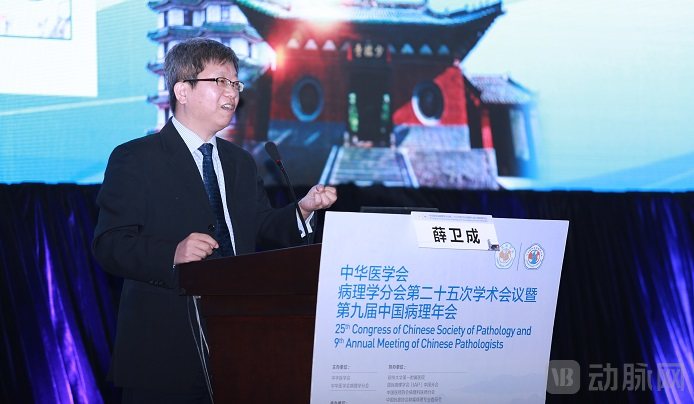
Director Xue Weicheng is engaged in academic exchange.
Pathology departments are thriving. However, the emergence of new technologies has further expanded their workload. Meanwhile, pathology work remains difficult to replace with artificial intelligence, which has further exacerbated the shortage of talent.
In his view, apart from the public’s limited understanding of pathology departments, the shortage of talent in this field is also partly attributable to the current licensure mechanisms: relevant policies stipulate that individuals whose undergraduate degree is not in clinical medicine but whose master’s degree is in pathology and pathophysiology are ineligible to take the National Medical Licensing Examination for Clinical Practitioners. Pathology departments themselves hold limited appeal for internists and surgeons with a clinical medicine background, while physicians from non-clinical medicine backgrounds who are interested in the specialty are often barred from entry.
“Whether or not one has a clinical background may have some impact on pathology professionals, but more importantly, we must strictly control the ‘exit’ gateway for talent. It is essential to ensure that they meet qualified standards, rather than imposing excessive restrictions at the entry level,” stated Director Xue Weicheng.
This also brought back memories of his student days. In 1988, he enrolled at Beijing Medical University, where he studied in the Department of Basic Medicine. At that time, many of his peers chose popular fields such as immunology and biochemistry and went abroad for further studies, but he opted for pathology with the intention of working in a hospital setting. During his final year, he began studying at the Department of Pathology, Beijing Medical University. He even proactively participated in graduate-level courses in diagnostic pathology. Ultimately, he fulfilled his aspiration by joining Peking University People’s Hospital (also known as the Second Affiliated Hospital of Beijing Medical University).
At that time, the residency training system was just being introduced. Hospitals were willing to allow residents to manage a wide variety of complex and challenging cases, and even enabled them to rotate through clinical departments to gain insight into the workflows of various supporting units. Back then, he was merely an undergraduate student. In contrast, medical doctoral graduates today, typically around 30 years of age, often lack extensive clinical experience and still require substantial time for further training. He stated, “The age of 20 is when an individual’s manual dexterity and cognitive abilities are at their peak; therefore, this period represents the optimal stage for training.”
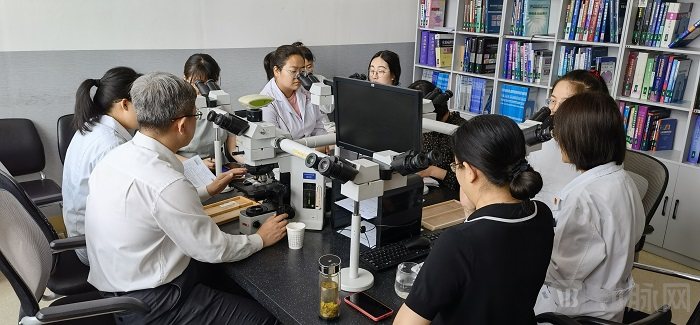
Director Xue Weicheng (front row, first from the left) demonstrating during teaching
The issue of talent development is not a new one. At that time, he also faced difficulties while attempting to pursue further education and obtain an in-service postgraduate degree. Since degree conferral is under the jurisdiction of universities, clinical institutions often lack pathology supervisors. Even when supervisors are available, their training approach tends to prioritize research over clinical practice. Ultimately, he had to resign from his position and go to the University of Hong Kong to pursue his degree. After obtaining his doctoral degree in 2005, he began his current work.
“Perhaps we could try something different.”
"Many things have faded into the past, but he has preserved the scene from the first lecture of his pathology course."
Professor Zheng Jie, former Editor-in-Chief of the Chinese Journal of Pathology, stated in his first lecture: “I hear, I forget; I see, I remember; I do, I understand.” (The original quote may be derived from Xunzi’s “Ru Xiao”: “Not hearing is not as good as hearing; hearing is not as good as seeing; seeing is not as good as knowing; knowing is not as good as practicing. Learning culminates in practice.”)
To this day, he continues to put these words into practice.
Regarding the future, he also has his own reflections:
On one hand, pathologists should embrace change. When confronted with new knowledge and emerging technologies, they should maintain an accepting and open-minded attitude, avoiding feelings of self-pity or resignation. Every day working in the healthcare industry should be approached with the earnestness and openness of youth, actively embracing external changes and striving to learn continuously.
On the other hand, pathology report data should not be cold and impersonal. Patients should be able to genuinely feel the comfort and reassurance provided by their physicians. Communicating with patients is, in itself, a demonstration of respect for all lives, including those of the patients. Moreover, saving lives and healing the wounded is the original aspiration of many who are committed to becoming doctors. The issuance of pathology reports and similar tasks should not lead to the neglect of the individual as a human being. This is an area that requires improvement in current societal practices.
Looking back from a future vantage point at how he embarked on this path, the answer may be quite simple.
At that time, as he contemplated his future career, the elder family members who worked as teachers became his role models. While attending school in the county town and achieving excellent academic results, he aspired to become a teacher like his elders. However, his father said to him, “Our family already has enough teachers; perhaps you could pursue a different path. There are currently few doctors in our family, so you might consider trying that.”
Thus, he did something different and became a pathologist.