

Intravascular Lithotripsy Gains Global Consensus as Breakthrough Solution for Vascular Calcification

Genesis Medtech
Medical Device Research, Development, Production, and Sales
From July 16 to 18, nearly 100 cardiology experts gathered in Beijing to participate in the 18th Cardiac Imaging and Cardiac Intervention Conference (CICI), witnessing the application of new technologies and the latest advances in interventional therapy for cardiovascular diseases.
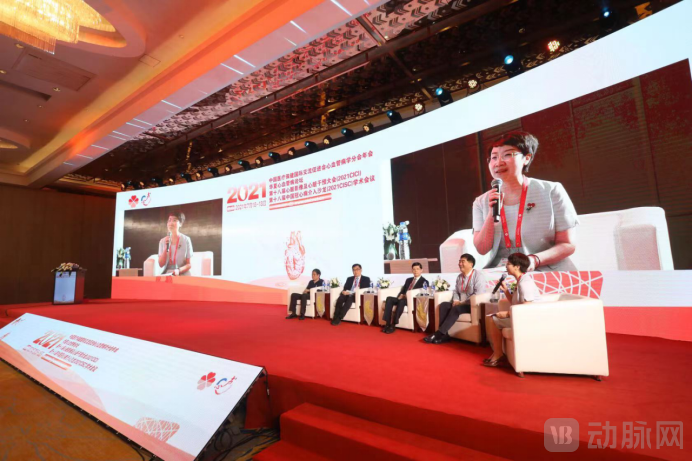
Following the opening ceremony at the main venue of the conference, the first presentation featured a novel technique: the first case in China of intravascular lithotripsy (IVL) for treating severe coronary calcification, performed by Professor Chen Yundai, Director of the Department of Cardiovascular Medicine at the Chinese PLA General Hospital. Professor Chen stated, “Intravascular lithotripsy is an innovative solution for addressing vascular calcification. It is currently the only safe and effective treatment modality, particularly for deep-seated vascular calcification. Furthermore, due to its operational simplicity, IVL holds significant advantages for widespread adoption and dissemination.”
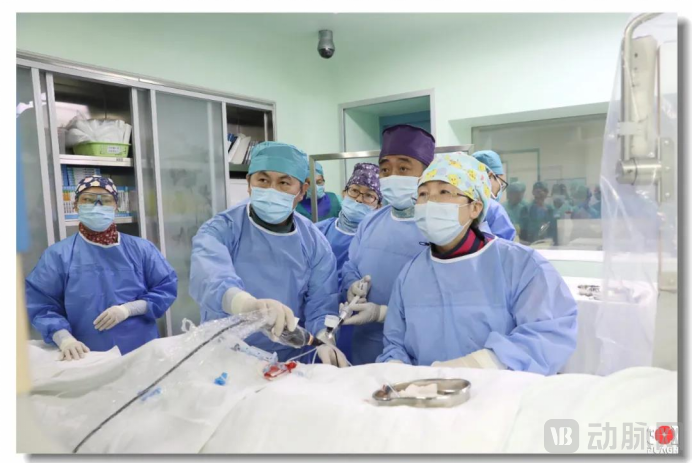
Figure: Professor Chen Yundai and his team performing the first-ever procedure using intravascular lithotripsy for the treatment of coronary artery calcified lesions
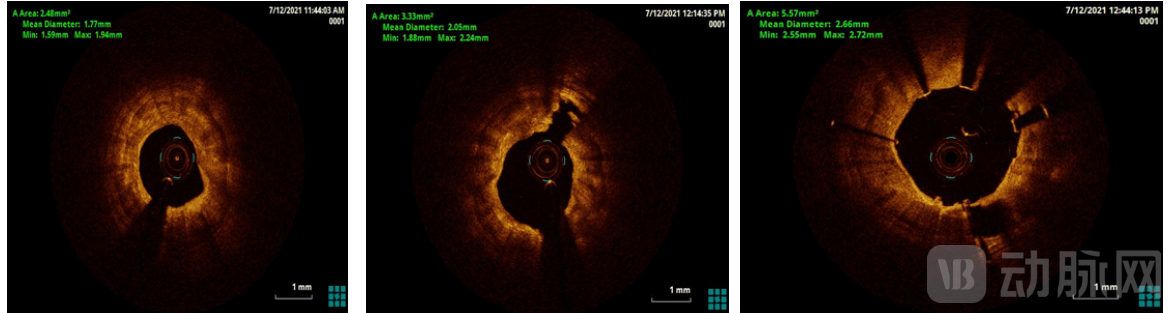
Figure 1: Preoperatively, severe 360° calcification of the left anterior descending artery is visible, with a 99% stenosis constituting a subtotal occlusive lesion. Lumen Area: 2.48 mm², Mean Diameter: 1.77 mm.
Figure 2: Following the application of Shockwave intravascular lithotripsy for calcium modification, the stenosis of the target lesion showed significant improvement compared to baseline. OCT revealed cracks at varying depths within the calcified lesions, disruption of the calcific ring, and marked luminal enhancement. Lumen Area: 3.33 mm²; Mean Diameter: 2.05 mm.
Figure 3: After stent deployment, satisfactory stent expansion and apposition were observed, with distal TIMI grade 3 flow and no complications such as dissection. Lumen Area: 5.57 mm², Mean Diameter: 12.66 mm.
The Q&A and discussions at the conference were highly engaging. Leading Chinese experts, including Ge Junbo, Huo Yong, Lü Shuzheng, Wang Weimin, Chen Jiyan, and Yang Tingshu, expressed their recognition and anticipation for this technology. Meanwhile, Professor Chen Huaiqin from Singapore shared his clinical experience and insights on using Shockwave products via an online presentation.
According to reports, intravascular shockwave technology targets vascular calcified lesions. The newly released “Chinese Expert Consensus on the Diagnosis and Treatment of Coronary Artery Calcified Lesions (2021 Edition)” indicates that the prevalence of coronary artery calcification increases with age, reaching approximately 50% in individuals aged 40–49 years and around 80% in those aged 60–69 years.
The detection rate of coronary artery calcification varies depending on the imaging modality used for assessment. Coronary angiography reveals moderate-to-severe calcified lesions in approximately one-third of cases with coronary artery disease.
Publicly available data show that, with the maturation of national volume-based procurement and minimally invasive interventional techniques, the number of percutaneous coronary intervention (PCI) procedures for coronary artery lesions in China exceeded 1 million in 2020. Among patients receiving interventional therapy, approximately 200,000 to 300,000 had moderate-to-severe calcified lesions requiring calcium modification to achieve the desired outcomes of interventional treatment.
There is a common saying in the medical community: “Fear not heaven, fear not earth; only fear vascular calcification.” Vascular calcification refers to a pathological condition characterized by the deposition of calcium substances in the vessel wall. This condition leads to stiffening of the vessel wall and reduced compliance, and it predisposes patients to high-morbidity and high-mortality conditions such as myocardial ischemia, left ventricular hypertrophy, heart failure, thrombosis, and plaque rupture.
According to reports, vascular calcification is frequently present throughout various complex vascular pathologies, and calcified lesions are often accompanied by vascular angulation and tortuosity. Meanwhile, calcified lesions exhibit a poor response to vascular dilation.
In terms of treatment, vascular calcification is managed by dilating the blood vessels and restoring blood flow using minimally invasive devices such as balloons and stents.
However, vascular segments with calcified lesions are relatively stiff and exhibit poor compliance. This makes it more difficult for interventional devices to cross the calcified lesions, thereby increasing the risk of PCI-related complications, such as failure of devices to reach the lesion site, stent detachment, guidewire fracture, and longitudinal stent compression, which ultimately compromises treatment outcomes.
Furthermore, since calcified lesions are high-resistance lesions, it is difficult to achieve full balloon expansion, which may even lead to serious complications such as balloon rupture. For vascular calcification, higher pressures are typically required to dilate the calcified segment; however, this significantly increases the probability of complications such as dissection, perforation, rupture, and no-reflow. If a stent is implanted in an inadequately expanded calcified lesion, issues such as incomplete stent expansion, poor apposition, and irregular stent deformation are likely to occur, thereby significantly increasing the risk of in-stent thrombosis and in-stent restenosis at various stages.
Therefore, to safely and effectively restore patency in calcified vascular segments, the calcified lesions must be addressed first.
Previously, the main approaches for treating calcified vascular lesions included: non-compliant balloons, cutting balloons, scoring balloons, rotational atherectomy, and excimer laser.
High-pressure balloons and modified balloons are generally only suitable for mild to moderately calcified lesions. They often fail to reliably dilate deeply and severely calcified vessels, resulting in significant residual stenosis that compromises stent delivery and expansion. The indications for excimer laser are also relatively limited; it is primarily applicable to mild-to-moderate calcified lesions, with low therapeutic efficacy for severely calcified lesions.
Coronary rotational atherectomy can only address superficial intimal calcification and is ineffective against medial calcification, calcified nodules, or severe calcification, necessitating its use in combination with other devices. Furthermore, the procedure is relatively complex, has a steep learning curve, and is associated with a higher incidence of postoperative complications. Complications include coronary artery dissection, coronary perforation, bradycardia and atrioventricular block, coronary spasm, slow-flow/no-reflow phenomenon, and distal embolization. Among these, the slow-flow/no-reflow phenomenon is one of the major complications of coronary rotational atherectomy, with an incidence rate of 1.8%–9.5%.
It is evident that significant clinical challenges persist in the management of vascular calcification, with substantial unmet needs remaining.
Fortunately, an innovative therapy has emerged on the international stage: intravascular shock wave technology. Experts both in China and abroad agree that intravascular shock wave technology provides a novel option and a powerful “weapon” for the treatment of coronary artery calcification, holding promise to become the “terminator” of this condition.
Public information indicates that the U.S.-listed company Shockwave, inspired by ultrasonic lithotripsy in urology, pioneered intravascular shockwave technology for treating intravascular calcification and originally developed an intravascular shockwave system (shockwave balloon) tailored to this procedural approach.To date, Shockwave is the first and only company worldwide to have commercialized an intravascular lithotripsy system.
According to the introduction, the shockwave balloon primarily delivers unfocused, circumferential, and pulsed mechanical energy to the lesion during low-pressure balloon inflation, thereby efficiently and safely fracturing both superficial and deep calcifications, as well as concentric or eccentric calcifications. This significantly improves vessel compliance, prepares the vessel for subsequent balloon angioplasty and stent implantation, and optimizes therapeutic outcomes.
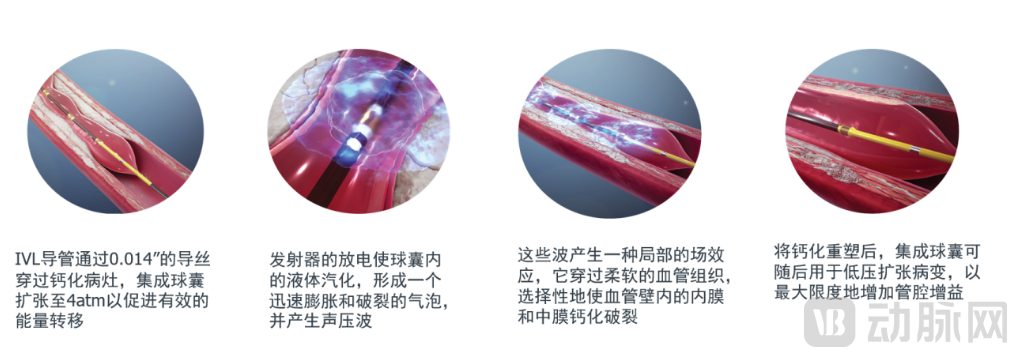
In the "Chinese Expert Consensus on the Diagnosis and Treatment of Coronary Artery Calcified Lesions (2021 Edition),"Intravascular Shockwave Technology Is Considered the Terminator of Vascular Calcification. Furthermore, as intravascular shockwave technology is safer, more effective, and simpler than other techniques, its use in more challenging calcified lesions is increasingly common.
It is worth noting that intravascular shockwave technology is currently the only modality with therapeutic efficacy for superficial, moderate, and deep calcifications.
According to Shockwave, shockwave balloons and intravascular lithotripsy technology have been widely adopted internationally and are currently available in more than 50 countries. Additionally,As of October 2020, its shockwave balloon has successfully treated more than 25,000 patients with coronary artery disease and more than 27,000 patients with peripheral artery disease.
Clinical trial data released by Shockwave demonstrate that the shockwave balloon exhibits a high safety profile and a low incidence of major adverse cardiovascular events (MACE) in the treatment of calcified vascular lesions, with no serious complications such as perforation, distal embolization, or acute occlusion. It also shows high efficacy, characterized by a high procedural success rate, significant immediate post-procedural lumen gain, low residual stenosis, and optimal stent expansion.
Based on the leading position and clinical efficacy of shockwave balloons, domestic innovative medical enterprisesGenesis MedtechReached a cooperation agreement with Shockwave in March 2021: Both parties jointly established aGenesis MedtechThe controlled joint venture introduced intravascular shockwave technology to China, benefiting Chinese patients; on the basis of establishing the joint venture,Genesis MedtechA production line will be established in China for the conversion and manufacturing of Shockwave’s products.
As of now,Genesis MedtechThe first clinical case enrollment for the shockwave balloon used in coronary artery calcification has been completed. The inaugural procedure, involving a case of severe coronary calcified stenosis, was successfully performed by Professor Chen Yundai’s team. The patient recovered well postoperatively, with restored blood flow to the stenotic vessel, and was discharged without complications. The case presented by Professor Chen Yundai at the CICI Conference was precisely this procedure.
Professor Chen Yundai stated, “The patient presented with long-segment vascular lesions and severe calcification, posing significant challenges for conventional techniques. In light of this, the team decided to employ an intravascular lithotripsy (IVL) balloon to address the calcification. The IVL balloon used in this procedure demonstrated unexpectedly excellent crossability. After ‘fracturing’ the calcified lesions with the shockwave balloon, stents were easily implanted, restoring blood flow and normalizing cardiac function. The procedure was minimally invasive, associated with few complications, and facilitated rapid patient recovery, making the overall surgery highly successful.”
Additionally,Genesis MedtechClinical trials for the shockwave balloon for peripheral vascular calcification are being prepared and are expected to launch by the end of this month.