

Century Therapeutics Advances iPSC-Derived UCAR-T and UCAR-NK Pipeline with Nasdaq Listing and IND-Enabling Programs

Century Therapeutics
Developer of Transformative Allogeneic Cell Therapies
Human pluripotent stem cells possess the potential for unlimited proliferation and multilineage differentiation in vitro. They are not only applicable to research on the mechanisms underlying disease onset and progression as well as in vitro drug screening, but also offer new possibilities for treating major human diseases. By inducing the differentiation of human pluripotent stem cells into functional cell types in vitro for use in cell transplantation to replace damaged or degenerated cells in the human body, cell replacement therapy holds promise for addressing major human diseases.
According to the report (hereinafter referred to as the “Report”) released by Transparency Market Research, a global market research firm,The global stem cell market is projected to reach $270.5 billion by the end of 2025, with a compound annual growth rate (CAGR) of 13.8% expected over the past eight years.The report estimates that the global stem cell market will experience strong growth momentum in the coming years, driven by a significant increase in the number of clinical applications of stem cells and the emergence of new therapies for chronic diseases.
Last month, Century Therapeutics, Inc. (“Century”), a biotechnology company focused on developing induced pluripotent stem cell (iPSC)-derived cell therapies for immuno-oncology, officially listed on the Nasdaq Stock Market (NASDAQ: IPSC). Founded in 2018, Century achieved its Nasdaq listing in less than three years. What makes this company so compelling? Or more broadly, what lies behind the allure of the iPSC sector? Let us begin by reviewing the history and evolution of cell therapy.

Cell therapy products currently lack clear definitions and scopes across various countries and regions. In December 2017, the former China Food and Drug Administration (CFDA) released the “Technical Guidelines for the Research and Evaluation of Cell Therapy Products (Trial)” (No. 216 of 2017) on its official website, stating that cell therapy products refer to live cell products derived from human sources, intended for the treatment of human diseases, with sourcing, manipulation, and clinical trial processes complying with ethical requirements, and developed and registered in accordance with relevant pharmaceutical regulations.
Cell therapy refers to a treatment method that utilizes a patient’s autologous (or allogeneic) adult cells (or stem cells) to repair tissues and organs. Cell therapies are commonly categorized into three types: immune cell therapy, stem cell therapy, and other cell therapies. Other cell therapies are primarily used for tissue injury repair; due to their limited innovation, they will not be discussed further here.
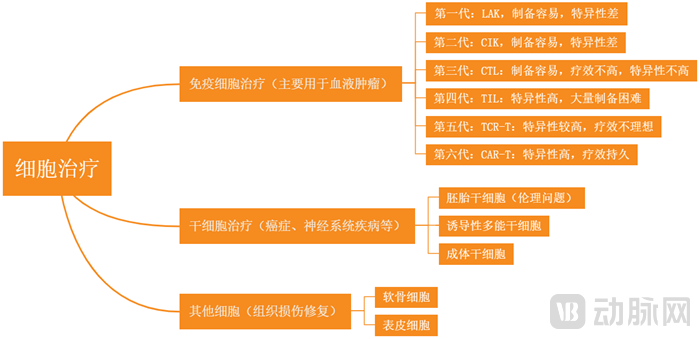
Cell Therapy Classification
Currently, the immunotherapy sector is gaining significant traction. The recent approval of China’s first CAR-T cell therapy product, Fosun Kite’s Axicabtagene Ciloleucel Injection, has provided a notable boost to the domestic cell therapy landscape, sustaining enthusiasm and optimism in this field. However, excessive hype has led to overcrowding in the sector, which hinders the development of truly innovative products. As the early movers have already reaped the initial rewards of this industry, how should the remaining companies chart their course? Promising avenues worth exploring include the development of iPSC-derived CAR cell therapies and CAR-T treatments for solid tumors.
Stem cell therapy in China is skewed toward early-stage research, while downstream stages such as clinical translation and industrialization are still in their infancy.Stem cell therapies are primarily categorized into embryonic stem cell therapy, induced pluripotent stem cell (iPSC) therapy, and adult stem cell therapy. The former involves complex ethical issues, while the latter has limited differentiation potential. iPSCs, occupying an intermediate position, can achieve unlimited proliferation and multilineage differentiation by introducing transcription factors into cells via vectors for induced differentiation, all within established ethical guidelines.
Compared with the already somewhat crowded CAR-T technology, the global industrialization of iPSCs is still in its infancy and may experience explosive growth in the future.This may also be the reason why major institutions and enterprises are increasing their investments in Century Therapeutics.
When discussing Century, one cannot overlook Luis Borges, the company’s Chief Scientific Officer. Luis has accumulated over 30 years of academic and professional experience in pharmaceutical R&D and management. In 1980, he began studying marine biology at the University of Lisbon, laying the foundation for his future work in biomedicine. In 1995, Luis earned his Ph.D. in Pathology from the University of Washington School of Medicine, after which he conducted scientific research in the Department of Pathology at the same institution for one year. The following year, he joined Immunex, a subsidiary of Amgen, where he spent six years engaged in postdoctoral and scientific research. During his tenure there, he led projects in immunology and cancer immunotherapy.
With this, Luis’s more than decade-long academic journey has finally come to a close. Having steadily accumulated knowledge and strength over the years, he is now embarking on his professional career.
In 2002, Luis joined Amgen, a global biotechnology giant, where he successively served as Research Scientist, Principal Scientist, and Scientific Director. In late 2011, he transitioned from oncology to the newly established Therapeutic Innovation department, where he led the development of novel T-cell cytotoxicity methods and agents, and investigated new approaches to harnessing distinct immune cell subsets for controlling tumor growth. He has been extensively involved in numerous hematology and oncology projects, spanning both preclinical and clinical stages.
In 2014, Luis joined Five Prime Therapeutics as Executive Director and Vice President of Research and Development, successfully helping the company transition into cancer immunotherapy. During his three years at Five Prime, Luis’s team advanced three drug candidates from discovery to the Investigational New Drug (IND) stage, two of which have entered clinical trials.
In 2017, Luis joined Cell Medica, a pharmaceutical company specializing in cellular immunotherapy, as Chief Scientist. This was his last position before joining Century Therapeutics. At Cell Medica, he was responsible for developing a new pipeline of CAR cell therapies and led the collaborative development of allogeneic CAR-NKT cells with Baylor College of Medicine. In 2019, during the early stages of Century Therapeutics’ establishment, Luis joined the company as Chief Scientist, where he oversaw the research and development of gene-engineered iPSC-derived immune cell products for the treatment of hematologic malignancies and solid tumors.
In addition, all members of the management team possess over 20 years of academic and professional experience in their respective industries, with an average age exceeding 55.“Though in their twilight years, their ambition remains undimmed.” In the latter half of life, they have chosen to come together, leveraging the steady accumulation of experience from their earlier years to embark on an endeavor filled with challenge and passion.
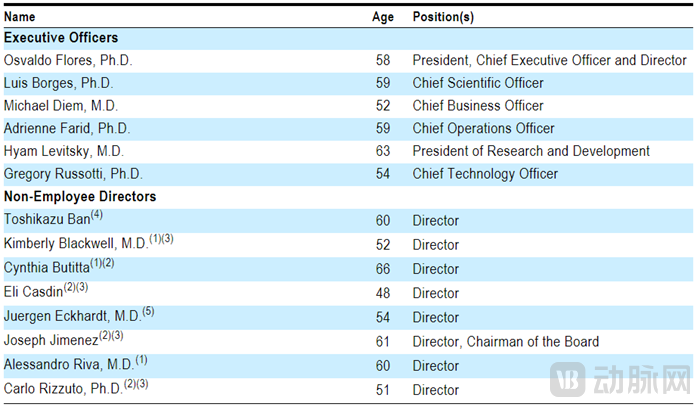
Company Management Team, Image Source: Prospectus
Under the leadership of the team,Century has established a comprehensive allogeneic cell therapy platform, which includes induced pluripotent stem cells (iPSCs), differentiation technologies for generating immune effector cells from iPSCs or iPSC-derived cells, and CRISPR-mediated precise gene editing. Leveraging these platform technologies, the company is developing proprietary next-generation chimeric antigen receptors (CARs) and advancing therapies based on iPSC-derived natural killer cells (iNK) and iPSC-derived T cells (iT).The Century technology platform primarily features the following four key elements:
① Highly Efficient and Precise Gene Editing Technology: Reassembly and repair editing using CRISPR technology. Transgenic expression via viral vectors typically results in variable gene copy numbers and random integration events, leading to insertional mutagenesis; Century Therapeutics achieves precise cleavage of the iPSC genome by employing the CRISPR-MAD7 ribonuclease, thereby preserving genomic integrity and precision.
② Proprietary Allo-EvasionTMTechnology: This technology enables the design of cells that can evade recognition and destruction by the host immune system. Its application prevents rejection by the patient’s immune system, thereby reducing allogeneic immune responses; when combined with CAR cell therapy, it further mitigates immune rejection in patients.
③ CAR and Protein Engineering: Leveraging the single-domain antibody fragment (VHH) platform to create multispecific CAR constructs targeting multiple tumor antigens; targeting diverse antigens on tumor cells will help address tumor heterogeneity and antigen loss.
④ Universal engineered iPSC progenitors, facilitating new product accelerationBecause other cell therapy platforms are generated from cells with limited replicative capacity, creating new product candidates requires restarting from each genetic engineering step of the product, which also makes it more difficult to predict functionality and safety based on products that may have undergone clinical testing in earlier programs. In contrast, Century Therapeutics’ iPSC-derived new product candidates all contain a set of shared core functionalities, eliminating the need to redesign common features every time a new product candidate is generated, thereby accelerating candidate generation.
Based on the aforementioned “one platform, four elements,” Century Therapeutics has established four product pipelines composed of cell therapies, all of which incorporate the company’s proprietary Allo-Evasion technology to prevent host rejection.TMtechnology. Let’s take a look at these four products one by one.
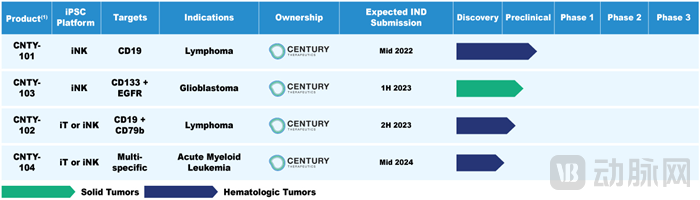
Product Pipeline, Source: Prospectus
The lead candidate product, CNTY-101, is a heterogeneous iPSC-derived CAR-iNK cell therapy indicated for lymphoma. Century Therapeutics expects to submit an Investigational New Drug (IND) application in mid-2022 to advance CNTY-101 into Phase 1 clinical trials;
CNTY-102 is indicated for refractory B-cell lymphoma and other B-cell malignancies. CNTY-102 simultaneously targets CD19 and CD79b, aiming to enhance response rates by mitigating the impact of CD19 antigen loss, while independently modulating CD79b. The Investigational New Drug (IND) application is expected to be submitted in the second half of 2023.
CNTY-103, a CAR-iNK therapy targeting CD133+EGFR, is indicated for recurrent glioblastoma. CNTY-103 is Century Therapeutics’ first clinical candidate for solid tumors, with submission of an Investigational New Drug (IND) application and/or Clinical Trial Application (CTA) expected in the first half of 2023.
CNTY-104, a CAR-iT or CAR-iNK therapy indicated for acute myeloid leukemia, is expected to submit an IND in mid-2024.
It is not difficult to see that,Century Therapeutics Focuses on iPSC-Derived iNK or iT Cell Therapies, because the human immune system is composed of two integrated systems: the innate immune system (NK cells) and the adaptive immune system (T cells). The innate immune system involves immediate, non-specific responses that recognize and defend against foreign pathogens based on widely conserved pathogen-associated molecular patterns, typically lacking pathogen- or disease-specific immune memory. Cell-based immunotherapies leveraging these two immune systems focus on modulating or enhancing the activity of different lymphocytes to treat cancer, particularly cytotoxic T lymphocytes (CTLs) and NK cells.
However, traditional personalized CAR-T therapy has drawbacks such as a long manufacturing lead time and high cost. Furthermore, patients often opt for cell therapy after undergoing multiple treatment regimens (such as chemotherapy or radiation therapy). Prior chemoradiotherapy may adversely affect the health of donor cells, impairing their ability to proliferate normally, which can result in manufacturing failure or insufficient potency.
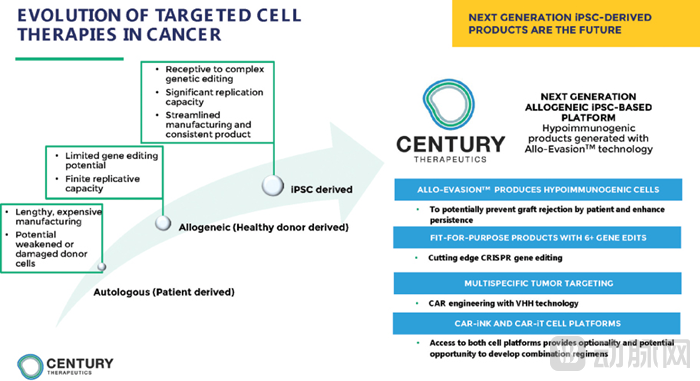
Century iPSC Cell Therapy, image source: prospectus
Century Therapeutics’ iPSC-based CAR cell therapy can directly generate target cells from functionally differentiated somatic cells, such as blood cells, skin cells, or bone cells. Furthermore, iPSCs can proliferate indefinitely, serving as progenitor cells for other cell types and differentiating into various types of immune cells under specific conditions.
The promising nature of this cutting-edge technology is one reason why Century Therapeutics has decided to enter the iPSC-CAR cell therapy sector; additionally, the broad market potential of indications based on this technology represents another key factor in its strategic decision.Glioma (Glioma, GBM) is the primary central nervous system tumor with the highest incidence and mortality rates, accounting for approximately 35.2%–61.0% of all intracranial tumors. Currently, there is no known cure for this cancer.
Currently, the primary treatment for glioma is craniotomy for tumor resection. However, due to the lack of clear tumor boundaries, complete resection is difficult to achieve, making recurrence almost inevitable. The efficacy of currently approved drugs is also suboptimal, with a median overall survival of only 12 to 15 months post-diagnosis. The lack of effective therapeutic options, coupled with gliomas accounting for 30% to 60% of all brain cancers, constitutes the market rationale for Century Therapeutics’ selection of its candidate products.
However, all of Century’s candidate products are currently in the discovery and early testing stages, with no products yet commercialized.As of March 31, 2021, Century had accumulated a fiscal deficit of $310.7 million. The vast majority of this deficit stemmed from product research and development, intellectual property acquisitions, and certain operational and administrative costs. Century is expected to continue incurring losses until its products receive regulatory approval.Following this IPO, Century will primarily use the net proceeds, after deducting issuance expenses, to advance its pipeline of CAR-iNK and CAR-iT cell candidate products.
In the future, iPSC+CAR cell technology may indeed spark novel breakthroughs: enabling the development of cell therapies with shorter R&D timelines and greater consistency in manufacturing scale and cost.