

Weining Health to Merge with Chuangye HuiKang in Landmark Deal Reshaping China's Healthcare IT Landscape

Winning Health
Digital Health Product Provider
On July 19, the Shenzhen Stock Exchange announced that the shares of Winning Health Technology Group Co., Ltd. and B-Soft Co., Ltd. were temporarily suspended from trading due to the planned disclosure of material matters. At noon on the same day, Winning Health and B-Soft respectively released the "Announcement on Trading Suspension for Planning Major Asset Restructuring." The documents indicated that the merger would be effected through a share swap, whereby Winning Health plans to issue A-shares to all shareholders of B-Soft in exchange for their holdings, thereby merging with B-Soft.
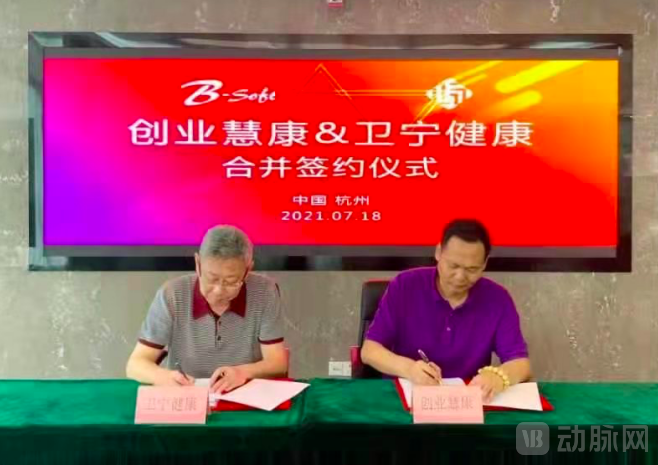
Winning Health Technology Group Co., Ltd. and B-Soft Co., Ltd. are both leading listed companies in the healthcare information technology sector. According to IDC’s 2018 report, “China Healthcare IT Solutions Market Forecast, 2018–2022,” Winning Health held a market share of 9.3%, while B-Soft accounted for 5.7%. Should the two companies successfully merge, the new entity could capture approximately 20% of the healthcare IT market share in the short term, with customer coverage reaching around 80%, thereby surpassing Neusoft Corporation, the current leader in healthcare informatization, to become the top player in the field.
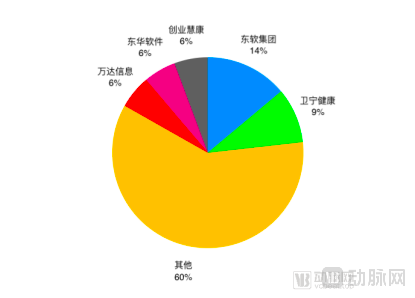
Data sourced from “China Healthcare IT Solutions Market Forecast, 2018–2022”
Winning Health and B-Soft have highly similar business portfolios, with both companies offering mature solutions in core areas such as Hospital Information Systems (HIS) and smart hospitals. How should their businesses be integrated? How should the lucrative East China market be divided? How can existing hospital systems be upgraded? Each of these questions requires substantial time and effort from both parties to resolve.
Therefore, to understand the rationale behind the merger of the two listed companies, VCBeat interviewed multiple industry experts and analyzed the event from three perspectives—traditional product development, complementary strengths through the merger, and industry shifts—in an attempt to clarify its potential impact on the market.
The objectives behind mergers of listed companies are diverse, with motivations ranging from complementary product portfolios to reduced industry competition. In this particular merger, the driving forces behind the union of the two companies are primarily related to business and technology.
In terms of business operations, Winning Health Technology Group Co.,Ltd. focuses primarily on tertiary hospitals, offering products and services such as Hospital Information Systems (HIS), big data center construction, interoperability grading, electronic medical record (EMR) grading, smart hospital development, internet hospital establishment, and county-level medical community construction. Looking ahead, the company is directing its development toward next-generation hospital management information systems and smart public health infrastructure. Overall, Winning Health’s core business expansion is geared toward providing integrated platform-based solutions for hospitals and cloud-based medical services beyond hospital walls, thereby accelerating the digital transformation of the entire healthcare system.
Annual report data shows that Winning Health Technology Group Co.,Ltd. generated a total revenue of RMB 2.267 billion in 2020, with 54.67% (RMB 1.239 billion) from software sales, 20.09% (RMB 455 million) from hardware sales, 18.5% (RMB 419 million) from technical services, and 6.6% (RMB 150 million) from internet healthcare services. These businesses were primarily concentrated in East China (48.25%), followed by North China (39.81%).
In comparison, B-Soft Co., Ltd. also operates in areas such as Hospital Information Systems (HIS), big data center construction, smart hospital development, interoperability assessments, electronic medical record (EMR) grading, internet hospital establishment, and smart medical insurance. The company’s core business expansion is geared toward developing cloud computing and Internet of Things (IoT) technologies, with a focus on connecting the entire patient journey and migrating traditional in-hospital informatics products to the cloud.
In 2020, B-Soft Co., Ltd. generated RMB 1.633 billion in revenue, with 41.09% (RMB 671 million) derived from technical services, 36.18% (RMB 591 million) from software sales, 9.69% (RMB 158 million) from system integration equipment, and 13.03% from other core business activities. Geographically, its operations were primarily concentrated in East China (47.27%), followed by South China (14.10%) and North China (12.15%).
Overall, Winning Health Technology Group Co., Ltd. and B-Soft Co., Ltd. are similar in scale. Both companies offer comprehensive medical IT infrastructure solutions and share a consistent regional customer base. However, precisely because of this high degree of overlap in products and customer distribution, the rationale for their merger may not lie in complementarity within traditional IT businesses.
It is worth noting the differences between the two. Drawing on insights from He Bingyu, a computerized healthcare informatics expert at Zhongtai Securities, as well as two anonymous informatics experts, VCBeat has summarized their business differences into three key points:
1. Differences in Technological Development. As indicated above, Winning Health Technology Group Co.,Ltd. focuses on providing innovative solutions for hospital information infrastructure, having developed the new-generation Hospital Information System (HIS), WiNEX, and the digital health platform, WinDHP. In contrast, B-Soft Co., Ltd. seeks to incorporate patients beyond direct hospital services into its management system through cloud computing and the Internet of Things (IoT), while leveraging medical big data to develop application-oriented products. These technological distinctions reflect differences in their core businesses, presenting opportunities for technological complementarity.
2. Different Customer Focus: Winning Health Technology Group Co.,Ltd.’s product portfolio is geared toward large hospitals as the primary payers, focusing on building a business model centered on hospital-side payments. In contrast, B-Soft Co., Ltd. is a leader in public health; while it also serves hospitals as payers, it additionally targets institutions such as the National Health Commission, actively developing products tailored to primary healthcare. The merger of the two companies would enable comprehensive coverage of users across all segments of medical institutions.
3. Divergent Paths for Future Development. In June 2020, the Chinese government issued the Notice on Leveraging Informatics to Support Routine Epidemic Prevention and Control, which called for strengthening epidemic information monitoring and early warning, improving early warning and command systems to support epidemic prevention and control efforts, while also advancing the construction of national health information platforms and establishing emergency command systems to enable the prevention, control, and response to major public health emergencies. In November 2020, China’s 14th Five-Year Plan was released, explicitly requiring reforms to the disease prevention and control system, with enhanced functions in monitoring and early warning, risk assessment, epidemiological investigation, testing and inspection, and emergency response; it also mandated improvements to mechanisms for monitoring, early warning, and handling public health emergencies, as well as the strengthening of medical treatment, scientific and technological support, and material supply systems to boost capacity for responding to sudden public health incidents. Under these policies, new opportunities have emerged.
The development of national health informatization can be regarded as a new and primary direction for future medical informatization, with both Winning Health Technology Group Co., Ltd. (Winning Health) and B-Soft Co., Ltd. (B-Soft) actively involved in this sector. However, from a market segmentation perspective, Winning Health focuses more on provincial and prefecture-level national health informatization projects, whereas B-Soft specializes in prefecture-level and county/district-level initiatives. Should the two companies complete a merger, the resulting entity would possess the capability to deliver end-to-end national health informatization services—a comprehensive offering that no other enterprise currently provides.
By examining these three points, it becomes evident that despite significant overlap in their business operations, the two entities possess considerable complementary strengths in technology, user base, and even their respective developmental trajectories. Therefore, behind their merger lie two primary motives: first, to capture a dominant share of the market, and second, to strategically position themselves for future scenarios.
Winning Health | B-Soft | |
Hospital Information Management System | Yes | Yes |
Medical Technology System | Yes | Yes |
Electronic Medical Record (EMR) Grading | Yes | Yes |
Interconnectivity Rating | Yes | Yes |
Performance Assessment of Tertiary Public Hospitals | Yes | None |
Next-Generation Hospital Management Information System | WiNEX | HI-HIS |
Smart Patient | None | Yes |
Smart Clinical Care | Yes | Yes |
Smart Healthcare | Partial Solutions | Complete Solution |
Internet Healthcare | Yes | Yes |
Telemedicine | Yes | Yes |
National Health Platform | Provincial, Prefectural, and County/District Levels | Provincial, Prefectural, and County Levels |
County-Level Medical Community | Yes | Yes |
Medical Big Data Center | Yes | Yes |
Applications of Big Data in Healthcare | Yes | Yes |
DRG | Yes | Yes |
Family Doctor | Yes | Yes |
Out-of-Hospital Payment | Yes | Yes |
Pharmaceutical and Medical Services | Yes | Yes |
Medical Insurance | Yes | Yes |
Internet of Things | Part | Yes |
Comparison of Business and Technology Between Winning Health and B-Soft (Based on Statistics from Their 2020 Annual Reports and the “2019 Smart Hospital Construction Handbook”)
Since the state began promoting the construction of healthcare IT infrastructure through policy initiatives, China’s foundational healthcare infrastructure has rapidly accelerated, achieving transformative changes within just a few years. However, as healthcare IT infrastructure projects across various regions reach completion, the overall pace of infrastructure development is bound to slow down. This implies that listed companies must identify new markets to offset the pressure resulting from the slowdown in their traditional markets.
To alleviate development pressures and explore new growth drivers in healthcare informatization, Winning Health Technology Group Co.,Ltd. has previously pursued diversification strategies. However, its equity investments in cloud-based healthcare sectors—namely Cloud Medicine (Nali Health, engaged in internet healthcare), Cloud Pharmacy (Yaoshiquan, now renamed Yunyao Technology, engaged in cloud pharmacy services), Cloud Insurance (Winning Internet and Winning Technology, engaged in building a unified payment platform and insurance claims system), and Cloud Wellness (Yitong Health and Zhongkang Shangde, engaged in chronic disease management)—have required continuous capital injection over the years. In 2020, only Cloud Medicine demonstrated relatively strong performance, with its net loss narrowing from RMB 15.0188 million to RMB 4.4807 million, while revenue increased from RMB 64.7308 million to RMB 100.7355 million, representing a significant growth rate of 55.62%. Therefore, for Winning Health, seizing the opportunity to build a post-pandemic national health system and thereby breaking through its current predicament has become an urgent priority. From this perspective, in anticipation of future opportunities, Winning Health may proactively position itself in new markets by merging with B-Soft Co., Ltd.
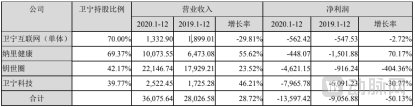
Table of Major Companies’ Operating Performance in Winning Health’s Innovative Business Segment, 2020 (Unit: RMB 10,000)
For the fragmented medical IT sector, this capital game has triggered an industry earthquake.
He Bingyu stated, “The merger between Winning Health Technology Group Co., Ltd. and B-Soft Co., Ltd. will facilitate the integration of industry resources, thereby reshaping the entire healthcare IT landscape. Winning Health focuses on the hospital sector, while B-Soft specializes in public health and medical insurance segments. The combined entity will see a significant boost in productivity, enabling it to capture approximately 20% of the healthcare IT market, with further upside potential. Under these circumstances, they will be better positioned to capitalize on opportunities in the healthcare informatization market driven by policy changes and evolving demands.”
However, this news is somewhat bearish for small and medium-sized healthcare IT companies that compete with these players. After all, bidding for healthcare informatization projects is increasingly scaling up; if such companies fail to build competitiveness in medium-to-large projects, they will lose out on long-term investment opportunities.
“As for the concerns regarding business allocation post-merger, Winning Health Technology Group Co., Ltd., as the leading party, will inevitably hold a certain degree of control. For overlapping business areas between the two entities, Winning Health will likely take the lead; for divergent projects, allowing each to operate independently would be a preferable solution.”
Based on the current situation, Winning Health Technology Group Co., Ltd. and B-Soft Co., Ltd. have only disclosed their intention to cooperate. The specific plan has yet to be finalized; it must subsequently be submitted to their respective shareholders’ meetings for approval and then filed with government authorities for review. As accounting firms and investment banks have not yet been engaged, the entire process is expected to take a considerable amount of time, and the merger between the two companies may not be completed as scheduled.
However, judging from the trends in the informatization industry in recent years, business integration and mergers and acquisitions among various informatization enterprises have become the norm. All parties are striving to build sufficiently comprehensive integrated solutions to acquire more valuable targets, a trend that has become irreversible.
Therefore, Winning Health Technology Group Co., Ltd. and B-Soft Co., Ltd. can be seen as a signal that more listed and large unlisted healthcare IT enterprises may participate in resource integration in the coming years. Under this trend, a major reshuffle may occur in this fragmented healthcare IT market.