

ForeSee Liver Cancer Early Screening Test Achieves 95.7% Specificity and 89% Sensitivity Using Multi-Dimensional Genomic Biomarkers
On July 10, 2021, Genetron Health Research Institute, in collaboration with Suzhou BioBAY, jointly hosted the 5th Annual Conference on Tumor Genomics Big Data. The conference brought together nearly 300 leading scholars from around the world, including Academician Cheng Shujun of the Chinese Academy of Engineering and Academician Yang Huanming of the Chinese Academy of Sciences. Under the theme “Multi-omics: New Opportunities in Genomics,” the event explored the new landscape ushered in by multi-omics technologies and the boundless new opportunities derived from genomic big data.
At the New Applications Forum on the afternoon of the 10th, Professor Yang Yuan from the Eastern Hepatobiliary Surgery Hospital of the Second Military Medical University presented “Research Progress of the ForeSee Early Screening Project for Liver Cancer,” introducing the current status of early liver cancer screening in China and the latest developments of the ForeSee project. VCBeat has compiled his key insights.
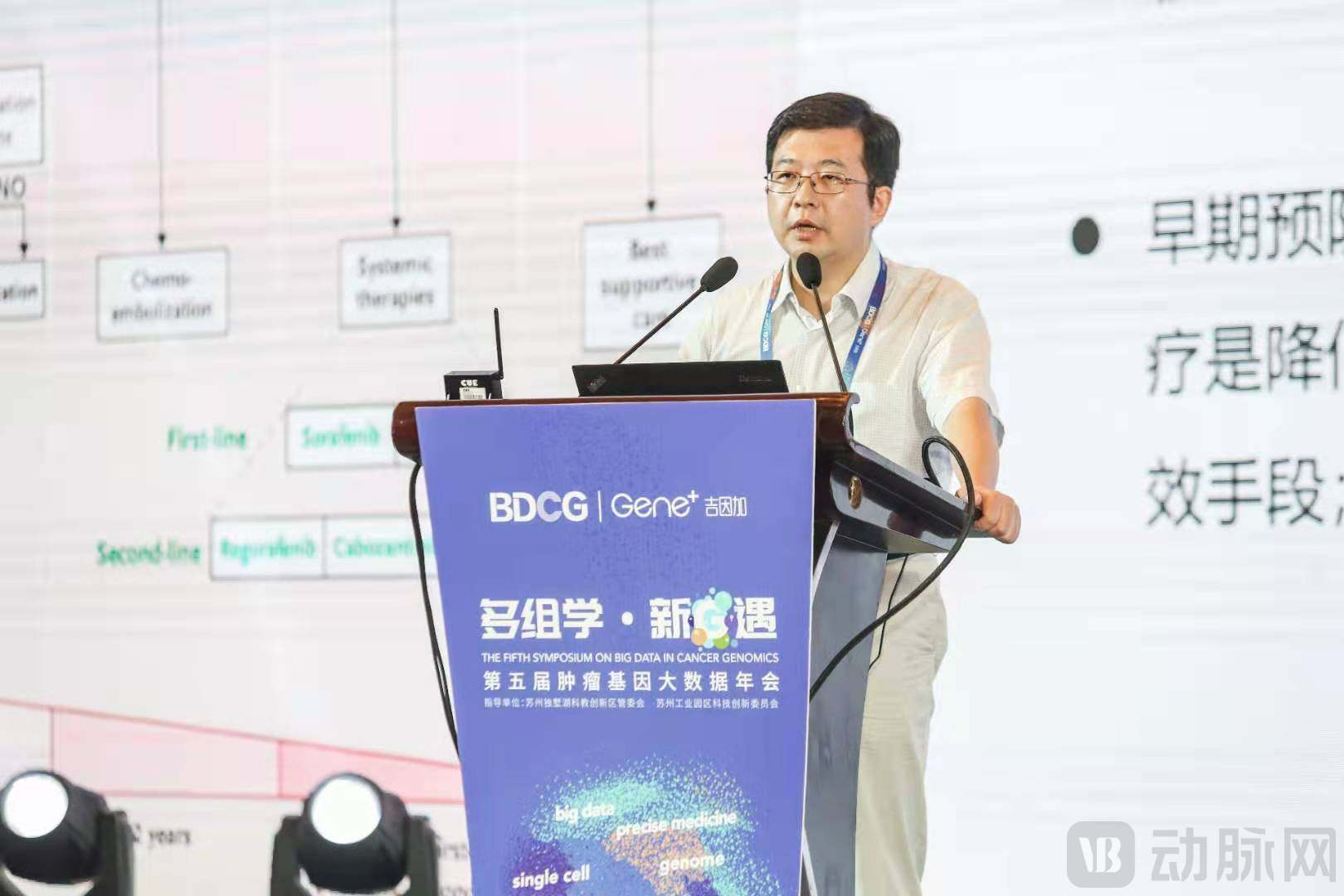
Professor Yang Yuan is an Associate Chief Physician, Associate Professor, and Master’s Supervisor at the Eastern Hepatobiliary Surgery Hospital of the Second Military Medical University. He holds a Doctor of Medicine degree and serves as the Head of the Liver Tissue Biobank at the Clinical Research Institute. Additionally, he is a Standing Committee Member of the Chronic Disease Management Branch and a Committee Member of the Biobank Branch of the China Biopharmaceutical Technology Association. Professor Yang’s research focuses on the clinical diagnosis and treatment of primary liver cancer, as well as large-sample molecular epidemiological studies. He has presided over or participated in 15 clinical and basic research projects, published 75 academic papers, co-authored three monographs, obtained nine software copyrights, and filed four invention patent applications.
China has the highest incidence of liver cancer. According to the latest 2020 global cancer burden data released by the International Agency for Research on Cancer (IARC) of the World Health Organization, liver cancer accounts for approximately 9% of all cancer cases in China, ranking fifth.
“As physicians, we have observed a stark clinical reality: only about 20% of liver cancer patients seen in our outpatient clinics are admitted to the hospital for surgical treatment at an early stage. This discrepancy stems from significant gaps in early prevention and screening that remain to be addressed,” stated Professor Yang Yuan.
The current state of primary liver cancer treatment in China is far from optimistic. A multicenter clinical study revealed that the overall 1- to 5-year survival rate is only 19.6%, significantly lower than the global average for surgical management of liver cancer. Early prevention, screening, and treatment represent some of the most effective strategies to reduce the incidence and mortality of liver cancer. Data indicate that with early detection and intervention, the 5-year survival rate for patients with stage 0 to A liver cancer can reach 85%–90%.
Currently, early screening technologies for liver cancer include alpha-fetoprotein (AFP) testing, B-mode ultrasound, CT, and MRI. Among these, the combination of AFP testing and B-mode ultrasound can detect the vast majority of liver cancer cases and represents the mainstream clinical approach for early liver cancer screening at present. Liquid biopsy, as a highly promising emerging technology for early liver cancer screening, has been extensively studied by numerous research institutions abroad, which have investigated the potential of liquid biopsy techniques—such as cell-free DNA (cfDNA) detection, methylation analysis, and DNA fragmentation profiling—in early cancer screening.
In recent years, Professor Yang Yuan’s team, in collaboration with the Genetron Health R&D team, has developed an early screening technology for liver cancer based on genomic variations, HBV (hepatitis B virus) integration, and cfDNA fragment characteristics.
Professor Yang Yuan stated that multi-dimensional genomic information during the malignant transformation of liver cancer, such as gene mutations, HBV integration, and cfDNA fragment characteristics, can serve as a research direction for early screening of liver cancer.
Regarding genetic alterations, the progression from liver cirrhosis to hepatocellular carcinoma is accompanied by a series of genomic events. Mutations in oncogenes and tumor suppressor genes confer proliferative, invasive, and survival advantages on dysplastic cells, playing a critical role in the malignant transformation of primary liver cancer.
Regarding HBV integration, virus-host chimeric DNA is present in the majority of HBV-related primary liver cancers, with hotspot integration events such as TERT observed in hepatocellular carcinoma. Chimeric DNA fragments in circulating tumor DNA (ctDNA) are considered a potential biomarker for HCC.
Regarding cfDNA fragment characteristics, studies have found that DNA fragments resulting from apoptosis in liver cancer cells are shorter than those in the cfDNA of healthy individuals or patients with liver cirrhosis. Differences in insert sizes can be utilized for early screening of liver cancer. Meanwhile, around gene transcription start sites (TSS), there are differences in nucleosome binding site distributions between highly and lowly expressed genes. The nucleosome distribution patterns in liver cancer versus healthy cohorts can also be applied to early liver cancer screening.
Targeting the prospects of applying gene mutations, HBV integration, and cfDNA fragment characteristics to early screening for liver cancer, Professor Yang Yuan’s team collaborated with Genetron Health to develop the ForeSee technology for early liver cancer screening. This technology enables precise early detection by simultaneously analyzing 293 gene mutations, viral integrations, and cfDNA fragment characteristics from a single 20 mL blood sample.
According to Professor Yang Yuan, the ForeSee liver cancer early screening project cohort has currently enrolled a total of 1,158 participants, including 371 cases in retrospective studies and 732 cases in prospective cohorts.
Retrospective studies have shown that the ForeSee technology achieves an overall specificity of 95.7% and a sensitivity of 89%. Furthermore, when compared with alpha-fetoprotein (AFP), ForeSee demonstrated superior performance in detecting hepatocellular carcinoma (HCC) across stages 0–A, B, and C.
"In the prospective cohort, ForeSee technology also demonstrated robust performance, with 100% sensitivity and 86.7% specificity. 'However, our current follow-up period is relatively short, spanning only about six months. We hope to uncover more insights through continued follow-up. We also look forward to greater participation from additional centers in this project,' remarked Professor Yang Yuan."
Currently, the prospective cohort expansion study of ForeSee technology is underway, with the expectation that this technology will be widely applied to early screening for liver cancer in the future.