

Battle for the Billion-Dollar COPD Market: Which Holds Greater Promise—Thermal Vapor Ablation or Endobronchial Valve Therapy?
As interventional procedures have gradually matured, innovative interventional therapies have emerged in the treatment of chronic obstructive pulmonary disease (COPD)—a condition that has long plagued patients—drawing domestic and international medical device companies to invest in this field. Bronchoscopic “valve implantation” and “thermal vapor ablation” technologies are being adopted into clinical practice at an accelerating pace, becoming the primary interventional treatment modalities for COPD patients.
What are the exact differences between these two pulmonary interventional techniques? Which one is more likely to be accepted and favored by the market? This is undoubtedly a topic of great concern to patients, physicians, and industry stakeholders alike.
With Over 200 Million COPD Patients Worldwide, the Treatment Market Holds Broad Prospects
“It’s like an elephant sitting on my chest…” a patient with chronic obstructive pulmonary disease (COPD) said when describing their physical condition.
In recent years, the incidence of chronic obstructive pulmonary disease (COPD) in China has remained high due to factors such as smoking, indoor and outdoor air pollution, and dust exposure. In 2018, The Lancet published the results of the “China Pulmonary Health Study,” led by Academician Wang Chen, which showed that the prevalence of COPD among adults aged 20 years and older in China was 8.6%, rising to 13.7% among those aged 40 and above, and exceeding 27% in individuals aged 60 and older. The number of COPD patients in China has reached 100 million, with nearly one million deaths attributed to COPD each year.
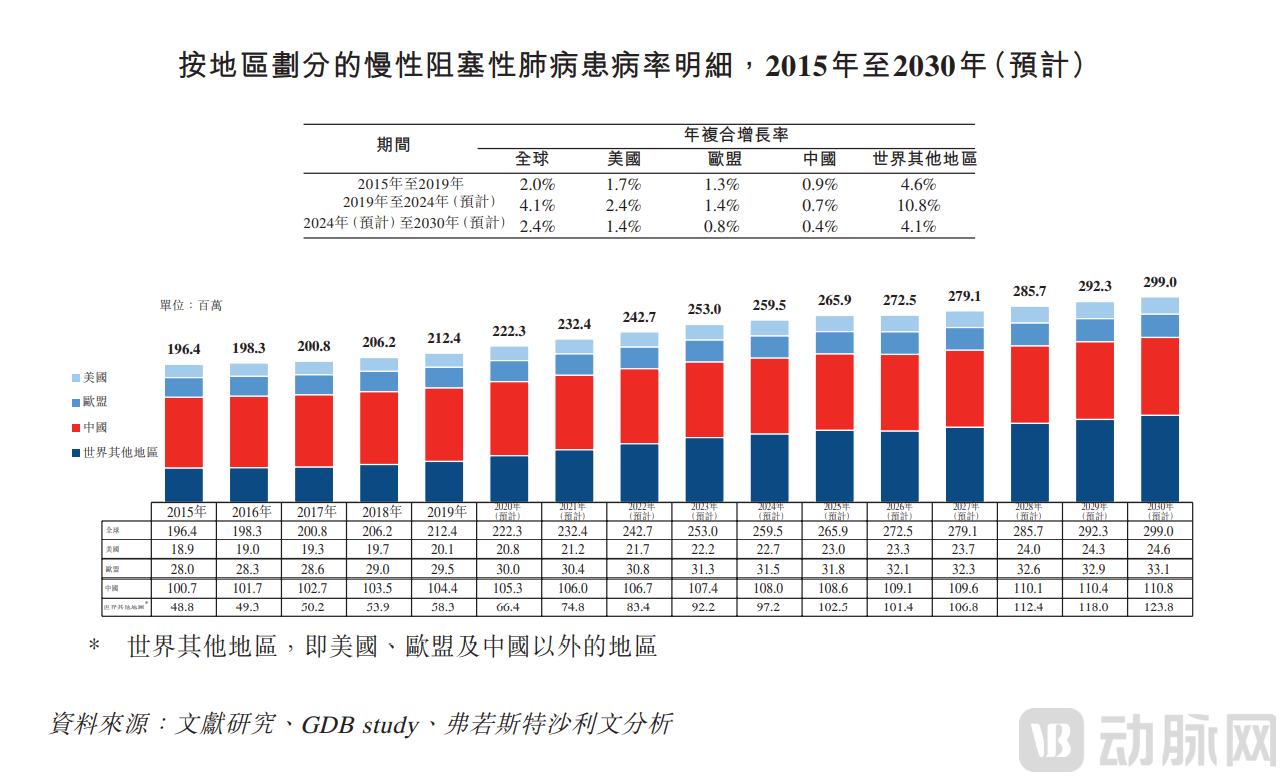 According to Broncus Medical's prospectus, prevalence of chronic obstructive pulmonary disease (COPD) by region
Globally, the number of patients with chronic obstructive pulmonary disease (COPD) is projected to reach 299 million by 2030. Patients typically undergo a continuum of care that includes pharmacological management, home oxygen therapy using purchased oxygen concentrators, and hospitalization during exacerbations. This underscores the substantial market size for COPD treatment. Given the large global population base and the rising prevalence of COPD, this market undoubtedly holds significant growth potential.
Sustained attention to the treatment of chronic obstructive pulmonary disease (COPD) has prompted Academician Zhong Nanshan, a member of the Chinese Academy of Engineering and an expert in respiratory medicine, to speak out on numerous occasions, affirming his unwavering commitment to advancing COPD treatment. Meanwhile, Academician Wang Chen, also a member of the Chinese Academy of Engineering and an expert in respiratory and critical care medicine, submitted a proposal at the Third Session of the 13th National Committee of the Chinese People’s Political Consultative Conference to include COPD management in China’s National Basic Public Health Services Package. The focus from medical experts has helped bring the realities of COPD treatment into public view.
Surgical Interventions Become a Thing of the Past as Pulmonary Interventional Procedures Gain Attention
The Global Initiative for Chronic Obstructive Lung Disease (GOLD) is an organization jointly launched in 1997 by the National Heart, Lung, and Blood Institute, the National Institutes of Health, and the World Health Organization. The majority of physicians worldwide adopt the GOLD guidelines to stage patients with chronic obstructive pulmonary disease (COPD) in clinical practice.
For patients with mild-to-moderate COPD (GOLD stages 1 and 2), treatment is typically based on bronchodilators, which alleviate or prevent COPD symptoms by relaxing airway smooth muscle tone to induce bronchodilation. In contrast, for patients with severe to very severe COPD (GOLD stages 3 and 4), pharmacological control is often limited. Previously, therapeutic approaches were primarily categorized into the following two types:
1. Lung transplantation. It is costly and has an extremely limited scope of application. In 2016, only 1,152 lung transplant procedures were performed worldwide;
2. Surgical Lung Volume Reduction Surgery. During the procedure, the patient’s thoracic cavity is opened to resect emphysematous lung tissue. However, due to its significant invasiveness and poor prognosis, this surgical approach is currently rarely performed in clinical practice.
With the emergence and development of minimally invasive interventional procedures, the field of chronic obstructive pulmonary disease (COPD) has also embraced such interventions. Due to fewer complications and faster postoperative recovery compared to traditional surgical approaches, minimally invasive techniques have been more widely adopted in clinical practice. Accordingly, the GOLD guidelines have included “valve” therapy and “thermal vapor ablation” therapy as effective treatment options for COPD.
Thermal Vapor Ablation vs. Valve Implantation: Which Holds Greater Promise?
Minimally invasive bronchoscopic implantation of one-way valves primarily works by inducing atrophy and collapse of the diseased areas, allowing adjacent healthy lung tissue to re-expand, thereby improving pulmonary function. In contrast, thermal vapor ablation generates a thermal response by heating water vapor, causing thermal injury to the diseased tissue; this leads to post-inflammatory atrophy of the affected areas, creating more space for functional lung tissue and improving the patient’s ventilatory function. Although both techniques share similar mechanisms of action, their indications differ significantly:
“Valve implantation” therapy is only applicable to COPD patients without collateral ventilation. In contrast, “thermal vapor ablation” is independent of the presence or absence of collateral ventilation, thereby covering a broader patient population.
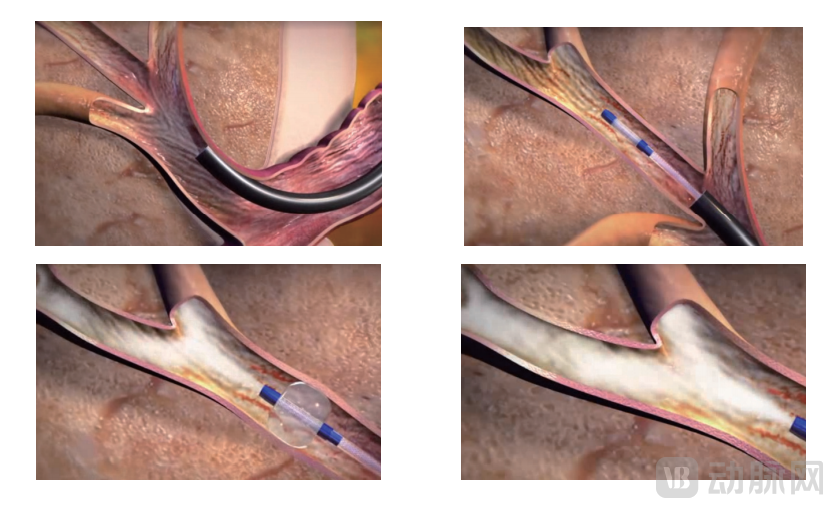 Schematic Diagram of Thermal Vapor Ablation
Currently, there are representative companies for both interventional lung therapies used in the treatment of chronic obstructive pulmonary disease (COPD): endobronchial valve implantation is represented by Pulmonx, which listed on the NASDAQ in October 2020, while thermal vapor ablation is represented by Broncus Medical, which filed its prospectus with the Hong Kong Stock Exchange in May this year.
Pulmonx was founded in 1998. The company primarily focuses on the research, development, and promotion of the Zephyr valve, and has launched supporting lung assessment systems and lung analysis platforms. A key feature of Pulmonx’s endobronchial valve implantation is that the valves are removable, offering a higher safety profile. However, this procedure requires patients to have intact interlobar fissures and no collateral ventilation. According to Pulmonx’s prospectus, approximately 1.2 million patients with severe chronic obstructive pulmonary disease (COPD) worldwide were eligible for the Zephyr valve in 2019.
Broncus Medical was established in 2012 and acquired the U.S.-based company Uptake in 2016, introducing the InterVapor thermal vapor ablation system. As the world’s only emphysema treatment platform capable of segmental and repeatable ablation, InterVapor offers distinct advantages over other therapies: First, it is not affected by collateral ventilation in patients with chronic obstructive pulmonary disease (COPD), thereby providing a broader indication range than valve-based treatments. Second, its targeted therapy for specific lesions enables treatment confined to the diseased areas while preserving healthy lung tissue.
In January 2018, a 65-year-old patient who had suffered from chronic obstructive pulmonary disease (COPD) for 15 years underwent thermal vapor ablation at West China Hospital of Sichuan University due to worsening emphysema symptoms and a significant decline in quality of life. This was the first case in Asia of using thermal vapor ablation to treat emphysema. The entire procedure took only 15 minutes, and the patient had a favorable prognosis with a marked improvement in quality of life.
Enter the Priority Review Pathway for Medical Devices and Continue to Expand Indications
Bronchoscopic thermal vapor ablation is currently the only lung volume reduction therapy successfully performed at the segmental rather than lobar level. Its international multicenter clinical trial (STEP-UP) was successfully completed in 2016 and published in The Lancet, confirming its favorable safety and efficacy profile. After years of application abroad, the safety and efficacy of InterVapor therapy have also been extensively validated.
InterVapor is backed by Broncus Medical’s integrated precision platform for pulmonary disease management, which combines real-time image fusion with “whole-lung navigation, diagnosis, and treatment.” This support has further facilitated its development. Currently, InterVapor is advancing toward lung cancer therapy. The results of a feasibility study on its use in lung cancer treatment have been published in the journal Respiration. The findings demonstrate that bronchoscopic thermal vapor ablation (BTVA) is safe, feasible, and well-tolerated for treating pulmonary tumors, highlighting its significant potential for lung cancer ablation.
In 2018, Broncus Medical’s InterVapor system received CE certification. Owing to its technological innovation and clinical value, it was designated by the U.S. Food and Drug Administration (FDA) as a Breakthrough Device in 2019. Given its substantial therapeutic benefit in the management of chronic obstructive pulmonary disease (COPD), Broncus Medical’s InteVapor thermal vapor ablation therapy was included in the Global Initiative for Chronic Obstructive Lung Disease (GOLD) guidelines for three consecutive years from 2019 to 2021, with recommendations for use in patients with severe to very severe COPD.
According to Broncus Medical’s prospectus, as a “medical device urgently needed for clinical use and with no similar products approved for registration in China,” Broncus Medical’s InterVapor was included in China’s priority review channel for medical devices in 2020.
Compared with “valve implantation,” “thermal vapor ablation” features a shorter learning curve and simpler operation. The financial burden on patients is also significantly lower, making it more suitable for the vast patient population in developing countries. Perhaps, in this intense battle of interventional treatments for COPD, most people have already found their own answers regarding which option to choose.