

XellSmart Biosciences and Founder Dr. Xiang Li: Pioneering China's iPSC-Derived Innovative Cell Therapies for Major Neurological Diseases

XsellSmart
Stem Cell Therapy New Drug Developer
Author: Cheng Wenhong
Recently, XsellSmart officially announced its establishment and secured tens of millions in angel-round financing, drawing widespread attention. Stem cells and regenerative medicine are poised to become the “third revolution in the history of human medicine,” offering hope for curing many complex diseases that currently lack clinical solutions. Let us take a closer look at XsellSmart and explore the story behind its founder, Li Xiang.
The idea for the startup originated more than a decade ago. At that time, Li Xiang’s uncle, who was suffering from Parkinson’s disease (PD), experienced a steady decline in his health and gradually lost his mobility. Li Xiang recalled: “My uncle was treated with levodopa, the first-line clinical medication for PD. Not only did the dosage continue to increase, imposing a heavy financial burden due to the high cost of imported drugs, but his symptoms also worsened progressively. Throughout the course of the disease, however, his mind remained fully clear, as if he were helplessly watching his body slowly plunge into an abyss while standing on the edge of a cliff—filled with despair and powerlessness.”
Li Xiang was deeply distressed by this and began to teach himself, eventually uncovering a lead:
Clinical studies in the 1980s and 1990s demonstrated that transplantation of neural precursor cells from the midbrain of aborted fetuses into the patient’s midbrain could partially restore motor function. In 1998, human embryonic stem cell (ESC) lines were successfully established; these cells can generate dopaminergic neurons that survive, integrate, and mature in the brains of animal models. However, the use of tissues from aborted fetuses and ESCs raises ethical concerns.
In 2006, stem cell research underwent a major transformation: Japanese scholars Takahashi and Yamanaka discovered that introducing four genes (Oct4, Sox2, c-Myc, and Klf4) into mouse fibroblasts could reprogram them into pluripotent stem cells, termed induced pluripotent stem cells (iPSCs). iPSCs are functionally similar to embryonic stem cells (ESCs) and circumvent ethical concerns. In 2012, Shinya Yamanaka was awarded the Nobel Prize in Physiology or Medicine for this discovery.
The mechanism of action of stem cell transplantation in the treatment of Parkinson’s disease (PD) involves inducing their differentiation into dopaminergic neurons, thereby exerting replacement, trophic, and protective effects; promoting the regeneration and repair of damaged dopaminergic neurons; and reestablishing functional neural control over somatic functions.
Li Xiang saw hope and firmly believed that this was the direction to which he should devote himself wholeheartedly and unswervingly for the rest of his life, because stem cell therapy can truly create value for the urgent medical needs of human society, especially for patients and their families.
From that point on, Li Xiang set his life’s course: to develop novel stem cell therapies aimed at curing major human diseases, exemplified by Parkinson’s disease. Through more than a decade of academic pursuit and industry experience, Li Xiang remained steadfast and purposefully accumulated expertise, ultimately founding XsellSmart. He went all-in on his prior accomplishments, joining forces with like-minded, talented professionals such as Xiao Xiong, Yan Pixi, and Qiu Wenlong. With patients first, they are committed to benefiting millions of suffering patient families through unparalleled, innovative stem cell therapeutics.
At that time, Li Xiang was majoring in Zoology at Huazhong Agricultural University. He decided to pursue interdisciplinary graduate studies, targeting the Deng Hongkui Laboratory at the School of Life Sciences, Peking University.
That year, Li Xiing began his internship at the State Key Laboratory of Agricultural Animal Genetics and Breeding. Under the supervision of mentors Zhao Shuhong, Yu Mei, and Zhu Mengjin, he was responsible for conducting the research project “Screening for Genes Associated with Economic Traits in Agricultural Animals Using the Digital Candidate Gene Approach.” He rapidly recruited software experts and classmates familiar with gene databases, efficiently completing the research tasks. His work earned a Gold Award in Hubei Province and a First Prize nationwide at the 11th “Challenge Cup” National College Student Extracurricular Academic Science and Technology Works Competition and Entrepreneurship Plan Competition.
Thanks to his outstanding performance in the “Challenge Cup” competition, Li Xiang was admitted to Peking University for doctoral studies. The Deng Hongkui Laboratory focuses on regulating cell fate to generate pluripotent stem cells and functional cells. Li Xiang proactively proposed a new research direction to Professor Deng and achieved remarkable results (Figure 1). He was honored with the Peking University Stem Cell Center Award for Outstanding Scientific Contributions, as well as the titles of Outstanding Graduate of Peking University and Outstanding Graduate of Beijing Municipality. Over five years of dedicated effort, Li Xiang established a comprehensive technical system for cell fate reprogramming and successfully obtained seed stem cells.
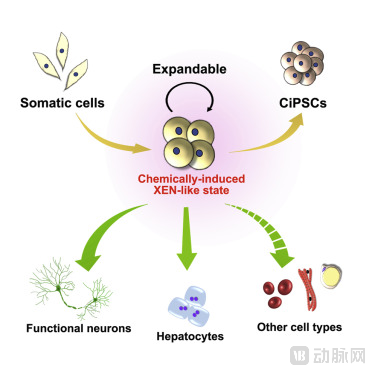
Figure 1. One of the key achievements: A novel reprogramming pathway based on intermediate-state cells (Cell Stem Cell Paper of the Year)
After earning his Ph.D., Li Xiang intentionally chose to join Professor Su-Chun Zhang’s laboratory at the University of Wisconsin–Madison. This institution is the birthplace of the first human embryonic stem cell line, and Professor Zhang is a leading authority and one of the pioneers in the field of neural differentiation of stem cells. Within one year, Li Xiang successfully identified key factors determining glial cell fate and established highly efficient methods for inducing the differentiation of human pluripotent stem cells into glial cells with specific subtype and brain-region identities, thereby obtaining the functional cell types required for stem cell therapy.
Subsequently, as a Principal Investigator (PI) for the Parkinson’s Foundation in the United States, Li Xiang led the project titled “Induced Differentiation of Pluripotent Stem Cells into Dopaminergic Neural Progenitor Cells and Cell Therapy Studies in PD Animal Models.” This work achieved large-scale expansion of dopaminergic progenitor cells in vitro and demonstrated positive outcomes in animal models of Parkinson’s disease, thereby laying a solid foundation for subsequent industrial-scale production (Figure 2).
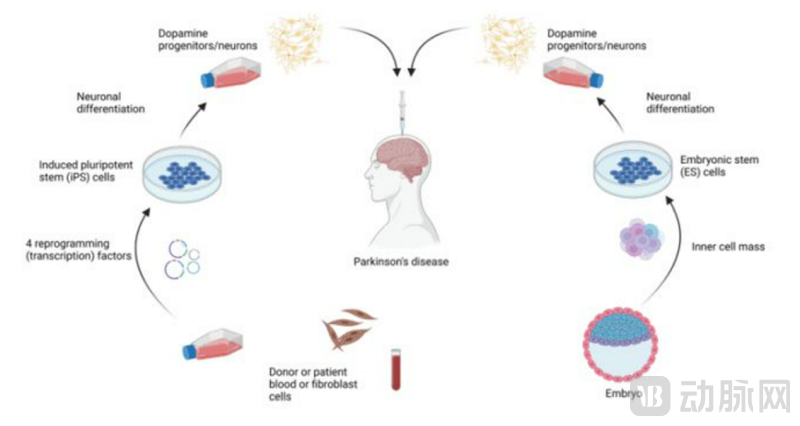
Figure 2 source: Recent Advances in the Development of Stem-Cell-Derived Dopaminergic Neuronal Transplant Therapies for Parkinson's Disease,"Movement Disorders" Journal
Stepping out of the ivory tower, the field of stem cell and regenerative medicine in the United States is experiencing a wave of entrepreneurial innovation. As a standout figure, Li Xiang has attracted interest from several companies. In 2018, he was poised to join BlueRock Therapeutics, a flagship U.S. company in stem cell therapy, but unexpectedly received a recruitment call from Sana Biotechnology (Sana) just before his scheduled onboarding.
Through online communications, background checks, and professional assessments of core technologies, Li Xiang keenly recognized that the startup was poised to address key pain points in allogeneic transplantation, achieve a historic breakthrough, and ultimately reshape the industry landscape. He therefore decisively joined Sana (indeed, Sana raised $700 million in financing in 2020 and went public in 2021). Li Xiang directly entered Sana’s core division—the universal human pluripotent stem cell segment—where he oversaw the cell biology platform and played a key role in non-human primate stem cell transplantation studies.
Sana’s non-human primate experiments were conducted in a remote town in the United States, a wild region where crocodiles lurked in the rivers and monkeys outnumbered humans. Li Xiang traveled there on multiple occasions. During one visit, a hurricane struck, prompting the company to order all employees to halt testing and return immediately; however, Li insisted on staying. Braving the threat of the hurricane, he leveraged his profound professional expertise to ingeniously design and ultimately complete the experiment, laying a critical foundation for Sana’s breakthrough in proving its concept using non-human primate models.
Why return? Li Xiang said he wanted to develop innovative stem cell therapies that are distinctly Chinese.
The core team of XsellSmart hails from top-tier domestic and international universities and research institutions, including Peking University, Tsinghua University, Harvard University, the University of California, Berkeley, and the University of Wisconsin–Madison. Li Xiang named the company “XsellSmart” (Shize), deriving its meaning from the phrase “a scholar of unparalleled stature, bringing blessings to countless people.” Relying on two Nobel Prize-winning platforms (iPSC + gene editing) and four interdisciplinary fields (stem cells and regenerative medicine, gene editing, neurobiology, and transplant immunology), XsellSmart will...Dedicated to the development of novel stem cell therapeutics, providing cell therapy solutions for major human diseases such as Parkinson’s disease.
In future scientific research and market competition, the XsellSmart team has been tempered into steel; let us wait and see.