

BMS Medical Submits IPO Prospectus: Pioneering China's Blood Healthcare Ecosystem with Innovations Exported to Over 30 Countries
Blood TransfusionBlood transfusion, a therapeutic procedure involving the intravenous infusion of blood into a patient, is widely used in clinical practice. Although the procedure may appear straightforward, it relies on extensive medical science and technology, such as ensuring ABO and Rh compatibility between donors and recipients, and preventing bacterial contamination during blood transfer and administration.
Regarding aseptic techniques during blood transfusion, most people typically consider only the sterility of transfusion equipment, consumables, and the environment, while few recognize the importance of sterile docking for blood bags. In clinical surgical settings, because the volume donated by a single donor may be insufficient to meet blood supply demands, component blood from multiple donors is often pooled into a single blood bag. This process requires strict assurance of sterile docking for the blood bags. Yet, this very step has remained a long-standing challenge and a critical bottleneck in China, with its core technology controlled by a few developed countries such as Germany and Japan. As the largest market for blood applications, China relies almost entirely on imported sterile docking devices, resulting in annual expenditures of hundreds of millions of yuan on foreign-related equipment and consumables.
This status quo has changed. It is understood that Wuhan Baimeisi Medical Technology Co., Ltd. (hereinafter referred to as “Baimeisi”), located in the Optics Valley Bio-city of Wuhan, has successfully developed a technology industry chain for blood connection equipment with full independent intellectual property rights, based on its breakthroughs in sterile blood connection technology. This achievement has filled the domestic technological gap in this field and enabled sales and supply to numerous international markets.
Focusing on Innovation in the Blood-Based Medical Industry
Compared with common blood-related procedures in clinical practice, such as blood tests and hemodialysis, blood access appears to be merely a “niche” market within the field of blood-based medical care. Yet it is precisely this niche technology of blood access that is closely intertwined with people’s daily lives, prompting Dr. He Jun, founder of Baimeisi, to devote more than a decade to its in-depth development.
In China, tens of millions of people participate in voluntary unpaid blood donation each year. During the blood collection and processing workflow, the tubing of blood bags must be connected multiple times, creating substantial market demand. However, due to the extremely high safety standards for blood processing, the global market for sterile blood bag docking devices has long been monopolized at premium prices by two companies from Germany and Japan.
As early as 2004, Dr. He Jun established BMS International Blood Technology Company in Germany, setting up operations simultaneously in Bavaria, Germany, and Wuhan, China. He organized a technical team to develop a series of blood technology products, which laid the foundation for what is now known as Baimeisi.
Leveraging his accumulated proprietary technologies, He Jun returned to Wuhan in 2014, officially embarking on his entrepreneurial journey upon returning to China. At that time, He Jun held multiple invention patents covering technologies such as blood separation, rapid freezing of blood plasma, sterile blood connection, and intelligent blood collection, laying a solid foundation for the development and product R&D of Baimeisi.
In 2014, Baimeisi established its presence in the Medical Device Park of Optics Valley Bio-city, focusing on the innovative R&D and manufacturing of high-end technologies for blood medical applications. In May 2015, Baimeisi launched China’s first sterile blood tubing connection device with fully independent intellectual property rights. Over the following years, Baimeisi continuously optimized and refined its technology and products, and in 2017, it obtained the medical device registration certificate, successfully breaking the monopoly of foreign brands in the Chinese market.
After years of development, Baimeisi has successfully built an efficient, professional, and agile team, bringing together a large number of specialized engineers, which ensures the continuous advancement of product R&D projects.
Focusing on the innovative field of blood medicine, Baimeisi now possesses three core technologies: "Aseptic Blood Connection Technology," "Fully Automated Blood Separation Technology," and "Autologous Serum Preparation and ASE Therapy." With over 100 patents, Baimeisi has developed seven major product series centered around these three core technologies. Its equipment is exported to more than 30 countries, including the United Kingdom and Germany, successfully achieving the strategic goals of import substitution and large-scale export.
In terms of production capacity, Baimeisi’s current manufacturing system can fully meet market supply demands at this stage, with significant untapped production potential that can support the company’s rapid market expansion.
Achieving a Breakthrough from 0 to 1
Prior to the official launch of Baimeisi’s sterile blood tubing docking device, two brands from Germany and Japan were already present in the market. However, the sterile blood tubing docking technology adopted by Baimeisi follows a completely different technical route compared to existing German and Japanese products. It is understood that blood tubing docking products from Germany and Japan mostly employ high-frequency cutting or blade-based methods to cut blood bag tubing. Although these technologies are mature, they suffer from pain points such as high costs and expensive consumables.
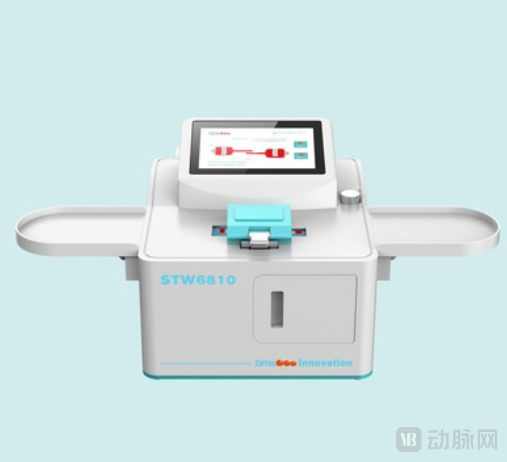
Baimeisi Blood Sterile Connector
The principle of Baimeisi’s sterile blood bag docking technology involves cutting the tubing with a metal wire heater, followed by high-temperature infrared fusion splicing to achieve a sterile connection between blood bags. The entire process takes only about ten seconds. Measurements indicate that the spliced tubing can withstand a tensile force of at least 5 kg, and the quality of the blood bag connection fully meets international standards.
By achieving innovation at the fundamental level and establishing a proprietary technological pathway, Baimeisi embraces greater challenges as its core strength and unwavering commitment to innovation.
Centered on blood technology, Baimeisi has also developed “Fully Automated Blood Separation Technology” as well as “Autologous Serum Preparation and ASE Therapy,” with the latter being applicable to the treatment of patients with dry eye disease.
According to the “2013 Expert Consensus on Clinical Diagnosis and Treatment Guidelines for Dry Eye,” the prevalence of dry eye disease in China ranges from 21% to 30%, with a low consultation rate. The key mechanism underlying dry eye disease at present is ocular surface inflammation, and the primary treatment modality is pharmacological therapy. Among therapeutic approaches for dry eye disease, ASE therapy has gained increasing recognition among industry professionals due to its efficacy and safety in treating ocular surface disorders.
Specifically, Baimeisi’s autologous serum preparation and ASE therapy involve collecting an appropriate volume of blood from the patient for serum preparation. The process utilizes Baimeisi’s independently developed blood processing workstation. Once the serum is prepared, it can be extracted and administered using the proprietary serum pen provided as part of the therapy kit. Currently, Baimeisi is actively advancing the regulatory registration and approval process for products related to this therapy, with a market launch expected by June next year.
Maximize Value
As the concepts of digitalization and intelligence continue to gain widespread adoption, Baimeisi has developed a corresponding digital management system. This system can collect operational data generated by blood sterile docking equipment and blood component separators, supports simultaneous data connectivity with multiple devices, and enables efficient, convenient, and real-time traceability of device data.
Moving forward, Baimeisi will continue to achieve digital coverage for products related to its three core technologies, while simultaneously deepening product development vertically based on existing technologies to maximize their value.
Meanwhile, the Company will accelerate innovation in product and service offerings, diversify its market product portfolio, and expand both the breadth and depth of the full industrial ecosystem for blood-based medical solutions. It will fully integrate emerging technologies such as “cloud computing,” “big data,” and “artificial intelligence” into its strategic initiatives and key priorities, thereby vigorously driving the Company’s digital and technological transformation.
With technological innovations and continuous market expansion, Baimeisi has long achieved break-even. The company is now actively preparing for its listing on the STAR Market, with plans to go public within the next three years.
To align with the company’s development needs, Baimeisi will progressively strengthen team building, attract more specialized talent, and remain committed to delivering safe and reliable blood medical technologies. By fostering an innovation-centric ecosystem across the entire blood medicine industry chain, the company aims to establish itself as a global leader in blood medical technology and services.