

Infervision Completes Series D2 Financing to Accelerate R&D and Commercialization Ahead of IPO

Infervision
Artificial Intelligence Product Developer
July 23 News: Infervision, a leading medical AI company, has completed its D2 round of financing, bringing the total amount raised in its Series D to RMB 900 million. Investors include Zhongguancun M&A Fund of Funds, Goldman Sachs Asset Management, CCB Trust, Qifeng Capital, Shenzhen Investment Holdings Donghai Investment, Oakley Capital, Zhongguancun Science City, Shenzhen Yicun Tongsheng, Shanghai Lianyi, and other investors. Infervision stated that the funds from this round will be primarily allocated to product research and development, team building, sales channel expansion, and internationalization efforts.
Infervision, founded in 2016, entered the life sciences sector with AI-based pulmonary nodule detection as its starting point, positioning itself among the first startups to venture into medical AI. Over five years of development, healthcare and AI have become deeply integrated, with deep learning achievements firmly established in clinical departments. Infervision has gradually built a comprehensive portfolio of products covering various diseases, including intelligent solutions for the entire lifecycle of lung cancer care, thereby extending AI application scenarios from radiology departments to broader clinical specialties.
Capital has long favored this medical AI company. Since its inception, Infervision has successively received investment offers from top-tier firms such as Sequoia Capital and Qiming Venture Partners, while also securing funding from state-owned capital funds like the Zhongguancun M&A Fund of Funds. Within five years, Infervision has completed seven rounds of financing, raising a total of over RMB 1.4 billion.
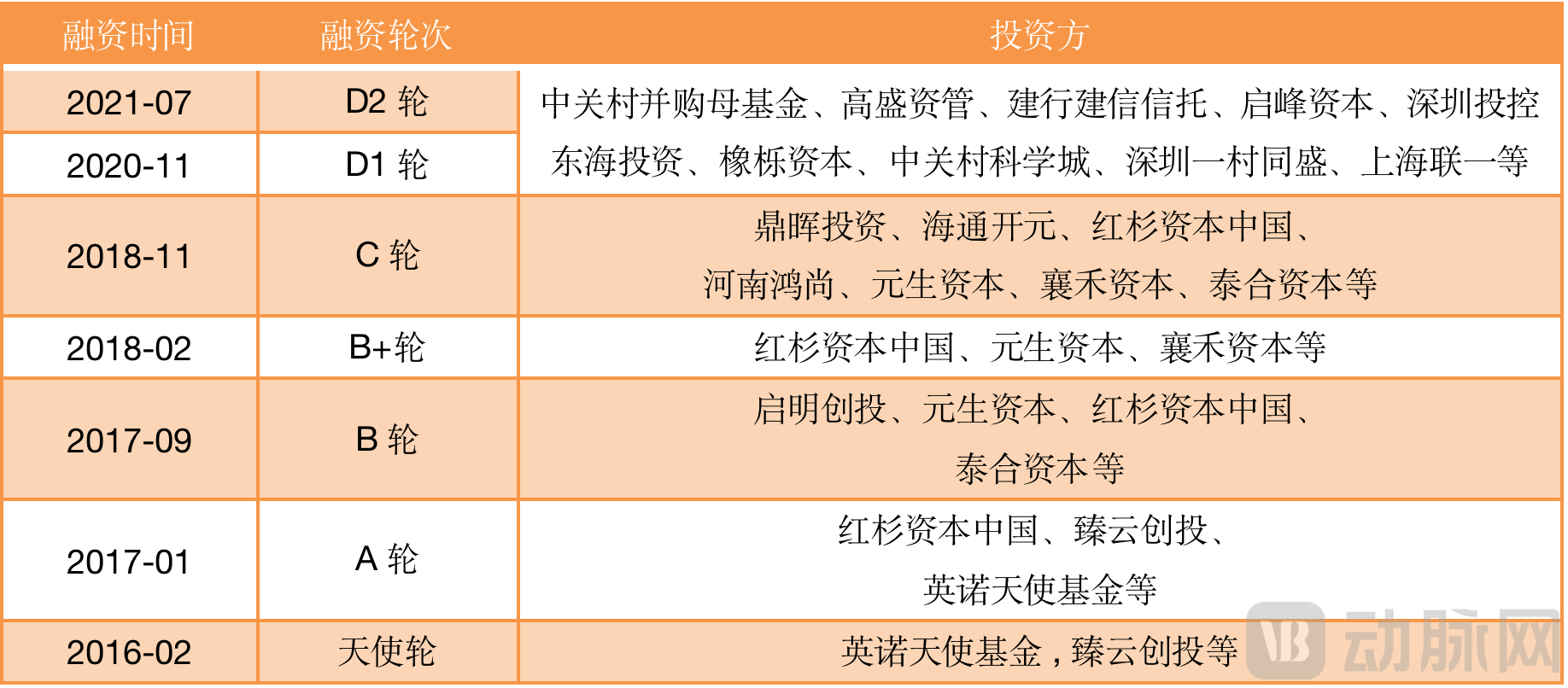
Infervision's Financing Path
However, the industrialization of artificial intelligence technology is still immature, and the business models that have emerged remain to be validated. Now that Infervision has secured a substantial Series D2 financing round, what path will it chart, and what insights will it offer to the industry?
Infervision’s product portfolio adopts a “one horizontal, one vertical” strategic layout. The “horizontal” axis is organized around different diseases, providing cross-specialty coverage across multiple conditions; the “vertical” axis spans the entire clinical workflow, delivering intelligent solutions for the full healthcare journey encompassing “screening, diagnosis, treatment, management, and research.”
Based on the current development trajectory of imaging artificial intelligence, the transformation of auxiliary diagnostic and therapeutic products across the industry primarily exhibits two trends. First, after completing research on a single organ, AI companies employ similar development methodologies to initiate AI design for the next viable clinical scenario. This involves a horizontal expansion from pulmonary nodules to other anatomical sites and disease pathways—such as the breast, thyroid, liver, heart, nervous system, and bones—thereby broadening corporate capabilities and mitigating risks associated with reliance on a single product. Second, companies deepen their focus within a single scenario by extending applications from radiology departments to clinical specialties, thereby developing therapeutic-area artificial intelligence that empowers clinical practice. The commonality between these two expansion strategies lies in the necessity to identify scenarios with genuine AI demand before initiating R&D, ultimately achieving market penetration and creating new revenue streams.
Infervision’s various AI-assisted diagnostic and therapeutic products clearly incorporate both of the aforementioned pathways. While completing the research and development of AI products for lung CT, Infervision has successively launched product lines for DR chest imaging, CT stroke assessment, CT fracture detection, multimodal breast imaging, DR bone age assessment, and CT coronary angiography. Driven by clinical needs, these products help hospitals alleviate the pressure of high patient volumes in high-throughput diagnostic and treatment scenarios, while enhancing diagnostic and therapeutic capabilities in regions with limited medical resources.
Furthermore, Infervision has entered the market through high-frequency clinical scenarios, continuously deepening its integration into clinical pathways. Infervision’s latest thoracic surgery clinical products have advanced beyond mere imaging analysis to become deeply embedded in clinical practice, now covering the entire diagnosis and treatment workflow in thoracic surgery. Currently, the software can automatically analyze chest CT images, perform tissue segmentation and reconstruction, and identify and analyze early suspicious lung cancer lesions. By combining lung tissue segmentation and reconstruction, it intuitively displays the spatial relationship of pulmonary nodules relative to lung structures (lobes and segments), airways, and blood vessels, thereby supporting surgical margin planning. This enables physicians to conduct real-time analysis and localization of suspected pulmonary nodules across various settings—including outpatient clinics, inpatient wards, operating rooms, and reading rooms—facilitating patient communication, teaching and training, case discussions, and surgical planning.
Overall, Infervision’s “horizontal and vertical” product line strategy can be regarded as a paradigmatic example of the development of medical imaging AI. It integrates all stakeholders in medical imaging into its ecosystem and incorporates the potential for extension into clinical departments, thereby establishing two closed loops: a data closed loop encompassing image data acquisition, enhancement, application, and exchange; and a diagnostic and therapeutic closed loop for single organs that spans from early screening to treatment, covering “prevention, diagnosis, treatment, and management,” as well as hospital-based scientific research. The creation of these two closed loops constitutes the core value proposition of Infervision.
Given the lack of successful commercialization, regulatory approval status serves as a strong reference indicator for valuing current medical AI enterprises.
Since February 2020, Infervision has successively obtained CE certification from the European Union, PMDA approval from Japan, and FDA clearance from the United States. These developed countries and regions impose stringent regulatory and market entry requirements for medical products, with fewer than 100 AI-based products having achieved such certifications worldwide. To date, Infervision is the first company to receive U.S. FDA clearance for an AI-assisted diagnostic product for lung diseases.
In November of the same year, Infervision once again obtained the NMPA’s first Class III certification for AI-based pulmonary nodule detection, securing its position in the high-volume pulmonary nodule sector. In March 2021, Infervision achieved another milestone by obtaining the Class III certification for pneumonia CT analysis, which was also the first Class III certification granted unconditional approval by the National Medical Products Administration (NMPA). With these two certifications, Infervision gained a first-mover advantage in the commercial exploration of AI for lung diseases and pioneered the commercialization of its solutions in the domestic market.
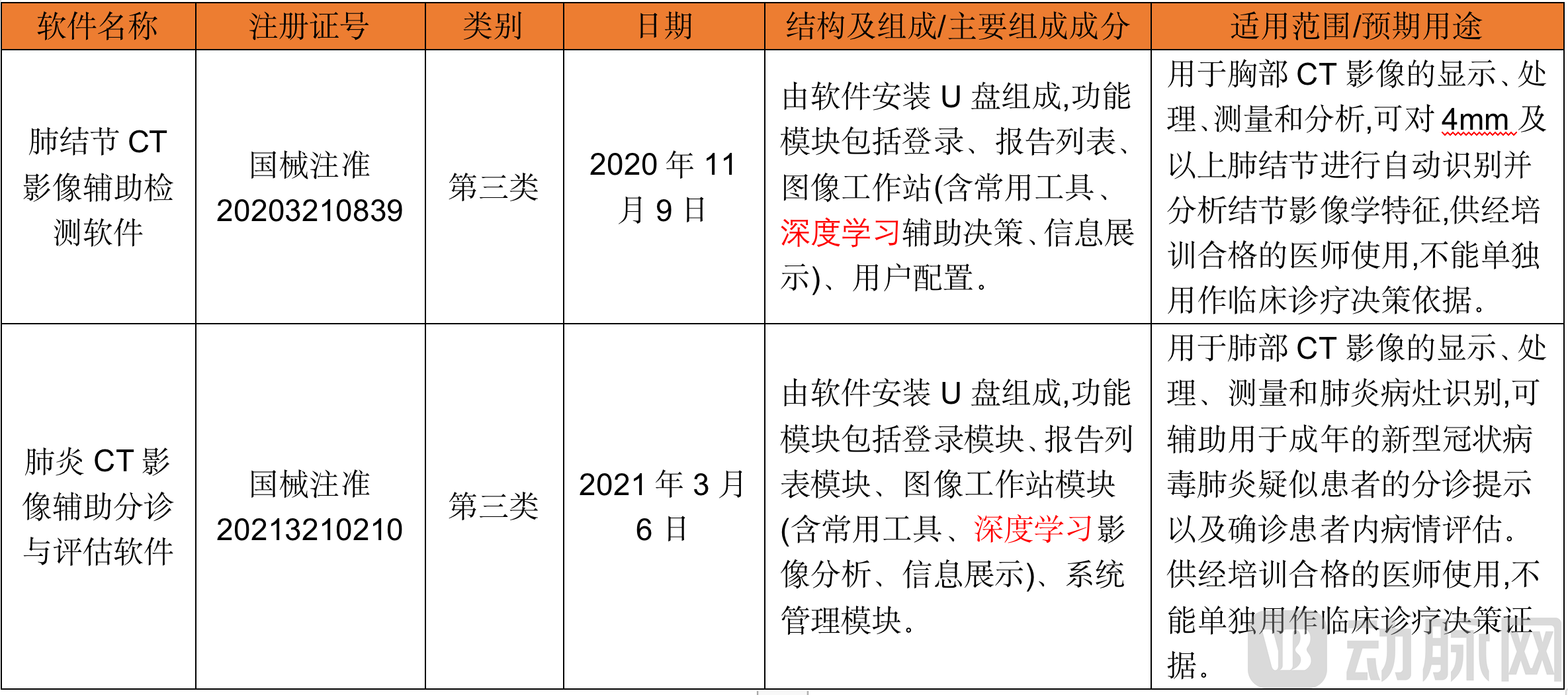
Infervision’s Two AI Software Products Receive NMPA Approval
By that time, Infervision had secured market access approvals from China’s NMPA, the EU’s CE marking, Japan’s PMDA, and the US FDA, becoming a global AI healthcare company with multiple products and certifications across these four major markets. These four approvals not only cover China, the United States, the European Union, and Japan—the world’s most significant markets characterized by the highest medical standards and the most stringent regulatory reviews—but also serve as important references for market access in other countries and regions worldwide.
According to statistics from VCBeat, Infervision’s AI products have established collaborations with over 400 medical institutions worldwide. Its overseas market presence spans countries and regions with the most advanced healthcare systems, including Switzerland, Germany, the United States, Canada, Japan, France, and Italy. Leveraging this prior experience, Infervision may be able to save time in regulatory registration and clinical trials, thereby accelerating its market penetration.
Obtaining market access approvals in multiple countries signifies that Infervision possesses international commercialization capabilities.
Recently, Infervision’s AI products were successfully included in the United Nations Global Digital Health Goods Procurement Catalogue (hereinafter referred to as “GDF”). This marks the first time a Chinese high-tech enterprise has been listed in the UN GDF and represents one of the first batches of AI products globally to achieve this distinction, signaling a new breakthrough for China in the fields of medical technology and artificial intelligence. It is understood that the GDF initiative was led by the United Nations Office for Project Services (UNOPS) through an open global tender. The tendering authority conducted a comprehensive and rigorous assessment of suppliers’ overall capabilities, including technical proficiency, product quality, global presence, and after-sales maintenance and operational support. After six months of stringent multi-stage screening, Infervision stood out among numerous companies worldwide and was successfully selected.
Notably, three months ago, the EU government also decided to procure Infervision’s AI solutions for COVID-19 through centralized purchasing for the second time, which, to some extent, reflects the recognition of Infervision AI in overseas markets.
In the Asia-Pacific region, Infervision partnered with Doctor Net, Japan’s largest teleradiology company, during the COVID-19 pandemic. Doctor Net deployed Infervision’s “Intelligent Assistant Screening and Epidemic Monitoring System for Pneumonia.” In Japan, where CT scanner availability is high but radiologists are in short supply, this AI system for COVID-19—trained on thousands of cases during the pandemic as an “expert”—has established a safety net to reduce missed diagnoses and enable precise diagnosis, forming the first line of defense in epidemic screening through chest CT imaging.
Beyond international collaborations, Infervision is also exploring partnerships within its ecosystem. At this year’s World Artificial Intelligence Conference (WAIC), Infervision joined AstraZeneca as a partner in its “AI Intelligent Screening Vehicle,” showcasing “AI + Healthcare” application scenarios through an interactive exhibition. Meanwhile, Infervision signed a strategic cooperation agreement with GE Healthcare China, under which both parties will engage in comprehensive and in-depth collaboration across business, strategy, R&D, and other areas to further cultivate the AI healthcare ecosystem.
Collaboration with pharmaceutical and medical device companies has become one of the primary commercialization models for AI healthcare startups. Leveraging the extensive hospital-side resources already established by these two types of enterprises, Infervision is poised to further accelerate its deployment speed.
Reviewing Infervision’s development in product, regulatory approval, and commercialization, we can broadly summarize its advantages into the following five points:
1. Possesses the technical capability to develop cross-departmental, all-disease AI solutions, enabling the construction of a closed-loop diagnostic and treatment system that provides clinicians with services aligned with clinical pathways and delivers comprehensive intelligent healthcare services for patients across the entire journey of “screening, diagnosis, treatment, management, and research”;
2. Possess comprehensive supporting services for medical AI, capable of addressing both informatization and research needs;
3. Possesses an absolute advantage in market access certification, enabling commercialization efforts in major international markets including China, Japan, Europe, and the United States;
4. After obtaining multiple regulatory approvals, the company has established certain capabilities in AI market access applications and clinical trials, which can accelerate subsequent product certifications;
5. Included in the United Nations Global Medical Equipment Procurement Catalog and the European Union’s procurement orders, with proven mature cases in AI commercialization.
Infervision’s recent financing round indicates that the medical imaging AI sector has entered a phase characterized by a strong Matthew effect, with leading enterprises capturing the vast majority of market capital. For new entrants to break through, they must possess three key attributes: acute identification of market needs, robust technical capabilities, and sustained financial support, while also allowing time for the maturation and consolidation of their applications. Therefore, having already established the aforementioned five major advantages and secured additional funding, Infervision has built formidable barriers to entry that are difficult for competitors to challenge.
Six months have passed since the news broke at the beginning of the year that Infervision had initiated listing counseling. With the completion of its D2 financing round, Infervision has moved closer to this goal. The company has delivered impressive results at key milestones, including regulatory approvals and international expansion. As it faces the ultimate challenge of entering the secondary market, can Infervision come out on top? The answer will be revealed soon.