

Peripheral Arterial Intervention: The Next Growth Engine in Vascular Access – Why Giants and Capital Are Betting Big
Peripheral interventions have become another lucrative frontier in vascular interventional procedures.
From the perspective of strategic moves by industry giants, leading global medical device companies are flexing their muscles in the peripheral intervention space. A dazzling array of products—including shockwave balloons, excimer lasers, and scoring balloons—have entered the peripheral intervention market, triggering a surge of new product launches in this field.
In the primary market, Zhuangtong Medical Bridge has recently listed on the Hong Kong Stock Exchange in the peripheral intervention sector, while SinoMedix has completed its hearing and is poised for an imminent listing on the same exchange. Meanwhile, in 2021, several high-value consumables companies specializing in peripheral interventions, including Tianhong Shengjie and Leao Medical, secured financing rounds exceeding RMB 100 million.
The reason why leading global medical device companies and capital investors are increasingly focusing on peripheral interventions is that peripheral, coronary, and neurointerventions constitute the three major markets in the field of vascular diseases.
Among these three major markets, the market size for coronary intervention stents alone has reached the tens of billions of yuan. However, with the normalization of national centralized procurement, prices of mainstream coronary stent products have plummeted, leading to a slowdown in the growth of the coronary intervention market.
Neurointerventional and peripheral interventions are just beginning to take off; despite a late start, they have experienced rapid development. Compared with coronary intervention, the fields of peripheral and neurointervention boast a significantly larger patient base, and their market growth potential should not be underestimated. In comparison to neurointervention, peripheral intervention involves a wider variety of disease types, more complex procedural techniques, and a diverse array of specialized therapeutic devices, resulting in stronger and more diversified growth drivers. In the long term, both neurointerventional and peripheral interventions will enter a golden period of high-speed growth, with their respective market sizes projected to reach the RMB 30 billion level by 2030.
In the overall peripheral intervention market, the peripheral artery segment is currently the primary focus for domestic companies. The peripheral artery market started earlier than the peripheral vein market and is more mature. Peripheral artery disease includes all arterial diseases excluding those of the coronary arteries and aorta. According to estimates by Industrial Securities, the market size for peripheral arteries was approximately RMB 5 billion in 2019. According to relevant reports from Frost & Sullivan, the peripheral artery intervention market is projected to reach the ten-billion-yuan level by 2030, with a market size of RMB 12.2 billion, representing a compound annual growth rate (CAGR) of 15.7% from 2019 to 2030.
In an industry landscape where interventional medicine is a hot topic, why has the peripheral artery market attracted intense competition from industry giants? What are the key opportunities for value creation in this market? VCBeat (WeChat ID: vcbeat) has conducted a detailed analysis of the peripheral artery market.
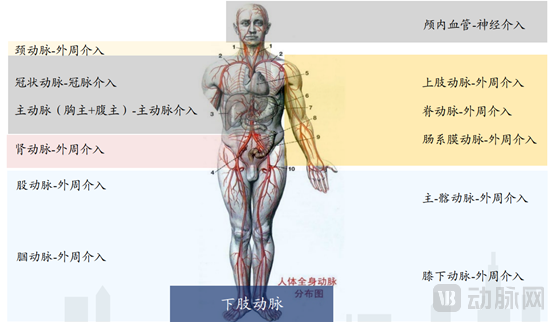
Peripheral Artery Disease (PAD) has garnered significant attention from global medical device companies, primarily due to the broad spectrum of conditions it encompasses. Peripheral artery disease includes all arterial diseases excluding those affecting the coronary and cerebrovascular arteries. The peripheral arterial sites include the aorta, carotid and vertebral arteries, upper extremity arteries, visceral arteries, and lower extremity arteries, among others.
Peripheral artery disease (PAD) is a vascular disorder primarily caused by atherosclerosis. The consequences of PAD are severe, including intermittent claudication, rest pain in the lower extremities, severe hypertension, renal failure, and carotid artery stenosis. Sharing a common pathogenesis with coronary and cerebral atherosclerosis, PAD is frequently associated with myocardial infarction (MI) and stroke, and it also increases the incidence of cardiac death.
Source: Industrial Securities
Lower extremity arterial disease accounts for approximately 80% of all peripheral artery disease cases. Therefore, the general peripheral artery market typically refers to lower extremity arterial disease (LEAD), making the lower extremity arterial market the core segment of the peripheral artery field. In China, around 4% of lower extremity arterial disease cases present with critical limb ischemia, while more than 3% progress to acute limb ischemia.
The peripheral artery intervention market is characterized by low penetration but rapid growth, with novel devices driving swift market expansion.
First, let us examine the penetration rate of the overall peripheral artery market. According to data from the *Report on Cardiovascular Health and Diseases in China 2020*, the prevalence of lower extremity artery disease (LEAD) in the natural population aged ≥35 years in China is 6.6%, suggesting that there are approximately 45.3 million patients with LEAD in China. Among them, about 1.9% underwent revascularization, resulting in an estimated 860,000 revascularization procedures.
At present, there is still significant room for improvement in the rate of interventional treatment for peripheral artery disease (PAD). The progression of PAD is insidious, and patients may remain asymptomatic for extended periods; consequently, the majority of patients with lower extremity peripheral arterial disease do not receive timely treatment.
The current state of insufficient penetration is being transformed by the booming development of vascular surgery. After 2005, vascular surgery in China entered a new era of minimally invasive techniques and experienced rapid growth. In 2012, there were approximately 230 hospitals in China with independent vascular surgery departments, and the total number of physicians specializing in vascular surgery was fewer than 1,500. Today, the majority of Grade A tertiary hospitals across China have established independent vascular surgery departments, and the number of officially registered vascular surgeons has exceeded 10,000.
The rising incidence rates driven by an aging population on the demand side, coupled with the rapid development of specialized vascular surgery teams and continuous innovation in peripheral diagnosis and treatment technologies on the supply side, have jointly expanded the growth boundaries of the peripheral arterial intervention market.
What are the core products in the peripheral artery market?
Lower extremity arterial disease primarily involves vascular stenosis and occlusion. Currently, the main interventional treatment methods include balloon angioplasty and vascular stent implantation.Bare-metal stents and plain balloon catheters are the mainstay products of conventional interventional therapy.Furthermore, universal access products such as catheters and guidewires serve as the foundation for every interventional procedure. Despite their low unit price, their high consumption volume makes them a significant component of the peripheral arterial intervention market.
For lower extremity vascular stenotic lesions, plain balloon angioplasty and bare-metal stents are two relatively traditional interventional devices, yet both have certain limitations. In the context of peripheral arterial disease, the development trend of minimally invasive interventional devices is focused on better addressing the challenges of recanalizing lower extremity vascular lesions and achieving more durable maintenance of maximal luminal patency post-procedure.
Under this development trend,The emergence of drug-coated balloons (DCBs) and vascular debulking devices is challenging the dominance of traditional bare-metal stents and plain balloon angioplasty.
Coronary intervention has consistently led the development of the interventional industry. Its relatively mature technologies and concepts have been more widely adopted and deeply expanded in the emerging peripheral vascular market, with innovative applications of coronary product technologies shining brightly in the peripheral field.
In 2020, global medical device giants launched several blockbuster products in China: Boston Scientific made a high-profile debut of Eluvia, the world’s first polymer-coated peripheral artery drug-eluting stent; BD Medical introduced the LifeStream peripheral balloon-expandable covered stent; Philips promoted its innovative excimer laser system for addressing arterial occlusion; and multiple international and domestic brands launched drug-coated balloons with distinct technological features. GenScript MedTech introduced Shockwave’s intravascular lithotripsy technology to China and initiated clinical trials.
Although the product variety is dazzling, when categorized,Products in the field of peripheral artery intervention are primarily developing in two directions: "intervention without implantation" and "novel drug-device combinations."
"Intervention Without Implantation" Becomes a Market Development Trend
Representative Products Under the "Intervention Without Implantation" ConceptDrug-Coated Balloons (DCB) and Various Vascular Debulking Devices(Rotational atherectomy, excimer laser, mechanical thrombectomy).
From a domestic application perspective, drug-coated balloons are the most noteworthy blockbuster product in the peripheral artery field. Some industry insiders believe that drug-coated balloons will replace the majority of the market share currently held by peripheral stents in the future.
The advent of drug-coated balloons has provided a superior solution to the high rate of restenosis following recanalization in lower extremity vascular disease. A drug-coated balloon (DCB) is an angioplasty balloon coated with an antiproliferative agent, commonly paclitaxel. The drug inhibits the proliferation and migration of smooth muscle cells, thereby further reducing the likelihood of arterial restenosis.
In Europe, drug-coated balloons (DCBs) are widely used in coronary and peripheral interventions. In China, an industry insider stated: “Substantial clinical evidence demonstrates that drug-coated balloons (DCBs) can reduce restenosis following treatment, and their efficacy is widely recognized by physicians in China. During angioplasty, DCBs can be employed as a final step to enhance procedural outcomes. In atherectomy procedures, DCBs are frequently used in conjunction with atherectomy devices. The penetration rate of DCBs among patients undergoing lower extremity endovascular interventions is projected to reach 50% in the future.
Currently, there are five approved drug-coated balloon (DCB) products for the treatment of lesions in the superficial femoral artery (SFA) above the knee and the popliteal artery (PPA), manufactured by three domestic companies—Zhejiang Endovascular Innovations, MicroPort Endovastec, and Acotec Scientific—and one multinational corporation, Medtronic.
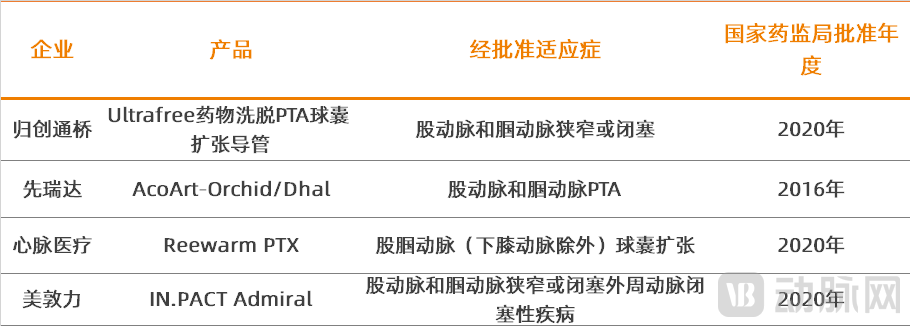
Domestically Marketed Peripheral Drug-Coated Balloon Products for Above-the-Knee Lesions
DCB has significant growth potential; in addition to capturing market share from stents in the above-the-knee lesion market, DCBs are also poised to unlock the below-the-knee lesion market, which has historically been difficult to treat.
Infra-popliteal arterial occlusion is common in patients with diabetes. However, due to the slender lumen of infra-popliteal vessels, it is difficult to overcome factors such as restenosis and elastic recoil; therefore, long-term therapeutic outcomes cannot be guaranteed. Consequently, on a global scale,Infrapopliteal Artery Disease Has Always Been a Challenging "Minefield" in Endovascular Therapy.
However, from a technical standpoint, DCB companies with sufficient venture capital can overcome almost any challenge. Over the past two years, clinical trial results of drug-coated balloon (DCB) therapy for below-the-knee lesions have initially demonstrated favorable short- to mid-term efficacy and the potential for repeat endovascular interventions.
Backed by the large patient population with diabetic foot, the market for below-the-knee (BTK) interventional therapy is projected to reach RMB 363 million in 2024. Currently, Acotec is the only company with a BTK drug-coated balloon (DCB) product launched in China; however, this market has attracted interest from multiple enterprises, and companies possessing specialized DCB technologies are actively expanding into BTK indications.
Most drug-coated balloons (DCBs) utilize paclitaxel as the therapeutic agent. However, due to the complex interplay among coating technology, drug dosage, formulation, excipients, and drug release kinetics, there are variations in the clinical efficacy of currently marketed DCB devices.
The primary differences among drug-coated balloon (DCB) products manufactured by participants in various industries lie in the dosage and formulation of paclitaxel, the excipients used to carry the drug (such as magnesium stearate, iopromide, and urea), and the methods employed for coating the drug and excipients onto the balloon surface. The main functions of the excipients are to ensure more uniform drug dispersion, enhance adhesion to the balloon surface, and improve drug release and absorption properties.
It is worth noting that in the field of peripheral arterial intervention, UltraFree, the drug-coated balloon launched by ZendoVascular, is China’s first carrier-free paclitaxel drug-coated balloon. Compared with other similar international or domestically produced products, its distinguishing feature is the absence of any drug carriers or excipients. This clearly enhances the safety profile of the pure drug component and simultaneously improves the drug-loading efficiency of the balloon coating.
In addition, Juanchuang Medical’s proprietary ultrasonic spray technology enables pure paclitaxel crystal particles to be smaller, more uniform, and more controllable. This results in higher drug absorption efficiency at the vascular target lesion and a more sustained therapeutic effect. Animal studies and clinical trials have demonstrated the favorable safety and efficacy of its drug-coated balloons.
The market launch of these products demonstrates that domestically produced peripheral interventional devices have evolved from pure imitation and introduction to a stage of independent innovation and development. In the future, it is expected that more vascular interventional products with distinct Chinese characteristics will continue to emerge.
In addition to above-the-knee and below-the-knee lesions, the maintenance of hemodialysis access, which serves a vast patient population, represents another major market for drug-coated balloons (DCBs). As more companies recognize the potential of the DCB market, the domestic DCB sector in China is expected to enter an era characterized by vigorous competition and diverse innovation.
New Drug-Device Combinations: The Evolutionary Direction for Existing Products
Although the "intervention without implantation" concept is a major trend, traditional non-implantable products cannot address all clinical challenges. While intervention-without-implantation devices, represented by drug-coated balloons, are improving therapeutic outcomes and disrupting the bare-metal stent market, peripheral stents, atherectomy devices, and other products are also evolving.Some companies have also begun to lay out their strategies for bioresorbable scaffolds, spot stents, covered stents, and drug-eluting stents.
Multiple vascular surgery centers in China have pioneered the treatment of lower extremity arterial disease using a combination of directional atherectomy and drug-coated balloons (DCBs), aiming to offset the limitations of debulking devices by leveraging the advantages of DCBs to enhance therapeutic outcomes. Some experts argue that improving existing bare-metal stents through integration with drug-eluting technologies may yield synergistic effects greater than the sum of their parts (1+1>2), representing the primary trend in future stent evolution. Additionally, foreign clinical data suggest that spot stents, specially coated stents, or covered stents may offer new value in improving lumen patency rates.Therefore, for stent products, developing entirely new drug-device combination products is also a major trend.
What New Innovations Can Stents Offer?
Boston Scientific has launched the world’s first polymer-coated drug-eluting stent for peripheral arteries; LifeTech Medical has identified below-the-knee peripheral lesions as a key application scenario for its iron-based bioresorbable stents; Zebra Medical has initiated research on peripheral drug-eluting self-expanding stents in China. This product, along with its bare-metal self-expanding stents, has obtained CE certification, and clinical trials will be conducted domestically in the future. In addition, Zebra Medical has announced that it is developing and strategically positioning itself in niche areas of novel stents, such as spot stents and TIPS stents.
In light of these two major trends, blind imitation offers no viable path in the peripheral artery market, which boasts immense potential and rapid growth. Only companies with comprehensive product line portfolios and swift commercialization capabilities can secure a first-mover advantage and capture greater market share.
International multinational corporations possess substantial technical reserves and production line foundations in the peripheral artery field. However, their performance in developing innovative products and expanding into the Chinese local market has been mixed—some have slowed their pace of innovation due to their large existing business operations, while others focus on specialized, in-depth development within a single niche.
Chinese domestic enterprises are rising comprehensively. Benefiting from policy support that encourages innovation and accelerates import substitution, leveraging the innovative environment fostered by healthcare reforms and the integration of medicine and engineering, and capitalizing on the favorable advantages of China’s domestic capital markets, these companies are rapidly enhancing the quality and performance of traditional products, accelerating industrial layout, and preparing to seize new development opportunities and market explosions in both domestic and international markets.
Domestic vascular interventional medical device players should not be underestimated. They have demonstrated strong overall performance in forward-looking pipeline planning, in-depth clinical understanding, and commercialization capabilities.
Taking Zhejiang Endovate, which has just listed on the Hong Kong Stock Exchange, as an example, although it is a new-generation player, it has comprehensively deployed in both the neurointerventional and peripheral intervention tracks. In the field of peripheral intervention, it is one of the few companies in China to have a complete layout of overall solutions for peripheral intervention. Its product portfolio covers various peripheral and neurointerventional stents, a full range of peripheral balloons and neuro-specific balloons, vena cava filters, catheter-based access products, and arterial puncture site closure devices, encompassing a full series of arterial and venous products. In terms of commercial performance, Zhejiang Endovate has obtained approval for six products in the peripheral vascular intervention field.
Undoubtedly, interventional therapy for peripheral vascular disease will remain one of the key themes in medical technology for the foreseeable future. Of course, peripheral interventions present both opportunities and challenges. For domestic companies in this field, distinguishing themselves amidst fierce competition remains a significant and long-term endeavor.