

Angell Technology Secures Position Among Global Top Three Dynamic DR Manufacturers with Innovative 3D X-ray Breakthrough

Angell Technology
Digital Medical Imaging Equipment Supplier
Since Wilhelm Röntgen’s discovery of X-rays and the first radiograph of his wife’s hand in the 19th century, the application of this technology has evolved from the era of purely physical imaging to the digital imaging era.
The continuous improvement in the functionality of medical imaging equipment has enabledThe clinical role of this technology is becoming increasingly prominent.Basic medical diagnostic equipment, DR (X-ray imaging), is widely used in the chest, bones and joints, and breast....in the diagnosis of diseases. During the COVID-19 pandemic, mobile digital X-ray imaging equipment became the primary modality for clinical X-ray examinations.
On the other hand, favorable policies such as tiered diagnosis and treatment and domestic substitution, coupled with emerging demands driven by population aging, hospital expansion, and operational model transformation, have injected new vitality into the DR industry. Opportunities in this sector are becoming increasingly prominent.
However, influenced by internal and external factors such as the declining growth rate of static DR and deepening user demands,The Future Direction of the DR Industry Remains Worthy of Further Exploration.
Shenzhen Angell Technology Co., Ltd. (hereinafter referred to as “Angell Technology”), established in 2002, is the first enterprise in China to commercialize dynamic digital radiography (DR) technology, and its dynamic DR systems have ranked among the top three globally.How can this enterprise, which successively launched China’s first dynamic detector, the first floor-mounted dynamic multifunctional X-ray system, and the first ceiling-suspended dynamic multifunctional X-ray system in the Chinese market, accurately position itself to achieve steady growth in the DR industry? This question warrants further analysis. VCBeat seeks to answer it by examining the company’s product portfolio, development positioning, and strategic planning.
“We have recently launched a new technology, achieving a significant breakthrough in digital radiography and propelling it comprehensively from the 2D era into the 3D era.”Guo Liang, head of the marketing department at Angell Technology, told VCBeat, “We refer to this technology as WR-3D (X-ray scanning and 3D image reconstruction in a standing position),”Unlike conventional tomosynthesis, which was previously limited to 3D imaging in the coronal plane only, WR-3D achieves true integration of 2D and 3D modalities, enabling 3D image visualization across the coronal, sagittal, and axial planes. This represents genuine full-volume, true 3D imaging.”。
Angell Technology has once again taken a new step forward in the field of DR. ButWhat Is the Significance of Achieving Three-Dimensional Imaging?
In fact,Both CR and DR imaging technologies are based on two-dimensional planar imaging. Conventional 2D DR imaging is prone to obscuration due to overlapping anatomical structures, making it difficult to identify obscured lesions or small, occult lesions, thereby leading to a high rate of missed diagnoses.By integrating 2D digital radiography with 3D multi-planar tomosynthesis, three-dimensional digital X-ray imaging technology can fundamentally address the high rate of missed diagnoses associated with conventional 2D DR imaging, thereby enhancing the accuracy of DR as an initial screening modality.
First, the integration of 3D photography capabilities helps enhance the accuracy of DR in initial screening, as well as improve disease diagnosis and treatment service capacity, efficiency, and quality, thereby expanding the clinical screening and diagnostic value of DR equipment.
Secondly, unlike the three-dimensional imaging provided by CT and MRI in the supine position, Angell Technology’s pioneering true 3D digital X-ray photography technology can provide weight-bearing 3D images, including multiplanar reconstruction (MPR) images, maximum intensity projection (MIP) images, and volume rendering (VR) images.
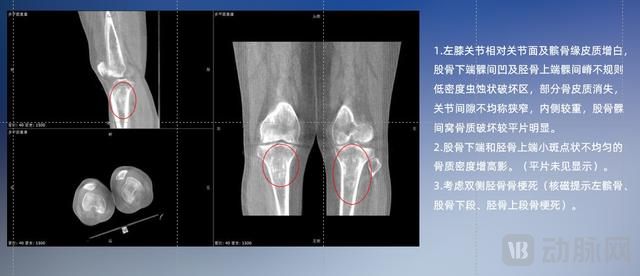
Images of Each Cross-Section
In response, Guo Liang explained“Under weight-bearing conditions, muscles, joint spaces, and other structures differ significantly from those observed when the patient is supine. Imaging data acquired under weight-bearing conditions more accurately reflect the true physiological state, thereby enabling more precise diagnosis of spinal and joint disorders. For basic surgical planning and assessment of spinal and joint conditions, this technology provides diagnostic information that cannot be obtained through conventional CT or MRI.”
Third, the ultra-low-dose 3D imaging capability of WR-3D results in lower cumulative radiation exposure for patients requiring multiple X-ray follow-up examinations, thereby offering enhanced overall safety.
Fourth, WR-3D features built-in distance and angle measurement tools. By providing arbitrary cross-sectional views at multiple angles along with highly sensitive density information, it enables clinical diagnosis to obtain richer diagnostic information than conventional 2D imaging, thereby reducing missed and misdiagnoses.
Currently, this technology has achieved scanning and application across multiple body regions, including the cervical spine, lumbar spine, foot and ankle, knee joint, hip joint, and airway.
Finally, in terms of product design, Angell Technology integrates a mobile platform design with its dynamic DR system, enabling seamless switching from 2D to 3D examinations and thereby improving DR detection efficiency.
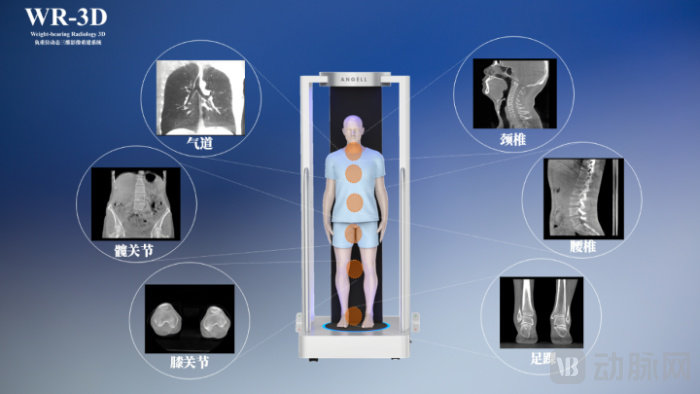
WR-3D Schematic Diagram
The limitations of 2D imaging have long been a major pain point for disease screening and diagnosis. After many years,Angell Technology Achieves Another Technological Breakthrough, Pioneering China’s First Weight-Bearing 3D Scanning Solution to Fully Integrate 2D and 3D Digital Radiography, Potentially Offering a New Product Development Paradigm for the DR Niche Market.
In exploring digital radiography technology, Guo Liang stated: “Regardless of the circumstances, we will remain focused on general radiography, dedicated to innovating digital X-ray technology, and continue to deepen our expertise in this field. Currently, Angell Technology has mastered full-chain component technologies for DR equipment and established a comprehensive product portfolio covering standard DR, gastrointestinal DR, mammography DR, mobile DR, and mobile C-arm X-ray systems. We are one of the few imaging equipment companies globally with integrated R&D and manufacturing capabilities for both complete systems and key components. In the future, Angell Technology will continue to focus on its core competencies, increase R&D investment, and develop more innovative products.”
Initially, Angell Technology expanded into international markets with its self-developed medical film scanners. In 2007, the company successfully developed China’s first digital detector. In 2008, it became a drafting and standard-setting entity for the “Chinese DR Industry Standard.” In 2010, Angell Technology began to make large-scale inroads into the complete DR system market, and established an industry-academia-research alliance with the Chinese Academy of Sciences the following year. In 2012, Angell Technology entered the niche segment of breast DR, developing the first generation of breast DR systems. In 2013, Angell Technology successfully developed China’s first high-definition digital multifunctional dynamic DR system...
Angell Technology’s growth curve resembles a “J” shape, with steady progress in the early stages followed by rapid advancement in the DR industry, positioning it at the forefront. By 2018, Angell Technology had already served 3,000 global users of dynamic DR systems, ranking among the top in sales within the dynamic DR segment.
Angell Technology’s sustained growth and frequent achievements in the DR industry are attributable to its strategic product portfolio planning and R&D of core technologies.
According to the data provided by Angell Technology, its R&D investment accounts for approximately 15% of its total expenditures. The company boasts an R&D team of over 200 members, which includes specialized sub-teams dedicated to detector development, X-ray tube development, high-voltage generator development, image algorithms, and mechanical and industrial design. Furthermore, Angell Technology collaborates with innovation platforms to facilitate the translation of industry-academia-research achievements. To date, the company has secured more than 150 intellectual property rights, including invention patents.
Initially, Angell Technology focused its attention on the component-level R&D of dynamic flat-panel detectors, high-voltage generators, X-ray tubes, and gantries, achieving independent research and development.
Guo Liang told VCBeat“Solving the R&D challenges of core components means clearer image presentation, higher R&D conversion rates, and improved equipment maintenance efficiency. While controlling costs and achieving breakthroughs in key technologies, it meets customers’ needs for equipment maintenance, bringing greater revenue to the enterprise.”
After achieving breakthroughs in several core component technologies, Angell Technology embarked on a new round of strategic reflection.Rather than merely exerting influence within the supply chain, the company chose to build its own brand. Naturally, Angell Technology entered the digital radiography (DR) sector and achieved notable success. Arguably, its earlier breakthroughs in core components provided some “growth momentum” for its subsequent development.
Angell Technology has gradually launched its static flat-panel DR series, dynamic flat-panel DR series, mammography product series, mobile X-ray product series, Zhumu ceiling-mounted dynamic DR (the first domestically produced ultra-high-end ceiling-mounted dynamic DR), veterinary X-ray product series, and general radiography peripheral product series. Corresponding models with dynamic functionality have been introduced across all product lines.
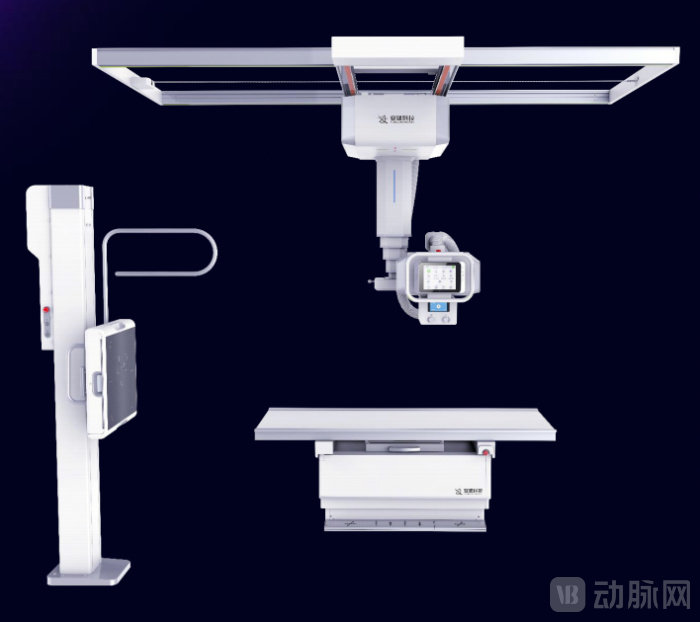 Zhumu Suspended Dynamic DR
Regarding the upcoming strategy,Guo Liang stated that Angell Technology will fully replace static DR with dynamic DR, achieving deep integration of 2D and 3D imaging as well as functional motion imaging on its dynamic digital X-ray photography platform. Adhering to a “disease-centric” approach, the company aims to promote the deep integration of medical imaging with clinical diagnosis and treatment, providing high-value diagnostic and assessment information for the management of various clinical conditions. Meanwhile, by gaining deep insights into the clinical needs of secondary and tertiary hospitals, Angell Technology is launching DR equipment with greater clinical value for high-level hospitals, thereby advancing the process of domestic substitution while actively participating in the expansion of global markets.
Angell Technology’s strategic market deployment stems from two aspects.
On one hand, traditional static DR suffers from limitations such as overlapping anatomical structures that are difficult to distinguish in 2D imaging, a primary focus on anatomical imaging with a lack of precise functional capabilities, and the inability of static images to capture changes during pulmonary respiratory motion. To address these shortcomings, Angell Technology has shifted its focus from anatomical to functional imaging, achieving core technological breakthroughs by replacing static systems with dynamic DR. Currently, sales of its dynamic DR products have multiplied.
On the other hand, the comprehensive rollout of the tiered diagnosis and treatment system has opened up another opportunity for the DR industry. The improvement of medical capabilities in numerous primary healthcare institutions relies, to a certain extent, on hardware upgrades. By focusing on the primary care market and serving it with high-quality products, companies can gain market recognition and expand their market presence.
Currently, all of Angell Technology’s products have obtained Class II medical device certifications, and the company has established collaborations with qualified hospitals in China. Meanwhile, Angell Technology has been expanding its overseas presence for many years, achieving sales and installations in more than 60 countries and regions.
According to relevant statistical data, the growth rate of static DR has declined from 20% in 2015 to 18% currently. Since Shimadzu launched the first dynamic DR system in 2009, dynamic DR has gradually become an industry trend, and Angell Technology had initially conceived a strategic layout related to dynamic DR. With this round of technological innovation in DR by Angell Technology, it is difficult to predict whether this direction will become the next major growth opportunity for the DR market.