

HanYi Files IPO Prospectus: Building a Rare Disease Digital Healthcare Platform through Private Domain Traffic Connecting Physicians, Patients, and Pharma
According toWHOof the definition, the number of patients accounts for0.65‰-1‰Rare diseases, as their name suggests, seem distant from our daily lives. In reality, due to China’s large population base, rare disease patients are not uncommon in the country.
According to statistics, there are nearly 7,000 internationally recognized rare diseases, and China currently has approximately 20 million patients with various rare diseases. However, rare diseases are characterized by low incidence rates for individual conditions, dispersed cases, complex and diverse clinical manifestations, and frequent involvement of multiple organs and systems. Most rare diseases require collaboration among multidisciplinary, cross-specialty clinical experts and medical genetics specialists for accurate diagnosis and treatment. Consequently, patients with rare diseases have long faced challenges such as prolonged diagnostic delays, high misdiagnosis rates, difficulties in accessing medications, and heavy economic burdens.
To address the challenges of difficult access to care, diagnosis, and medication in the field of rare disease management, the Hanyi Rare Disease Internet Healthcare Platform (hereinafter referred to as “Hanyi”) has leveraged internet technology to establish a private-domain operational platform connecting physicians, patients, and pharmaceutical companies. This initiative supports expert physicians in building their own online rare disease clinics, delivering comprehensive solutions ranging from academic promotion to patient management. In this article, VCBeat engages in a conversation with Hu Yifan, founder of Hanyi, to gain a deeper understanding of this model.
Private Domain Operations Boost the Development of Internet Healthcare
In recent years, an increasing number of public brick-and-mortar hospitals have accelerated their adoption of internet-based services. Driven by the needs of COVID-19 prevention and control as well as relevant policies, the development of internet hospitals has entered a fast lane. According to statistics, the number of internet hospitals exceeded 1,100 by March this year, with public hospitals holding a significant numerical advantage.
Amid the surge in internet hospital development, Hu Yifan, former Vice President of Qilekang Shiliu Yunyi Internet Hospital, gradually recognized the bottlenecks and challenges faced by most third-party internet hospitals from his perspective as an industry practitioner.
First, physicians constitute the most critical resource for internet hospitals, where public hospitals hold a natural advantage. Since the majority of physicians on platform-based internet hospitals also come from public hospitals, as public hospitals increasingly establish their own internet hospitals, third-party platforms—whose business model primarily focuses on follow-up consultations for chronic diseases—are facing growing difficulties in securing physician participation and accessing their fragmented spare time.
Secondly, as the construction of internet hospitals accelerates, online medical insurance reimbursement policies are also being liberalized at a faster pace. Admittedly, opening up medical insurance payments to internet hospitals will bring substantial patient traffic; however, for third-party internet hospitals, the actual revenue growth realized is very limited due to the zero-markup policy on pharmaceuticals. Without robust traffic operation capabilities, this may even lead to increased operational costs.
As the internet healthcare sector has evolved, public-domain traffic has approached saturation, while the concept of “private-domain” traffic has rapidly gained traction. This shift can effectively reduce corporate operational costs and enable more efficient utilization of traffic, offering substantial benefits to the development of third-party internet healthcare platforms.
Drawing on his industry insights and past project execution experience, Hu Yifan began to refine the private-domain traffic operation model and decided to build a platform that connects doctors, patients, and pharmaceutical companies.
Focusing on Rare Diseases: Integrating Digital Marketing Models
At that time, Hu Yifan was contemplating how to leverage his experience in managing physicians’ private-domain traffic to build a differentiated internet healthcare platform. The catalyst that directed Hu’s focus toward rare diseases was a promotional video for EnChroma color-blindness correction glasses. In the video, the emotional reaction of a color-blind patient who shed tears of joy upon seeing colors for the first time after wearing the glasses deeply moved Hu. After gaining a deeper understanding of the current landscape of rare diseases, Hu became even more determined to draw on his accumulated experience in internet healthcare to create a doctor-patient service platform dedicated to serving niche but urgently underserved populations in need of medical resources.
In Hu Yifan’s view, rare diseases are well-suited to addressing current pain points and urgent needs through private-domain traffic operations and physician community management. Building an internet-based healthcare platform for rare diseases—even if it merely helps patients achieve diagnosis and receive appropriate treatment six months to a year earlier than under existing circumstances—would already be a highly meaningful and worthwhile endeavor.
This assessment is based on Hu Yifan’s industry research. Through discussions with physicians and experts in the field, Hu Yifan recognized that the industry not only lacks sufficient resources for academic research and promotion of rare diseases, but also presents significant challenges for patients in accessing medical care and obtaining medications. Issues such as unreasonable resource allocation and information asymmetry are particularly pronounced in this sector. Furthermore, for pharmaceutical companies, the development of orphan drugs is associated with limited market returns due to factors such as high R&D complexity and a small target market, which has, to some extent, dampened their enthusiasm for investing in rare disease drug development.
The application of private-domain traffic may help address these issues. By operating physician communities, Hanyi can establish private-domain pools for rare disease patients and online physician departments, thereby providing digital marketing channels for pharmaceutical companies’ rare disease drugs. This approach also enhances physicians’ understanding of rare diseases and facilitates patients’ access to specialists capable of diagnosing and treating these conditions, thus offering greater convenience in effective treatment and ongoing course management.
So, specifically, what benefits can the establishment of HanYi bring to various roles involved in the entire business process?
Building a Closed-Loop Ecosystem for Patients, Physicians, and Pharmaceuticals to Benefit Multiple Stakeholders
In simple terms, Hanyi recruits physician resources and conducts academic promotion through its three-domain private traffic operation model—comprising a private community for rare disease academic exchange, a private pool for rare disease patients, and a private online department for rare diseases—thereby forming physician communities. This enables physicians to manage and engage patients via the platform. In this process, Hanyi connects physicians, patients, and pharmaceutical companies, successfully integrating internet healthcare, private traffic operations, and digital marketing for pharmaceutical enterprises.
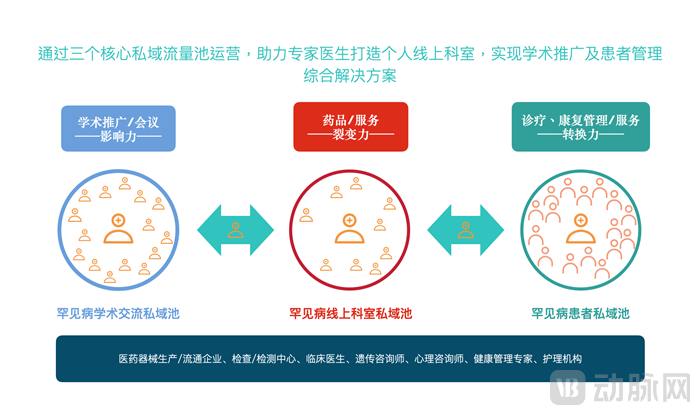
For physicians, HanYi enables key opinion leader (KOL) specialists to conduct academic discussions and case reviews, leveraging their influence to attract interested physicians and establish a private community for rare disease academic exchange. This platform also allows physicians to access a broader range of rare disease knowledge.
At present, in addition to the inherent characteristics of rare diseases themselves, a major factor contributing to the difficulty in diagnosing these conditions is the scarce number of clinicians capable of making such diagnoses. According to the 2018 China Rare Disease Survey Report, nearly 33.33% of the physicians surveyed lacked knowledge about rare diseases. In the actual diagnostic process for certain specific diseases, this proportion can even exceed 70%.
It is evident that awareness of rare diseases needs to be improved not only among the general public but also within the medical community. Through academic exchanges and knowledge dissemination facilitated by Hanyi’s private-domain ecosystem, physicians can effectively acquire expertise in rare disease screening and diagnosis, thereby enhancing their understanding and enabling more precise screening and case sharing. Furthermore, leveraging Hanyi’s patient management module, physicians can establish a virtual online clinic dedicated to rare diseases, allowing for more convenient and efficient follow-up visits, patient monitoring, and referrals, as well as real-time tracking of treatment outcomes.
For patients, many conditions cause mobility impairments, necessitating dedicated caregiving. Moreover, treatment resources for rare diseases are concentrated in a few hospitals, leading to significant overlap between diagnostic and follow-up care pathways, which imposes additional burdens on patients seeking medical attention. Through Hanyi’s online follow-up consultations and remote monitoring services, the time and travel hardships associated with follow-up visits can be effectively reduced, thereby meeting patients’ multifaceted disease management needs.
For pharmaceutical companies, leveraging HanYi’s hybrid online-offline academic promotion model enables the dissemination of medical knowledge on rare diseases to physicians, enhancing their understanding and acceptance of product pharmacology and efficacy, while continuously shaping prescribing behavior. This approach further drives prescription conversion. Moreover, the feedback data on treatment outcomes from physicians and patients generated during this process provides valuable insights for optimizing therapeutic regimens and formulating marketing strategies, aligning with the current digital marketing needs of pharmaceutical enterprises.
Furthermore, Hanyi’s expert influence assessment algorithm enables pharmaceutical companies to evaluate physicians’ influence factors during the recruitment of medical experts, thereby establishing a comprehensive, top-down evidentiary chain of promotional value that links expert influence with conversion power. This facilitates the quantification of both physician influence and patient conversion outcomes.
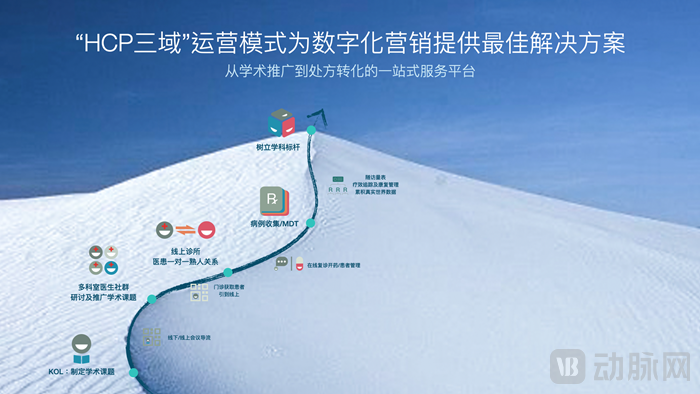
Although rare diseases constitute a niche sector, they encompass a wide variety of conditions. The first edition of the National Rare Disease Catalog included 121 diseases, and the selection process for the second batch is currently underway. It is anticipated that more rare diseases will be added to the catalog in the future. Moving forward, HanYi will further strengthen its collaborations with enterprises involved in the rare disease space, continuing to deepen its expertise in this specialized field. By leveraging a thorough understanding of the needs of key stakeholders—including healthcare providers, patients, and pharmaceutical companies—HanYi will continuously optimize its existing service ecosystem to build a compassionate and professional internet-based healthcare platform for rare diseases. Our mission is to support dedicated physicians and ensure that every individual faces serious illness with equality and dignity.