

XinKong Air Rescue Files IPO Prospectus: Pioneering Regional Air Medical Networks from Henan Relief to Yangtze Delta Coverage
A torrential downpour in Henan Province disrupted transportation, leaving countless people stranded. The immediate priority became how to effectively deliver supplies to residents facing power outages and food shortages.
On July 22, Shanghai Xinkong Helicopter Co., Ltd. dispatched a Bell 429 medical helicopter to Zhengzhou Xinzheng Airport to conduct aerial rescue and supply delivery operations in areas affected by flooding.
In fact, this is not the first time Xinkong Helicopter has carried out air rescue operations. Two months ago, two critically ill patients from Jiaxing were also transported by helicopter to Shanghai Ruijin Hospital.
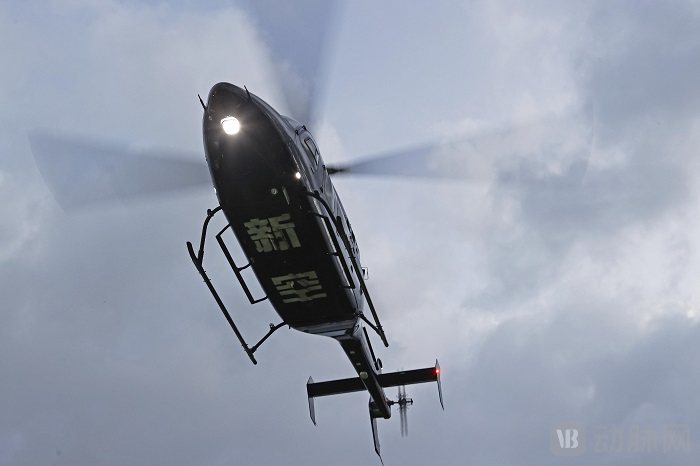
New Sky helicopters were present in all of the aforementioned air rescue operations.
Established in 2016, the company (hereinafter referred to as “Xinkong Helicopter”) is currently dedicated to building an aviation rescue and medical care collaboration network in the Yangtze River Delta region, as well as other regional aviation medical rescue networks, providing emergency air medical rescue services across East China and even nationwide.
Amid the Pandemic: From Air Travel to Air Medical Rescue
If it hadn’t been for the 2020 pandemic, “Xinkong Rescue” might still be “Xinkong Travel.”
Cao Xintian, the founder of New Air Helicopter, was initially motivated to establish the company to address the long-standing transportation challenges plaguing society. His vision is to realize a future that appears somewhat cyberpunk: one where people travel by aircraft for family visits, social engagements, and business trips.
This is closely tied to his passion for helicopters. After graduating early in his career with a focus on aviation maintenance, he self-funded his helicopter pilot training. Upon obtaining his license, he joined Bell Helicopter, a U.S.-based helicopter manufacturer. Later, he returned to China and founded Xin Kong Helicopter.
Indeed, this was precisely what they were doing in the early stages: by providing more convenient transportation services, their mobility business gradually gained traction.
But when the pandemic struck in 2020, Cao Xintian suddenly realized that they could undertake more meaningful initiatives—also addressing “mobility challenges,” but this time focusing on issues such as patient transfer and the transportation of disaster-relief supplies.
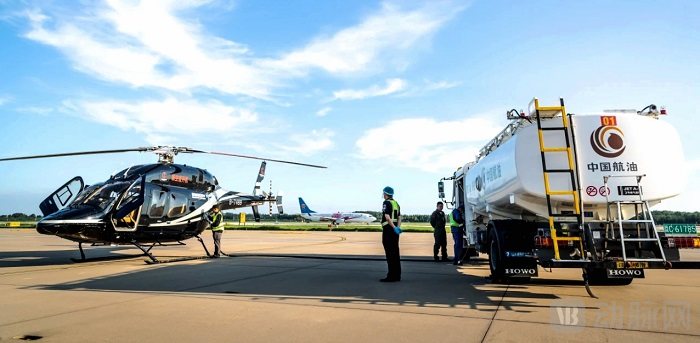
The story began quite simply. When the pandemic broke out, he also wanted to contribute and do something meaningful. At that time, it was difficult for supplies to enter the epidemic areas, and truck transportation often took a long time with poor efficiency. He realized that his company had fast transportation tools and sufficient manpower, so he decided to publish an article on their official WeChat account stating that Xinkong Helicopters could provide free material transportation services to the affected areas. However, due to limited reach, there were very few responses.
Following the promotion and publication of hotline numbers on platforms such as Weibo, relief supplies began to pour in continuously. “Xinkong Travel” transformed into “Xinkong Rescue,” urgently launching multiple air freight corridors for medical supplies, including the Wuhan, Huanggang, Xiangyang, Jingmen, and Hangzhou lines. Three helicopters operated in rotation, accumulating nearly 60 flight hours and completing more than 10 emergency airlift missions. At a time when medical personnel in Hubei Province faced critical shortages of medical supplies, Xinkong Helicopters joined others on the front lines to address the urgent needs of the epidemic-stricken areas, airlifting over 3.5 tons of urgently needed medical protective equipment.
Following this incident, Cao Xintian adjusted the company’s primary strategic direction: in 2020, Xinkong Helicopter shifted from aviation transportation to aerial emergency rescue.
In his view, the underlying logic is the same for both material transport and aerial rescue. “The former is akin to a private car, while the latter is comparable to an ambulance, which needs to be equipped with advanced medical devices—including defibrillator monitors, ventilators, infusion pumps, and suction units—to allow onboard medical personnel to provide emergency care and ensure the stability of patients’ vital signs during flight.”
Compared with transportation, rescue missions demand smoother and faster helicopter operations. Nevertheless, both share the same goal and mission: to safely deliver passengers to their destinations. The previously established rapid-response mechanism is also helping “Xinkong Rescue” achieve a smooth transition.
Medical Rescue: Building a Multi-Regional Collaborative Network for Medical Emergency Care
New Sky Helicopter has selected the Bell 429 in its dedicated medical configuration as its flagship aircraft. This model boasts the largest cabin space among light twin-engine helicopters, featuring a flat floor and an eight-seat layout (accommodating one pilot and seven passengers).
Helicopters are merely the most basic component of support. Establishing a collaborative medical rescue network also involves ensuring effective liaison and communication with hospitals, among other factors. Throughout this process, the specific transfer protocol for aeromedical evacuation is generally as follows:
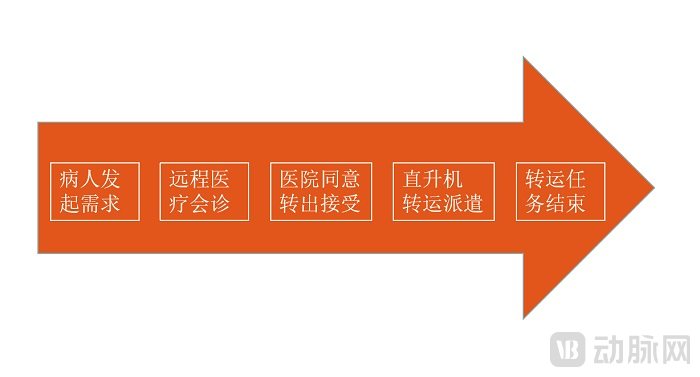
Local hospitals submit helicopter transfer requests to institutions such as Ruijin Hospital. After Ruijin Hospital evaluates the patient and determines that they meet the criteria for transfer, it contacts “Xinkong Rescue.” Upon receiving and confirming the helicopter transfer request, Xinkong Helicopter coordinates with multiple parties to immediately activate the air medical transport mechanism. It rapidly completes necessary preparations, including flight path approval and opening green channels at the hospital, deploys a helicopter to the referring hospital, and carries out the emergency medical escort mission.
In the field of medical emergency response, the industry currently primarily establishes an air medical rescue network by collaborating with urban 120 emergency centers and partner hospitals. It also sets up joint operational mechanisms with highway management authorities and highway traffic police departments, while assessing sites such as highway service areas and hospital helipads to enhance rescue capabilities.
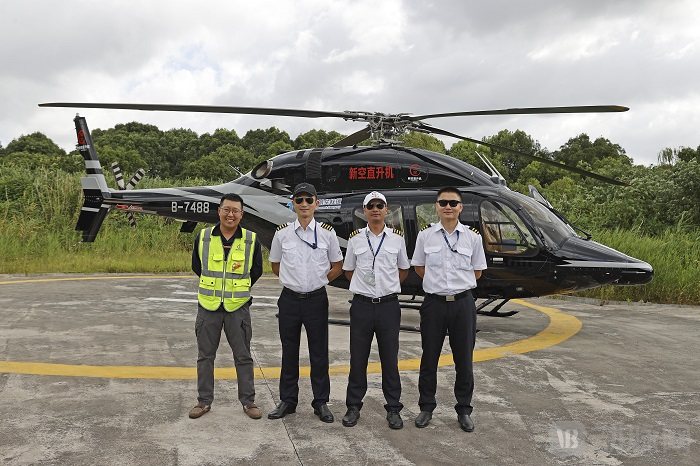
Xinkong Helicopter is also actively expanding its collaborations with hospitals across various regions. Currently, Xinkong Helicopter’s air rescue operations are primarily concentrated in East China. By incorporating provincial hospitals from Jiangsu, Zhejiang, Shanghai, and Anhui, and jointly establishing an air medical rescue network in the Yangtze River Delta region with prefecture-level city hospitals, as well as cooperating with government departments, Xinkong has created an aerial rescue route for patients in need within this area, thereby improving the rate of timely treatment for patients.
Furthermore, it has innovatively established a “long- and short-haul combined” air medical transfer model. Users can select the “business jet + helicopter” transfer mode based on their individual needs, enabling long-distance medical transfers in the shortest possible time while avoiding potential traffic congestion and secondary injuries caused by road bumps, thereby gaining precious time for patient rescue.
Cao Xintian stated that the number of helicopters is not the key factor. They will increase the fleet size according to demand; for instance, one additional helicopter was recently added, and further investment in helicopters is expected in the future.
A more critical issue lies in operational efficiency. On one hand, patients themselves need to recognize that certain conditions require emergency medical intervention to improve their quality of life, rather than missing the golden hour for rescue. On the other hand, companies should not blindly expand their helicopter fleets; instead, they should enhance operational efficiency and optimize utilization capacity.
“If an aircraft costs 10 million, each person only needs to pay 1 yuan when covering an audience of 10 million; but if it covers 1,000 people, the cost per person would be 10,000 yuan. When each of the 10 million audience members is willing to spend 2 yuan, it means that profit is generated.”
In his view, by expanding population coverage and integrating with insurance products, it is entirely feasible to safeguard patients’ lives while alleviating their financial burden during the establishment of an air medical rescue network. Currently, Xinkong Helicopter is collaborating with Pacific Insurance to promote air medical rescue insurance among its extensive customer base. For Xinkong Helicopter, which prioritizes efficiency, the goal for this year is to achieve 500 cumulative flight hours per helicopter.
Cao Xintian believes that current air medical rescue capabilities remain relatively weak, necessitating capital investment in this sector to truly address its shortcomings. Society also requires the support of emergency medical services provided by this innovative air rescue model. He expressed his hope that more like-minded individuals will commit themselves to this field.
Xinkong Helicopter is currently planning to initiate fundraising, with the proceeds intended to expand its urban coverage by increasing its helicopter fleet in proportion to the projected business volume in each province and municipality, thereby achieving comprehensive service coverage. In selecting target regions, priority will be given to areas that can ensure positive profitability. Subsequently, the company plans to establish regional medical collaboration networks centered on provincial capital cities, gradually fostering broader-scale synergy.
Since the 1980s, air medical rescue services in the United States have gradually transitioned to civilian use, evolving into a welfare-oriented undertaking serving the general public through commercial operations and government support, thereby becoming a supplement and extension of emergency medical services. “Patients in China have similar medical needs, and we even face more severe traffic congestion. With policy support, there is no reason why a nationwide aviation rescue medical collaboration network cannot be established,” said Cao Xintian.