

Jun Health Secures Tens of Millions in Series A Funding to Advance Single-Cell Multi-Omics for Early Cancer Detection
VCBeat has learned that JUN HEALTH, a tumor single-cell diagnostics company, recently completed an A-round financing of tens of millions of yuan. This single-cell testing enterprise, which stands out in the field of liquid biopsy with its independently developed, globally original technology platform, obtained China’s first clinical certification for single-cell applications in 2020 and is now accelerating the creation of a new track for early screening and diagnosis of tumors using single-cell analysis.
Yan Zhuohui, Founder and CEO of JUN HEALTH, stated, “We are delighted to continue receiving the trust and support of experienced industry investors, which will accelerate the translation and promotion of clinical application products based on original inventions by Chinese scientists. The Series A financing will further empower JUN HEALTH to pioneer a new ‘single-cell diagnostics’ sector, drive the commercialization of our bladder tumor detection products, and accelerate collaborations with numerous clinical experts to conduct more registration-related clinical trials for our single-cell tumor detection products.”
The early screening and diagnosis sector was extremely hot in 2021. Colorectal cancer early screening via stool testing, and blood-based genetic testing leveraging circulating tumor DNA (ctDNA) and minimal residual disease (MRD), are among the key technologies drawing attention in this field. In contrast, exfoliated cell detection, which once played a significant role in the history of early screening and diagnosis, is now rarely heard of.
However, it is not the case that exfoliative cytology cannot be used for early screening. Cervical cancer is the first cancer worldwide that can be truly eliminated. In August 2020, the World Health Assembly passed a resolution calling for the elimination of cervical cancer, with screening for precancerous lesions initially conducted using the Pap smear method based on exfoliative cytology, which halved cervical cancer mortality rates in the early stages. Currently, nearly 120 million exfoliative cytology screenings and tests for cervical cancer are performed annually in China. When combined with molecular HPV testing, this approach has become the most effective gene-plus-cell detection method. However, exfoliative cytology testing for other types of cancer has not yet achieved screening outcomes comparable to those seen in cervical cancer. This is because, for other cancer types, relying solely on pathologists’ morphological assessment of exfoliated cells makes it difficult to achieve high sensitivity and specificity. ThereforeTo uncover more hidden information from exfoliated cells, the optimal approach is to delve into the single-cell level and conduct in-depth proteomic and genomic analyses of individual cells, thereby identifying novel detection methods. This has been the persistent focus of JUN HEALTH for many years.
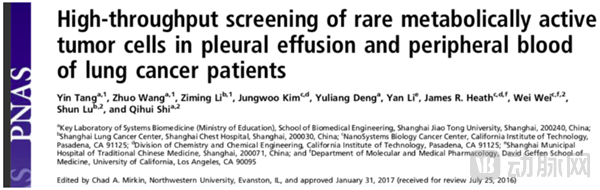
Since exfoliated cells in the early stages of cancer onset or metastasis are extremely scarce, the key to achieving highly sensitive and specific detection lies in identifying suitable biomarkers, which constitutes the core technical barrier for JUN HEALTH.JUN HEALTH’s Chief Scientific Advisor, Dr. Shi Qihui from the Institute of Biomedical Sciences at Fudan University, published a paper in 2017 in PNAS (Proceedings of the National Academy of Sciences of the United States of America), proposing that glucose metabolism markers based on the same detection principle as PET-CT can effectively identify rare exfoliated cancer cells, thereby overcoming the bottleneck of lacking biomarkers for exfoliated cell detection beyond cervical cancer.
This research and the associated multiple patents have directly laid the technological foundation for JUN HEALTH.Building on this technological foundation, JUN HEALTH has developed its proprietary PET-seq™ platform by optimizing the entire detection system in terms of efficiency, cost, and sample processing. The company pioneered the clinical application of its “UroNeng™” non-invasive bladder cancer detection product and its “Automated Single-Cell Image Analysis and Separation Instrument,” which received market approval from the National Medical Products Administration in March and May 2020, respectively.
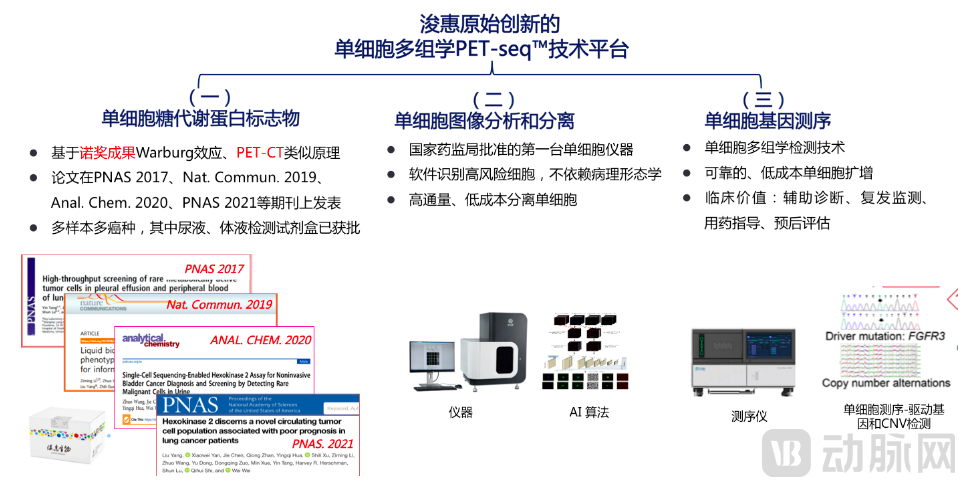
In December 2020, the joint research conducted by Professor Shi Qihui’s team and JUN HEALTH was published in *Analytical Chemistry*, a top-tier global journal in analytical chemistry and a publication of the American Chemical Society. The article detailed the detection of bladder cancer via urinary exfoliated cells. This non-invasive screening and auxiliary diagnostic approach for bladder cancer, achieved through “glycometabolic markers + single-cell sequencing,” has gained genuine recognition from scientific peers, establishing itself as a novel diagnostic methodology.
Globally, the annual number of new bladder cancer cases is comparable to that of cervical cancer. However, in contrast to the multi-billion-dollar global market for cervical cancer, the early screening market for bladder cancer has yet to reach scale. There is a worldwide demand for new technologies that are high-performance, low-cost, convenient, and non-invasive. JUN HEALTH has targeted this vast untapped market in bladder cancer early screening by launching a non-invasive urine-based test for bladder cancer. In the Chinese market alone, this product can serve over 100 million high-risk individuals for routine screening, tens of millions of patients with hematuria for auxiliary diagnosis, and nearly one million bladder cancer patients for recurrence monitoring, representing a substantial market size. Since 2021, JUN HEALTH has accelerated the adoption of its UroNeng product in hospitals. It has already established clinical application collaborations with dozens of top-tier tertiary hospitals, including Huashan Hospital Fudan University, Cancer Hospital Chinese Academy of Medical Sciences, Fudan University Shanghai Cancer Center, The First Affiliated Hospital of Harbin Medical University, and Zhejiang Cancer Hospital, earning high recognition from clinical experts.
Following product approval, JUN HEALTH has shifted part of its development focus to the clinical promotion of approved products, while continuing to accelerate the development of new products. For JUN HEALTH, the more critical asset is its core technology—the PET-seq platform. “UroNeng” represents merely an initial foray into clinical applications from early screening and diagnosis in the field of bladder cancer; greater opportunities remain hidden in other clinical scenarios, such as pleural and ascitic fluids, cerebrospinal fluid, and circulating tumor cells (CTCs) in blood.
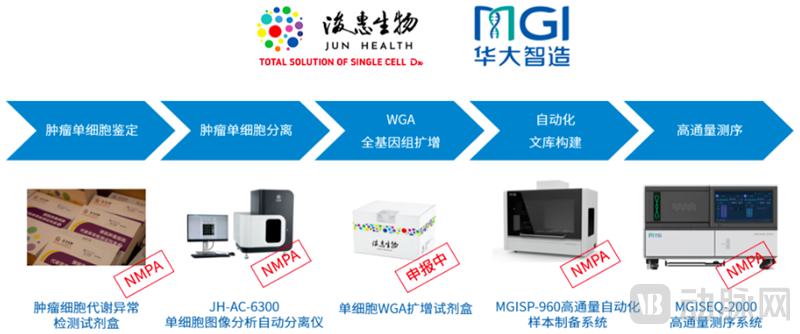
In January 2021, JUN HEALTH entered into a pivotal collaboration with MGI Tech to jointly establish China’s first clinical-grade “Joint Research Center for Single-Cell Diagnostics,” leveraging JUN HEALTH’s single-cell diagnostic PET-seq platform., in collaboration with Professor Lu Shun, Chair of the Lung Cancer Committee of the China Anti-Cancer Association; Professor Zheng Junhua, Vice Chair of the Urology Branch of the Chinese Medical Association; Professor Ye Dingwei, Chair of the Genitourinary Tumor Committee of the China Anti-Cancer Association; and Professor Xu Haimiao, Deputy Head of the Cytology Group of the Pathology Society of the Chinese Medical Association, among other experts, to participate in the project research and accelerate the clinical application of single-cell sequencing technology.
Having collaborated with JUN HEALTH for many yearsProfessor Lu Shun, Chairman of the Lung Cancer Committee of the China Anti-Cancer Association, Shanghai Chest Hospital Affiliated to Shanghai Jiao Tong UniversityHe evaluated JUN HEALTH as follows: “We have conducted joint research for many years with Professor Shi Qihui and the JUN HEALTH team. By leveraging glycolysis markers and single-cell sequencing technology, we have achieved highly sensitive detection of shed rare tumor cells in the pleural effusion and blood of lung cancer patients. This approach holds significant potential for early diagnosis of recurrence, prognostic monitoring, and guidance on adjunctive medication in lung cancer patients. Our findings have been published in journals such as PNAS and Nature Communications.”
“I am also delighted to see that, through the translational efforts of JUN HEALTH, our series of research achievements have been developed into an end-to-end single-cell diagnostic technology platform. The single-cell instruments and some supporting reagent kits have already obtained regulatory approval. Next, we will accelerate the clinical registration trials for our circulating tumor cell (CTC) product for lung cancer in collaboration with JUN HEALTH, aiming to introduce single-cell diagnostic technology into clinical practice at an early date. This will enable early diagnosis and treatment of metastasis in lung cancer patients, significantly reducing mortality rates.”
Other clinical and diagnostic experts, such as Professor Ye Dingwei and Professor Xu Haimiao, began to gradually understand and apply this emerging technology only after JUN HEALTH obtained regulatory approval. However, within less than a year, they have already recognized the potential changes that single-cell multi-omics technology may bring to clinical practice and even broader healthcare scenarios.
Professor Ye Dingwei, Chair of the Committee on Urological and Male Genitourinary Tumors, China Anti-Cancer Association; Fudan University Shanghai Cancer Center“JUN HEALTH’s glucose metabolism markers operate on principles quite similar to those of PET-CT, so I found it relatively easy to understand their presentation. At the very least, their technological approach is scientifically sound. After collaborating with them to analyze several batches of samples, I observed that their product indeed demonstrates satisfactory sensitivity and specificity.”
“Previously, clinical detection of bladder cancer mainly relied on cystoscopy, an invasive procedure that is not well-suited for screening purposes. With JUN HEALTH’s product, we can now perform an initial urine-based screening when bladder cancer is suspected in a patient. Based on the screening results, we then determine whether the patient truly needs to undergo cystoscopy. This approach significantly reduces unnecessary cystoscopies and alleviates considerable patient discomfort.”
Xu Haimiao, Professor, Department of Pathology, Zhejiang Cancer Hospital; Deputy Head of the Cytology Group, Chinese Society of Pathology, Chinese Medical AssociationJUN HEALTH believes that greater future opportunities may lie within the health checkup market: “China sees nearly 100,000 new cases of bladder cancer annually, which is a substantial figure. However, screening for bladder tumors in men has hardly been popularized. Existing methods, such as exfoliative cytology and imaging, are currently inadequate for early screening of bladder cancer. In many cases, patients only seek examination after noticing hematuria on their own, by which time it is often too late.”
“Therefore, although JUN HEALTH’s products are currently primarily used in clinical settings as a screening tool prior to cystoscopy, they hold significant potential in the health checkup market if they gain widespread recognition in the future. This is particularly valuable for high-risk populations aged 50 and above for bladder cancer. The product offers not only substantial market value due to the large population base but also carries profound significance for the early screening, diagnosis, and treatment of bladder cancer.”
Clinical recognition is undoubtedly the greatest reward for JUN HEALTH, which has been dedicated to this niche sector for five years. Close collaboration with clinical experts will serve as the primary driving force for JUN HEALTH’s next phase of growth. In the burgeoning field of early cancer screening, diagnosis, and auxiliary diagnostics, the integration of innovative biomarkers with single-cell sequencing will soon demonstrate its unique value.
Yan Zhuohui, Founder and CEO of JUN HEALTHHe stated, “In its 2017 special issue on single-cell technologies, Nature predicted that single-cell sequencing and detection would become routine clinical tests within the next decade—a highly foresighted judgment. Over the past four years, JUN HEALTH has achieved clinical application of ‘single-cell multi-omics’ testing for early screening and diagnosis of bladder cancer. In the next two to three years, our focus will be on completing clinical studies and regulatory registration for early diagnostic products targeting metastasis in lung cancer and other cancer types, monitoring metastasis risk in tumor patients, and guiding medication and treatment through single-cell sequencing, thereby enabling timely cure of cancer patients and reducing mortality due to metastasis.”