

AR+Ultrasound Breakthrough Empowers Primary Healthcare: ShenZhi Tech and Vpon Medical Launch ARGUS System
In the field of medical imaging, ultrasound has remained relatively low-profile. However, in reality, ultrasound constitutes a high-volume market in China, with an annual examination volume of 2 billion patient visits. Driven by market demand and favorable policy incentives, this market is poised for rapid growth.
According to statistics from the China Association of Medical Equipment, as of 2019, there were approximately 220,000 ultrasound units in China, accounting for about 74.44% of the total installed base of medical imaging equipment. This figure far exceeds that of DR, CT, endoscopes, and other modalities, making ultrasound the most widely installed type of medical imaging equipment.
The ultrasound market’s high installed base and high value are attributable to its accessibility.
On the one hand, ultrasound is arguably one of the fastest, safest, and most cost-effective medical diagnostic tools available to practicing physicians.At the macro level, ultrasound has a broad primary healthcare market as its application scenario. With the implementation of the tiered diagnosis and treatment policy, ultrasound has been endowed with extraordinary significance.
On the other hand, technological advancements and iterative improvements have gradually broadened the scope of applications for ultrasound equipment.Continuous breakthroughs in both software and hardware have further advanced the role of ultrasound in assisting clinical diagnosis and treatment, thereby improving diagnostic accuracy for physicians and reducing their learning curve.
From a technical perspective, ultrasound devices appear to have a natural affinity with primary healthcare institutions. To address pain points such as scarce medical resources, limited clinical capabilities, and the lengthy training process for ultrasound operation in these settings, Shanghai Shenzhi Information Technology Co., Ltd. has attempted to provide solutions through “technology empowerment.”
Shanghai Shenzhi Information Technology Co., Ltd. (hereinafter referred to as “Shenzhi Technology”) has joined forces with Vpen (Suzhou) Medical Device Co., Ltd. (hereinafter referred to as “Vpen”) to incubate the “Ultrasound Empowerment” project on Vpen’s innovative medical device platform. By applying augmented reality (AR) technology to ultrasound diagnosis and providing interactive visual guidance for traditional ultrasound scanning procedures, the project aims to improve scanning efficiency, shorten the learning curve, and further promote the adoption of precision medicine.
In an interview one year ago, Zhu Ruixing, CEO of Shenzhi Technology, shared with VCBeat the significance of the company’s continuous breakthroughs in technology development. He stated, “Through our sustained focus on intelligent hardware and software, we have continuously reduced the application costs of ultrasound equipment, further promoting the optimization of operational efficiency across primary healthcare services.”
One year later, Shenzhi Technology partnered with Vpon Medical to launch the ARGUS (Augmented Reality Guided Ultrasound) system, an “AR-based ultrasound scanning guidance platform,” introducing technological innovations by applying AR technology to the field of ultrasound.
Although Shenzhi Technology’s exploration of “technology empowerment” has become increasingly diverse, an examination of its underlying logic reveals that its core mission has remained unchanged: by continuously deepening its expertise in intelligent hardware and software, the company aims to reduce the cost and barrier to entry for device adoption, thereby empowering grassroots healthcare facilities and further promoting the widespread adoption of precision medicine.
The ARGUS joint R&D project established by Shenzhi Technology and Vpon Medical is also built upon this underlying logic. While the technology may appear complex on the surface, it becomes easy to understand once its core principles are grasped.
AR technology is an interactive technology that superimposes multimodal information onto the operator’s real-world environment, thereby enhancing it. This technology not only presents visualized information to the operator in real time but also helps the operator efficiently handle complex tasks.
Although AR technology appears relatively “niche” in public perception, with only a few products such as Google Glass and Pokémon Go achieving mainstream popularity, it has in fact made significant strides in specialized sectors including industry, healthcare, and manufacturing. As early as 1990, Boeing began exploring the use of AR technology to guide cable routing and wiring operations. Today, Porsche also employs AR technology to enhance production efficiency during engine installation.
What Can AR Technology Bring to the Healthcare Sector?
First, in the traditional application of medical imaging data, physicians generally can only make diagnoses by viewing images displayed on screens after data acquisition is complete; they cannot establish real-time interaction with patients or achieve integration between medical images and the real world.
By leveraging AR technology, this “impasse” can be broken, establishing a link between medical imaging data and real-world scenarios. Existing medical AR products are already capable of displaying three-dimensional fused images of organs on smart glasses or mobile devices, enabling physicians to visualize marked lesions during both preoperative and intraoperative phases, thereby aiding surgical planning. Furthermore, physicians can use gestures to hide outer tissue layers, examine the inner structures of organs, and even delineate surgical paths directly on the images.
Secondly, the human eye’s judgment of physical properties such as distance, size, brightness, and sound frequency is qualitative, making it difficult to accurately assess parameters like distance and size. In contrast, various sensors equipped on AR devices, after undergoing data fusion and processing algorithms, can provide high-precision, rich information that is imperceptible to humans.
Finally, AR technology can significantly enhance the quality of telemedicine and training, helping to expand the application scope and target population of medical technologies. For instance, AR devices can provide virtual 3D imagery during physician consultations or patient interactions, thereby improving communication efficiency and diagnostic accuracy.
In light of current needs in the healthcare sector—such as deploying specialized physicians to remote locations or conducting targeted training programs for primary-care physicians—the advancement of this technology undoubtedly provides corresponding solutions.It effectively reduces the training costs for medical institutions, bringing tangible economic benefits to hospitals. The successful application of Butterfly’s AR-based remote-assisted ultrasound scanning serves as a prime example.
Overall, AR technology can provide relevant information and corresponding solutions in a timely and accurate manner based on specific scenarios, enabling its application in numerous fields such as surgical procedures, assisted 3D reconstruction, laparoscopy, anatomical teaching assistance, and medical imaging assistance. This offers valuable support to primary care physicians who lack experience in the operation and interpretation of ultrasound scanning. By making ultrasound-based scanning and interventional procedures more accurate, rapid, and standardized, this technology not only improves the accuracy of ultrasound detection but also unlocks greater potential for primary healthcare, thereby further advancing precision medicine.
Currently, the Augmented Reality-based Ultrasound Scanning Guidance Platform (ARGUS System), jointly developed by Shenzhi Technology and Vpon Medical, was created for this purpose.
Taking medical ultrasound scanning of the thyroid as an example, the ARGUS system, based on human anatomical structures, provides real-time augmented reality (AR) scanning guidance runnable on handheld devices to address issues related to scan positioning and ultrasound image acquisition in thyroid ultrasound examinations, thereby enabling timely and standardized ultrasound image acquisition and screening.
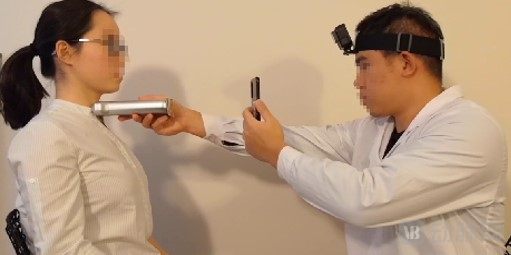
By integrating ultrasound image acquisition and recognition algorithms, this product enables sonographers to perform efficient and accurate scans, offering intuitiveness, multimodality, convenience, and universality.
Specifically, the product directly presents the scanning target location and guidance to the operator, eliminating the need for experience-based surface palpation to locate the target. Three-dimensional positional information and ultrasound images are displayed synchronously within the AR cross-section to assist physicians in clinical decision-making. The system can run directly on mobile devices such as smartphones. Furthermore, the same framework can be applied to guide ultrasound scans of other anatomical regions and organs, including abdominal and pelvic ultrasound.
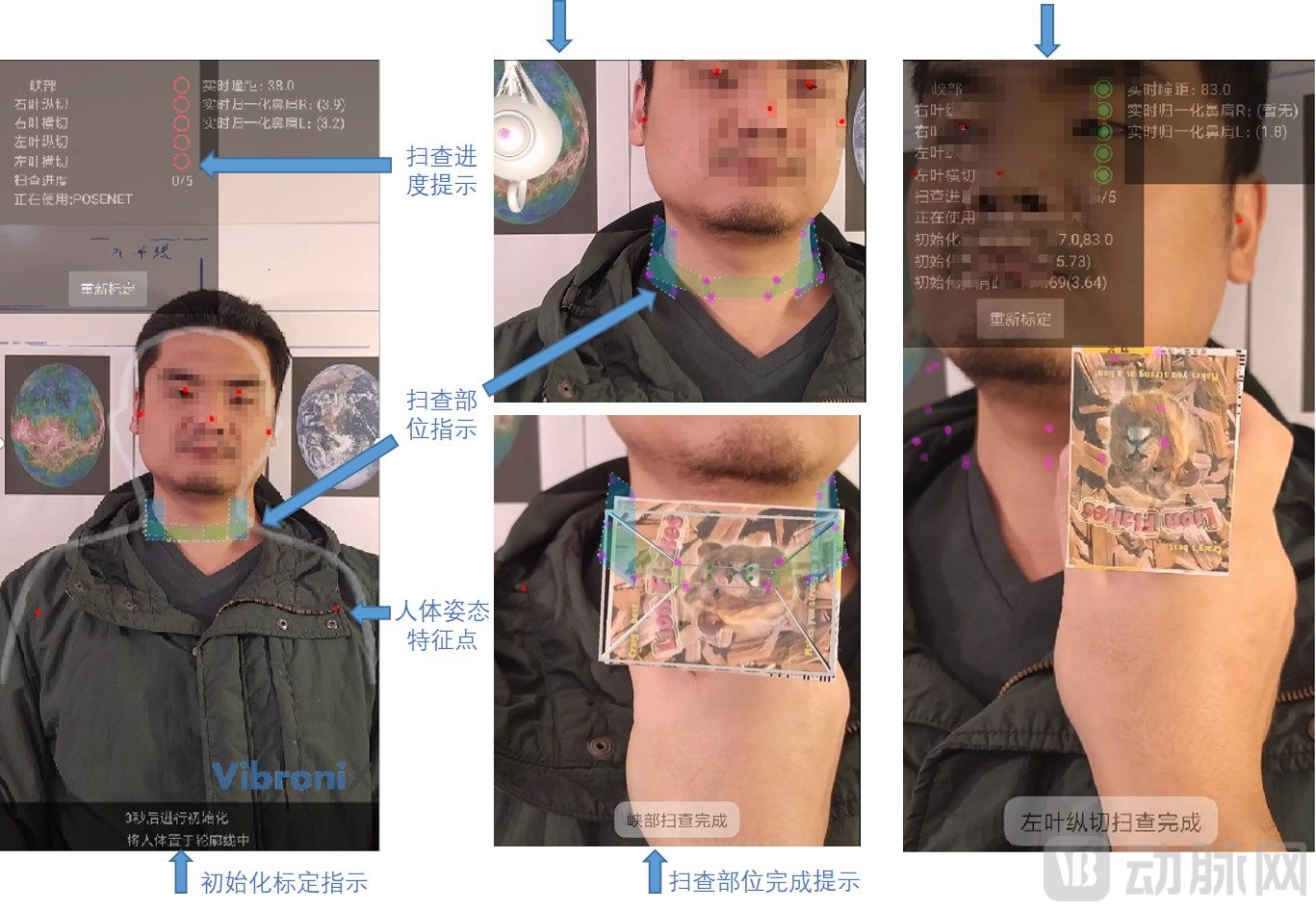
According to internal physician testing at Shenzhi Technology, the product has achieved millimeter-level accuracy, with image quality generally reaching 1080p. Feedback from early trial users and physicians indicates that ARGUS meets the clinical requirements for real-time performance, intuitiveness, and accuracy in ultrasound scanning guidance. In the future, Shenzhi Technology will collaborate with Weipeng to add more features to this system, continuously promoting the development of primary healthcare.
The introduction of any new technology to the market inevitably encounters promotional challenges; however, accurately identifying needs can create opportunities for its practical implementation. Shenzhi Technology’s years of observation in the ultrasound market, combined with its extensive experience in engaging primary-care physicians, industrialization, and operational maintenance, have endowed the company with a keen sensitivity to market demands.
To address pain points such as the insufficient interactivity between existing medical data, particularly imaging data, and the real world; the limitations of human sensory capabilities leading to poor quantitative assessment; and the scarcity or uneven distribution of medical resources, which prevents grassroots communities and remote areas from fully benefiting from advances in medical technology, Shenzhi Technology has partnered with Weipeng Medical to leverage AR, an innovative technology, to provide solutions.By integrating device form factors with service scenarios, standardized ultrasound scanning is achieved to help primary care physicians quickly master “standard ultrasound plane acquisition and standardized image archiving,” thereby meeting the diagnostic needs of patients across multiple diseases and clinical settings.
Currently, Shenzhi Technology has established a mature foundation for industry-academia-research-application collaboration in small-scale devices and primary care diagnostics, ensuring the technological integration and interactive experience of AR, artificial intelligence, and handheld ultrasound.
In terms of implementation, Shenzhi Technology also has a team of professional physicians to provide guidance. To address the potential issue of primary care physicians being “unable to use” the technology, the company will also offer remote assistance to help them master ultrasound scanning techniques. Through ultrasound AR navigation applications, the company provides technique training, skill assessments, and scanning assistance, helping primary care physicians improve their diagnostic capabilities for both common and complex diseases, thereby truly enabling the technology to take root at the grassroots level.
In the future, ultrasound AR navigation technology will also integrate with 5G and edge computing technologies, gradually exploring commercial collaborations with partners in hardware devices, digital health, and healthcare institutions, thereby further accelerating the commercialization of these devices.
Perhaps, the application of AR technology in the medical field does appear somewhat “high-end” at present. Although Shenzhi Technology’s foray into the “AR + ultrasound” sector marks the first such initiative in China, its exploration is not without precedent. Butterfly Network, a U.S.-based manufacturer of handheld ultrasound devices, has already successfully integrated AR technology with ultrasound and obtained regulatory approval for market launch, subsequently emerging as an industry unicorn.
In the face of technological transformation, there is a hypothesis that companies, when confronted with endless technological change, are akin to surviving on quicksand, requiring them to keep moving at all times. Despite the challenges in exploring new technologies, it is evident that Shenzhi Technology has never ceased its exploration in the face of technological变革.
Weipeng (Suzhou) Medical Device Co., Ltd. was established in 2017, dedicated to developing advanced medical sensing technologies for disease diagnosis and treatment, and to localizing and commercializing advanced laser microscopy, photoacoustic imaging, and optical navigation technologies in China.
Currently, Vpon Medical holds more than 30 independent intellectual property rights. Its main product directions include ultra-rapid antimicrobial susceptibility testing based on Raman microscopy imaging, surgical AR navigation, 3D ultrasound imaging, intraoperative tumor margin detection, and photoacoustic vascular endoscopy. Vpon Medical is a high-tech enterprise in Suzhou City and has obtained ISO 13485 certification for medical device quality management systems. The company’s biopsy guidance system has received U.S. FDA clearance.