

ChenDe Capital Partner Tan Qing: Targeting Medical Device Innovation — Technological Transformation Drives New Market Opportunities
Medical devices represent the most critical sector within the healthcare industry. Since its inception, Chende Capital has maintained a focused investment strategy in this domain. From Berry Genomics, a leader in molecular diagnostics, to Westlake Omics, an emerging player in in vitro diagnostics (IVD), Chende Capital has invested in nearly 60 medical device companies over the past eight years. The firm deliberately excludes pharmaceuticals and healthcare services from its portfolio, concentrating exclusively on the medical device track—a level of specialization that is rare among investment institutions in the industry.
Focus Drives Exceptional Reputation. Discussing the strategic direction at its inception, Tan Qing, Partner at Chende Capital, stated that the firm chose to root itself in the “most familiar” sector starting in 2013, committing to achieving excellence in the medical device field and facilitating innovative technological transformations within the medical device industry. Today, Chende Capital has grown intoRepresentative Firms in the Medical Device Investment Sector。
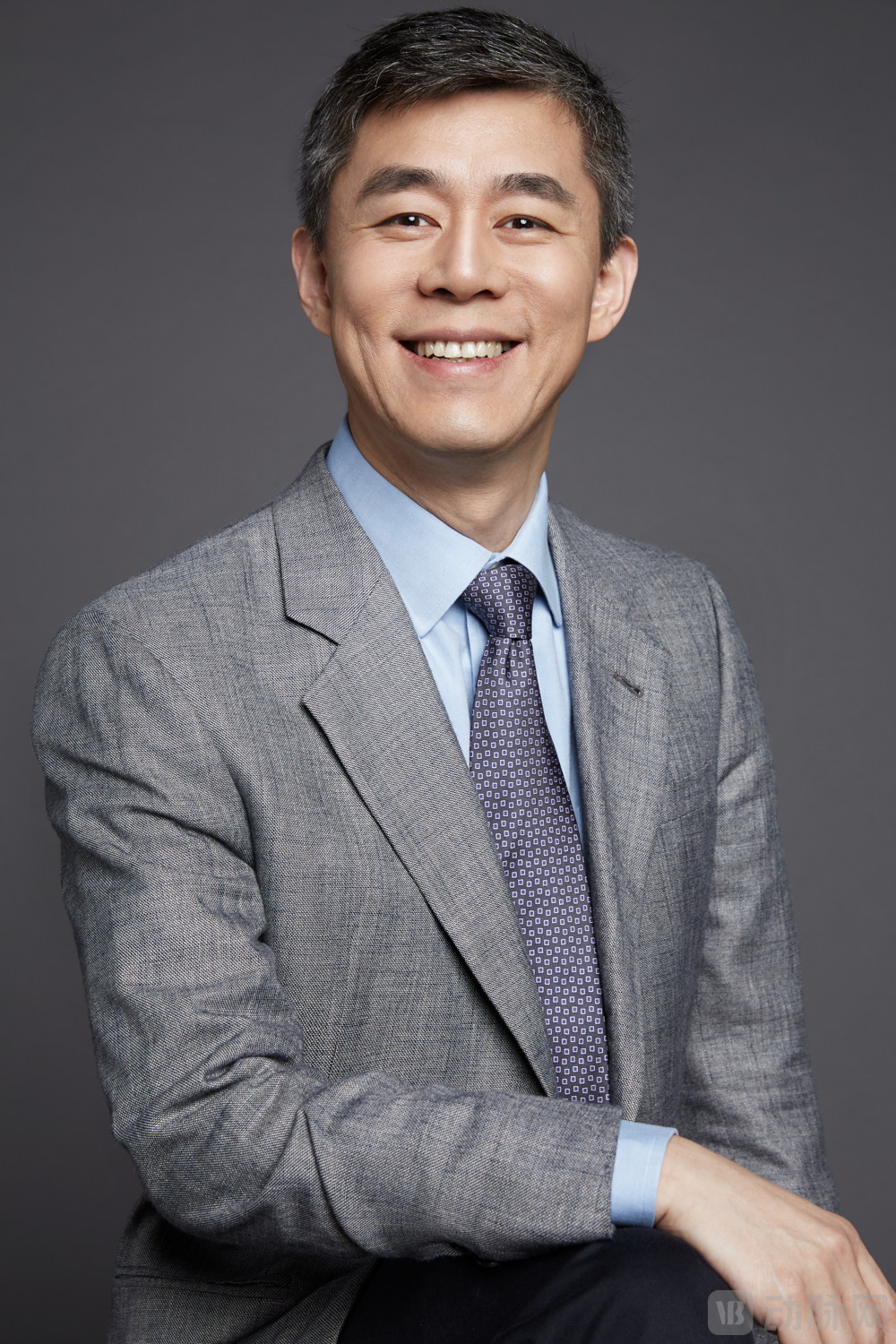
Chende Capital Partner, Tan Qing
Tan Qing holds dual academic backgrounds in Biomedical Engineering and Business Administration. Biomedical engineering applies engineering methodologies to address practical clinical challenges, with medical devices representing its primary area of application. Prior to entering the investment industry, Tan Qing worked as a medical device R&D engineer, dedicating decades to deepening his expertise in the medical device sector. He also served as Vice President at GE Healthcare (China).
After accumulating a solid industrial foundation, Tan Qing ventured into the field of medical device investment. He stated that, compared to direct product R&D, capital empowerment can support more entrepreneurs and drive innovative development across the entire medical device industry, ultimately ensuring that the Chinese people have genuine access to and can afford these innovative medical devices.
Recently, VCBeat (WeChat ID: vcbeat) conducted an exclusive interview with Tan Qing to interpret Chende Capital’s investment strategy and explore the future development prospects and opportunities in China’s medical device industry.
Tan Qing positions Chende Capital as a sniper in the healthcare investment market.
This means that at Chende Capital, the precision of sector selection is more important than sector density, and the success rate of project investments is more important than the number of projects.
This philosophy is clearly reflected in Chende Capital’s investment strategy. Within Chende Capital’s investment portfolio, the IVD industry constitutes the largest segment, at one point accounting for40%The above point surpasses any healthcare investment fund.
The rationale for making substantial investments in this sector is grounded in Chende Capital’s proprietary evaluation framework:
I. In the medical device industry, the targeted niche sectors for investment must have a sufficiently large market size.
II. The development speed of the invested sectors must be sufficiently rapid.
III. Technological transformations in niche sectors present disruptive new opportunities.
Tan Qing explained: A promising sector requires not only substantial market size and high growth potential, but also opportunities for latecomers to leapfrog incumbents. Such opportunities arise from technological disruptions within the industry; the emergence of new technologies resets the competitive landscape, freeing all players from the constraints of the existing market structure and enabling innovative companies to catch up and capture market share. China’s IVD industry perfectly aligns with these three criteria:Currently, IVD is the largest market in China's healthcare sector, with a scale approaching RMB 100 billion and an annual growth rate of around 15%. Continuous technological iteration and innovation within the IVD industry present significant opportunities.。
IVD underlying detection technologies fromBiochemical Testing、Immunodiagnostics, developing intoMolecular Diagnostics, and then to the cutting-edgeMass Spectrometry AnalysisChende Capital has categorized the IVD industry into four segments based on the evolution of underlying technologies. Currently, half of Chende Capital’s IVD investment portfolio is allocated to molecular diagnostics companies, while also strategically positioning itself in emerging fields such as mass spectrometry and proteomics research. Its portfolio includes well-known listed companies such as KingMed Diagnostics (603882.SH) and Ruisong Gene (688217.SH), as well as emerging innovation-driven enterprises like Aikenuo Biotech and Yingsheng Biotech.
In addition to its dominant layout in the IVD industry, Chende Capital has made investments in niche segments of the medical device sector, including cardiovascular, neurointerventional, and dental devices. For instance, in the cardiovascular field, it has invested in Baixinan Biology and Jianshi Biology; in the neurointerventional field, it has invested in Wobi Medical and Weimi Medical; and in the dental device sector, it has invested in Zhengya Dental and Xunshi Technology.
To date, Chende Capital has invested in approximately 60 projects, a number that is not particularly high compared to firms of similar size, butAmong these, the proportion of projects that are already listed or planning to go public reaches 25%, far higher than that of similar niche-focused institutions.. Achieving such a high project success rate depends not only on the careful selection of investment sectors but also on the precision of the investments.
Tan Qing explained that Chende Capital focuses on technology investments within its areas of expertise, while rarely venturing into fields lacking innovation or those driven solely by business model innovation. “Our strength lies in understanding technology and market demands, as well as conducting quantitative analysis. Through continuous accumulation and learning, we develop cognitive advantages and establish barriers to entry in niche sectors.”
Since its establishment in 2013, Chende Capital’s growth has paralleled the evolution of China’s medical device market. Compared with the past, China’s medical device industry is currently accelerating innovation, with new technologies and devices continuously replacing older applications, thereby benefiting both clinical patients and physicians. Tan Qing summarizes that three key changes have driven the rapid development of China’s medical device market:
I. The environment for medical device innovation has improved, with stronger policy support, greater inflows of talent and capital, and a more robust global supply chain system.
II. Rising Intrinsic Demand: With improvements in living standards, people are more willing and better able to pay for life-critical medical devices, while also pursuing higher-quality healthcare. This has internally driven the rapid development of the medical device industry.
III. Further recognition of medical devices in the secondary market has encouraged more investors to participate, which in turn has promoted innovation in the medical device sector. This innovation has attracted additional investment opportunities, while IPO channels have remained smooth, fostering healthy development across the entire industry.
However, compared with the U.S. market, China’s medical device market still has substantial room for growth. Data show that the pharmaceutical-to-medical-device ratio in the U.S. market is 1:1, whereas in China it is approximately 3:1. Over the past few years, the growth rate of China’s medical device market has consistently been more than twice that of its pharmaceutical market. Therefore, based on these ratios, China’s medical device market holds significant potential for future expansion and promises robust development.
So, in which fields do the future development opportunities for medical devices lie?Tan Qing responded that while different fields offer distinct development opportunities, the overarching theme of China’s medical device industry will undoubtedly be independent innovation. “Currently, the main trend in China’s medical device sector is ‘import substitution.’ However, as time progresses, I believe we can evolve from following imported technologies to keeping pace with them, and ultimately achieve fully independent innovation, with homegrown medical devices developed entirely within China. This prospect is highly promising.”
Meanwhile,Innovation is also a key factor that Chende Capital prioritizes when investing in companies.Tan Qing stated that Chende Capital does not impose standard restrictions on investment rounds or stages when investing in medical devices. Instead, it places greater emphasis on understanding the team and technological roadmap, assessing whether the enterprise is driven by technology in its development and possesses sustained technological innovation capabilities.
Medical device development differs significantly from pharmaceutical R&D. In pharmaceutical research, once a molecular compound is developed to target a specific biological target, it undergoes several rounds of clinical trials to verify its safety and efficacy. The decision to proceed to clinical stages is a binary “Yes” or “No” choice, with pharmaceutical R&D even involving an element of luck akin to gambling. In contrast, medical device development allows for continuous optimization based on the first-generation product. This requires companies to possess sustained innovation capabilities, consistently developing new iterative products to maintain the competitive advantage of their entire product series in the medical device market.
Tan Qing stated frankly that regardless of company size, Chende Capital will seriously consider investment opportunities in projects that demonstrate strong and sustained innovation capabilities. The firm maintains a highly rigorous approach to assessing such innovative potential. He explained that Chende Capital conducts in-depth due diligence on the technologies and initial products of target companies, as well as on competing technologies within the industry, to verify the authenticity, efficacy, and applicability of their innovative technologies. Developing medical devices requires diligent and strenuous effort; however, once a company achieves R&D breakthroughs in a specific field and establishes a competitive advantage, it becomes significantly difficult for others to surpass it.
Just as crucial as selecting valuable enterprises is the ability of investment institutions to grow alongside them. “In investing, almost no company is a perfect investment target. The ability to discern among imperfect targets, work with founders to mitigate risks, improve corporate governance, and drive business development is also a key reflection of an investor’s capability and value,” said Tan Qing.
Compared with managing portfolio companies, Chende Capital is more inclined to enhance its influence in invested enterprises through multi-dimensional empowerment and services.
Following its investment, Chende Capital supports portfolio companies’ growth while leveraging their industry resources to identify new investment opportunities. It conducts joint due diligence and co-invests in these new projects alongside the portfolio companies. These new initiatives often share synergies with the original portfolio companies in terms of technology, distribution channels, or customer bases, enabling collaborative development and fostering a win-win ecosystem. Chende Capital refers to this investment model internally as“Banyan Tree Theory”: Investing in a company is like planting a banyan tree seed; as the tree grows, new opportunities emerge, giving rise to new branches and veins. The banyan trees intertwine and rely on one another, ultimately forming a dense banyan forest.
Chende Capital is committed to close collaboration with its portfolio companies and entrepreneurs. By applying its proprietary “Banyan Tree” methodology, it builds industrial ecosystems and supports the growth of portfolio companies from multiple dimensions through a comprehensive and unique post-investment value-creation system. Leveraging its extensive industry experience, Chende Capital provides targeted value-added services focused on three core areas—talent, capital, and strategy—and implements a series of corresponding practical initiatives.
Particularly in terms of talent development, Chende Capital has designed the “Strong Waist” Program to enhance the management capabilities of mid- and senior-level executives within portfolio companies—“Chenxing Hui” Leadership Training Campas well as the “Chenying Hui” Future Talent Program, which helps portfolio companies cultivate students specializing in medical devices through targeted training; meanwhile, it provides tailored services such as talent recruitment, organizational structure consulting, and incentive plan design to meet the specific needs of each enterprise. Through a diverse range of post-investment empowerment activities, Chende Capital has gradually established a closed-loop industrial ecosystem in the medical device sector, fostering mutual support and shared growth between enterprises and investors.