

DaXiang Biotech Secures Tens of Millions in Series A+ Funding Within Two Months, Advancing Its Organoid-on-a-Chip Platform
Daxiang
Developer and Producer of Human Organ Chips and Organoid Chips
Tens of millions in real capital are being poured into cutting-edge sectors.
Recently,Beijing Daxiang Biotech Co., Ltd. (“Daxiang”) announced that it has secured tens of millions of yuan in Series A+ financing.It is understood that this round of financing was led by Hongtai Fund, with Renai Capital participating as a co-investor, while existing shareholders CDH VGC and Furong Investment continued to increase their stakes.
Notably, as a pioneer in the domestic organoid-on-a-chip field, Daxiang completed its Series A financing round, raising tens of millions of yuan, this past May. Less than two months later, investors increased their stakes, underscoring the strong confidence capital markets have placed in the company.
Zhou Yu, CEO of DaxiangIt was revealed that within just three months, the company secured cumulative financing amounting to hundreds of millions of yuan across two consecutive rounds. In addition to accelerating the layout of the organ-on-a-chip industry chain as originally planned, the funds will be primarily directed toward advancing the technological iteration of organoid-on-a-chip platforms. This initiative aims to provide highly biomimetic and high-throughput models for innovative drug development in areas such as cancer, neurodegenerative diseases, and inflammatory disorders, while also improving standardized organoid culture systems and expanding their applications in personalized precision medicine.
In August 2020, Daxiang launched three organ-on-a-chip products with fully independent intellectual property rights, marking the first time a Chinese enterprise introduced such commercial products to the market. Building on this foundation, Daxiang has developed highly biomimetic human physiological and pathological models for the liver, kidney, tumors, and the blood-brain barrier. These models have gained recognition from research institutions and pharmaceutical companies, leading to multiple collaborations and successfully achieving a closed-loop business model encompassing technology platform development, product R&D, industrial manufacturing, and product application.
While empowering the pharmaceutical industry and leading the transformation of drug development by constructing high-biomimetic models based on organ-on-a-chip technology, Daxiang’s research team also integrates two frontier fields—organ-on-a-chip and organoids—to build an innovative organoid-on-a-chip technology platform.
OrganoidsMicro-organs with three-dimensional structures, which are derived from pluripotent stem cells under in vitro conditions involving induction by specific factors and embedded culture in 3D matrix gel.In layman's terms, organoids are models that contain multiple cell types of a specific human organ, exhibit histological and genotypic characteristics highly similar to those of human organs, and can partially recapitulate the organ-specific physiological functions. With the support of chip technology, behaviors such as hepatic metabolism, neural activity in the brain, and cardiac contraction can be simulated in vitro.
In 2013, organoid technology was hailed by Science as one of the Top 10 Scientific Breakthroughs, and in 2017, it was named Method of the Year in the life sciences by Nature Methods. In the “14th Five-Year” National Key Research and Development Program released by the Ministry of Science and Technology of China in 2021, organoids were also designated as a key area for development.
Compared with traditional organoid culture platforms, the organoid-on-a-chip system developed by Daxiang features greater standardization, higher biomimicry, and high-throughput capability. It significantly improves the success rate, stability, and reproducibility of organoid culture, thereby addressing challenges that are difficult to achieve with traditional platforms, such as constructing tumor microenvironment models, recapitulating vascularization processes, and modeling multi-organ interactions.
Compared with traditional 2D/3D cell models and animal models, Daxiang’s organ-on-a-chip technology can better simulate the biochemical and physical microenvironments of human tissues/organs, faithfully recapitulating many key physiological characteristics of in vivo organs. It offers superior clinical consistency and, to a certain extent, addresses the industry pain point of low data accuracy in pharmaceutical R&D caused by species differences in evaluation models.
Meanwhile, immune co-culture models built on organ-on-a-chip platforms can highly authentically simulate the tumor immune microenvironment in the human body, providing robust high-throughput in vitro evaluation models for macromolecular drugs such as monoclonal antibodies, bispecific antibodies, and PD-1 inhibitors. In terms of clinical treatment, beyond chemotherapy and small-molecule targeted therapies, organ-on-a-chip technology can also assist patients in drug testing for tumor immunotherapy and combination regimens, helping to identify optimal treatment options from a broader range of therapeutics and thereby delivering tangible benefits to patients.
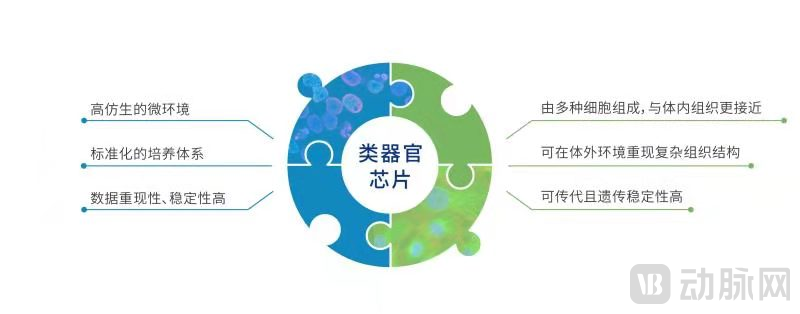
Currently, the R&D team at Daxiang has successfully developed various organoid-on-a-chip models derived from tumor tissues, highly biomimetic tumor microenvironment models, and other organoid-based pathological models, which are applicable to drug development and clinical translation across multiple disease areas. Additionally, Daxiang has disclosed that a prospective clinical study evaluating the concordance between drug sensitivity testing results conducted in collaboration with partners and actual clinical outcomes is progressing smoothly.
Dr. Jiang Fei, Managing Director of Hongtai Fund, stated that pharmaceuticals and healthcare are among the key investment sectors for Hongtai Fund, which has already invested in a portfolio of well-known, high-quality projects in this field. As an emerging niche within the pharmaceutical industry, organ-on-a-chip technology represents one of the most suitable solutions for “personalized precision medicine.” During the preclinical drug development phase, organ-on-a-chip platforms have the potential to gradually replace in vitro assays and animal testing, becoming the primary tool for preclinical research. The organ-on-a-chip products developed by Daxiang combine high-throughput capabilities with biomimetic fidelity, offering strong operability, leading global industrialization, and scalability for large-scale applications. The company has established deep collaborations with top-tier industry partners both domestically and internationally, demonstrating significant investment value.