

Songke Medical Files IPO Prospectus to Empower SME Reagent Manufacturers in China's Primary Healthcare Market with Affordable Automated Chemiluminescence Analyzer
Primary care settings constitute the main battlefield of China’s healthcare system. According to the China Health and Health Statistical Yearbook 2020, there were more than 950,000 primary healthcare institutions in China in 2019, an increase of over 10,000 from 2018, accounting for 95% of all healthcare institutions nationwide.As the tiered diagnosis and treatment policy continues to advance, medical resources are gradually being decentralized to primary healthcare institutions, unlocking a vast and untapped blue ocean in primary care laboratory testing.
Chemiluminescence is the mainstream methodology in the diagnostics market. Currently, large industry leaders primarily focus on large hospitals with higher testing volumes, while small and medium-sized reagent manufacturers mainly target the primary healthcare market. Primary healthcare institutions have low testing volumes and require diagnostic instruments that are low-cost, highly automated, and easy to maintain. However, most small manufacturers lack the capability for independent instrument development, therefore,Partnering with a chemiluminescence immunoassay analyzer that is low-cost, easy to maintain, and highly automated has become an essential requirement for small and medium-sized reagent manufacturers seeking to penetrate the primary healthcare market.
Songke Medical has launched a compact, fully automated chemiluminescence immunoassay analyzer, targeting the practical needs of “low-test-volume users” such as primary healthcare institutions.This instrument is cost-effective and fully open, allowing compatibility with reagents from various manufacturers. It also features low maintenance costs and a simple, efficient operating procedure, making it highly suitable for primary healthcare institutions with low testing volumes. By collaborating with small and medium-sized reagent manufacturers, it can significantly enhance their competitiveness in the primary healthcare market.
Dr. Zhong Weiming, founder of Songke Medical, has 25 years of experience in the design of automated medical devices and reagent R&D. Since 2009, he has provided R&D services to third parties for the development of various types of fully automated blood testing products, successfully developing multiple instruments and reagents, including fully automated tube-based chemiluminescence immunoassay analyzers, fully automated syphilis screening analyzers, and fully automated microplate-based chemiluminescence immunoassay analyzers.
In 2018, through extensive engagement with numerous in vitro diagnostic (IVD) manufacturers and on-site field research, Dr. Zhong Weiming identified growth opportunities in the chemiluminescence market at the primary care level, leading to the establishment of Songke Medical.
“The primary care testing market is a rapidly emerging sector. There is a large number of primary care medical institutions with substantial demand for diagnostic instruments, yet there are currently no fully automated chemiluminescence immunoassay analyzers on the market tailored to the needs of primary care settings,” Dr. Zhong Weiming told VCBeat.Primary healthcare institutions have even higher requirements than tertiary hospitals for the price, level of automation, and after-sales service of chemiluminescence instruments!”
Regarding pricing, reagent manufacturers currently tend to provide closed-system analyzers to hospitals free of charge or at a low cost in exchange for exclusive rights to supply the corresponding reagents. These manufacturers typically aim to recoup the costs of placing the instruments within one year through reagent sales. However, primary healthcare institutions serve a relatively small patient volume, and the market price for purchasing chemiluminescence immunoassay analyzers outright generally exceeds RMB 100,000. As a result, it is difficult for manufacturers to recover their instrument placement costs within one year, which significantly dampens their incentive to expand into the primary care market.
"Therefore,Nearly all reagent manufacturers and distributors deeply engaged in the grassroots market have expressed a demand for fully automated chemiluminescence immunoassay analyzers priced below RMB 100,000.“If the price of purchased instruments can be controlled at 70,000 yuan, under the basic condition that the instrument placement cost can be recovered within one year, reagent manufacturers can place instruments in primary medical institutions with as few as 10 patients per day and a testing volume as low as 50.”
In terms of automation, the skill levels of operators in primary healthcare institutions vary significantly. To reduce training costs and malfunctions caused by human error, instruments must be highly intelligent and automated, with extremely simple operating procedures driven by the instrument itself. Furthermore, on-site pairing and the process of adding reagent items must be automated to lower the requirements for operators.
In terms of maintenance and repair costs, tertiary hospitals currently have senior technicians from manufacturers stationed on-site, whereas medical equipment maintenance in primary healthcare institutions mainly relies on dispatched field service engineers.Primary healthcare institutions are often located in remote areas, resulting in low maintenance efficiency. Meanwhile, maintenance quality is influenced by the skill level of engineering personnel, making it difficult to ensure maintenance efficiency, cost-effectiveness, and quality.
Dr. Zhong Weiming founded Songke Medical with the original aspiration of providing small and medium-sized reagent manufacturers with one-stop instrument solutions tailored to the primary care testing market, addressing the challenges of implementing chemiluminescence assays at the grassroots level, helping these manufacturers penetrate the primary care market, and promoting the rapid development of China’s primary care testing sector under the broader context of tiered diagnosis and treatment policies.
Targeting the primary care testing market, Songke Medical has developed a compact, fully automated chemiluminescence immunoassay analyzer, the Metis 800. According to Dr. Zhong Weiming,The Metis 800 is an open platform that can be used with reagents from different manufacturers,Detectable items include infectious diseases, infertility, heart disease, thyroid function, diabetes, renal and hepatic function, and bone metabolism.
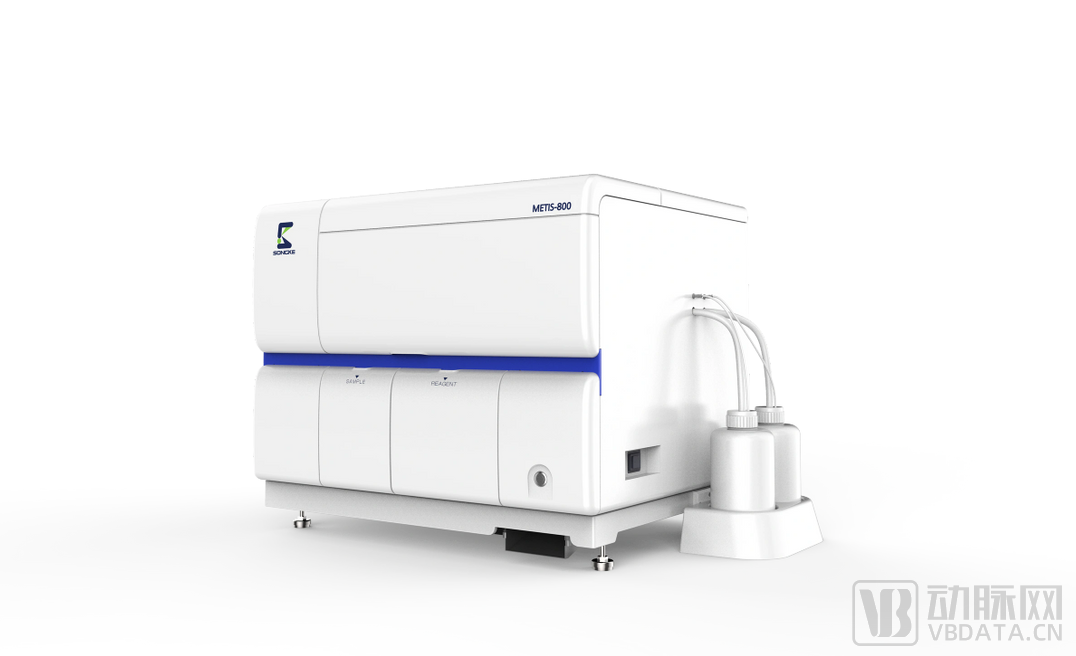
Metis 800 features highly intelligent automation.Throughout the entire testing process, operators are only required to load blood samples, with all remaining steps automatically performed by the instrument. Prior to each test, the instrument conducts a self-diagnostic check of all system functions to ensure proper operation. Additionally, leveraging Songke Medical’s proprietary core drive system and management software, the Metis 800 can accommodate diverse testing protocols from all reagent manufacturers in the industry. It supports remote addition of test items, eliminating the need for hospital staff to perform any manual operations for new reagent assays, thereby effectively reducing the technical requirements for operators.
In terms of maintenance, the Metis 800 employs an intelligent modular control system. Each module is capable of independent self-operation, self-monitoring, self-repair, and automatic fault reporting, thereby achieving full automation of instrument failure prediction, monitoring, diagnosis, calibration, and repair. This significantly reduces the need for dispatching technical personnel for on-site maintenance, greatly simplifies maintenance procedures, and lowers both the skill requirements for maintenance staff and overall maintenance costs.
Dr. Zhong Weiming stated, “The maintenance cost for each Metis 800 unit is projected to be as low as RMB 2,000 per year. Moving forward, we will enhance the modular design of the entire system, enabling end customers to troubleshoot and resolve issues independently, thereby completely disrupting the traditional model that relies on dispatched technical personnel for maintenance.”
Regarding the pricing concerns of reagent manufacturers, Dr. Zhong Weiming revealed: “The pre-sale price of Metis 800 will be below RMB 100,000, significantly reducing the cost for reagent manufacturers to purchase instruments from external suppliers.”
Currently, Metis 800 has obtained product certification from the National Medical Products Administration (NMPA), established collaborations with multiple reagent manufacturers, and completed order deliveries in batches.
Data shows that the market size of chemiluminescence immunoassay (CLIA) in China grew from RMB 1.6 billion in 2010 to RMB 23.3 billion in 2019, with a compound annual growth rate (CAGR) of 34.7% from 2010 to 2019. The share of CLIA in the immunodiagnosis market increased from 44% in 2010 to 85% in 2019. Under the broader trend of tiered diagnosis and treatment, the primary healthcare market is expected to become a new growth engine for CLIA, further expanding the overall market size in the future.
It is noteworthy that in recent years, chemiluminescence companies have placed increasing emphasis on the primary healthcare market and significantly ramped up their investments. A large number of new chemiluminescence brands have emerged, with many enterprises launching compact, fully automated chemiluminescence analyzers tailored to low-volume testing needs. Furthermore, chemiluminescence assays have been extensively implemented in primary healthcare institutions located in regions with higher levels of economic development.
Particularly noteworthy is that the grassroots diagnostics market, with its immense potential, has already attracted the attention of leading enterprises. Recently, several top chemiluminescence companies have launched small automated chemiluminescence analyzers, directly targeting the grassroots chemiluminescence market.
Dr. Zhong Weiming stated, “Leading enterprises hold greater advantages in capital and technological reserves, and competition in the grassroots chemiluminescence market will become increasingly fierce in the future.”For small and medium-sized reagent manufacturers, continuing to rely on the simple procurement of external instruments will quickly put them at a disadvantage.”
“In other words,”In addition to seeking suitable compatible instruments, small and medium-sized reagent manufacturers are in greater need of a business framework that enables flexible and innovative, highly collaborative partnerships with instrument manufacturers., leverage complementary strengths, enhance the efficiency of technical communication and after-sales service, reduce costs, improve competitiveness, and achieve mutual benefits and win-win outcomes.”
Songke Medical is undoubtedly the ideal partner for small and medium-sized reagent manufacturers to enhance their competitiveness.
With its compact chemiluminescence immunoassay analyzers featuring low pricing, low maintenance costs, and a high degree of automation, Songke Medical enables small and medium-sized reagent manufacturers to control instrument costs and after-sales service efficiency, positioning them at the forefront of this competitive landscape. Moving forward, Songke Medical will leverage the Metis-800 platform to collaborate closely with reagent manufacturers, providing one-stop instrument solutions that empower small and medium-sized reagent companies to rapidly expand into the primary care testing market.