

Functional Medicine Emerges as a Future Trend in Chinese Healthcare: HealthSNP Builds National Health Database with Functional Medicine Devices and Files IPO Prospectus
When VCBeat asked why he chose to start a business in the field of functional medicine, Chen Zhonglin, founder and chairman of Huisianpu, smiled and said, “In 2008, the concept of functional medicine had not yet been introduced to China, and I had not even come across the term ‘functional medicine.’ In fact, at that time, I recognized the broad prospects of the health risk assessment market and hoped to help healthy and sub-healthy populations access health services more conveniently through early detection, early intervention, and early recovery. The company name and its core product, HRA, are both derived from ‘Health Risk Assessment.’”
“Surprisingly, after the concept of functional medicine was introduced to China, I found that my entrepreneurial direction aligned perfectly with its core principles. Consequently, we anchored the theoretical foundation of our product development in functional medicine, established the Functional Medicine Research Institute and the Hebei Provincial Engineering Technology Research Center for Functional Medicine Diagnostic Devices, and commenced the research, development, and manufacturing of functional medicine devices.”
Although functional medicine was not Chen Zhonglin’s initial motivation for starting his business, after years of dedicated effort, Qinhuang Dao Huisianpu Medical Systems Inc. has become a leading player in China’s functional medicine sector, launchingHealth Risk Assessment System (HRA), Alzheimer's Disease Diagnosis System (ADDS), Microcirculation Repair System (PMR)and other functional medical devices,Leveraging functional medicine devices, a large-scale database of Chinese population health has been established, significantly driving the rapid development of China’s functional medicine market.
Functional medicine originated in the United States in the mid-20th century, where it is also known as “naturopathy.” It is a science-based healthcare discipline that employs physical, chemical, instrumental, or molecular biological methods to detect and assess the extent of changes in organ function during the preclinical phase, when no overt symptoms are present. In 2010, functional medicine was recognized as part of preventive care under the U.S. Affordable Care Act enacted by the Obama administration, marking a period of rapid development in the United States.
In China, functional medicine got off to a late start. According to Chen Zhonglin, China did not have its first *Introduction to Functional Medicine* until 2016. Meanwhile, the China Health Promotion Foundation collaborated with the Institute for Functional Medicine in the United States to organize training programs for functional medicine physicians in China.
“Until today,Functional medicine is still in a very early stage.. A functional medicine theoretical framework suitable for China has not yet been established, and there are only a few genuine functional medicine physicians in China; meanwhileDomestic enterprises’ presence in the functional medicine market is predominantly concentrated in functional foods such as nutrients, dietary supplements, and probiotics, while medical devices that can serve as tools for functional medicine applications remain scarce.”
To address the pain point of lacking functional medical device products, Huisianpu has launchedHealth Risk Assessment (HRA) System.HRA utilizes specially customized sensors to ensure the consistency of detection data, with color imaging of organ risks for easier identification by examinees. Meanwhile, its unique design against spatial electromagnetic interference enables precise detection of 9 major human systems and 220 system functional values and parameters within 5 minutes and 38 seconds.
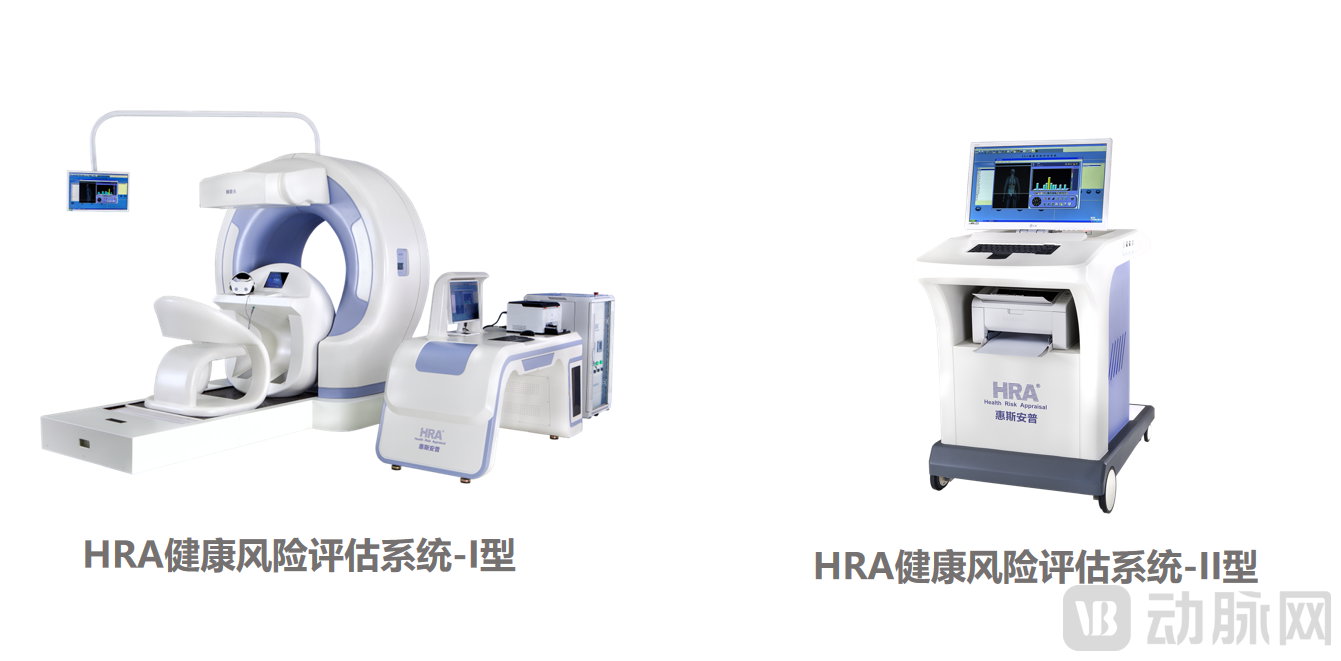
HRA is highly suitable as a basic health screening device for healthy and sub-healthy populations, used to assess human health risks and determine the divergence and development trends of certain diseases.To provide specific recommendations for further routine health examinations, helping examinees conduct targeted health management.
HRA has obtained medical device certification. In 2016, HRA was officially launched into the market. Over the past five years, with strong support from strategic partners such as the China Health Promotion Foundation, Tsinghua University, Peking University, and Ali Health, HRA has been deployed in hospitals, elderly care institutions, and health and wellness centers across multiple cities in China.
Leveraging HRA, Qinhuang Dao Huisianpu Medical Systems Inc. is building a big data platform for the health of the Chinese population.Using HRA as the health data acquisition terminal, we have successively completed the Population Health Assessment Project in Pinggu District, Beijing; the health poverty alleviation initiative in Weiyuan County, Gansu Province; and the construction of population health records in regions such as Altay Prefecture, Xinjiang, and Huanghua City, Hebei Province. Notably, based on health assessments of a 10% sample size, Pinggu District, Beijing, produced China’s first population health map, providing robust and reliable data support for local government formulation of public health policies.
Overseas,HRA has obtained EU CE certification and US FDA approval., entering countries such as Germany, France, Turkey, the United Arab Emirates, India, and South Korea.
Chen Zhonglin recalled, “When we first began developing functional medicine devices, the greatest challenge we faced was a shortage of talent. Typically, medical professionals lack expertise in automation, while automation specialists lack medical knowledge, making communication between these two groups extremely difficult.” Chen stated, “We sent our team members to universities for advanced studies, cultivating an R&D team that possesses expertise in both mechatronic automation and medicine. Meanwhile, by establishing an Academician Workstation and a Postdoctoral Innovation Practice Base, we leveraged external expertise to address technical challenges encountered during R&D, effectively accelerating the development of functional medicine products.”
Now, relying on an experienced and professional R&D team, Huisianpu’s research and development efforts cover key areas including human body electrical impedance measurement technology, brain-computer interface technology, extremely low-frequency electromagnetic field technology, and medical laser technology.The products cover the entire life cycle from childhood to old age, forming a closed-loop health management system that encompasses health screening, health risk intervention, adjunctive disease treatment, functional rehabilitation, and therapeutic efficacy evaluation.
In addition to the HRA, the company has launched functional medical devices and health risk intervention products, including the Alzheimer’s Disease Diagnosis System (ADDS), the Microcirculation Repair System (PMR), and the Memory Impairment Training System (ADTS). Among these, the ADDS combines the internationally recognized Mini-Mental State Examination (MMSE) and Activities of Daily Living (ADL) scales with dynamic electroencephalogram (EEG) monitoring. This approach offers rapid, accurate, and non-invasive capabilities, enabling both the diagnosis of Alzheimer’s disease and the assessment of early-stage risks.
It is worth noting that many of the products developed by Huisianpu are the first of their kind in China or in Henan Province, holding significant innovative value. Chen Zhonglin candidly stated, “The limited number of manufacturers and competitors for similar products is both a blessing and a curse. It means we need to educate the market from the ground up, which has hindered the adoption of functional medicine technologies in health management centers within healthcare institutions, as well as in other health service organizations.”
Discussing the future of functional medicine in China, Chen Zhonglin stated,Compared to the disease-centered healthcare system, functional medicine represents a completely new approach, and potentially the optimal one.“Functional medicine emphasizes a holistic view of health. As long as we can promote the integration of functional medicine with Traditional Chinese Medicine (TCM) culture, apply functional medicine more extensively in chronic disease management practices, accumulate more functional medicine health data, and accelerate the development of functional medicine tools, we believe that the day when functional medicine will rise in China will come soon.”
As Professor Zeng Qiang, Editor-in-Chief of Introduction to Functional Medicine and from the Health Management Research Institute of the Chinese PLA General Hospital, stated: “Functional medicine originated in the United States, but it is bound to flourish in China.”
Next, Huisianpu will accelerate the industry-wide promotion of appropriate health management technologies and equipment based on functional medicine, continuously advance urban population health assessments, and encourage more cities to adopt Health Risk Assessment (HRA) systems for this purpose. This effort aims to ultimately establish a comprehensive national health database for the Chinese population, providing foundational support for the Healthy China initiative. Meanwhile, Huisianpu is also focusing on health tourism, leveraging its functional medicine testing, intervention, and rehabilitation equipment to empower and upgrade tourist destinations, wellness towns, and sanatoriums. The company is poised to launch a nationwide rollout of residential wellness-oriented sanatoriums.