

Xinjing Tech Files IPO Prospectus: Pioneering VR-Based Digital Therapeutics for Mental Health
Over 300 million people in China suffer from sleep disorders, and persistent insomnia can create a vicious cycle with mental health conditions. Initially, stress responses triggered by various pressures and external stimuli often lead to insomnia, thereby increasing the risk of anxiety and depression; conversely, mental health disorders such as anxiety and depression can also cause severe sleep problems.
The progression of psychiatric and psychological disorders typically evolves from superficial to profound and from mild to severe. Without timely intervention, patients may develop mental disorders such as anxiety disorders, depression, and bipolar disorder, depending on individual personality traits and the intensity and frequency of stressors. In severe cases, individuals may exhibit suicidal tendencies, making treatment particularly challenging with limited efficacy. Notably, the COVID-19 pandemic once triggered a widespread mental health crisis among the general public.
To this end, the National Health Commission and seven other national ministries jointly issued the "Notice on Issuing the Key Work Tasks for 2021 of the Pilot Program for Building a National Social Psychological Service System," requiring that 100% of psychiatric specialty hospitals within their jurisdictions establish psychological outpatient clinics, and that 40% of general hospitals at Level II and above open psychiatric (psychological) outpatient clinics, thereby enhancing the capacity of medical institutions to provide mental health services.
This means that nearly 5,000 hospitals across China need to establish psychiatric (psychological) outpatient departments. With nearly 100 million depression patients in China, there are fewer than 40,000 licensed psychiatrists and psychologists. Treatment primarily relies on medication, which often entails significant side effects from long-term use, along with risks of drug resistance and addiction. Overall, there is a severe shortage of both professionals and therapeutic options in the field of mental health, resulting in highly inefficient treatment outcomes.
Against this backdrop, it is crucial to find a solution that can improve patients’ treatment experience and outcomes, enhance physicians’ work efficiency, and increase hospital revenues. Fortunately, as the severe pandemic receded, Digital Therapeutics (DTx) emerged into the spotlight and finally gained widespread attention.
Digital therapeutics deliver evidence-based, software-driven interventions to prevent, manage, or treat diseases. They can be used alone, in combination with medications, or alongside other therapies to improve patient health outcomes, offering advantages such as safety and efficacy, remote portability, high accessibility, and cost-effectiveness.
Although digital therapeutics have only recently begun to gain recognition, Hangzhou Xinjing Science and Technology Co., Ltd. (hereinafter referred to as “Xinjing Tech”) had already established its strategic presence since its inception in 2016. By leveraging virtual reality technology, internet cloud platforms, and big data analytics, the company provides comprehensive medical VR-based digital therapeutic solutions for rehabilitation training in the fields of neurology and mental health.
Focusing on Mental and Psychological Disorders: Developing VR Digital Therapeutics Products
Hangzhou Xinjing Science and Technology Co., Ltd. is located in the Jinxiu International Science and Technology Center, a provincial-level technology business incubator within the “National Internet of Things Industrial Park” in Binjiang District, Hangzhou, Zhejiang Province. The company was jointly established by multiple research institutions and experts, including the Mental Health Institute of Xiangya Second Hospital of Central South University (the National Clinical Research Center for Mental Disorders), the Zhejiang Provincial Mental Health Center, and the Mental Health Center of Zhejiang University School of Medicine.
2016, the year Xinjing Technology was founded, is also known as “the Year One of Virtual Reality (VR).”
Cao Qun, General Manager of Hangzhou Xinjing Science and Technology Co., Ltd., recalled“The immersion, interactivity, and multi-sensory nature of VR technology are closely related to and highly compatible with psychiatric and psychological treatment modalities. At that time, our extensive review of the literature revealed that some international clinical laboratories had already begun applying VR technology to the treatment of mental disorders such as post-traumatic stress disorder (PTSD). Consequently, we sought to digitize and standardize existing manual therapeutic approaches for psychiatric and psychological conditions, integrating them with virtual reality technology, and to clinically validate the effectiveness of each scenario and various combination protocols.”
Currently, leveraging its 22 virtual reality clinical application R&D centers, Xinjing Technology has not only applied VR/AR, AI, and other technologies to the rehabilitation treatment of mental disorders but also extended their use to areas such as children’s attention training, cognitive rehabilitation, and assessment and rehabilitation for drug and alcohol addiction.
Xinjing Tech'sMental Health DTx Training System, suitable for use in neurology, psychosomatic medicine, sleep medicine, and psychiatry departments, for the treatment and adjunctive therapy of insomnia disorder, anxiety disorders, post-traumatic stress disorder, and various anxiety reactions.
This system, built upon virtual reality technology, clinical expert practice, and psychological research, creates numerous high-quality immersive VR scenarios to help patients relax their minds and bodies, uplift their mood, alleviate stress, facilitate easy sleep onset, and improve sleep quality. It incorporates various digital therapy modules, including music therapy, hypnotherapy, and mindfulness-based therapy, along with real-time monitoring of vital parameters such as EEG, enabling precise analysis of sleep.
Currently, Xinjing Technology’s digital therapeutic (DTx) training system for mental health has been deployed as an adjunctive therapy in nearly 100 Grade A tertiary general hospitals across China, complementing traditional treatment regimens.
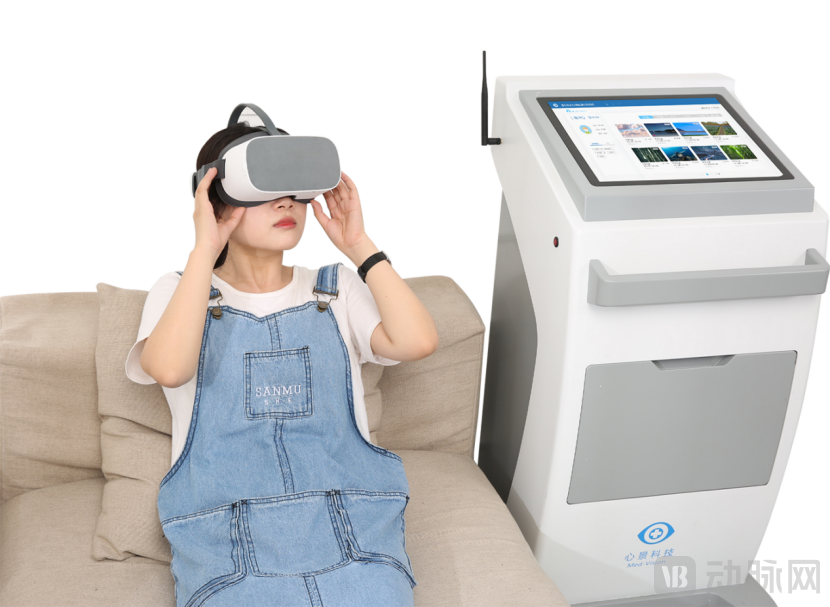 Xinjing Technology’s Mental Health DTx Training System. Image courtesy of Xinjing Technology
In addition, by integrating technologies such as virtual reality, intelligent learning, neuroscience, and biofeedback, Hangzhou Xinjing Science and Technology Co., Ltd. has also developedPediatric Cognitive Function DTx Training System. The system can provide personalized treatment plans for children with varying cognitive levels, conduct multi-dimensional data collection and analysis, and generate training reports.
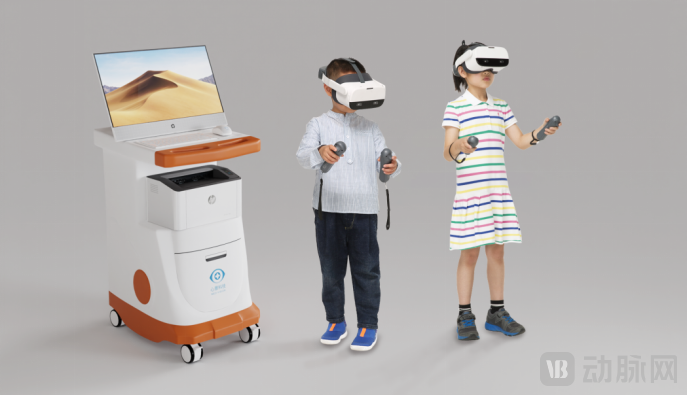 Xinjing Technology’s DTx Training System for Children’s Cognitive Functions | Image provided by Xinjing Technology
Through immersive VR experiences and interactive scenario design, the training is not only effective but also enjoyable for children. This system is suitable for children with attention deficit disorder, autism, as well as neurotypical children who need to improve their attention levels.
Currently, Xinjing Technology has participated in or completed numerous national-, provincial-, and municipal-level research projects in the aforementioned two fields, is continuously applying for new projects, and holds multiple invention patents as well as nearly 20 software copyrights.
Furthermore,Xinjing Technology has been continuously expanding its product boundaries., and has established collaborations with hospitals and research institutions such as the National Clinical Research Center for Mental Disorders (The Second Xiangya Hospital of Central South University), Shanghai Mental Health Center, Zhongshan Hospital Fudan University, Shenzhen Kangning Hospital, and Renji Hospital Affiliated to Shanghai Jiao Tong University School of Medicine, a series of R&D projects on VR + digital therapeutics have been launched for addiction withdrawal from tobacco, alcohol, and drugs, physical motor rehabilitation, and cognitive function rehabilitation in the elderly.
Cao Qun, General Manager of Xinjing Technology, stated, “In 2017, the U.S. FDA granted the world’s first device clearance for a digital therapeutic. This year, seven additional products have received FDA authorization, targeting insomnia, schizophrenia, attention-deficit/hyperactivity disorder (ADHD), depression, alcohol use disorder, post-traumatic stress disorder (PTSD), and irritable bowel syndrome (IBS). Among these seven authorizations, Xinjing Technology has four corresponding products.”
“In fact, Xinjing Technology has been developing in these fields since 2017, progressing in parallel with international trends and continuously validating the safety and efficacy of its digital therapeutic products.”
Dual Focus on B2B and B2C: Tiered Coverage and Empowerment for Doctors and Patients
Cao Qun stated, “In the future, Xinjing Technology will continue to focus on the rehabilitation of common and chronic mental and psychological disorders. In accordance with national requirements to enhance the capacity of medical institutions to provide mental health services, more than 30,000 community health centers across China are required to establish mental health service centers. Xinjing Technology will respond to the national call by further expanding its coverage to hospitals at all levels as well as community health centers.”
However, coverage is not the end goal; effective linkage and intervention are the keys.
Xinjing Technology is strategically developing an internet-based specialized hospital, leveraging a cloud platform to connect VR-enabled digital therapeutics devices, physicians, and patients. This enables patients to undergo standardized, safe, and effective rehabilitation training at home; empowers more professional physicians to provide expanded medical services in a compliant and lawful manner; and enhances the operational efficiency and economic benefits of hospital departments, thereby establishing a comprehensive service ecosystem that spans from in-hospital to out-of-hospital care.
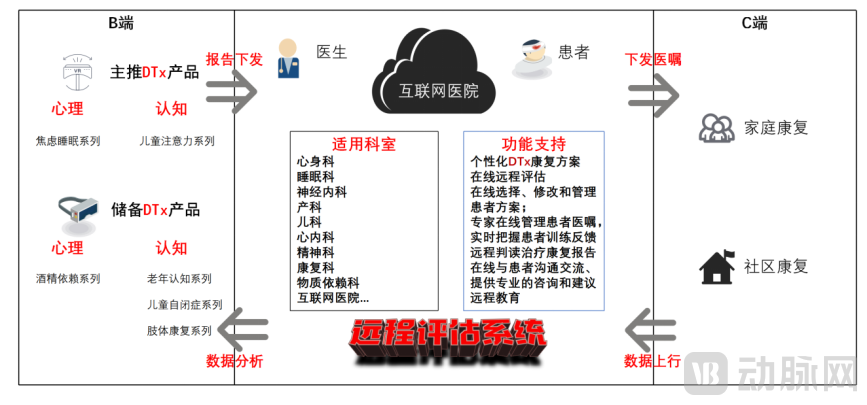
Xinjing DTx Series Products and Platform Remote Diagnosis and Treatment Services. Image provided by Xinjing Technology
When discussing the current state of development in digital therapeutics, Cao Qun, General Manager of Xinjing Technology, remarked with emotion“Digital therapeutics have surged in popularity this year, providing a significant opportunity for companies that are solidly established and diligently cultivated. However, the emerging sector is not without its share of firms merely ‘jumping on the bandwagon.’ To ensure the standardized development of the industry, it is imperative that we adhere to the essence of medicine when developing digital therapeutic products—namely, the validation of safety and efficacy, which constitutes the fundamental basis.”
Cao Qun also noted that while there are over 50,000 known human diseases, the conditions currently addressed by digital therapeutics (DTx) companies worldwide likely number no more than twenty. As 2021 marked the inaugural year for digital therapeutics, this market is still in its early stages. With dedicated clinical efforts and a focus on uncovering unmet needs, digital therapeutics represent a vast blue ocean with promising prospects.
Xinjing Technology will adhere to the mission of “When the mind is at peace, the world is at peace; when the mind is at ease, all beings are at ease,” and is committed to becoming a leading domestic provider of comprehensive digital therapeutics (DTx) solutions for psychiatric, psychological, and brain function rehabilitation.