

From Periphery to Pioneer: WeDoctor's Innovative Path in Digital Healthcare Reform
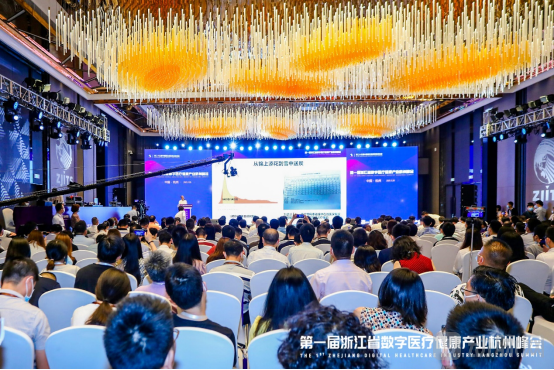
On July 28–29, the inaugural Hangzhou Summit of Zhejiang Province’s Digital Health Industry was held in Hangzhou. Themed “Embracing the New Digital Economy, Pioneering the Future of Healthcare,” the summit brought together distinguished guests from government, industry, academia, research institutions, healthcare providers, and investment sectors. Participants shared insights and engaged in discussions on innovation and development trends in digital health from multiple perspectives, including policy interpretation, application scenarios, industrial ecosystems, and investment trends. Sheng Qiuping, Party Secretary and Director of the Zhejiang Provincial Department of Commerce, and Liu Xin, Deputy Secretary of the Hangzhou Municipal Committee of the Communist Party of China and Mayor of Hangzhou, attended the summit and delivered addresses.
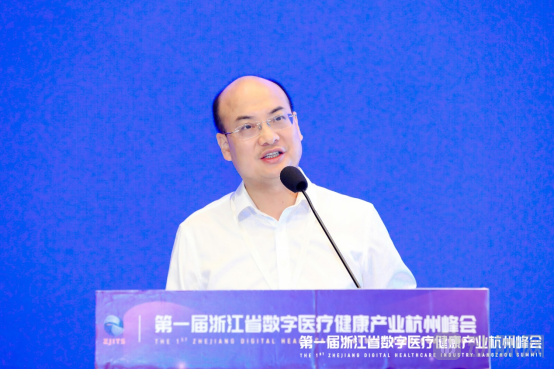
In recent years, as China’s healthcare reform has entered a critical phase, the empowerment of digital technologies has become the most significant driver for further deepening reforms. As a pioneer with over a decade of experience in leveraging digital services to empower healthcare reform, Liao Jieyuan, Chairman and CEO of WeDoctor Group, was invited to attend the conference and delivered a keynote speech titled “From the Margins to the Vanguard: The Path of Digitally Driven Healthcare Reform in China,” sharing WeDoctor’s innovative practices in using digitalization as an engine to support healthcare reform over the years.
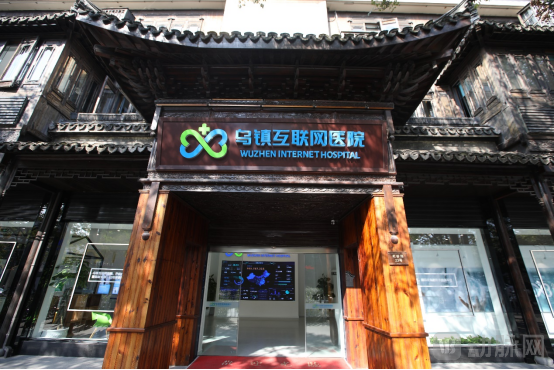
As China’s largest digital healthcare service platform, WeDoctor established the country’s first internet hospital—the Wuzhen Internet Hospital—in 2015. The emergence of internet hospitals pioneered integrated innovations such as online prescriptions, online follow-up consultations, and remote consultations. Official data show that by early 2021, there were more than 1,100 internet hospitals across China, making them an essential option for healthcare institutions to deliver medical services in the new era.
“Digital healthcare has evolved from a former ‘fringe’ player to today’s ‘pioneer,’ and Zhejiang is precisely where this journey began,” stated Liao Jieyuan in his speech. He noted that the development of digital healthcare has progressed through three stages: standalone internet hospitals, internet-based medical consortia, and tightly integrated internet-based medical consortia.
During Phase 1.0, standalone internet hospitals broke down the physical barriers of traditional hospitals, enabling data interoperability and creating a closed-loop integration of online and offline medical services. In Phase 2.0, internet-based medical consortia established on the foundation of internet hospitals facilitated online health insurance payments and built a comprehensive healthcare security system integrating “Internet + Health Insurance + Medical Care + Pharmaceuticals,” thereby implementing the coordinated reform of medical care, health insurance, and pharmaceuticals (“Three-Medical Linkage”). In Phase 3.0, tightly integrated internet-based medical consortia based on digital platforms are gradually transforming the operational models of healthcare institutions. By focusing on health outcomes, they are establishing new health accountability mechanisms and driving reforms in health insurance payment methods, such as capitation and diagnosis-related group (DRG) payments.
“WeDoctor has witnessed and experienced the industry’s transformation from ‘adding icing on the cake’ to ‘providing timely assistance in times of need,’ and has actively explored the upgrade path for digital healthcare reform.” On-site, Liao Jieyuan outlined the advancement of digital healthcare from version 1.0 to 2.0, using WeDoctor’s innovative practices as a thread.
Since the establishment of Wuzhen Internet Hospital, WeDoctor has launched 27 internet hospitals, 17 of which have been designated as medical insurance providers, enabling online medical insurance payments. During the 2020 pandemic, at its peak, WeDoctor’s internet hospitals fulfilled 97% of the online follow-up consultation and medication purchase needs for 408,000 patients with chronic and severe conditions in Wuhan, effectively reducing the risk of cross-infection associated with offline medical visits and ensuring that chronic disease patients received timely and standardized medication during the outbreak.
At the grassroots level, Weiyi continuously channels high-quality medical resources to lower-tier areas through digital means, helping bridge the “last mile” of healthcare access in rural and remote regions. By leveraging its self-developed Mobile Hospital, Weiyi empowers primary healthcare institutions and provides family doctor contracting and health services to local residents. For example, in Jia County, Henan Province, Weiyi has supported the establishment of an intelligent tiered diagnosis and treatment system across county, township, and village-level medical institutions through its Mobile Hospital initiative. Reportedly, by the end of 2020, Weiyi’s Mobile Hospital services had reached 28 million people across 69 counties in 12 provinces nationwide.
In the field of chronic disease management, WeDoctor’s internet-based medical consortium for chronic diseases in Tai’an, Shandong Province, has become the first model innovation in China where municipal healthcare security departments directly purchase digital chronic disease management services. This model establishes an integrated online-offline management loop and strengthens healthcare security supervision and cost containment through standardized, end-to-end digital management. Within just one year, the average per-visit consultation time for local patients with chronic diseases decreased from 2–3 hours to 30 minutes, the average cost per prescription dropped by 12.7% compared with 2019 levels, and expenditures from the healthcare security fund were correspondingly reduced.
In 2020, the Shandong Internet Medical Insurance and Big Health Service Platform, initiated and operated primarily by WeDoctor, commenced operations. It issued China’s first platform-based internet hospital medical insurance electronic settlement statement, marking the first time that the entire process of integrated coordination among internet healthcare, pharmaceuticals, and medical insurance (“Three-Medical Linkage”) was truly connected. Meanwhile, the platform has been gradually establishing full-lifecycle digital health profiles for insured individuals within medical insurance pooling areas, empowering healthcare providers to optimize services, assisting patients in self-health management, and facilitating the development of commercial health insurance products.
Currently, the Chinese government is vigorously promoting the Sanming healthcare reform model to facilitate the continuous deepening of healthcare reforms nationwide. Liao Jieyuan stated that after achieving digital connectivity among the supply side, demand side, and payers, digital healthcare has entered the 3.0 phase of tightly integrated internet-based medical consortia. This phase further empowers healthcare reform by establishing health outcome-oriented accountable care organizations.
Micro Medical Group has established the Tianjin Primary Care Digital Health Consortium in Tianjin. By implementing its “Four Clouds” platforms—Cloud Management, Cloud Services, Cloud Pharmacy, and Cloud Diagnostics—the consortium has achieved unified management, shared responsibility, shared benefits, and standardized services locally. It has created a health stewardship organization that provides continuous care throughout residents’ entire life cycles and across all stages of health, effectively improving population health indicators and enhancing the operational efficiency of medical insurance funds.
Tianjin’s Primary Care Digital Health Consortium empowers primary healthcare institutions through digital means, standardizes clinical pathways, and provides patients with standardized, intelligent chronic disease management services. It is reported that the consortium is currently using diabetes management as an entry point. Within a closely integrated medical alliance supported by internet hospitals, it is exploring payment models such as “global bundled payments” and “capitated bundled payments” under the medical insurance system. In accordance with assessments of healthcare quality and management performance, the consortium implements an incentive and constraint mechanism whereby surplus funds are retained for use, while deficits are not reimbursed.
Liao Jieyuan stated that the Tianjin Primary-Level Digital Health Community, led by an internet hospital and jointly established in collaboration with 267 primary healthcare institutions across the city, has initially completed the structural framework of a tightly integrated internet-based medical consortium under Healthcare Reform 3.0. This may represent another evolution in internet-based healthcare. The path explored by the Tianjin Primary-Level Digital Health Community in this field reflects the trend of digitalization facilitating reform and will drive the healthcare system from a “price-differential model” to an “efficacy-differential model.”

At the 2021 National Conference on Promoting Experience in Deepening Healthcare Reform, held on July 24, Tianjin’s Primary Care Digital Health Consortium was recognized as one of the “Top Ten New Initiatives in 2020 for Advancing Healthcare Reform and Improving Public Health.” Regarding WeDoctor’s explorations and practices in Tianjin, Zhan Jifu, the key architect of the Sanming healthcare reform, stated in an interview: “Establishing a tightly integrated medical consortium led by internet hospitals, and implementing a health accountability system centered on family doctor contracts and focused on chronic disease management, represents the goal of Phase 3.0 of the Sanming healthcare reform. The related practical experience has strong demonstrative value, and its effectiveness merits close attention.”