

AI-Powered Cardiovascular Disease Prevention: Fosun Xingmai, Siemens Healthineers, and The Second Affiliated Hospital of Harbin Medical University Forge Strategic Collaboration
With the continuous advancement of medical imaging technology, empowered by digitalization, post-processing of cardiovascular and cerebrovascular images, and artificial intelligence (AI), imaging has delivered significant value to a broader range of clinical departments. Medical imaging is also evolving from morphological description toward in-depth functional research, providing critical information for diagnostic decision-making.
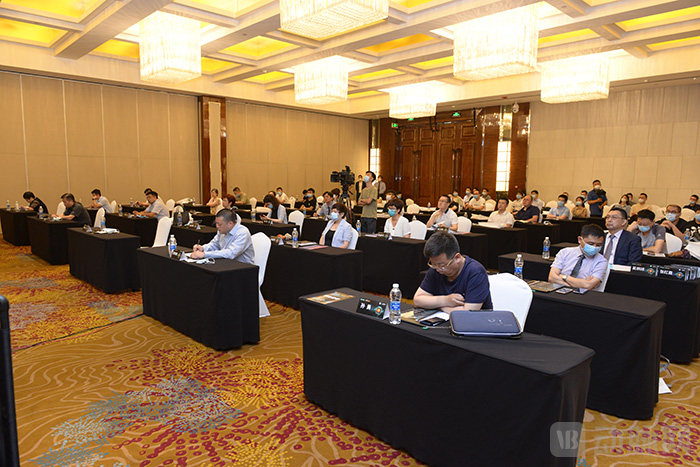
At the High-Level Forum on Clinical Applications of Cardiovascular Functional Imaging Technology and Departmental Digitalization, held on July 31, Fosun Xingmai, in collaboration with Siemens Healthineers and the Cardiovascular Imaging Center of the Department of Cardiology at the Second Affiliated Hospital of Harbin Medical University, successfully convened the summit. The event provided a comprehensive showcase of best practices and applications of medical imaging technologies, big data analytics, and artificial intelligence.
In recent years, the prevalence and mortality of coronary heart disease (CHD) in China have been gradually increasing. According to estimates from the "Report on Cardiovascular Health and Diseases in China 2019," there are approximately 330 million people with cardiovascular diseases in China, including 11 million CHD patients.
The vast patient population places immense pressure on limited medical resources. Meanwhile, delayed intervention in cardiovascular diseases leads to poorer treatment outcomes. Therefore, it is essential to shift the focus of care upstream to the prevention stage, thereby controlling the incidence of cardiovascular diseases at their source. This creates an urgent need for earlier and more precise medical testing and services. Non-invasive coronary fractional flow reserve derived from computed tomography (hereinafter referred to as FFR-CT) is among the most promising diagnostic technologies in this regard.
At the forum, Dr. Fu Qizheng, Chief Scientist at Fosun Xingmai, presented research progress on the company’s key product that has entered the mature application stage: non-invasive coronary fractional flow reserve derived from computed tomography (FFR-CT).
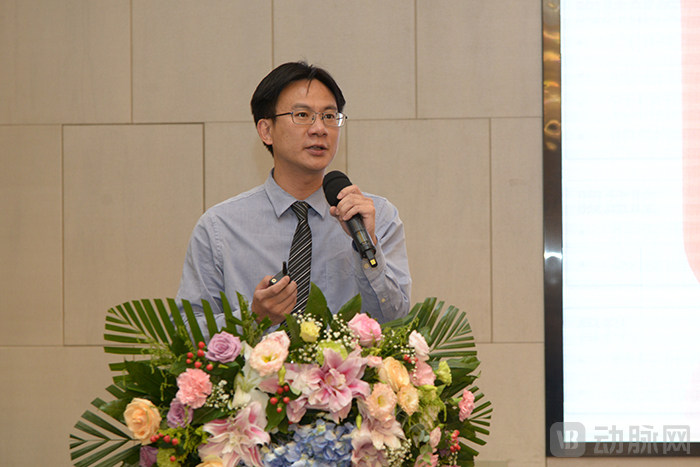
Fu Qizheng, Chief Scientist at Fosun Xingmai
Traditionally, cardiologists have assessed the degree of coronary artery stenosis in patients via coronary angiography to infer the extent of myocardial ischemia. However, increasing clinical evidence in recent years has demonstrated that coronary stenosis severity and plaque characteristics alone cannot accurately correlate with the actual extent of myocardial ischemia. A more precise assessment should be based on the evaluation of fractional flow reserve (FFR).
First-generation FFR-CT technology emerged overseas and faces two bottlenecks: first, its efficiency is relatively low, typically requiring 4–6 hours of computation time; second, it necessitates the full-process involvement of specialized computational fluid dynamics engineers, thereby precluding scalable replication.
The second-generation FFR-CT technology, widely adopted in China, overcomes these two drawbacks by employing deep learning methods throughout the process to bypass the numerous challenges associated with computational fluid dynamics. However, this approach introduces stringent requirements for training data and carries the risk of limited generalizability.
Integrating FFR-CT with CTA as a screening protocol for coronary artery disease offers advantages such as operational convenience, minimal invasiveness, and cost-effectiveness, facilitating its widespread adoption. This approach enables the identification of more patients with coronary issues and ensures timely access to high-quality diagnostics, providing significant guidance for subsequent coronary interventions and coronary artery disease screening.
Fosun Xingmai’s latest-generation FFR-CT, independently developed with proprietary innovations, features patented “fully automatic adaptive mesh generation” and “computational fluid dynamics acceleration” technologies. This effectively overcomes the limitations of the previous two generations of FFR-CT, compressing the entire computation process to under five minutes while ensuring computational accuracy. Furthermore, due to its exceptional ease of use, the entire operation can be performed independently by in-house medical staff without engineer intervention, facilitating smooth and rapid deployment across tertiary hospitals and primary healthcare institutions at all levels.
Building on this foundation, Fosun Xingmai has also actively developed products for “Virtual Coronary Stent Surgical Planning” and “Virtual CABG Surgical Planning,” further extending its computer vision- and hemodynamics-based technologies from auxiliary diagnosis to auxiliary treatment. Combined with its previously approved “Coronary CTA Post-Processing” product, Fosun Xingmai aims to create a one-stop solution for patients with coronary heart disease, covering the departments of radiology, cardiology, and cardiac surgery.
For physicians, AI-enabled FFR-CT can compress the diagnostic process to just a few minutes, thereby significantly enhancing clinical workflow efficiency.
For patients, FFR-CT requires no invasive procedures, offering a non-invasive approach that delivers diagnostic results for coronary artery lesions within minutes. This provides an intelligent, automated, and efficient non-invasive screening solution for coronary heart disease.
In recent years, Fosun Xingmai has deeply integrated into medical institutions and primary healthcare settings, exploring the application of technology-enabled solutions for cardiovascular and cerebrovascular diseases in diagnosis and treatment. By leveraging AI imaging technologies to predict disease progression, it has established appropriate screening and assessment techniques to optimize treatment protocols.
To achieve seamless integration between imaging diagnosis and clinical prevention and treatment, provide quantitative parameters to facilitate rapid decision-making by frontline clinicians, and enable early prediction of cardiovascular and cerebrovascular diseases, Fosun Xingmai has been actively enhancing its core service capabilities in tiered diagnosis and treatment—such as early screening, remote consultation, and precision medicine—and implementing prevention and control measures at both primary and secondary prevention levels.
In January 2021, Fosun Xingmai partnered with the Xuhui District of Shanghai to launch an integrated AI-powered imaging decision-support application for cardiovascular and cerebrovascular diseases, covering screening, follow-up, and emergency care. This hospital-local government collaborative AI healthcare project aims to explore a digital, convenient, and vertically integrated model of prevention and treatment within Xuhui District. By linking core clinical processes—screening, follow-up, and emergency response—it establishes a comprehensive network for the prevention and management of cardiovascular and cerebrovascular diseases, enabling “visualized” public health data, “intelligent” disease screening, and “digitalized” clinical treatment.
Promoting the implementation of an AI-assisted, multidisciplinary tiered diagnosis and treatment model for coronary heart disease has also been a key focus for Fosun Xingmai, aiming to facilitate the decentralization of high-quality medical resources. This model will leverage regional medical resources and strengths to foster multidisciplinary collaboration within the tiered diagnosis and treatment framework, enabling physicians at all levels to conduct more precise and effective clinical practices. Ultimately, this approach benefits patients, contributes greater support to the cardiovascular field, and helps accelerate the arrival of the inflection point where cardiovascular events begin to decline.
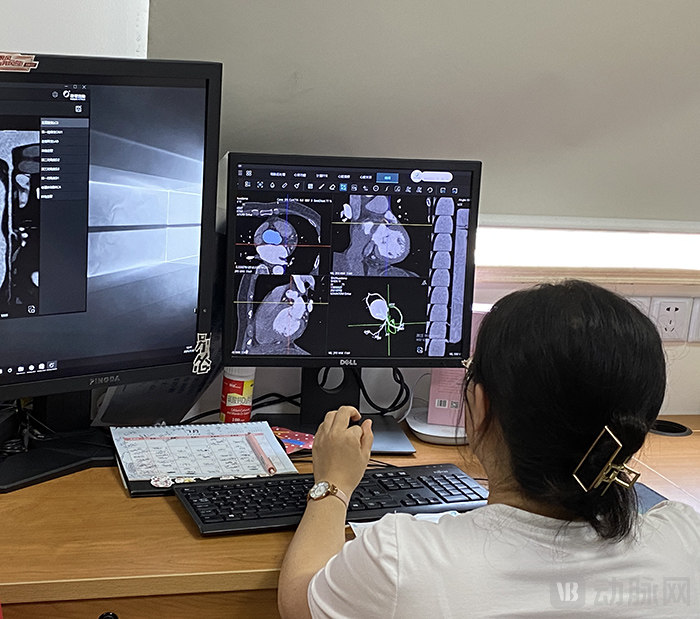
In 2020, Guizhou Provincial People's Hospital partnered with Fosun Xingmai to implement an AI-enabled multidisciplinary tiered diagnosis and treatment model for coronary heart disease (CHD). They successfully conducted AI-assisted Multidisciplinary Team (MDT) tiered consultation meetings, thereby facilitating collaboration with primary care hospitals to establish standardized, scientifically sound, rational, and regulated diagnostic and therapeutic protocols for CHD across hospitals at all levels.
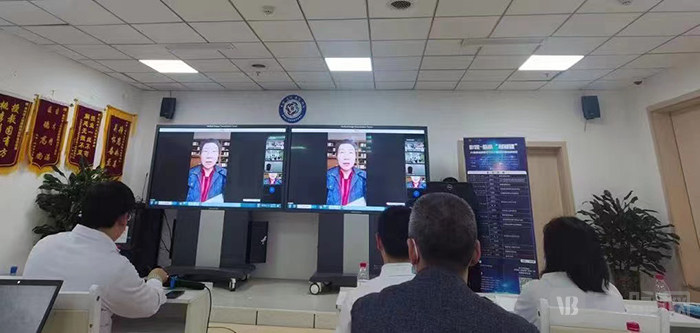
It is worth noting that due to the varying brands and performance levels of imaging equipment across medical institutions at different tiers, compatibility with software may be suboptimal, making it difficult to achieve optimal outcomes. Consequently, integrated software-hardware solutions that fully unlock system potential while offering ease of use are gaining greater recognition among medical institutions and are likely to become a future development trend.
Yu Bo, Dean of the Cardiovascular Hospital and Director of the Department of Cardiology at the Second Affiliated Hospital of Harbin Medical University, stated in his forum speech that the department’s introduction of MRI on a departmental basis is a first in China. Compared with the traditional hospital-wide allocation of high-end imaging equipment, this approach can effectively alleviate the pressure on limited imaging resources caused by the time-consuming nature and higher risks associated with cardiovascular imaging, thereby greatly supporting the diagnosis and treatment of cardiovascular diseases. Currently, within less than 10 months, the hospital has completed nearly 2,000 MRI examinations, including 200 coronary MRI scans.
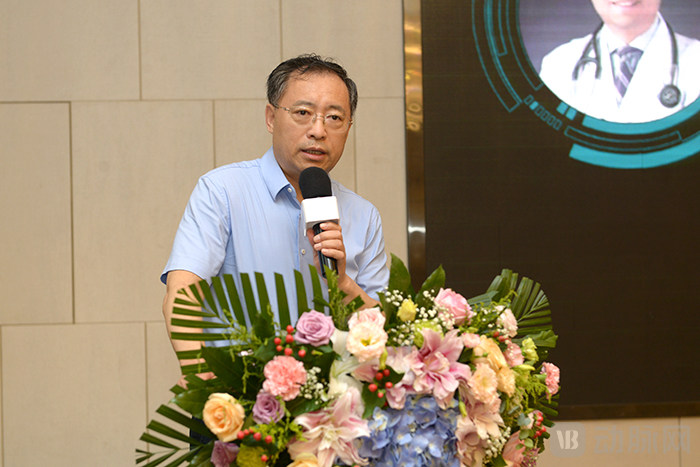
Yu Bo, Dean of the Cardiovascular Hospital and Director of the Department of Cardiology at the Second Affiliated Hospital of Harbin Medical University
Supported by a robust hardware infrastructure, the hospital will adopt a dual-pronged strategy of “external experts + internal talent acquisition.” By leveraging expert resources from institutions such as Beijing Fuwai Hospital and continuously recruiting young professionals, it aims to establish a nationally top-tier cardiovascular imaging center within three to five years.
Dr. Chen Lifeng, Head of Digital Health at Siemens Healthineers, also pointed out that the mortality rate of cardiovascular diseases remains high. This forum aims to promote advancements in the diagnosis and treatment of cardiovascular diseases. It represents a collaborative effort among experts in imaging, cardiology, and various regions. Meanwhile, the partnership between Siemens Healthineers and Fosun Xingmai will continue to provide better services to medical institutions.
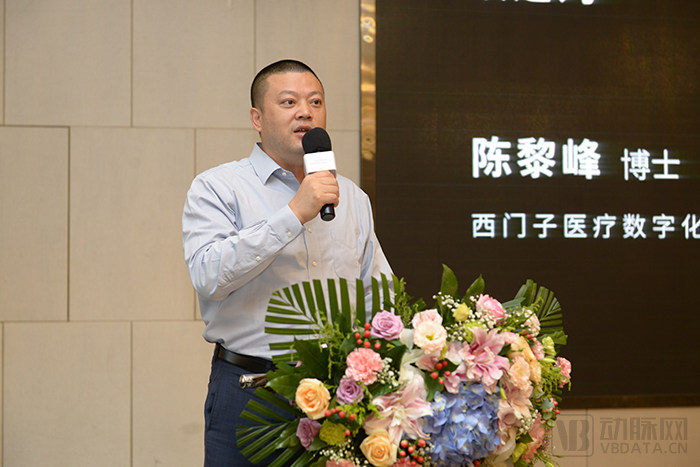
Chen Lifeng, Head of Digital Health at Siemens Healthineers
In addition, the Summit on Clinical Application of Cardiovascular Functional Imaging Technology and Departmental Digitalization brought together nearly 100 renowned experts and scholars from across China. They shared insights on the value of digital medical imaging for clinical departments, highlighting its innovative applications in scientific research, treatment planning, and therapeutic decision-making, with discussions centered on technological innovations in cardiology, advances in research and application, and case studies. The summit also delved into precision medicine in the cardiovascular field and how AI is facilitating the digital transformation of healthcare.
Currently, in its AI medical imaging service layout, Fosun Xingmai has completed the deployment of its intelligent imaging-assisted diagnostic software across four major domains: pulmonology, orthopedics, cardiovascular medicine, and reproductive health. The software covers radiological imaging modalities such as MR, CT, and DR, focusing on lesion localization, detection, morphological analysis, and growth pattern follow-up for pulmonary diseases (pulmonary nodules, tuberculosis, pneumonia, pneumothorax), hip joint disorders, knee joint disorders, and cardiovascular and cerebrovascular conditions (coronary heart disease, cerebral hematoma, stroke). This comprehensive approach meets clinical needs for early screening and precise diagnosis and treatment.
By integrating AI, Fosun Xingmai is committed to rapidly, intelligently, and precisely enhancing the diagnostic capabilities and efficiency of healthcare institutions, facilitating remote consultations, and truly realizing AI-driven medical technology services. Meanwhile, by leveraging a broader industrial ecosystem, Fosun Xingmai is progressively deploying AI products and technologies in areas such as medical services and hardware, working toward its vision of “AI enabling healthy lives for one billion households worldwide.”