

Eight Years, 153 Regions and 503 Hospitals: Three Major Trends Emerge in China's Medical Information Interoperability Assessments
On July 2, the National Health Commission released the “Notice on the Public Announcement of the Results of the 2020 National Assessment of Standardization Maturity for Interconnectivity of Medical and Health Information,” publicly disclosing the assessment results for 148 hospitals across 20 participating regions. This also marks the first year of outcomes under the new assessment framework implemented in August 2020. What challenges have hospitals encountered in practical implementation?
Furthermore, since its inception in 2013, the assessment initiative has garnered widespread public attention and has become a powerful operational tool and scientific guide for health authorities at all levels to direct and implement regional health informatization development. To date, eight rounds of interoperability assessments have been conducted. By reviewing information released by the Statistical Information Center of the National Health Commission (NHC), VCBeat has compiled the results of the Standardized Maturity Assessment for Hospital (Regional) Interoperability from all eight rounds held since 2013. According to data published by the NHC, as of 2021, a total of 153 regional administrative bodies and 503 secondary-level and above hospitals had passed the interoperability grading assessment. What is the overall landscape of these eight rounds? How can health IT enterprises better serve hospitals? To address these questions, VCBeat interviewed various industry practitioners.
According to the publicized results, 148 hospitals have obtained the corresponding Interconnectivity Maturity Ratings. Prior to this assessment, seven rounds of the National Health and Medical Information Interconnectivity Standardization Maturity Assessment had already been conducted.
In the 2020 assessment results for the maturity of interoperability standardization, a total of 20 regions participated in the evaluation, with 6 regions rated at Level 5 Grade B; 147 hospitals were rated at Level 4 Grade B or above, among which 9 hospitals, including Xuanwu Hospital of Capital Medical University, reached the level of Level 5 Grade B.
In terms of hospital accreditation across different regions, the number of accredited hospitals in Jiangsu Province increased significantly in 2020 compared to 13 in 2019, while Shandong and Hubei Provinces remained largely unchanged from 2019. Additionally, Sichuan Province maintained a positive trend, with five more hospitals passing the assessment than in 2019. The central and western regions, which have a large number of Grade III Class A and Grade III Class B hospitals and substantial needs for infrastructure upgrades, have gradually caught up with cities that have been rapidly advancing interoperability, thanks to accelerated policy implementation. Jiangsu Province added 17 newly accredited hospitals, followed by Shandong, Hubei, and Sichuan Provinces, with 13, 10, and 10 hospitals respectively achieving Level IV Class A certification.
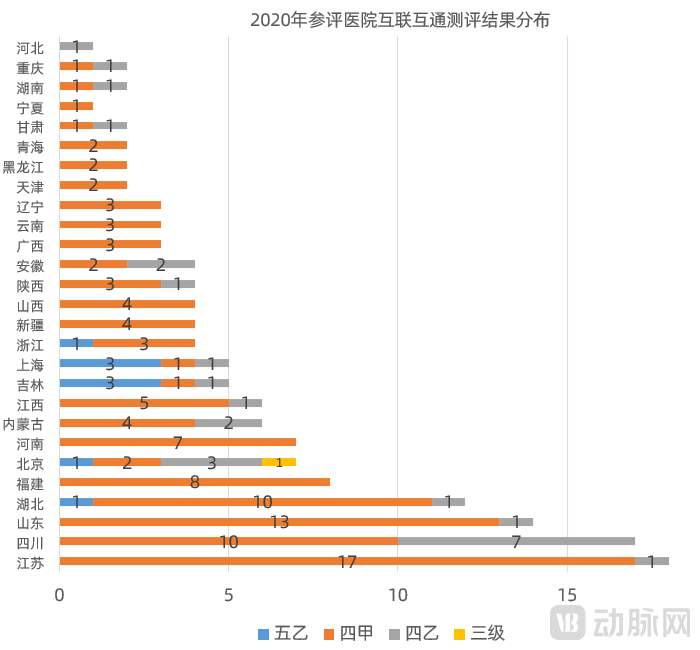
Notably, Jilin Province achieved remarkable results, with three hospitals—The First Hospital of Jilin University, China-Japan Union Hospital of Jilin University, and The Second Hospital of Jilin University—attaining the Grade 5, Class B certification. In fact, Jilin Province has long been committed to advancing healthcare informatization. In recent years, the province has established a standardized, interoperable provincial universal health information platform, maximizing the efficiency of medical resource utilization. Leveraging this provincial platform, it has also deployed city-level virtual platforms that cover municipal medical institutions and specialized public health organizations, collecting and storing comprehensive regional health data to support municipal health commissions in supervising local healthcare services.
Five hospitals in Shanghai have recently passed the corresponding accreditation, including three that achieved Grade 5, Class B status. Currently, a total of eight hospitals in Shanghai hold the Grade 5, Class B accreditation: Ruijin Hospital, Shanghai Jiao Tong University School of Medicine (accredited in 2017); Shanghai Children’s Hospital and Longhua Hospital, Shanghai University of Traditional Chinese Medicine (accredited in 2018); Children’s Hospital of Fudan University and Shanghai Chest Hospital (accredited in 2019); and Renji Hospital, Xinhua Hospital, and Shanghai General Hospital, all affiliated with Shanghai Jiao Tong University School of Medicine (accredited in 2020).
From the healthcare informatization policies issued in 2018, it is evident that the state has strengthened the assessment of medical institutions’ informatization capabilities. By incorporating informatization-related indicators into performance evaluations, the government has mandated the advancement and application of hospital informatization.
On April 28, 2018, the General Office of the State Council issued the "Opinions on Promoting the Development of 'Internet + Healthcare'," explicitly stating that hospitals at Level II and above should improve the functions of their hospital information platforms, integrate various internal system resources, and enhance hospital management efficiency. Tertiary hospitals were required to achieve interoperability of medical service information within their institutions by 2020, with other qualified hospitals urged to do so as soon as possible. On August 22, 2018, the National Health Commission issued the "Notice on Further Advancing the Construction of Information Systems in Medical Institutions with Electronic Medical Records at the Core," requiring that by 2020, tertiary hospitals achieve interoperability of information across all clinical diagnosis and treatment processes within the hospital, reaching Level 4 maturity in the standardized assessment of hospital information interoperability. This would allow authorized access to relevant diagnostic and therapeutic information from any terminal in any department within the hospital.
Based on an analysis of the results from eight rounds of healthcare interoperability assessments, we have identified the following trends:
1. Only 3.75% of hospitals in China have achieved Level 3 or above in the National Interoperability Standardization Maturity Assessment for Medical and Health Information
Driven by policy initiatives, healthcare institutions have actively promoted the development of interoperability and continuously enhanced its in-hospital application, achieving favorable results in a short period. In 2018, the number of hospitals and regional administrative authorities that passed the assessment increased significantly compared to previous years. However, the overall level of hospital interoperability in China still requires improvement. According to the Statistical Bulletin on the Development of Health and Wellness Services in China in 2020, released by the National Health Commission in July 2021, there were 13,400 secondary and tertiary hospitals nationwide. Among them, only 503 secondary and tertiary hospitals achieved Level 3 or above in the Interoperability Standardization Maturity Assessment. The proportion of hospitals rated at Level 3 or above was merely 3.75%, indicating that the current level of medical health information interoperability in China remains relatively low.
![UMHRJ_(2IYSKN_C8]3H@{$U.png](http://cdn.vcbeat.top/upload/image/08/08/02/26/1627892760448794.png/dmw)
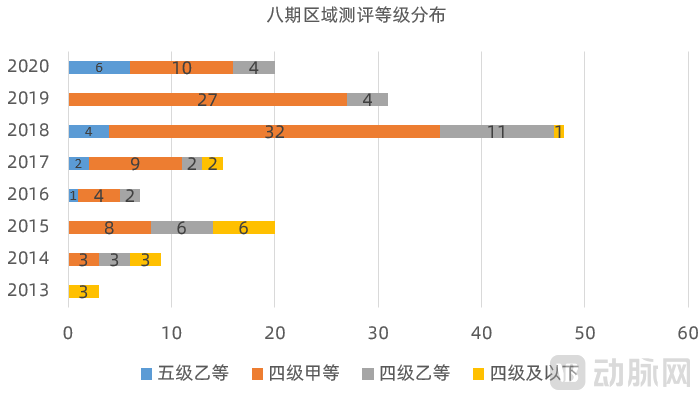
2. Level 4, Grade A Becomes the Target and Expected Benchmark for Interconnectivity of Current Medical and Health Information
Since 2013, whether for regional health information authorities or healthcare institutions, the proportion of entities rated as Level 4 Grade A has consistently exceeded three-fifths. Level 4 Grade A represents the expected benchmark for the standardization and maturity of interoperability in medical health information. Achieving Level 4 Grade A requires establishing a more comprehensive information platform, an independent clinical data center, and a clinical knowledge base to support clinical diagnostic decision-making. It also entails expanding system coverage to include more health institutions within the jurisdiction and effectively implementing dynamic data quality monitoring and management. Platforms at this level demonstrate strong performance in data quality metrics—including logical consistency, timeliness, completeness, stability, and accuracy—while fostering the enrichment of business system development.
Currently, the assessment of standardization maturity for hospital (regional) interoperability is divided into seven levels. Among them, Level 5 Grade B is the highest level in China’s assessment of standardization maturity for healthcare information interoperability, and it represents the best performance achieved by domestic hospitals in this assessment to date.
Level 5, Grade B: On the basis of meeting the requirements for Level 4, Grade A, statutory medical reports and health examination shared documents comply with standards; the platform achieves standardization of in-hospital terminologies and dictionaries; it enables interaction with higher-level platforms through shared documents; provides relatively comprehensive internet-based diagnosis and treatment services; initially implements clinical decision support, closed-loop management, and big data applications based on the platform; the performance of the hospital information platform meets the requirements for integration with higher-level information platforms; and initial interoperability with higher-level information platforms is achieved.
Since 2013, a total of 13 regional health authorities and 32 hospitals in China have passed the Level 5 Grade B Interconnectivity Maturity Assessment.
In terms of regional assessment results, Jiangsu Province took the lead with eight Grade 5, Class B regional competent authorities. Among them, the Health and Family Planning Commission of Zhangjiagang City, Jiangsu Province, was the first regional health entity in China to pass the Level 5 Interconnectivity Assessment. Zhejiang Province ranked second with three such entities, while Fujian and Shandong Provinces each had one Grade 5, Class B regional competent authority. Regarding hospital assessment results, Shanghai secured the top position with eight hospitals achieving this rating. Guangdong Province had four hospitals, while Beijing, Jilin, and Jiangsu each had three. Fujian and Hubei Provinces each had two hospitals that passed the Grade 5, Class B assessment. Sichuan, Zhejiang, Anhui, Liaoning, Hunan, and Henan Provinces each had one hospital rated as Grade 5, Class B.
3. The Yangtze River Delta Region Has the Highest Level of Interconnectivity in Healthcare
Shanghai, Zhejiang, and Jiangsu are the three primary provincial-level administrative regions in the Yangtze River Delta. According to the evaluation results for the standardization maturity of medical health information interoperability conducted by regional health authorities, both Zhejiang and Jiangsu Provinces have achieved ratings of Level 4 Grade B or higher. These two provinces account for 41.2% of all regions nationwide rated at Level 3 or above. The average level of medical health information interoperability in this region is significantly higher than that of other regions. Among the 32 hospitals rated at Level 5 Grade B, Shanghai has eight, representing 25% of the total. The Yangtze River Delta region represents the highest level of regional medical health information interoperability in China.
![82N]B9{X`3(MH8%`KLRH6@1.png](http://cdn.vcbeat.top/upload/image/08/08/02/27/1627892839101009.png/dmw)
Level 5 Grade B is the highest rating in China’s Interoperability Standardization Maturity Assessment for Healthcare Information, representing the best performance achieved by domestic hospitals in this evaluation to date. An analysis of the health IT infrastructure data from the nine hospitals that passed the Level 5 Grade B assessment in 2020 reveals that their information technology service providers are predominantly established or next-generation IT companies, including Peking University Medical Information Technology, Huimei Technology, Jingyi Technology, Jiahemeikang, Senyi Intelligence, Wanda Information, and Yihui Technology. These IT enterprises have provided substantial support in terms of recommendations and product direction to assist hospitals in meeting the assessment requirements.
The construction of standards for the Interconnectivity Maturity Assessment involves numerous modules and requirements. As no single enterprise can cover all services, it is common for a hospital’s infrastructure to be built by multiple vendors. Peking University Healthcare Information Technology (PKU HIT), the first medical informatics vendor to implement hospital information platforms and data centers, has continued to strengthen its efforts, helping 10 hospitals pass the 2020 Interconnectivity Maturity Assessment. Among them, Xuanwu Hospital of Capital Medical University and the First Hospital of Jilin University achieved Level 5 Grade B certification.
Huimei Technology delivered outstanding performance in the 2020 Interconnectivity Assessment. The Xuanwu Hospital of Capital Medical University, the First Hospital of Jilin University, the China-Japan Union Hospital of Jilin University, Renji Hospital affiliated with Shanghai Jiao Tong University School of Medicine, and the Fourth Affiliated Hospital of Zhejiang University School of Medicine, all developed by Huimei Technology, achieved Level 5 Grade B certification. Additionally, Huimei Technology assisted 15 hospitals in passing the Level 4 Grade A assessment. To date, Huimei Technology has cumulatively supported 45 hospitals in passing the Standardized Maturity Assessment for Interconnectivity.
In 2020, Kyee Technology helped 19 hospitals make the list, among which The Second Hospital of Jilin University, Shanghai Renji Hospital, Shanghai Xinhua Hospital, and Wuhan Tongji Hospital passed the Level 5 Class B assessment. To date, Kyee Technology has cumulatively assisted 54 hospitals in passing the assessment, including 8 cases of Interconnectivity Level 5 Class B and 46 cases of Interconnectivity Level 4 Class A.
Yihui Technology assisted 13 hospitals in passing the accreditation, with Xuanwu Hospital of Capital Medical University and Xinhua Hospital Affiliated to Shanghai Jiao Tong University School of Medicine achieving Level 5 Grade B, and 11 other hospitals, including Daxing District People’s Hospital of Beijing, achieving Level 4 Grade B or above. As of July 2021, Yihui Technology had supported a total of 51 hospitals in passing the National Assessment for Standardization Maturity of Healthcare Information Interconnectivity.
In addition, many informatization enterprises have also made significant efforts and contributions to the interoperability of healthcare in China.
Since the pilot launch of the Hospital (Regional) Interconnectivity Assessment in 2013, it has played a significant role in guiding hospital information construction to avoid detours, reduce investment waste, and accelerate development. During the early stages of construction, due to the absence of established assessment standards, any issues encountered in system or project implementation necessitated seeking authoritative experts within China for multi-party deliberations and comparisons among multiple vendors to select relatively optimal solutions before finalizing implementation plans. This period witnessed considerable setbacks, difficulties, and wastage of human and financial resources in hospital information construction.
However, since 2015, the National Health Commission has issued the “Standardized Maturity Assessment Scheme for Hospital Information Interconnectivity (Trial)” and, by continuously integrating new requirements in medical informatization construction and the application of emerging technologies in recent years, has further refined the assessment processes and content in a more scientific manner, releasing the 2017 and 2020 versions successively. Currently, the hospital (regional) interconnectivity assessment has become a powerful operational tool and scientific guideline for health institutions at all levels to direct and advance regional health (hospital) informatization development.
![YXYP5U~`VHHT]G33CY`XEI7.png](http://cdn.vcbeat.top/upload/image/08/08/02/29/1627892957566136.png/dmw)
Compared with the 2015 edition, the 2017 edition more prominently highlights the discrepancies between real-world implementation and standardized testing in its content definitions, thereby significantly promoting the practical application of hospital interoperability. Furthermore, the 2017 edition adheres to a broader and more up-to-date range of standards and documents in its testing content. This also indicates that the quality and extent of data sharing in hospitals have improved under the 2017 edition.
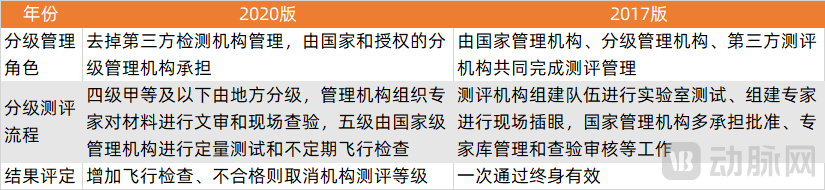
According to Wang Minhui, Senior Vice President of Huazhuo Technology, the 2020 Edition of the Hospital Interconnectivity Standardization Maturity Assessment is a comprehensive evaluation conducted across four dimensions: data resource standardization, interconnectivity standardization, infrastructure construction, and the effectiveness of interconnectivity applications. The Hospital Interconnectivity Standardization Maturity Assessment is further divided into two components: standards compliance testing and application effectiveness evaluation.
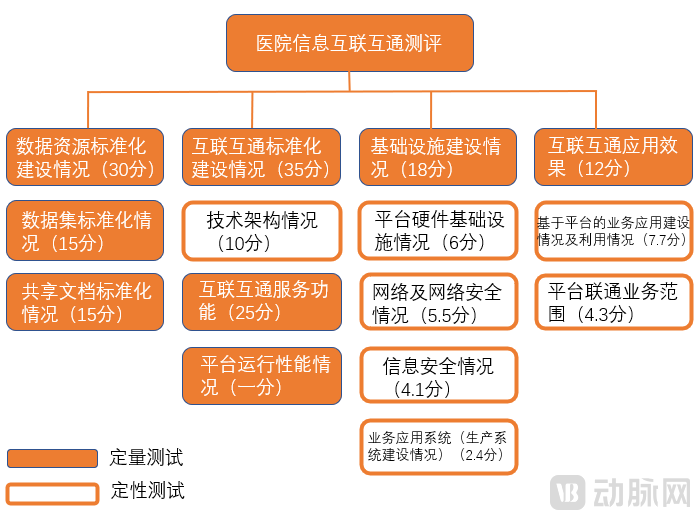
The 2020 version of the assessment framework continues to employ a combination of quantitative testing and qualitative evaluation. However, adjustments to the assessment content fully reflect the new framework’s greater emphasis on the actual implementation status and application effectiveness of hospital information systems, focusing on the capacity and extent to which system construction supports clinical operations, as well as the practical assistive functions provided to end users.
Tongji Hospital, Affiliated to Tongji Medical College of Huazhong University of Science and Technology, has recently passed the Level 5 Class B assessment. Wu Kun, a software engineer in the hospital’s Information Department, explained that the 2020 version of the standards eliminated third-party testing agencies, emphasizing direct oversight of the assessment process by national regulatory authorities. It also introduced unannounced “flight inspections” by experts; failure to meet the standards would result in the revocation of the hospital’s previously awarded interoperability assessment rating. This places significant demands on the real-world application, stability, and sustained effectiveness of hospital information systems.
The addition of this assessment component, on one hand, can encourage hospitals to realign their Hospital Information Systems (HIS) with the core essence of medical care, ensuring that these systems are built not merely to pass evaluations but to genuinely meet service and operational needs. However, this also presents a challenge: how can visiting experts comprehensively understand the complex information systems, data structures, and the actual status of data interoperability at participating hospitals during short-duration inspections, and thereby provide accurate and objective evaluations?
“The new version of the plan sets higher requirements for the coverage and standardization of hospital business data. The application of technological power can significantly improve the efficiency and quality of the healthcare industry, using technological reform to drive changes that address the medical pain points of difficult and expensive access to care,” said Wu Kun.
The construction of an information integration platform serves as the foundation for achieving standardized maturity in health information interoperability, making adherence to standards and specifications crucial. The new framework strengthens the application of emerging technologies such as big data and artificial intelligence (AI), incorporates internet-based diagnosis and treatment services, and expands clinical research applications based on big data. Furthermore, it provides more detailed requirements for higher levels of interoperability. For instance, Level 4A mandates the provision of internet-based diagnosis and treatment services and the initiation of clinical knowledge base development. Level 5A further requires the implementation of robust AI and big data applications via the platform, along with comprehensive cross-institutional business collaboration and interoperability solutions.
The assertion that the 2020 edition places greater emphasis on the application of emerging technologies such as artificial intelligence (AI) and big data has also been affirmed by healthcare IT vendors. Zhang Xiangming, a rating solutions consultant at Huimei Technology, stated that this trend presents significant opportunities for vendors providing AI-based clinical medical services. Hospitals have also become increasingly aware that to pass the Interconnectivity Standardization Assessment, they must build systems grounded in big data and driven by AI technology, integrated with various application scenarios, to ensure intelligent clinical applications and data interoperability, thereby delivering tangible benefits to patients, clinical care, research, and logistical departments. Furthermore, Mr. Zhang noted that while the current focus of hospital informatization lies in patient diagnosis and treatment, future developments will align with the direction of interconnectivity data standards to further expand applications geared toward patient-side medical services.
Wang Minhui stated that the new version of the guidelines provides more explicit provisions on the application of emerging technologies—such as artificial intelligence, the Internet of Things, big data, and robotics—in the assessment of Level 5 (highest-tier) hospitals. The use of these technologies to support hospital interoperability assessments will focus on three key areas: smart healthcare, smart services, and smart management.
In terms of evaluation management and process changes, the new proposal more clearly specifies requirements for test subjects, mandating that hospital information platforms (or systems) selected for testing must hold a Software Copyright Registration Certificate, have been in operation for over one year, and have passed preliminary acceptance. Zhang Xiangming stated that the new version places greater emphasis on the quality of clinical applications, introducing numerous additional requirements regarding application channels. This is particularly true for the development and utilization of applications targeting higher-level ratings, which encompass areas such as medical quality and safety monitoring, construction of in-hospital medical knowledge systems, establishment of clinical auxiliary warning systems, development of clinical decision support warning systems, and big data-enabled clinical research infrastructure.
During the specific process of hospital construction, information technology enterprises have also encountered numerous challenges, among which data accuracy and security issues are the most sensitive.
Data-driven clinical decision support and management decision support capabilities are key emphases in the application effectiveness evaluation section of the 2020 edition. Zhang Xiangming introduced that achieving the use of information systems for performance assessment of public hospitals, particularly for specific (single) disease entities and in-hospital risk disease management—such as quality management in the diagnosis and treatment of VTE, COPD, and AKI—relies even more heavily on a standardized, high-quality data foundation.
Huimei Technology has also found, in the process of implementing CDSS in hospitals, that data missing and data errors are common at the data source end, manifested as inconsistent dictionary standards, time logic errors, and missing key data. Therefore, to pass the interconnectivity evaluation, hospitals must strengthen the governance of business data. The quality of governance affects the credibility and intelligence level of the data, and the effectiveness of governance directly determines the value of data assets.
Wang Minhui stated that, based on an analysis of the new evaluation scheme, the adoption of microservices architecture is encouraged; requirements for data timeliness in Clinical Data Repositories (CDR) are more clearly defined; data de-identification has become a standard requirement for Grade 4A hospitals; and functionality for interactive service subscription management has been added. Furthermore, the scheme clarifies Level 3 Classified Protection requirements for cloud deployment, stipulates that hospitals rated Grade 4A and above must provide internet-based diagnosis and treatment services, and requires hospitals at Level 5 and above to possess deployment capabilities for the Internet of Things (IoT) and 5G, big data-driven decision support functions, and closed-loop management capabilities across all business processes of the hospital information platform.
Furthermore, the requirements for building big data clinical research systems have been expanded to include new application scenarios involving natural language processing, knowledge graphs, data modeling, machine learning, deep learning, big data search, 5G, imaging AI, speech recognition, visual recognition, blockchain, the Internet of Things (IoT), robotics, and wearable devices. This development also places higher demands on health IT enterprises. According to Wang Minhui, achieving closed-loop management of entire business processes based on hospital information platforms, along with the integration of new technologies, will become a key focus in future hospital development.
Regarding the key priorities for future hospital data interoperability initiatives, Wang Minhui stated that while current efforts focus on data standardization and integration, future development will center on “digital-intelligence empowerment and innovative healthcare.”
On July 12, 2021, the National Health Commission (NHC) announced the list of hospitals that achieved high-level ratings in the 2020 Evaluation of Functional Application Levels of Electronic Medical Record (EMR) Systems. A total of 54 medical institutions across China passed the Level 5 or higher assessment for EMR system functional application in 2020. In recent years, to promote the greater role of information systems in Chinese hospitals, the NHC has continuously implemented mandatory evaluation standards for hospital information systems. The EMR Functional Application Level Evaluation and the Interconnectivity Standardization Maturity Assessment are among the key indicators used in these evaluations.
Wu Kun frankly stated that the evaluation of EMR functional application levels and the assessment of interoperability standardization maturity are merely phased milestones in hospital informatization construction, representing a process through which hospitals transition toward digitalization and intelligence. By undergoing these ratings, hospitals validate their own medical informatization efforts; however, they must also remain vigilant against falling into the “rating trap” of pursuing ratings for their own sake.
We extend our gratitude to the following guests for accepting interviews and providing relevant information (listed in no particular order): Wu Kun, Software Engineer in the Information Department of Tongji Hospital Affiliated to Tongji Medical College of Huazhong University of Science and Technology; Wang Minhui, Senior Vice President of Huazhuo Technology; and Zhang Xiangming, Rating Solutions Consultant at Huimei Technology.
References:
Among these 135 hospitals, which one currently has the strongest comprehensive strength in domestic interoperability?
Where Is Healthcare Informatics Headed After the 2019 Interconnectivity Rating Results and the Release of the 2020 New Scheme??
How Long Will It Take to Achieve Interconnectivity of Medical and Health Information?
Four Major Changes in the New Standards for Interconnectivity Assessment: The Resurgence of Big Data—Application Matters as Much as Examination!
Official Website of the Statistical Information Center of the National Health Commission