

Zhilan Health's Digital Therapeutic Product 'Xiao Beike' APP Recognized by WHO for Advancing Zero Mother-to-Child Transmission of Hepatitis B
According to the latest 2020 estimates from the World Health Organization, 325 million people worldwide are living with hepatitis B or C. Each year, 1.1 million people die from diseases related to viral hepatitis. In China, there are approximately 70 million individuals with chronic hepatitis B virus infection, and more than 20 million patients with hepatitis B, making it a serious public health issue that threatens the health of the Chinese population.
Hepatitis B is primarily transmitted through three routes: mother-to-child transmission, blood exposure, and sexual contact. In China, 45% of patients with chronic hepatitis B acquired the infection via mother-to-child transmission.Following chronic hepatitis B virus (HBV) infection, failure to intervene promptly can lead to the development of chronic hepatitis B, placing patients at high risk of death from cirrhosis and hepatocellular carcinoma. Therefore, early diagnosis and treatment, along with prevention of mother-to-child transmission (PMTCT), are crucial for the prevention and control of hepatitis B.
Hangzhou Zhilan Health Co., Ltd. (hereinafter referred to as “Zhilan Health”) was established in 2015. The name “Zhilan Health” is derived from the Confucian classic Kongzi Jiayu (School Sayings of Confucius), which states, “Irises and orchids grow in secluded valleys; they do not cease to be fragrant simply because no one is there to appreciate them.” True to its name, Zhilan Health initially supported the public welfare initiative “Project for Zero Mother-to-Child Transmission of Hepatitis B,” starting with the prevention of mother-to-child transmission of hepatitis B and strategically positioning itself in the field of digital healthcare for chronic disease management.
Over the past three decades, China has made significant progress in hepatitis B prevention due to the widespread use of the hepatitis B vaccine. According to official United Nations data, the hepatitis B infection rate among children under five years of age in China has decreased by 90%—dropping to 0.32%—following the administration of the hepatitis B vaccine and hepatitis B immunoglobulin as part of the national expanded program on immunization for newborns. In 2014, the World Health Organization awarded China in recognition of its achievements in hepatitis B prevention.
However, China currently has nearly 70 million individuals infected with the hepatitis B virus (HBV). Each year, there are approximately one million pregnant women with HBV infection, and about 50,000 newborns acquire HBV infection annually due to failures in mother-to-child transmission (MTCT) blockade. Once infected, 90% of newborns develop chronic HBV infection, and one-quarter of them will eventually progress to liver cirrhosis or hepatocellular carcinoma, leading to severe consequences.
Prevention of mother-to-child transmission (MTCT) of hepatitis B is a critical step in eliminating hepatitis B virus infection, requiring close collaboration among obstetrics, infectious diseases, and neonatology departments to provide comprehensive monitoring, follow-up, and management for pregnant women with hepatitis B and their infants from pregnancy through the postpartum period.
Ms. Zhang Lan, Chief Medical Officer of Zhilan Health, former WHO Representative to China, and epidemiology expert, introduced:In July 2015, the China Hepatitis Prevention and Control Foundation launched the nationwide “Zero Mother-to-Child Transmission of Hepatitis B” public welfare project, known as the “Little Shell” Initiative, with Professor Hou Jinlin and his team from Nanfang Hospital of Southern Medical University serving as the clinical research leads and supported by Zhilan Health.
The project utilizes the intelligent mobile health application “Xiao Beike” throughout its entire course to conduct comprehensive monitoring and follow-up management for pregnant women with hepatitis B during pregnancy and the postpartum period. By enabling functions such as data collection, information dissemination, doctor-patient communication, and patient education, the project aims to improve disease awareness and treatment adherence, thereby achieving the goal of preventing mother-to-child transmission of the hepatitis B virus.
Professor Hou Jinlin, Director of the Department of Hepatology at Nanfang Hospital of Southern Medical University and Director of the Institute of Hepatology, stated: At the launch of the public welfare project for zero mother-to-child transmission of hepatitis B, the “Hundreds, Thousands, and Ten Thousands” Initiative was proposed, aiming to cover 100 hospitals, train 1,000 physicians, and manage 10,000 patients.
As of December 31, 2019, the Xiao Beike app achieved its “Hundreds, Thousands, and Ten Thousands” target, covering all 31 provinces, autonomous regions, and municipalities across China, including Tibet and Qinghai. By February 2021, a total of 136 hospitals had participated in the project, with more than 1,500 registered physicians, benefiting over 37,000 pregnant women with hepatitis B and their families.
Digital therapeutics place significant emphasis on evidence-based medical data. Driven by software or programs, they can be used independently or in combination with medications to prevent, manage, and treat diseases.
The global digital therapeutics market is projected to reach $6.9 billion by 2025, with a compound annual growth rate (CAGR) of 26.7%, and software will account for the majority of the market share. Although digital therapeutics represent a new frontier in the healthcare sector, Zhilan Health has been strategically positioned in this field for many years.
At its inception in 2015, Zhilan Health collaborated with the China Hepatitis Prevention and Control Foundation and Professor Hou Jinlin’s team at Nanfang Hospital of Southern Medical University to develop the Xiaobeike App, and submitted a medical device registration application the following year.and successfully obtained registration in 2019, becoming one of the first digital therapeutics companies to receive a medical device software registration certificate.
Xiao Beike APP: Hepatitis B Mother-to-Child Transmission (MTCT) Prevention and Management SoftwareThroughout the entire cycle of hepatitis B MTCT prevention and management (approximately two years, from pregnancy through to the completion of serological testing after vaccination), the Xiao Beike APP collects medical data from pregnant women with hepatitis B and their infants to create electronic medical records (EMRs). Based on these EMRs, as well as the latest authoritative domestic and international guidelines and expert consensus on hepatitis B MTCT prevention, the system provides physicians with real-time dynamic alerts for high-risk patients, reliable intelligent diagnostic and analytical recommendations, thereby supporting them in carrying out appropriate diagnosis and treatment activities.
Real-world data from Xiao Beike over the years shows that the success rate of mother-to-child transmission blockade of hepatitis B through the Xiao Beike APP has reached 99.7%.On March 30, 2019, the World Health Organization (WHO) published an article on its official website highlighting China’s efforts and achievements in hepatitis B prevention and control. The WHO highly recognized the significant role played by “Little Shell” in facilitating mother-to-child transmission blockade by leveraging mobile health tools to assist physicians in improving follow-up management for pregnant women with hepatitis B.
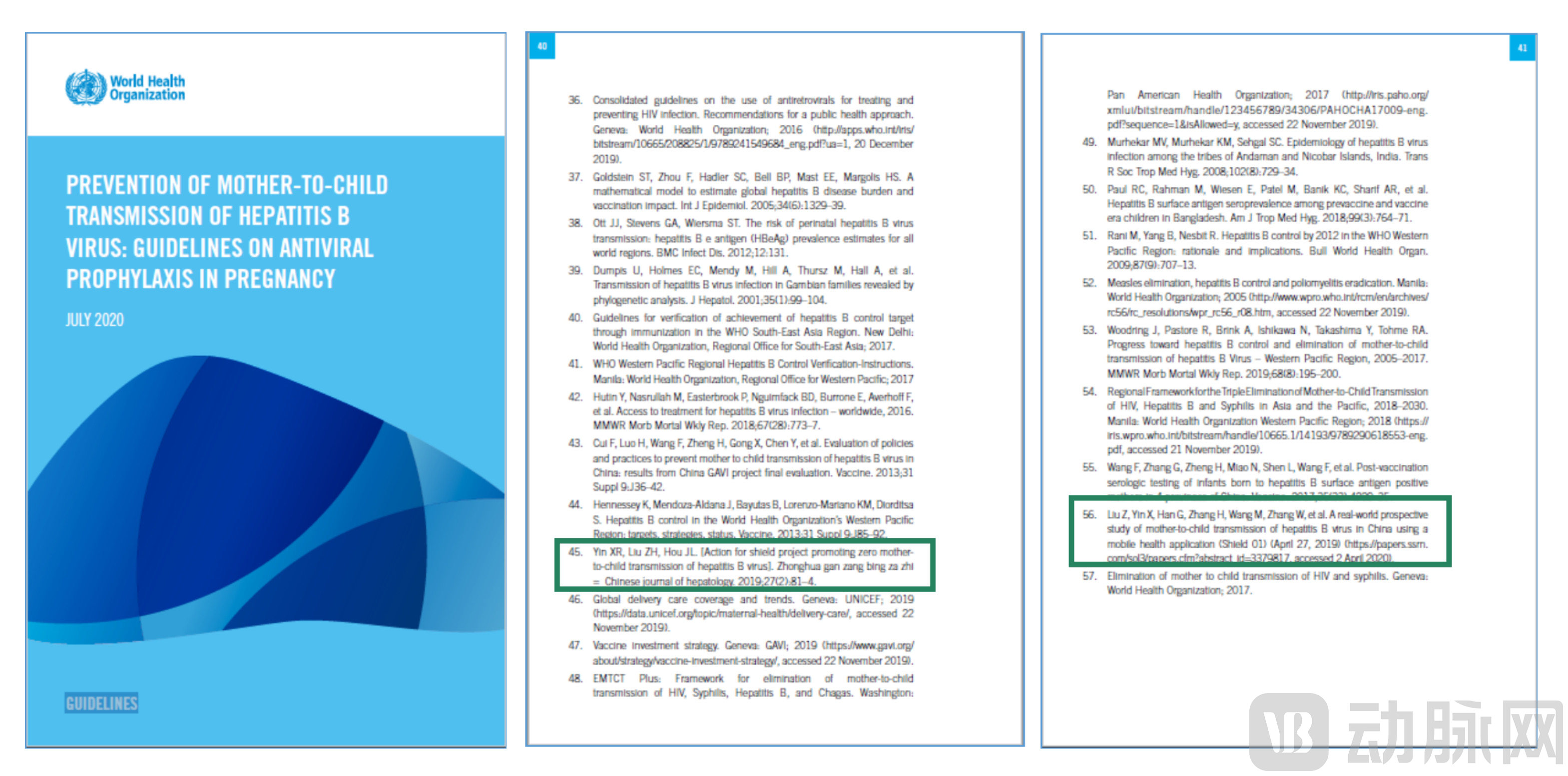
Data from two academic papers published by Xiao Beike were adopted by the World Health Organization as
Updating the Evidence Base for Clinical Management Guidelines on Mother-to-Child Transmission of Hepatitis B
Zhilan Health has long been dedicated to developing mobile health tools for physicians to manage patients, facilitating effective long-term management of chronic diseases and conducting real-world studies. In particular, in the prevention and control of hepatitis B, Zhilan Health has collaborated with a team of hepatology experts and achieved notable progress toward the elimination of hepatitis B.
Xiao Beike—The clinical research team led by Professor Hou Jinlin, the lead clinical research institution for the “Zero Mother-to-Child Transmission of Hepatitis B Project,” conducted a prospective, nationwide multicenter study during the first phase of the project—the “Real-World Study on Mother-to-Child Transmission of Hepatitis B in China”—to investigate the occurrence of mother-to-child transmission of hepatitis B in China.
The research findings were published in the February 2020 issue of J Clin Transl Hepatol (Journal of Clinical and Translational Hepatology) and presented at the 28th Annual Meeting of the Asian Pacific Association for the Study of the Liver (APASL 2019), attracting significant attention.

Professor Hou Jinlin’s Team (second from left) Participated in APASL 2019 and Delivered a Presentation
This study enrolled 1,008 hepatitis B surface antigen (HBsAg)-positive pregnant women from 10 centers across China. The results indicated that, on the basis of combined immunization with hepatitis B vaccine and hepatitis B immunoglobulin for newborns, the use of the Xiao Beike APP for management and follow-up, along with the addition of antiviral therapy for pregnant women with high viral loads in the third trimester, can further reduce mother-to-child transmission of the hepatitis B virus.
Professor Hou Jinlinstated: “Although the risk of mother-to-child transmission (MTCT) of hepatitis B has been significantly reduced, it remains essential to enhance public awareness, screening rates, and treatment coverage for hepatitis B. Through the Xiaobeike APP, we aim to encourage family members of pregnant women with hepatitis B to undergo screening. By implementing MTCT prevention measures, we can reach families with a history of hepatitis B, ensure that hepatitis B-positive individuals are enrolled in disease management programs at an early stage, and thereby reduce the incidence of end-stage liver diseases, including cirrhosis and hepatocellular carcinoma.”
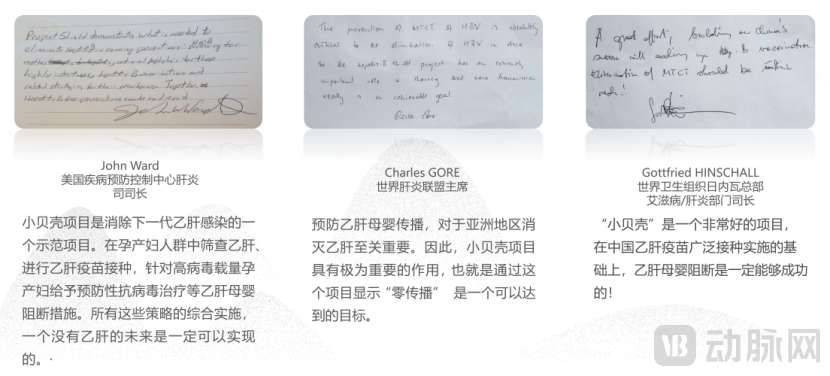 International Hepatitis Authorities Highly Recognize Xiao Beike
On World Hepatitis Day, July 28, 2021, Zhilan Health joined Professor Hou Jinlin and his team from the Liver Disease Center of Nanfang Hospital, Southern Medical University, in Nyingchi for the National Major Science and Technology Special Project, launching the “Rainbow Project for Early Screening of Liver Cancer” and participating in the series of activities themed “Preventive Healthcare on the Plateau: Eliminating Hepatitis in Nyingchi.”

This initiative aims to advance community-based prevention and control of chronic liver diseases in Nyingchi City by leveraging mobile health technologies to establish an integrated hospital–community management model for chronic liver disease. It seeks to strengthen the integration of medical care and public health prevention, improve diagnosis and treatment rates for chronic liver diseases, support the elimination of viral hepatitis in the Nyingchi region, and explore new models for chronic disease management in remote areas of China.

Zhilan Health has also built a business data middle platform centered on digital therapeutics, which can summarize, integrate, and statistically analyze electronic medical record datasets based on the data middle platform, providing real-world data support for the revision and formulation of disease diagnosis and treatment guidelines.
Zhilan Health will strengthen its collaboration with organizations such as the Chinese Center for Disease Control and Prevention, the China Primary Health Care Foundation’s Poverty Alleviation Project in Central and Western Regions, and the International Hepatitis Foundation. It will continue to expand the grassroots community coverage of the Xiao Beike APP, respond to President Xi Jinping’s call to promote China-Africa cooperation, and bring the Xiao Beike APP to communities worldwide.
In 2021, Zhilan Health launched the Ganzhilan App to enable more liver disease patients to receive scientific and standardized management. Leveraging digital healthcare as its platform, the app provides one-stop chronic liver disease management services, helping patients control disease progression and reduce the incidence of liver cirrhosis and liver cancer.
Gan Zhilan has expanded its target audience from the maternal and infant population to the entire liver disease community. Its service cycle has been extended from a relatively short two-year lifecycle (covering preconception, pregnancy, and 7–12 months postpartum) to full-course disease intervention, shifting its focus from preventing mother-to-child transmission in infants to comprehensive health management for individuals with liver disease (i.e., hepatitis B surface antigen-positive populations).
In addition to strengthening doctor-patient communication and standardizing key follow-up milestones, numerous features have been added, such as lab result interpretation, liver cancer risk prediction, frequently asked questions, and expert lectures. These functionalities comprehensively leverage software assistance to help patients monitor disease progression and prevent deterioration.
Wang Haiwei, Deputy General Manager of Zhilan Health, stated that in the near future, Zhilan Health will continue to focus on the field of liver disease, providing comprehensive solutions for the full-cycle management of viral hepatitis, liver cirrhosis, and even liver cancer, and launching a series of digital therapeutic tools.
On the other hand, Zhilan Health will carry out research and development of digital therapeutics targeting various diseases. By effectively managing precise patient populations with chronic conditions, it aims to maximize the utilization of medical resources, alleviate the overall burden of chronic diseases, support national initiatives for disease prevention and control that benefit the public, and ultimately contribute to achieving the 2030 Healthy China strategic goals for chronic disease population management.