

XinGuangWei Medical Secures Nearly RMB 800 Million in Back-to-Back Funding Rounds Led by Hillhouse, LAV, and Matrix China Ahead of IPO Filing
In April this year, Scivita Medical Technology Co., Ltd. (hereinafter referred to as “Scivita Medical”) secured nearly RMB 400 million in Series A financing from investment institutions including Hillhouse Capital, Lilly Asia Ventures, and Matrix Partners China.
Just three months later, Scivita Medical announced the completion of a new round of financing. Hillhouse Capital, Lilly Asia Ventures, and Matrix Partners China once again appeared on the list of investors. The cumulative total from the two financing rounds reached nearly RMB 800 million.
This is also one of the projects with the highest financing amounts in China's endoscopy sector in recent years.
What Makes Hillhouse Capital, Lilly Asia Ventures, Matrix Partners China, and Other Investment Firms So Bullish on Scivita Medical’s Growth?
Yi Nuoqing, Co-Chief Investment Officer at Hillhouse and Head of Biopharmaceuticals and Medical Devices at Hillhouse Ventures, once stated, “Scivita Medical holds a leading market position in China and is globally competitive. It is a domestically developed independent brand that has strategically positioned itself in both electronic and optical endoscopy, possessing proprietary technologies across multiple technical routes, including ultra-high-definition imaging, 3D imaging, special light imaging, ultra-thin endoscope imaging, and single-use technology.”
With a diversified product pipeline and an independently developed brand, Scivita Medical Technology Co., Ltd. creates the impression of achieving “domestic substitution” for imported brands in the endoscopy field.
However, during an interview with VCBeat, Dr. Chen Dong, Founder, General Manager, and CTO of Scivita Medical, held a markedly different view. “We have never considered domestic substitution. Our long-term focus has been on defining what endoscopes should look like to meet the needs of clinicians.”
With the confidence to secure substantial funding, what exactly are Scivita Medical’s competitive advantages? How does the company view the current competitive landscape in the endoscopy market? And does its development model offer valuable insights for other players in the endoscopy industry?
To address the aforementioned issues, we spoke with Dr. Chen Dong, CTO of Scivita Medical.
An Opportunity: Potential Market Size and Product Gaps
When mentioning Scivita Medical, it is hard not to mention two core figures.
One of them is Dr. Zhang Yi, founder of Scivita Medical. As a serial entrepreneur, he built Peijia Medical, a publicly listed company specializing in interventional therapies for cardiovascular and cerebrovascular diseases. The other is Dr. Chen Dong, founder, General Manager, and CTO of Scivita Medical.
The public may have long been familiar with Dr. Zhang Yi, but knows little about Dr. Chen Dong.
After graduating in China early in his career, Dr. Chen Dong went to Japan for advanced studies in precision medicine and subsequently joined a renowned Japanese endoscopy company to engage in the research and development of endoscopic products. By chance, he was dispatched by the Japanese company to China, where he gained exposure to the domestic endoscopy market. At that time, he observed that domestically produced endoscopes lagged significantly behind overseas products in terms of performance and imaging quality, and had not yet achieved comprehensive coverage across clinical departments.
Dr. Chen Dong, who served as a member of the National Subcommittee on Standardization of Medical Optics and Instruments, possesses extensive knowledge of the industry. He has not only participated multiple times in the formulation of national and industry standards but has also led numerous academic and clinical projects, maintaining close ties with various hospital departments. This experience, however, has given rise to a new perplexity: Why does China excel in related niche sectors such as optics and electronics, yet perform so poorly in the development and manufacturing of endoscopes?
His long-term observation, familiarity, and understanding of the Chinese market made him aware of the substantial gap between domestic endoscopy products and their international counterparts. Meanwhile, the potential size of the endoscopy market made him realize the significant market opportunities in this field. Ultimately, Dr. Chen Dong chose to co-found Scivita Medical with Dr. Zhang Yi.
In fact, the founding of Scivita Medical was not merely a fleeting idea. Long before they even considered starting a business, Dr. Chen Dong and Dr. Zhang Yi had already begun discussing the field of endoscopy. Many years ago, when few people were paying attention to this sector, they started making step-by-step plans and ultimately embarked on the path of establishing an endoscopy company.
They are also very clear about their entrepreneurial goals. “We are not pursuing domestic production for the sake of it. What we aim to develop are endoscopic products that meet the clinical needs of physicians. If a company cannot produce endoscopes that are equivalent to or even superior to imported brands, it will lack sustainability.”
Some Origins: Independently Developed Technologies and Innovative Products
On the official website of Scivita Medical Technology Co., Ltd., one can find products such as 3D endoscopic imaging devices and 4K medical endoscopy camera systems. However, as Yi Nuoqing, Co-Chief Investment Officer at Hillhouse Capital and Head of Biopharmaceuticals and Medical Devices at Hillhouse Ventures, has pointed out, Scivita Medical’s product pipeline is far more extensive than this suggests.
Scivita Medical’s product portfolio encompasses both flexible and rigid endoscopes, with extensive exploration in the research and commercialization of cutting-edge technologies in the medical endoscopy field. The company possesses advanced capabilities including ultra-high-definition imaging (such as 4K imaging), 3D imaging, special light imaging (such as fluorescence imaging), ultra-thin endoscopic imaging, and disposable endoscopic consumable technologies.
The company’s low-profile official website reflects the founder’s philosophy. Dr. Chen Dong pointed out, “We have a substantial portfolio of registered products and candidates under development, many of which have not been publicly disclosed. Our approach is to refine a product to perfection before launching any external promotion.”
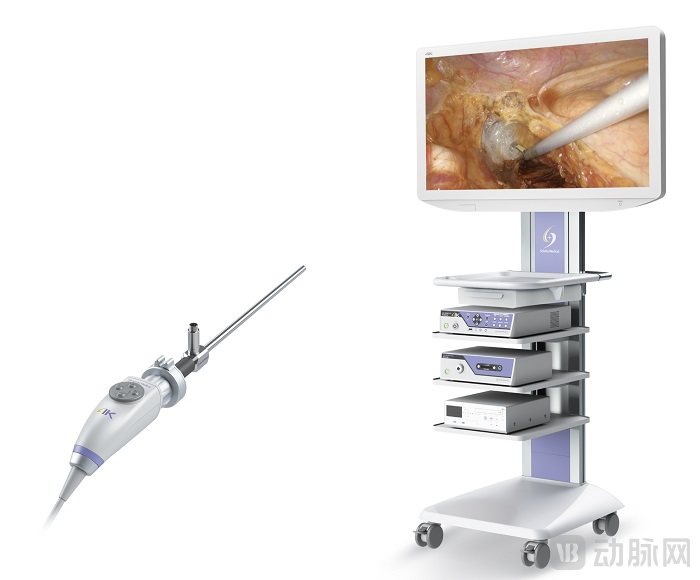
Scivita Medical 4K Ultra-HD Endoscopic Camera System
Scivita Medical’s pioneering “3D Image Imaging Device,” which converts 2D images to 3D, obtained NMPA and CE certifications in July 2018, and became the first Chinese-made 3D image imaging device approved for marketing by the U.S. FDA in September 2019. Its independently developed “4K Ultra-High-Definition Endoscopic Camera System” received NMPA certification in June 2019 and CE certification in July of the same year. In August 2020, the “4K Ultra-High-Definition Endoscopic Camera System” became the first 4K ultra-high-definition endoscopic product from China to obtain U.S. FDA clearance.
In the first half of 2021, Scivita Medical’s independently developed 4K rigid endoscopes for rhinology and arthroscopy, as well as its single-use electronic cysto-pyeloscopes, bronchoscopes, and hysteroscopes, all successfully obtained EU CE certification.
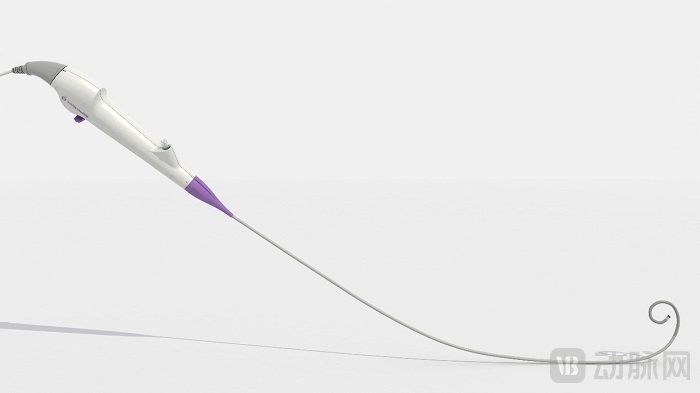 Scivita Medical Single-Use Electronic Cystoureteroscope
Scivita Medical is also continuously advancing its R&D layout for innovative products, such as binocular 3D fluorescence endoscopes, 4K fluorescence endoscopes, and other specialized optical imaging endoscopes. In terms of device miniaturization, Scivita Medical is developing an ultra-thin endoscope with a diameter smaller than that of a 0.5mm mechanical pencil lead.
To develop innovative products, companies must continuously pursue technological advancements, such as resolving transmission issues and camera light source challenges in endoscopic devices. In the more cutting-edge field of wireless transmission, Scivita Medical is also actively exploring new possibilities. Dr. Chen Dong expressed a certain degree of pride, stating that they are currently among the companies with the most comprehensive portfolio in the endoscopy sector.
“Without core technologies of their own, companies may only be able to imitate and replicate equipment from major manufacturers when clinicians’ needs change.”
For Dr. Chen Dong, who comes from a technical background, technology is undoubtedly the core of an enterprise. This emphasis on technology has driven significant investment in core transmission technologies and key components, enabling independent research and development to master the fundamental origins of these technologies. Only in this way can “Scivita Medical Technology benchmark its products against international giants, continuously refine them based on clinicians’ needs, and compete head-to-head with these major players.”
A Persistent Commitment: Products Aligned with Critical Clinical Needs
The factors that make one endoscope superior to another are never merely about simple parameter advantages, but rather whether it can address the actual challenges encountered in clinical practice. Dr. Chen Dong has repeatedly emphasized in interviews that imaging clarity and color fidelity are only the most basic standards; while most companies opt for parameter comparisons when benchmarking products, they often overlook issues arising in real-world applications.
For instance, with ultra-high-definition endoscopes, imaging design must account for the clinical environment and the specific details surgeons prioritize during procedures—such as whether their focus is on blood vessels or adipose tissue. How can these details be optimally rendered? How can edge clarity be enhanced for the surgeon’s view? Furthermore, given the inherent lack of light within the human body, several critical issues require careful consideration in endoscopic illumination design: how to calibrate light intensity to prevent thermal tissue damage; how to correct color deviation; how to manage specular reflections from internal tissues; how to accurately differentiate between blood, adipose tissue, and surgical gauze; how to mitigate light transmission loss; and how to optimize the effective information capacity entering the lens.
Factors affecting image quality can stem from multiple sources, including the lens’s inherent light transmittance, the presence of smoke or bleeding within the body cavity, signal attenuation during 4K image transmission, and interference from electrosurgical units, ultrasonic scalpels, monitoring instruments, and other devices used during surgery. These represent merely the fundamental requirements for a product. In clinical hospital settings, equipment wear and tear also pose significant challenges. How can uniform endoscopic illumination be maintained after thousands or even tens of thousands of surgical procedures? How can operational stability be ensured? These are urgent issues that need to be addressed.
“Even within the field of 4K ultra-high-definition endoscopy, there is still significant potential for advancement in imaging, chip technology, and optics. Over the next five to eight years, 4K ultra-high-definition endoscopes will become the mainstream products in the market,” pointed out Dr. Chen Dong. “Both physicians and patients will opt for superior products for surgical procedures. The future will not be an era defined merely by competing on technical specifications, but rather one that hinges on which solutions better meet clinical needs.”
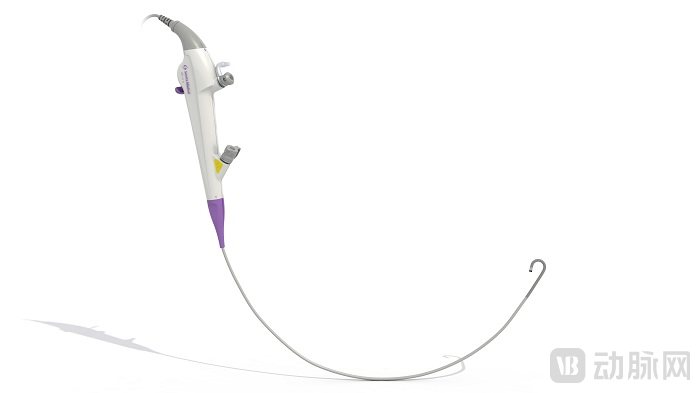
Scivita Medical Single-Use Electronic Bronchoscope
This principle applies equally to the field of single-use endoscopes. As early as a decade ago, Dr. Chen Dong ventured into the research and development of single-use endoscopes and has long been thoroughly familiar with the pain points and challenges associated with them. The critical clinical need addressed by single-use endoscopes is the prevention of cross-infection. Furthermore, against the backdrop of the COVID-19 pandemic, attention to single-use endoscopes from the broader community has been significantly heightened.
Contrary to the prevailing mindset among current manufacturers of single-use endoscopes, Dr. Chen Dong holds a more distinctive view: he believes that single-use endoscope products should be benchmarked against reusable endoscopes from major brands. Only when the operational performance and image quality of single-use endoscopes reach or even surpass those of reusable counterparts can companies unlock their growth potential. Medical practice is inherently a highly serious endeavor, and physicians will opt for superior surgical instruments and consumables to ensure safety and efficacy. If single-use endoscopes fail to deliver surgical outcomes comparable to those of reusable endoscopes, what rationale would clinicians have for adopting them?
Scivita Medical has also developed high-quality, cost-effective products in the field of single-use endoscopes. The term “high-quality” here refers to aspects such as image clarity, operability, and transmission performance, which meet or even exceed those of traditional reusable endoscopes. Previously, clinical experts conducted comprehensive evaluations of its single-use endoscopes through animal experiments and specialized testing equipment, ultimately concluding that the products are on par with imported alternatives.
Unlike the widespread acceptance of single-use endoscopes abroad, domestic clinicians in China still lack sufficient awareness of this technology. Therefore, Scivita Medical Technology Co., Ltd. plans to cultivate the market by collaborating with hospitals and medical associations to conduct academic training and physician education, thereby gradually enhancing clinical recognition.
Dr. Chen Dong also stated that single-use endoscopes and reusable endoscopes may not have a substitutive relationship in the future; rather, each will have its own specific areas of application. Furthermore, environmental pollution concerns associated with single-use endoscope products must be addressed. Measures such as recycling components that do not come into contact with the human body can be considered to further enhance environmental and cost controllability, thereby reducing the depletion of natural resources.
One Approach: Bringing Engineers to the Operating Table
The pursuit of independently developed technologies has also led Scivita Medical Technology Co., Ltd. to place great emphasis on talent development. Currently, the company employs dozens of engineers in China and Japan, who are primarily technical professionals with backgrounds in optical imaging and medical device consumables.
Dr. Chen Dong has a unique methodology for talent selection. His previous experience working at major tech companies has made him quite stringent in his hiring criteria, making it nearly impossible to find ready-made candidates who fully meet his requirements. Scivita Medical Technology Co., Ltd. has taken a different approach by focusing on cultivating highly malleable talent. After selecting individuals with some development experience (regardless of whether it is in the medical field), strong initiative, and abundant curiosity, Dr. Chen, in his capacity as CTO, provides them with training tailored to the company’s needs.
Training programs range from basic foundational instruction to specialized clinical knowledge in internal medicine, often spanning multiple disciplines. To help engineers gain a deeper understanding of their products, Scivita Medical Technology Co., Ltd. regularly invites experts in endoscopy and clinicians from various hospital departments to deliver lectures at the company. Engineers are also given opportunities to observe surgical procedures in hospitals.
“To compete with major brands in the international market, it is essential to integrate medical clinical needs based on a comprehensive understanding of technological prerequisites.” This emphasis on grasping and prioritizing clinical needs has led Scivita Medical Technology to pursue a path of integrating medicine and engineering. Dr. Chen Dong illustrated this point with an example.
In the field of laparoscopy, the use of electrocautery and ultrasonic scalpels often generates smoke, which can cause fogging of the lens. The conventional approach has typically been to employ intermittent operation to allow for smoke evacuation.
Engineers at Scivita Medical recognized this issue during surgical support and communications with physicians, and proposed a new solution: since smoke typically appears as white speckled pixels in imaging, they opted to process the image signals. Dr. Chen Dong recalls an instance when, during a clinical procedure performed by the department director, significant smoke initially obscured the view. However, after a simple one-click operation, the image became remarkably clear, leaving the department director momentarily stunned.
Their exploration and emphasis on the integration of medicine and engineering also indirectly reflect their commitment to training and practical application.

Scivita Medical's New Factory
Within the newly built factory of Scivita Medical, a training center has been constructed. For other startup companies, this is almost unimaginable. However, Dr. Chen Dong believes it is worthwhile. The training center will be equipped with various training facilities, an animal experimentation center, and a tiered conference room capable of hosting global surgical live broadcasts for 200–300 participants. In addition to internal training, the center also serves as a venue for external visits and training experiences, such as training physicians to understand and proficiently master the use of its products.
When Scivita Medical’s engineers developed a product but lacked clarity on its quality, the company would invite collaborating physicians to conduct on-site evaluations at its experimental center and provide suggestions for improvement. This approach significantly enhanced the reliability of its product development. Dr. Chen Dong even revealed that this practice drew from his experience working at a large corporation, where team members would sometimes serve as test subjects during the development of endoscopic products.
A Shift: The Market Is Heating Up, but Time Is Needed to Transition from Quantitative Growth to Qualitative Change
Amid the current fervor in the endoscopy field, Dr. Chen Dong has also provided a calm and measured analysis.
In his view, the market has been evolving with the emergence of new endoscopic technologies. However, these changes actually began in the early years of the 21st century, only to be overlooked by capital investors and the media at that time.
In recent years, with the emergence of single-use endoscopes, surgical robots, and 4K ultra-high-definition endoscopes, an increasing number of endoscopy companies have come into the spotlight for investors, leading to continuous growth in both financing amounts and the number of financing deals. Currently, while there has been an increase in technical personnel and innovative enterprises within the industry, it remains in a phase of quantitative accumulation rather than qualitative transformation.
To achieve a qualitative leap from quantitative accumulation, product quality must first be ensured. This requires domestic enterprises to reach, or even surpass, the standards of their international counterparts. Currently, Chinese-made endoscopes have stood out in certain clinical departments, with a small number ranking among the world’s leaders, though this progress is not yet comprehensive. Achieving this transformation will continue to require capital investment. During this process, funding will increasingly concentrate on leading enterprises, causing some companies to exit the market. Those possessing proprietary original technologies will survive, gradually build their own talent pipelines, and establish market recognition.
Scivita Medical is systematically advancing its sustained R&D investment, corporate system development, talent cultivation, marketing infrastructure, and commercial partnerships. Last December, Scivita Medical entered into a strategic cooperation agreement with Medtronic to collaborate on endoscopic devices, which underscores Scivita Medical’s inherent strengths.
Over the past period, Scivita Medical Technology Co., Ltd. also established the “West China–Scivita Intelligent Endoscopy Joint Innovation Center” with West China Hospital to conduct in-depth discussions and product improvements on endoscopes and related instruments. The hospital departments provide current clinical pain points, while Scivita Medical is responsible for providing solutions and facilitating medical-engineering translation.
Scivita Medical, in collaboration with the team led by Professor Zhang Shutian—President of the Digestive Physicians Branch of the Chinese Medical Doctor Association, former Chairman of the Digestive Endoscopy Branch of the Chinese Medical Association, and President of Beijing Friendship Hospital—successfully secured approval for its project, “Development of a Memory-Material-Guided Multidimensional Intelligent Imaging Cholangiopancreatoscope System,” as a Major Research Instrument Development Project under the National Natural Science Foundation of China. Furthermore, a series of collaborations with various hospitals are being actively advanced.
Dr. Chen Dong has a clear vision for future development. In the short term, it is essential to build a talent pipeline across all key functions, including R&D, regulatory affairs, quality assurance, manufacturing, and sales, while continuously expanding the product portfolio and accelerating the development of innovative products through medical-engineering collaborations. Ultimately, the goal is to establish a global presence, with plans to set up manufacturing facilities in Japan, Europe, and the United States as needed, thereby gaining deeper insights into local market demands and driving business expansion.
The current market remains dominated by a few major players, which he believes is advantageous for Scivita Medical in competing with these established giants. If the market were overly fragmented, it would be difficult to maintain a clear strategic focus. As competition intensifies, the pace of innovation in endoscopic products will accelerate, ushering in an era of rapid technological advancement. In his view, the future of the endoscopy field will trend toward greater specialization, with products becoming more focused on specific surgical procedures.
At the end of the interview, we asked Dr. Chen Dong what has sustained his passion for the endoscopy industry. He shared a brief anecdote: He had previously developed an endoscopic product designed for young children. As an engineer, he initially viewed it merely as a product. It was not until he observed a surgery in which a physician used his device to successfully treat a five-year-old girl that he was profoundly moved. He realized that an endoscope is not just a product, but a vital tool for healing patients and saving lives.
Guided by this mindset, he approached product development with prudence, constantly reflecting on whether a product still had room for improvement. Perhaps it is precisely in this way that Scivita Medical Technology Co., Ltd. has steadily advanced to where it is today.