

Abbott Achieves Over RMB 13 Billion in Sales with 11.9% Growth: How the Medical Nutrition Giant Drives High Growth in the FSMP Market

Abbott
Provider of Health Diagnostic Products and Health Diagnostic Management Solutions
133 years ago, a doctor established a pharmaceutical factory in Chicago, USA, where he began meticulously formulating and producing medications with the aim of providing more effective treatments for patients and physicians. The drugs he developed contained active substances derived from plants and herbs, and in its first year, the pharmacy’s sales reached $2,000.
This Ph.D. was Wallace C. Abbott, the founder of Abbott, now a healthcare giant. Under Dr. Abbott’s leadership, the company quickly rose to become one of the pioneering enterprises in the pharmaceutical industry. To this day, Abbott has become one of the Fortune 500 companies.
Twenty-two years ago, another leader took the helm at Abbott, shaping the company’s trajectory for the next two decades. This leader was Miles D. White, who was named the “World’s Best CEO” by Barron’s for eleven consecutive years and remains the only CEO from the healthcare industry to receive this honor. In 2020, Mr. White stepped down as Chief Executive Officer (CEO) and continued to serve as Executive Chairman of the Board. Robert B. Ford succeeded him as CEO.
Miles White transformed Abbott into a truly global enterprise, driving its market capitalization from approximately $75 billion at the time he took over to $149 billion. This figure excludes data related to AbbVie.
Since commencing continuous operations in China in 1988, Abbott has established its China headquarters in Shanghai, along with 23 offices, four manufacturing plants, and three R&D centers, employing more than 6,000 people. Anticipating transformations in medical technology, Abbott is addressing urgent healthcare needs across various regions and actively expanding its business development in the food for special medical purposes (FSMP) industry.
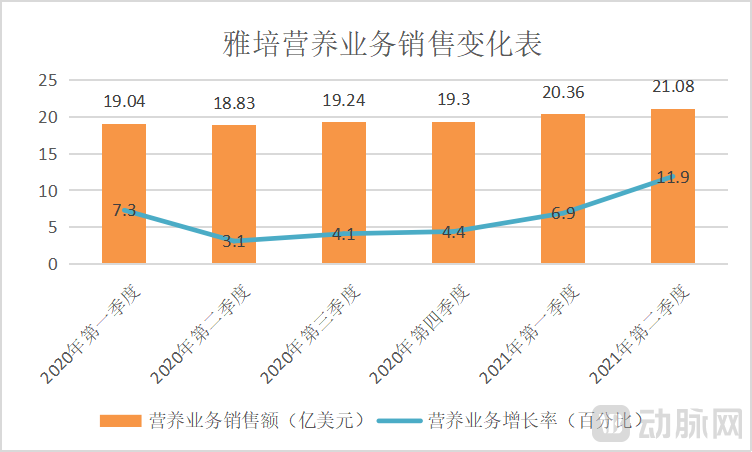
Abbott’s latest financial report shows that its sales in the second quarter of 2021 reached $10.2 billion, a year-on-year increase of 39.5%, with organic growth of 35.0%. Among them, nutrition sales were $2.108 billion, an increase of 11.9%, and organic food sales increased by 9.5%.
The financial report stated that double-digit growth in global adult nutrition led its sales performance. Driven by the strong performance of Abbott’s adult nutrition brand Ensure and its diabetes nutrition brand Glucerna, global adult nutrition sales increased by 18.2% on a reported basis and 15.6% on an organic basis.
Global pediatric nutrition sales grew 6.7%, with organic sales up 4.4%. Strong performance by Abbott’s market-leading toddler brands, Pedialyte and PediaSure, along with continued share gains in infant nutrition, drove an 8.9% increase in U.S. pediatric nutrition sales. Global nutrition sales rose 6.9% in the first quarter, with organic sales increasing 6.4%. Global adult nutrition sales grew 18.9% on a reported basis, with organic growth of 18.3%.
During Miles White’s tenure at Abbott, the company undertook large-scale divestitures and acquisitions in the pharmaceuticals, cardiovascular, and in vitro diagnostics (IVD) sectors, while continuing to advance its presence in the nutrition sector.
As early as August 2011, Abbott invested $230 million (equivalent to RMB 1.54 billion) in Jiaxing, Zhejiang Province, to establish a modern nutrition manufacturing facility. This marked Abbott’s largest investment project in China to date. The plant commenced operations in 2013 to provide premium nutritional products for infants and young children in China.
In 2016, Abbott’s China R&D Center, located in the Caohejing Hi-Tech Park in Shanghai, was officially inaugurated. Reportedly, the center represents a total investment of over US$30 million and comprises the Abbott Nutrition China R&D Center and the Abbott Diagnostics China R&D Center. It is Abbott’s only global R&D facility that integrates both its Nutrition and Diagnostics businesses.
This R&D center is currently one of Abbott’s five global nutrition research and development centers. With a team of over 50 researchers, it will primarily focus on six key areas upon its official launch: product introduction and development, foundational research in nutritional science, food safety analysis, clinical efficacy analysis, product packaging design, and consumer research.
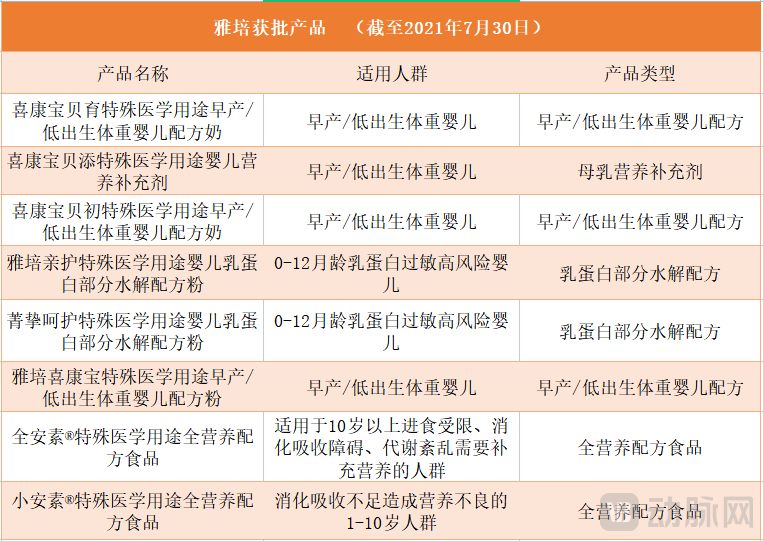
Its product, Ensure Complete Nutrition Formula Powder, was among the first to receive national registration as a complete nutrition formula food for special medical purposes. It meets the nutritional needs of individuals aged 10 and above who have limited food intake, digestive and absorptive disorders, or metabolic disturbances.
PediaSure can provide the nutrients necessary for the development of toddlers and children aged 1–10 years. It contains 27 vitamins and minerals, three types of proteins from both plant and animal sources, and is fortified with medium-chain triglycerides (MCTs). It meets the dietary nutritional needs of children aged 1–10 years who suffer from malnutrition due to inadequate digestion and absorption, thereby reducing malnutrition or the risk of malnutrition.
It is understood that Abbott also offers a comprehensive portfolio of medical nutrition products worldwide, dedicated to providing end-to-end medical nutrition support for perioperative patients, individuals in rehabilitation, and the elderly. Furthermore, to address the specific nutritional needs of special populations, Abbott provides specialized medical nutrition products for people with diabetes and will launch products tailored to other specific disease conditions.
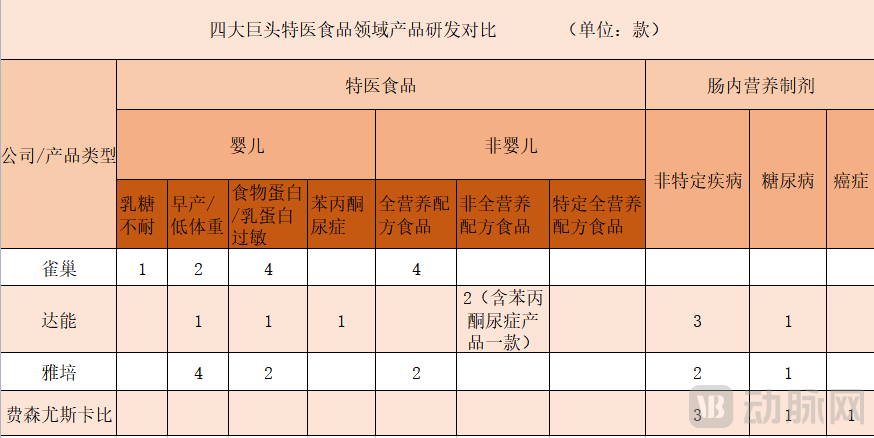
To date, Abbott has had eight foods for special medical purposes (FSMPs) approved through China’s national registration. These include the Similac series, Abbott Total Comfort, Similac Organic Protect, Similac, PediaSure, and Ensure. Among these, six are primarily intended for infants, one is designed for children aged 1–10 years, and one is targeted at individuals aged 10 years and older. Additionally, there are three enteral nutrition formulations: two are indicated for non-specific conditions, and one is formulated for individuals with diabetes.
VCBeat has compiled relevant data and found that Abbott has an extensive presence in both enteral nutrition formulations and foods for special medical purposes (FSMP).
In August 2016, Abbott partnered with Jinxiang Grand Pharmacy to establish the Abbott Comprehensive Nutrition Center, aiming to explore innovative marketing channels for foods for special medical purposes (FSMP). Both parties made significant efforts in promoting the center. In addition to designating dedicated areas within stores and leveraging large display windows and exclusive counters for promotion, they utilized advanced technologies such as holographic projections and immersive audio explanations. To disseminate knowledge related to FSMP, hospital experts were invited to conduct free lectures and voluntary consultation activities at the stores on an irregular basis.
In addition, the center periodically hosts large-scale marketing campaigns, consumer gift-with-purchase promotions, experiential marketing activities such as free product sampling, employee internal purchase events, and targeted WeChat message pushes to members. To provide consumers with a more intuitive product experience, both parties have also installed an ice cream machine at the center, where staff prepare ice cream on-site using Ensure powder and ice cream mix for in-store customers to sample free of charge.
In 2019, Abbott expanded into e-commerce channels by establishing a dedicated online store for specialized formula nutritional products and enabling cross-border purchases. According to data from JD.com, Tmall, and other platforms, Abbott’s monthly sales volume through online channels reached 15,000 units, making it the highest among the four major industry players in terms of online sales. By comparison, Nestlé recorded 13,000 units, Danone 8,000 units, while Fresenius Kabi, which only launched its online store in September 2020, achieved a monthly sales volume of merely 500 units.
Abbott's recent financial reports indicate steady growth in its nutrition business, with significant expansion since 2021.
In October 2020, Abbott was fined RMB 1.94807151 million for violating the Advertising Law and was ordered to cease publishing the advertisements in question and eliminate their impact within the corresponding scope. According to previous media reports, the advertisements involved video clips posted on Douyin (TikTok) that promoted Abbott’s medical food product, PediaSure, by leveraging a related film and its lead actor.
In accordance with Article 46 and Paragraph 1 of Article 16 of the Advertising Law of the People's Republic of China, advertisements for medical services, pharmaceuticals, medical devices, pesticides, veterinary drugs, and health foods, as well as other advertisements subject to review as required by laws and administrative regulations, shall undergo content review by the relevant authorities prior to publication. Furthermore, advertisements for medical services, pharmaceuticals, and medical devices shall not utilize advertising endorsers to make recommendations or provide certifications.
Since the revision and adoption of the Food Safety Law of the People's Republic of China in 2015, China has shifted the regulatory framework for Foods for Special Medical Purpose (FSMP) from a drug registration model to one that accords them the status of "food." The law mandates that FSMPs must be registered with the food and drug administration department under the State Council. This has ushered Chinese special foods—including health supplements, infant formula milk powder products, and FSMPs—into an era of comprehensive, science-based regulation, establishing a new paradigm of stringent oversight with distinct Chinese characteristics.
At the R&D stage, the National Food Safety Standard for Foods for Special Medical Purposes (2010) and the National Food Safety Standard for Infant Formula for Special Medical Purposes (2013) clearly specify the standards for food additives and nutritional fortifiers used in the development process, including the R&D standards for 13 essential vitamins and 12 essential minerals.
During the clinical stage, the General Rules for Formula Foods for Special Medical Purposes (2013) stipulate: “Specific complete nutritional formula foods require clinical trials, and the applicant shall entrust qualified clinical trial institutions to issue clinical trial reports. The clinical trial report shall include a complete statistical analysis report and data.” In the Good Clinical Practice for Clinical Trials of Formula Foods for Special Medical Purposes (Draft for Comments) drafted by the State Administration for Market Regulation, it is mentioned that clinical trials shall be conducted in accordance with the Good Clinical Practice for Clinical Trials of Formula Foods for Special Medical Purposes.
During the registration phase, the period for supplementing materials is six months. The product application and registration process for a developed food for special medical purposes (FSMP) generally takes one year, with registration procedures and application requirements being more stringent than those for conventional foods or health supplements. For FSMPs with specific complete nutritional formulas, clinical trial reports must be submitted, and the expected timeline can extend up to three years.
During the production phase, to regulate the manufacturing of foods for special medical purposes (FSMP), the State Administration for Market Regulation issued the Detailed Rules for the Examination of Production Licensing for Foods for Special Medical Purposes in 2016. These rules standardize requirements for FSMP enterprises regarding production premises, equipment and facilities, equipment layout and process flow, as well as personnel management and administrative systems.
During the distribution phase, the Interim Measures for the Administration of Advertisement Review of Drugs, Medical Devices, Health Foods, and Foods for Special Medical Purposes (2019) stipulates that: “Advertisements for foods for special medical purposes shall prominently indicate the applicable population,” “Not suitable for use by non-target populations,” “Please use under the guidance of a physician or clinical dietitian,” and “Advertisements for specific complete nutritional formula foods may only be published in medical and pharmaceutical professional journals jointly designated by the health administrative department and the drug regulatory department under the State Council.”
Article 19 of the Measures for the Investigation and Punishment of Illegal Acts Involving Online Food Safety (2017) stipulates that “specifically formulated foods for special medical purposes intended as complete nutritional formulas shall not be sold online.”
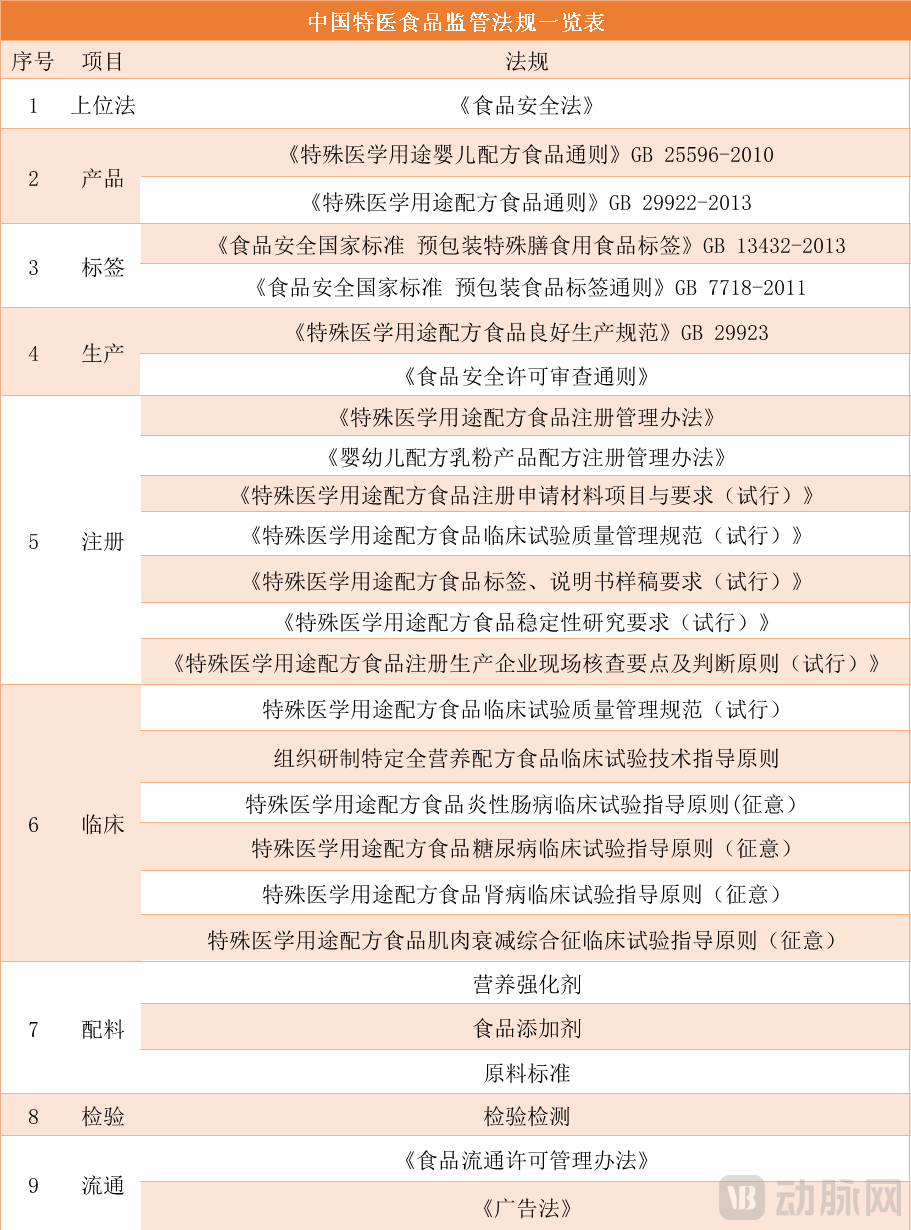
Over the past two years, foods for special medical purposes (FSMP) have witnessed rapid development in China, with the market gradually expanding. Relevant authorities have also introduced a series of measures to regulate the FSMP market, implementing stringent oversight throughout the entire product lifecycle. Companies entering the FSMP sector should pay close attention to these regulatory developments.
Abbott has established a comprehensive presence in both foods for special medical purposes (FSMP) and enteral nutrition formulations. However, its current investment in the FSMP sector remains relatively modest compared to its commitments in other healthcare segments. In contrast, Nestlé has entered the FSMP market with timely and substantial investments, Danone has responded promptly to developments in this field, and Fresenius Kabi has subsequently increased its focus on FSMP. Given these competitive dynamics, Abbott’s future strategic moves in the FSMP sector warrant close attention.