

Former Journalist-Turned-Entrepreneur Leads China's No.4 Medical Aesthetic Group Evercare to Hong Kong IPO
China’s RMB 100-billion medical aesthetics industry may soon welcome another listed company.
Recently, Beijing Yimeier Medical Technology Group Co., Ltd. (hereinafter referred to as “Yimeier Medical”) filed a prospectus with the Hong Kong Stock Exchange, seeking a listing on the Main Board of the Hong Kong Stock Exchange, with Haitong International serving as the sole sponsor.
As one of the earliest private chain groups engaged in the medical aesthetics industry in China,Founded in 1997, Yimeier Medical primarily provides non-surgical and surgical medical aesthetic services to users. Currently, it owns and operates nine medical aesthetic institutions in five cities across northern China., with five in Beijing, one in Tianjin, one in Qingdao, one in Jinan, and one in Xi’an.
Revenue data is a major highlight for Yimei Medical. The prospectus shows that,In 2020, Yimeier Medical’s medical aesthetic services revenue ranked first among all private chain medical aesthetic institutions in Northern China and fourth nationwide.
In terms of annual revenue, Yimeier Medical increased from RMB 661 million in 2018 to RMB 811 million in 2020, with a compound annual growth rate (CAGR) of 10.8%. The gross profits for 2019 and 2020 were RMB 381 million and RMB 435 million, respectively, with gross profit margins exceeding 50% in both years.
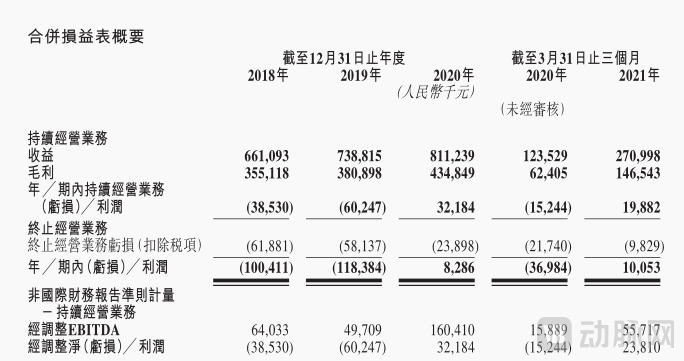 (Yimei Medical's Revenue Structure Source: Prospectus)
Moreover, the number of active customers at Yimeier Medical increased from 70,467 in 2018 to 86,629 in 2020, reaching 45,694 in the first three months of 2021.As can be seen, Yimeier Medical possesses considerable competitive advantages in terms of revenue and customer acquisition.
ButOn the other hand, Yimeier Medical has also been plagued by controversy.. For example, in 2019, Tianjin Yimeier Medical Plastic Surgery and Aesthetic Medicine Hospital Co., Ltd., a subsidiary of Yimeier Medical, was warned by the Market Supervision Administration of Hexi District, Tianjin Municipality, and fined RMB 230,000 for publishing illegal advertisements.
On one hand, it boasts solid operational capabilities; on the other, negative incidents occur from time to time. What predicaments does Yimeier Medical actually face? What is its business composition? What are the company’s core competitive barriers? In the medical aesthetics sector, what issues remain unresolved, and what new trends are emerging? To address these questions, VCBeat will next dissect Yimeier Medical’s prospectus and conduct an in-depth analysis.
The growth of Yimeier Medical has precisely aligned with the industry trend of China’s private medical aesthetics sector, from its nascent stage to rapid expansion.
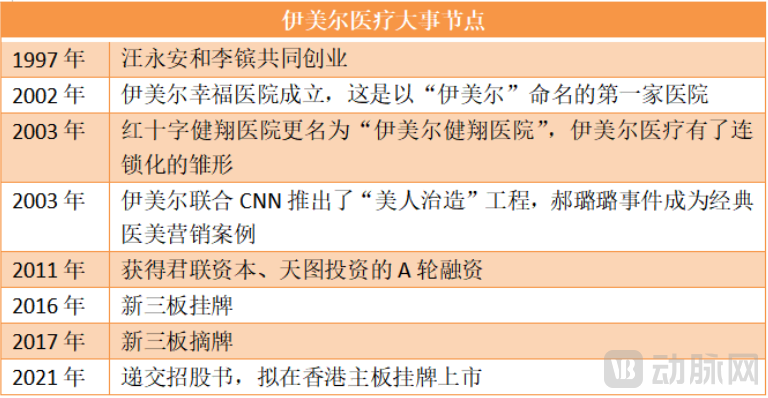
In 1997, when the Chinese market had yet to develop a clear understanding of cosmetic procedures such as plastic surgery, Wang Yongan, a former journalist, learned about a device known abroad as the laser intense pulsed light skin therapy system, which was purported to enhance skin radiance and clarity.Wang Yongan, with his keen business acumen, recruited Li Bin, a former journalist, to introduce this device to the Chinese market under the name “Photorejuvenation Therapy Device.”
The first step in launching their startup was to sell these devices, so the two founders adopted the “most grueling and rudimentary” approach: braving the elements as they visited countless areas, large and small, to bet on the probability of securing customer partnerships.The revenue model involves leasing equipment to hospitals and sharing the proceeds with them.Two months later, the project began to generate profits.
But the good times were short-lived, as national policies nearly brought their entrepreneurial venture to a halt: A policy issued by the Ministry of Health prohibited social capital from participating in the construction of Grade 3A hospitals, thereby rendering unsustainable the business model that generated revenue by leasing services from public hospitals.
In the face of setbacks, Wang Yong’an and Li Bin did not give up. Since collaboration with public hospitals was not feasible, they directly established their first medical aesthetics institution—the Red Cross Jianxiang Plastic Surgery Hospital—in Dongsheng Township, Haidian District, Beijing. In 2002, Wang Yong’an and Li Bin founded Yimeier Happiness Hospital near the East Third Ring Road in Beijing, which was the first hospital branded under the “Yimeier” name. In 2003, the Red Cross Jianxiang Hospital was also renamed “Yimeier Jianxiang Hospital.”At this point, Yimei Medical had taken on the initial form of a chain operation.
However, just as Yimeier Medical was on the verge of rapid development, the SARS outbreak that swept across China once again disrupted the company’s momentum: due to hygiene control measures, the hospital’s patient volume plummeted to its lowest point.
At this juncture, the two former journalists once again rose to the challenge.To attract customers, Wang Yongan and Li Bin meticulously orchestrated the “Hao Lulu Incident: China’s First Artificial Beauty.”Specifically, in that year, Yimei'er Medical partnered with CNN to launch the “Beauty Creation” project, which garnered widespread social attention and generated significant buzz by providing full transparency into the plastic surgery procedures of Hao Lulu, a widely publicized case of surgical enhancement, thereby raising public awareness of the plastic surgery industry.
According to reports at the time, Hao Lulu underwent cosmetic procedures on more than ten areas of her body in 2003 alone, including double eyelid surgery, eyelash extensions, rhinoplasty, mandibular angle contouring, breast augmentation, breast lift, buttock augmentation, skin rejuvenation, hair removal, and liposuction. The series of surgeries lasted nearly 200 days and cost over RMB 300,000.
The marketing results were highly effective. Although revenue data for Yimeier Medical, the campaign planner, for that year is unavailable, taking a cosmetic surgery hospital in Jinan as an example, it performed only 3 to 5 surgeries per day when it was first established in 2000. Benefiting from the Hao Lulu incident, the hospital’s average daily surgical volume rose to 5–10 procedures that year, surging to as many as 25 during holidays—a several-fold increase.
Following its initial breakthrough, Yimei Medical’s development proceeded smoothly. In 2005, Yimei Medical partnered with the Yanran Angel Foundation, established by celebrity Li Yapeng, significantly enhancing its brand image. In 2010, Yimei Medical joined forces with Dongtian Styling to establish the Yimei-Dongtian Club, marking its entry into the fashion industry.
Driven by its rapid growth and keen grasp of industry trends, Yimei Medical has also begun to attract the favor of mainstream capital.Since 2011, Yimei Medical has undergone several rounds of financing, garnering favor from numerous institutions including Legend Capital, Tiantu Capital, Warburg Pincus, CDH Investments, Joy Capital, and Huatai Zijin.
To date, Yimeier Medical has grown into a large-scale chain group integrating clinical practice, scientific research, and teaching in the field of plastic and aesthetic surgery. Its services span multiple areas of medical aesthetics, including plastic and aesthetic surgery, body contouring, injectable treatments, laser-based cosmetic procedures, traditional Chinese medicine (TCM) aesthetics, oral care, and hair transplantation.
Notably, prior to this IPO attempt, Yimeier Medical had listed on the New Third Board in October 2016 but delisted in March 2017, less than six months later.
It is not difficult to see that Yimeier Medical has experienced the entire period from the inception to the accelerated development of China’s private medical aesthetics industry. Despite encountering various challenges along the way, including regulatory oversight, the SARS outbreak, and delisting, it has withstood these trials and continues to thrive today.
The medical aesthetics industry has long been regarded as a golden track within the sector.
This is becauseWith the rise of the “beauty economy,” the medical aesthetics market is continuously expanding.According to the "2020 Medical Aesthetics White Paper" by the Gengmei App, China's pure medical aesthetics market reached RMB 197.5 billion in 2020, accounting for 17% of the global market, with the potential to become the world's largest medical aesthetics market. Consequently, service providers downstream in the medical aesthetics industry can also benefit from the growth dividends of the entire sector.
In addition to a sufficiently large market size and strong growth potential, medical aesthetic service providers also enjoy high gross profit margins.The prospectus shows that Yimei'er Medical's gross profit in 2020 was RMB 435 million, with a gross margin of 53%.
From the perspective of revenue structure, Yimeier Medical’s revenue is primarily derived from two sources: first, non-surgical medical aesthetic services, including injectable aesthetic treatments and energy-based aesthetic treatments; second, surgical medical aesthetic services, mainly comprising cosmetic plastic surgery procedures.
Specifically,Non-surgical medical aesthetic servicesAccording to the prospectus, from 2018 to 2020, Yimeier's revenue from injectable aesthetic medical services amounted to RMB 329 million, RMB 362 million, and RMB 353 million, respectively, accounting for 43.6% to 49.1% of total revenue; revenue from energy-based aesthetic treatments totaled RMB 103 million, RMB 137 million, and RMB 232 million, respectively, representing 15.6% to 28.6% of total revenue.
As of March 31, 2021, Yimei'er Medical recorded 63,542 visits for injectable aesthetic treatments, with an average cost of RMB 2,007 per visit; and 41,022 visits for energy-based aesthetic treatments, with an average cost of RMB 1,841 per visit, placing its average revenue per user (ARPU) at a relatively affordable level.
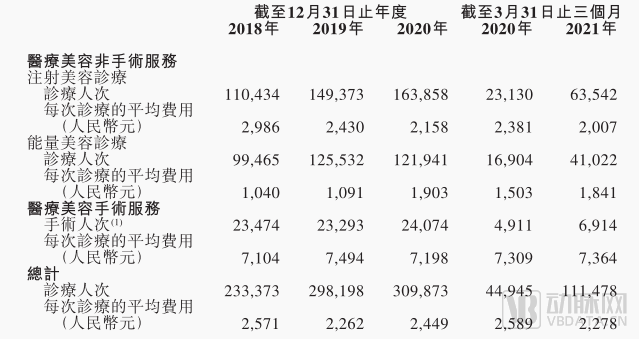 (Image source: Prospectus)
Surgical Medical Aesthetic ServicesFrom 2018 to 2020, revenues were RMB 178 million, RMB 187 million, and RMB 184 million, respectively, accounting for 22% to 27%. Among these, the number of aesthetic surgical procedures was 6,914, with an average cost per visit of RMB 7,364, placing its pricing at the high end within the overall service portfolio.
As can be seen from the above, non-surgical medical aesthetic services have demonstrated a stable growth trend and account for the majority of revenue.This is because surgical procedures carry high risks and low repurchase rates, making it difficult to establish a robust business model loop. In contrast, non-surgical treatments, which offer higher customer stickiness and lower risks, help companies achieve sustained business growth.
Therefore, in summary, medical aesthetics chain institutions with high gross margins and high growth potential represent a sound business model. However, a closer examination reveals that Yimeier Healthcare’s sales and marketing expenses in 2018, 2019, and 2020 were RMB 199 million, RMB 219 million, and RMB 187 million, respectively, indicating significant fluctuations.
The prospectus stated that the company’s sales and marketing expenses are expected to continue increasing as its business expands and it proceeds with planned investments in diversified promotional and marketing channels.
It is well known that, in order to capture a larger market share, most medical aesthetics brands choose to continuously increase marketing expenditures to purchase traffic or package new product concepts to attract more consumers.Amid fierce competition and a market rife with mixed-quality providers, this approach has trapped an increasing number of medical aesthetics brands in the marketing pitfall of “traffic is king.”
In addition to marketing costs consuming profits, the scarcity of qualified physicians is another critical pain point for medical aesthetics service providers. According to the White Paper on “Underground Black Injections” in China’s Medical Aesthetics Industry, there are approximately 17,000 compliant practitioners in China’s medical aesthetics sector, while the number of illegal practitioners exceeds 150,000. This means that nine out of every ten practitioners are “black doctors,” posing a serious threat to the industry’s development.
The underlying reason for this is that,It takes ten years or more to train a competent physician, resulting in a highly constrained supply.However, the rapid growth in demand for medical aesthetics has led to a severe imbalance between supply and demand, resulting in frequent market irregularities.
To this end, according to the prospectus, Yimei Medical’s approach involves building a high-caliber physician team through a multi-tiered physician training program. As of March 31, 2021, the company had 157 licensed physicians, including 63 attending physicians, 19 associate chief physicians, and 6 chief physicians, with more than 65% being internally trained.
Furthermore, in terms of products and technology, Yimeier has established communication and interaction with renowned medical aesthetics institutions, industry associations, and providers of medical aesthetic devices and consumables from mature overseas markets, including the United States, France, Israel, Japan, and South Korea.
Certainly,One fact that cannot be ignored is that Yimeier Medical and its subsidiaries have repeatedly received regulatory penalties., the reasons for the penalties included illegal publication of medical advertisements, employment of non-health technical personnel to engage in medical and health technical work, and use of medical devices without obtaining medical device registration certificates. These issues have also become controversial aspects of Yimei'er Medical.
It is important to recognize that medical safety risks directly impact brand image, while brand reputation and influence constitute one of the core competencies of medical aesthetic service institutions. Therefore,For Yimeier Medical, in addition to facing external competitive pressures and continuing to bet heavily on marketing, it must also strengthen internal security risk prevention and improve management.All of these factors contribute to significant uncertainty in the medical aesthetics chain business.
Over the past year, medical aesthetics companies have embarked on their paths to initial public offerings.
In addition to Yimeier Medical, which is currently pursuing an initial public offering (IPO), Aimei Ke, known as the “Moutai of medical aesthetics,” has recently filed its prospectus for a secondary listing in Hong Kong. Meanwhile, Chuanger Biotech, the parent company of Chuangermei, which specializes in collagen-based products, has also launched an IPO bid on the STAR Market. The medical aesthetics industry is poised for a surge in IPO activity.
The underlying reason is that,The Medical Aesthetics Industry Is Undergoing Structural Changes: The latest data report from Medical Aesthetics Industry Insider reveals that the composition of medical aesthetics consumers—including their age, educational background, spending power, and industry awareness—has undergone subtle yet significant changes in recent years.
From the perspective of user demographics, medical aesthetics consumers are exhibiting a dual trend of rejuvenation and maturation. Specifically, users aged 20–25 account for 37%, while those aged 26–30 represent 26%. In other words,The younger generation, represented by those born in the 1990s and 2000s, has become the mainstream consumer base for medical aesthetics.
From the perspective of user demographics, in addition to young women primarily concentrated in first- and second-tier cities, young users from third- and fourth-tier cities, as well as postpartum mothers, the silver-haired demographic, and male consumers, are increasingly joining the ranks of aesthetic medicine consumers. Secondly, demand for service categories is becoming more diversified, with treatments such as anti-aging, hair care and transplantation, body contouring, and intimate plastic surgery gaining significant popularity. Thirdly, regarding consumer psychology, beyond self-gratification, factors such as career advancement and marriage prospects have also become key drivers for many individuals seeking aesthetic procedures.
It is also worth noting that men are increasingly participating in aesthetic medicine consumption. Reportedly, the primary demographic for male aesthetic procedures currently includes celebrities and entertainers, white-collar professionals, university students, and successful middle-aged individuals.
It is foreseeable that China's medical aesthetics industry will still have enormous room for growth in the next three to ten years,First movers undoubtedly gain a competitive edge; therefore, many institutions have chosen to go public to secure financing and accelerate their market expansion.
Of course, as the consumption structure evolves, new entrants still have opportunities. However, in this process, those who can identify the industry’s most critical pain points and provide the best solutions will achieve success more rapidly.
In this process,Only enterprises that truly prioritize the interests of beauty seekers can reap the greatest rewards.
References:
1: “Yimei'er: The Conspiracy in the Plastic Surgery Industry” iHeima
2: “Yimeier, the ‘Hype King’ of the Medical Aesthetics Industry, Plagued by Crises After Failing Its IPO Valuation Adjustment Mechanism Bet?” Shuguan Qilu
3: “The ‘Qualified Simpleton’ Yimei: Winning Over the Market with Strength” China Economic Development Network