

Reading Papers and Understanding Science: The Shortcut to Healthcare Investing — A Conversation with Matrix Partners China's Eric Yu
After careful consideration, Zhang Ying, Founding Managing Partner of Matrix Partners China, has decided to launch a new column titled “Revisiting Our Partners.”
First, through these partners, we can gain insight into Matrix Partners’ strategic layout and thinking across various sectors. Matrix has consistently prioritized empowering young talent and supporting entrepreneurs by “offering help without causing disruption.”
Secondly, over the past three-plus years, we have witnessed each partner’s continuous self-iteration, which may offer some valuable insights for everyone’s entrepreneurial journey and professional experience.
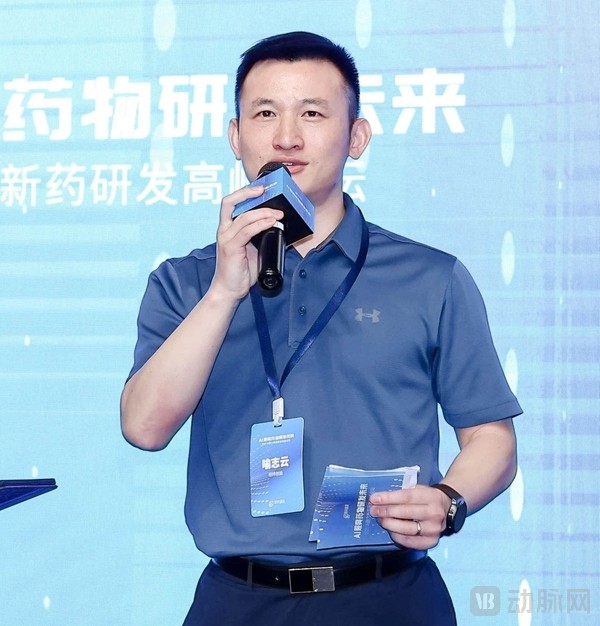
Matrix Partners China Partner, Yu Zhiyun
Today, we begin with Partner Eric Yu (hereinafter referred to as “Eric”), who is primarily responsible for the healthcare sector at Matrix Partners China. His coverage spans innovative drugs, medical devices, diagnostics, healthcare services, and more. Notable portfolio companies include Peijia Medical, InnoCare Pharma, Adimab, RemeGen, Genetron Health, Huahao Zhongtian, Bota Bio, Kemai Diagnostics, Lanyu Biologics, Huahui Anjian, New Vision Medical, Youfu Clinic, Ambrx, Senti Bio, Rootpath, PAQ Therapeutics, Nuance, and Xinian Gene.
We chatted with him about investment perspectives, personal insights, and cognitive reflections. Below, enjoy:
1Q: Take a quick second to think—which project immediately comes to mind?
ERIC: One second is far too short. I immediately thought of Peijia Medical, which we have been continuously investing in since its early stages. Peijia was relatively obscure in its early days, and it was only two years ago that the market began to recognize its value. This project fully validates our worth as early-stage investors who can spot hidden gems. Our first investment yielded a return of approximately 30x, ultimately satisfying all parties involved.
At this stage, I believe synthetic biology holds significant potential within the innovative drug sector. We have made substantial investments and strategic arrangements in this area, including in companies founded by technical experts such as Bota Bio, RootPath, and Senti Bio. Although synthetic biology has become a highly popular field today, we positioned ourselves in this space two years ago.
2Q: At the fund level, Matrix Partners China has numerous performance records, ranging from industry teams to individual partners, often requiring highly intuitive data to demonstrate their achievements. While this undoubtedly places significant pressure on everyone, such pressure is also necessary to drive individual growth. Looking back from today’s perspective, how do you evaluate your own performance over the past three to five years?
ERIC: In 2020, we invested in a significant number of projects, with investments in the healthcare sector accounting for more than one-third of the entire fund’s portfolio. From a broad perspective, we focused on innovative drugs, medical devices, diagnostics, and digital health. At a granular level, our investments covered areas such as COVID-19 vaccines, cell and gene therapies, antibody-drug conjugates, synthetic biology, antibody-based therapeutics, next-generation small molecules, and surgical robots.
Antibody-drug conjugates (ADCs) represent a highly promising new direction. RemeGen, one of our portfolio companies, was the first pharmaceutical enterprise in China to receive approval for an ADC drug. Furthermore, we have invested in Sinocelltech and Ambrx; their current data are among the best worldwide.
In some emerging fields, for instance, we recently invested in PAQ Therapeutics, a company built upon a world-class discovery by a professor at Fudan University, whose paper was also published in Nature. While PROTACs have become increasingly popular for protein degradation, this Fudan professor harnessed the natural autophagy mechanism to degrade proteins.
What are the benefits of autophagy? First, it can degrade a wide variety of proteins; furthermore, it can also degrade lipids and other non-protein macromolecules. You can view PROTAC technology as a specialized “off-road vehicle,” whereas autophagy-based technology is more akin to an “all-terrain vehicle,” capable of navigating any type of terrain. Most notably, this approach represents an original innovation by Chinese professors that has gained worldwide recognition. We are honored to have participated in incubating this company, which is truly exciting.
3Q: Many cross-industry sectors often hold hidden treasures, yet entering these fields typically involves high cognitive barriers. Have you ventured into such interdisciplinary areas? How can one find the right entry points?
ERIC: This is a very interesting topic. Many recent product breakthroughs are indeed driven by interdisciplinary approaches. We have invested in several such companies, for example, Vazyme Bioscience, which leverages semiconductor technology to achieve breakthroughs in gene sequencing. In fact, many technologies used in the medical field are not the most cutting-edge, as they must undergo various certifications. Once certified, these products face no shortage of demand. Therefore, the medical industry does not adopt new technologies as rapidly as the tech sector.
For instance, traditional gene sequencing relied on optical signals, whereas semiconductor technology has long since transitioned to purely electrical signals. Therefore, WanZhong YiXin aims to eliminate optical pathways altogether. By leveraging the mass-production capabilities of semiconductors, this approach enables the development of products that are compact, highly accurate, and cost-effective.
For investors, it is essential to continuously acquire new knowledge and cultivate the ability to learn by reading research papers and understanding scientific literature.
Q4: With the increasing concentration of market leaders and intensifying competition in the investment industry, how can one maintain a cognitive edge? How do you strategize for the next 1–3 years?
ERIC: Maintaining a significantly leading cognitive edge has indeed become more difficult than before. For instance, when we invested in Peijia Medical five years ago, we studied its U.S. counterparts and found that some companies had already made substantial progress. At that time, we concluded that minimally invasive surgery would inevitably replace open-chest surgery. Back then, few investment firms conducted research on overseas comparable companies to inform their investment decisions.
However, in the current innovative drug sector, everyone is focusing on overseas markets, and a large number of life sciences PhDs from top global universities have entered the investment field. Five years ago, after we invested in Peijia Medical, the company remained relatively quiet in the market for another three to four years before gaining widespread recognition. I believe such a long window of opportunity no longer exists in today’s market.
To maintain a leading edge in insight, it is essential not only to engage in high-frequency exchanges with outstanding founders but also to learn from academia. In the healthcare sector, this involves reading the latest research papers and identifying opportunities from cutting-edge scientific discoveries worldwide. Accordingly, we are building a highly specialized team composed of PhDs with complementary academic backgrounds spanning chemistry, biology, pharmacy, and clinical medicine—a configuration that closely resembles that of an innovative drug startup team.
We frequently hold group discussions, much like the seminar meetings during my doctoral studies, where we collectively analyze and discuss interesting literature to uphold our academic spirit. Only by consistently excelling in these practices can we stay ahead of the curve and identify promising startup teams and investment opportunities.
In an increasingly hyper-competitive market, having a strong team has become ever more critical. I avoid micromanagement within my team, empowering everyone to pursue the projects they are passionate about and genuinely enjoy. We do not hire individuals who lack enthusiasm for the industry and require constant prodding—like being whipped from behind—to make progress. Our current team boasts complementary academic backgrounds, enabling each member to perceive insights that others might miss. I believe this is the optimal outcome, as opposed to everyone seeing the same things, which actually implies that much is being overlooked.
5Q: Investment has always been cyclical, and we are currently in a period of relatively high valuations. Do you worry about suddenly waking up one night to find yourself at the peak of the cycle?
ERIC:“I think it’s fine. This is precisely the advantage of early-stage investing: with a substantial safety cushion, there’s less need to worry about bubbles, which may be a greater concern for later-stage investors. Although we have passed on some projects that were too expensive, valuation is not our primary consideration. Instead, we focus more on the team’s execution capabilities and whether they can ultimately deliver the products they initially promised.”
A common pitfall for early-stage investors is being constrained by past experiences. I sometimes joke that older individuals may gradually become less suited for investment roles. The core principle here is to avoid being bound by entrenched habits and to keep pace with the times. While the current era has indeed driven valuations to high levels—and we are willing to pay a premium for high-quality companies—we also place significant emphasis on keeping valuations within a reasonable range. More importantly, it is essential to carefully assess fundamentals, determine whether there is genuine innovation, and evaluate the potential for sustainable future growth.
6Q: No one is born with a liking for risk. Do you believe you can coexist well with risk? What type of risk do you find most intolerable?
ERIC: I’ve always been quite bold, and I still am. I believe that to succeed in early-stage investing, one must be an optimist by nature; only then can you sustain your efforts over the long haul. I think individuals like DZ and DS are also optimists at their core. When investing in early-stage ventures, it’s impossible to avoid all risks. A company isn’t necessarily safe just because it has gone through several rounds of financing; nothing is certain until a final exit via IPO is achieved.
We strive to ensure that every decision we make—whether it’s pulling the trigger on an investment or committing capital—is as sound and reliable as possible. Our team has become increasingly precise in its industry assessments. What I find intolerable now is misjudging people—for instance, overlooking integrity issues or obvious character flaws. It is particularly frustrating when we attempt to help such individuals, only to have them reject our advice. To be clear, I am not referring to the kind of persistence seen in scientists, nor to a lack of social polish; rather, I am talking about situations where there is a fundamental lack of transparency within the company.
7Q: How to quickly judge a person? When did you start feeling that you have an intuition for judging human nature?
ERIC: I think it’s largely a matter of having more experience and exposure. In your interactions with the other party, you observe their responses to various matters—for instance, whether they follow through with concrete actions after you discuss an issue with them. This year, we had several projects where we initially held their products in high regard, but as our engagement deepened, we found that the teams fell significantly short of our standards in terms of mindset and execution capability, leading us to ultimately walk away from all of them.
In the early stages, I used to reject founders based on their ventures; for instance, I would pass if their team was not strong enough. However, I often found later that as long as the founder is exceptionally capable, they will promptly pivot once they realize their initial approach is unviable. Leveraging their industry influence and personal charisma, they can gradually recruit top-tier talent from the sector, significantly increasing the probability of success. This has led me to a key reflection: in early-stage investing, if you encounter an outstanding founder, you should invest even if you are not fully convinced by their current business idea.
8Q: Some people say that Zhang Ying is a very domineering boss, even to the point of being described as “ruthless.” How do you usually interact with her?
ERIC: It seems this might be a tricky question. I think Zhang Ying’s assertiveness is, in many cases, rather rational. Her assertiveness often pushes me to my limits, helping me reach the next level.
Indeed, on several occasions, his assertiveness enabled us to turn the seemingly impossible into reality. I believe a good leader should empower every team member to become their best self; pushing individuals to their limits is also a shortcut to growth.
Of course, there are rare instances where I do not agree with his assertiveness, which has led to debates between us. DZ is often receptive to feedback. For example, we once had intense discussions regarding the qualities that founders in the innovative drug sector should possess. I have always believed that individuals who excel in scientific research tend to be less socially polished than internet entrepreneurs, as scientific inquiry requires single-minded dedication and deep focus. Therefore, I am more tolerant of certain imperfections in founders within the innovative drug field. In contrast, for other niche sectors, such as in vitro diagnostics (IVD), I expect founders to be highly well-rounded: they must develop high-quality products, excel in sales, and effectively manage teams, requiring a comprehensive skill set. The requirements vary across different industries.
Therefore, differing viewpoints should certainly be voiced; I believe the culture at Matrix Partners China is one that embraces diverse perspectives. Of course, whether one appears assertive or not, the saying still holds: “Strength in oneself leads to strength in all.” As an investor, if you have backed a promising venture, even the founder’s assertiveness can be seen as “gentle strength.” Conversely, if performance is lackluster and self-reliance is insufficient, even a gentle-natured founder will ultimately come across as “forceful gentleness.”