

Fujifilm Strengthens Smart Healthcare with Integrated Imaging-Centric Solutions
Medical imaging equipment constitutes the largest segment of China's medical device market, accounting for approximately clinically90%of diseases require the use of medical imaging equipment for diagnosis and treatment, with the generated data accounting for more than70%. However, the extensive coverage and large data volume also create challenges for processing and application, making it difficult for hospitals to explore the value of imaging data and giving rise to new demands for efficient image processing and operational management.
Recently, the 2021 China Hospital Information Network Conference and International Medical Information Technology and Product Exhibition (CHIMA 2021), hosted by the Professional Committee on Hospital Information Management of the Chinese Hospital Association, was held in Qingdao, Shandong Province. Fujifilm (China) Investment Co., Ltd.’s Medical Network Products Division made its debut with a brand-new medical imaging solution, aiming to address the aforementioned challenges faced by hospitals.
Over the past two decades, Fujifilm has gradually transformed from a “traditional” photographic film manufacturer into a diversified, technology-driven innovative enterprise, progressively establishing a diversified business portfolio spanning healthcare, materials, imaging, and other sectors.
At this year’s CHIMA, the Fujifilm booth, themed “Innovation Without Bounds, Intelligence Igniting the Future,” showcased advanced applications of its comprehensive smart healthcare solutions in the two key areas of “Smart Imaging” and “Smart Hospital.” Medical informatics solutions on display included the SYNAPSE VNA medical imaging data platform, the “Fuyi Ruiying” cloud film system, the SYNAPSE 3D three-dimensional image post-processing system, and SYNAPSE PACS 5. Amid the trend toward intelligence, Fujifilm is striving to lead the smart transformation of radiology departments.
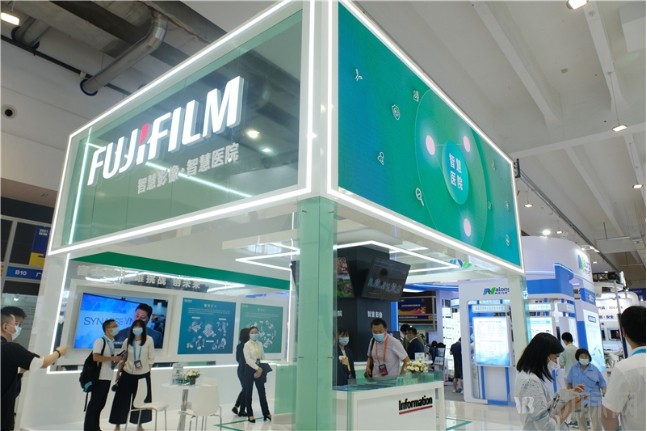
Fujifilm’s Smart Imaging and Smart Hospital Solutions Debut at CHIMA 2021
Deepening Strategic Presence in the Healthcare Sector
Over the past six months, Fujifilm Holdings Corporation has undertaken a series of major initiatives. On April 15 this year, Fujifilm unveiled its latest medium-term management plan, “VISION2023,” announcing $11 billion in growth investments over three years. The announcement was accompanied by adjustments to the company’s management structure, with Teiichi Goto, formerly head of Fujifilm’s global healthcare business, appointed as President and CEO. It is understood that Mr. Goto previously oversaw the development of Fujifilm’s healthcare operations in China.
Previously, the Fujifilm Group completed its acquisition of Hitachi’s diagnostic imaging business. The newly established company “Fujifilm Healthcare,” formed by Hitachi to inherit these operations, has officially become a wholly-owned subsidiary of the Fujifilm Group. This acquisition has created strong complementary synergies between the two parties, expanding Fujifilm’s medical business portfolio to include a comprehensive range of products such as CT and MRI systems, X-ray imaging systems, ultrasound diagnostic equipment, endoscopes, in vitro diagnostic systems, and PACS.
By integrating its proprietary image processing technologies and AI big data solutions with its products, Fujifilm enhances clinical diagnosis and care quality while creating new value. Additionally, it provides comprehensive one-stop solutions tailored to the specific needs of healthcare institutions.
Furthermore, Fujifilm plans to restructure its business divisions into four major segments: Healthcare, Materials, Business Innovation, and Imaging. This indicates that Fujifilm will continue to deepen its strategic presence in the healthcare sector over the long term. By leveraging the Group’s technologies, products, and services, it aims to provide more comprehensive and higher-quality solutions, thereby contributing to the advancement of medical care and the maintenance and improvement of people’s healthy lives.
Driven by Clinical Needs: A Dual Approach of Smart Imaging and Smart Hospitals
Medical imaging is another sector that has rapidly undergone digitalization, following the traditional imaging industry. The immense opportunities embedded in smart hospitals are impossible for any medical imaging equipment manufacturer to ignore; therefore, establishing a presence in smart imaging and smart hospitals has become Fujifilm’s preferred path for transformation and development.
So, how exactly does Fujifilm achieve intelligent empowerment through its solutions? And what support can it provide for the implementation of medical diagnosis and treatment services in clinical practice? During CHIMA 2021, Mr. Wang Zhen, General Manager of the Medical Network Products Division at Fujifilm (China), was interviewed exclusively.
Smart Imaging: Empowering In-Hospital and Out-of-Hospital Image Data Processing and Applications
After years of development, Fujifilm has secured a significant position in China’s medical imaging market, particularly in digital radiography (DR) and endoscopy, thereby granting it a distinct advantage in the development of its smart imaging business.
In the realm of smart imaging, Fujifilm primarily creates more intelligent medical imaging platforms for large tertiary hospitals and other institutions with substantial software and hardware capabilities. This is achieved by organically integrating advanced IT technologies—such as the internet, Internet of Things (IoT), sensors, chips, and algorithms—with its years of accumulated expertise in medical imaging modalities, including X-ray, MRI, CT, ultrasound, and optical imaging.
To address the challenges of processing massive volumes of imaging data in large-scale healthcare settings, Fujifilm showcased its SYNAPSE PACS 5, SYNAPSE VNA medical imaging data platform, SYNAPSE 3D three-dimensional image post-processing system, and the “Fuyi Ruiying” cloud film system. These solutions cover the entire workflow of imaging data acquisition, analysis and organization, and end-user applications, providing substantial support for hospital data management, clinicians’ diagnostic work, and patients’ medical care experience.
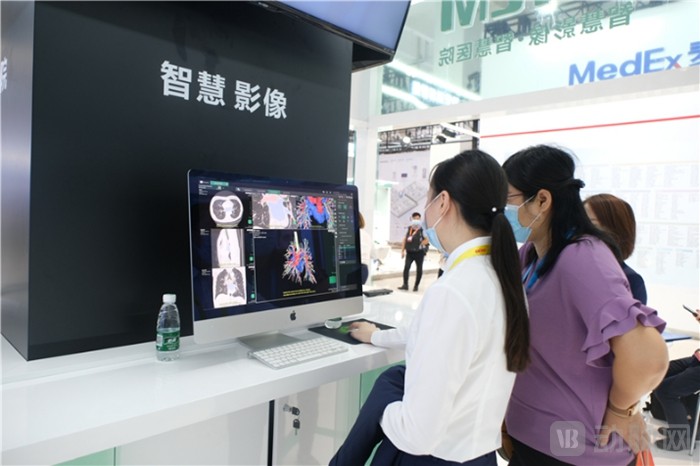
Fujifilm Smart Medical Imaging Platform Debuts at CHIMA 2021
Fujifilm is also continuously increasing its investment in AI applications. It is understood that Fujifilm has developed an open AI medical imaging platform called “REiLI,” which can integrate AI products developed in-house or by third-party companies. When applied in clinical settings, the platform can accurately identify organ shapes after imaging examinations and detect and annotate areas that differ from normal tissue structures. Based on the detected features, it classifies patients according to disease type and anatomical region. REiLI can also list potential disease conditions for patients based on its database, enabling radiologists to make diagnoses more effectively.
Looking ahead, Fujifilm will continue to build a smart medical imaging platform centered on its Smart Imaging Cloud. This platform integrates massive data storage, online image viewing, information sharing, remote diagnosis, imaging collaboration, tiered diagnosis and treatment, and AI-assisted diagnosis into a unified system embedded within physicians’ workflows, thereby truly benefiting both doctors and patients.
Smart Hospital: Achieving Multi-Point Interconnectivity Inside and Outside the Hospital
Over the past three decades since Chinese hospitals entered the stage of informatization, their overall service levels and operational efficiency have significantly improved. In recent years, with the deepening integration of technologies such as the Internet, artificial intelligence, and the Internet of Things into the healthcare sector, smart hospitals have emerged.
In the development of China’s smart hospitals and smart healthcare, with informatization at its core, the market growth of traditional medical informatics products such as Hospital Information Systems (HIS) and Electronic Medical Records (EMR) has slowed. The next phase of hospital construction, clinical research needs, and the introduction of new technologies will drive the medical informatics market toward more comprehensive smart solutions.
Fujifilm closely follows China’s policies on smart hospitals and the trends in hospital information technology development, providing comprehensive smart hospital solutions to meet diverse needs across various stages of smart hospital construction. Centered on the core philosophy of “patient-centricity, service-oriented approach, and management support,” Fujifilm will fully leverage technologies such as IT, IoT, and AI to facilitate effective interaction and communication among hospitals, physicians, nurses, patients, suppliers, government agencies, public health institutions, and community services, thereby optimizing patient care processes and delivering intelligent healthcare services.
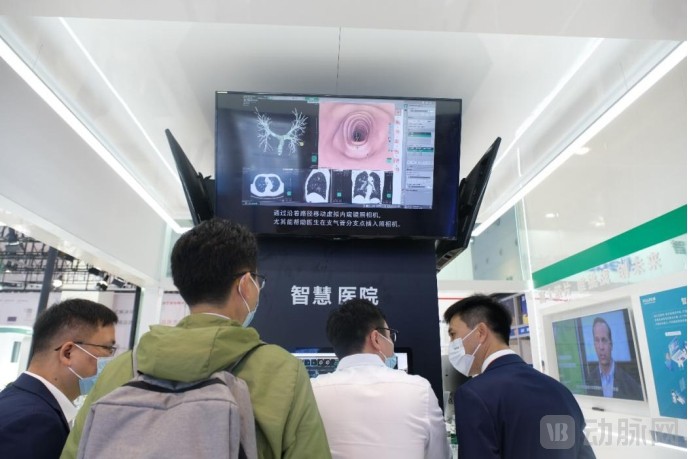
Overall, Fujifilm has not only leveraged technology to perform data analysis, processing, and structuring for medical imaging, but has also designed comprehensive solutions tailored to clinical scenarios and customer needs. By connecting all stakeholders involved in the medical diagnosis and treatment process, Fujifilm has achieved intelligent service delivery.
Dual-Pronged Strategy and Open Collaboration: Fujifilm’s Next Move
An overview of the product portfolio and solutions showcased by Fujifilm at this exhibition reveals that the company is primarily integrating its internal resources around medical imaging processing. Fujifilm also has its own strategic plans for future development in the healthcare sector.
First, we will vertically deepen product value by continuously advancing the further penetration of medical informatics solutions, represented by SYNAPSE PACS, into both in-hospital and out-of-hospital settings as well as clinical applications.
Second, we will horizontally expand the scope of application. Rather than solely providing imaging data management products to hospitals, we will also develop comprehensive solutions tailored to the needs of other regional-level projects. In this process, Fujifilm will maintain an open development stance, collaborating with domestic hospitals and integrating with other products to jointly build a portfolio of smart imaging and smart healthcare solutions that better meet clinical needs.
Under the two production lines, what kind of posture can Fujifilm present in technology and medicine? Everything is worth looking forward to.