

SmartNucl Biopharma: China's First Innovative Radiopharmaceutical Company Files IPO Prospectus with Integrated Theranostic Pipeline
SmartNuclide
Radiopharmaceuticals Developer for Tumors
For over a decade, no new radiopharmaceuticals have been approved in China, yet clinical demand from nuclear medicine departments has continued to grow. For instance, prior to iodine-131 therapy for differentiated thyroid cancer, serum thyroid-stimulating hormone (TSH) levels must be elevated. Multiple domestic and international guidelines strongly recommend recombinant human TSH (rhTSH) as an alternative to thyroid hormone withdrawal. However, the absence of marketed rhTSH products in China has forced thyroid cancer patients to continue undergoing the more burdensome regimen of thyroid hormone withdrawal.
Dr. Xu Tao, Founder of SmartNuclideDuring an informal conversation with the chairman of the Nuclear Medicine Branch of the Chinese Medical Association in the early years, I learned about this significant demand within clinical nuclear medicine departments. At that time, Dr. Xu Tao was serving as the R&D Team Leader and Assistant to the President at Alphamab Oncology, a well-known pharmaceutical company, where he led multiple antibody drug modification projects and related regulatory submissions. Recognizing the tangible clinical needs in nuclear medicine and the promising prospects of radiopharmaceuticals, Dr. Xu Tao and Dr. Xu Ting, Chairman of Alphamab Oncology, established Suzhou Smart Nuclear Biological Pharmaceutical Technology Co., Ltd. (hereinafter referred to as “SmartNuclide”) in 2015.
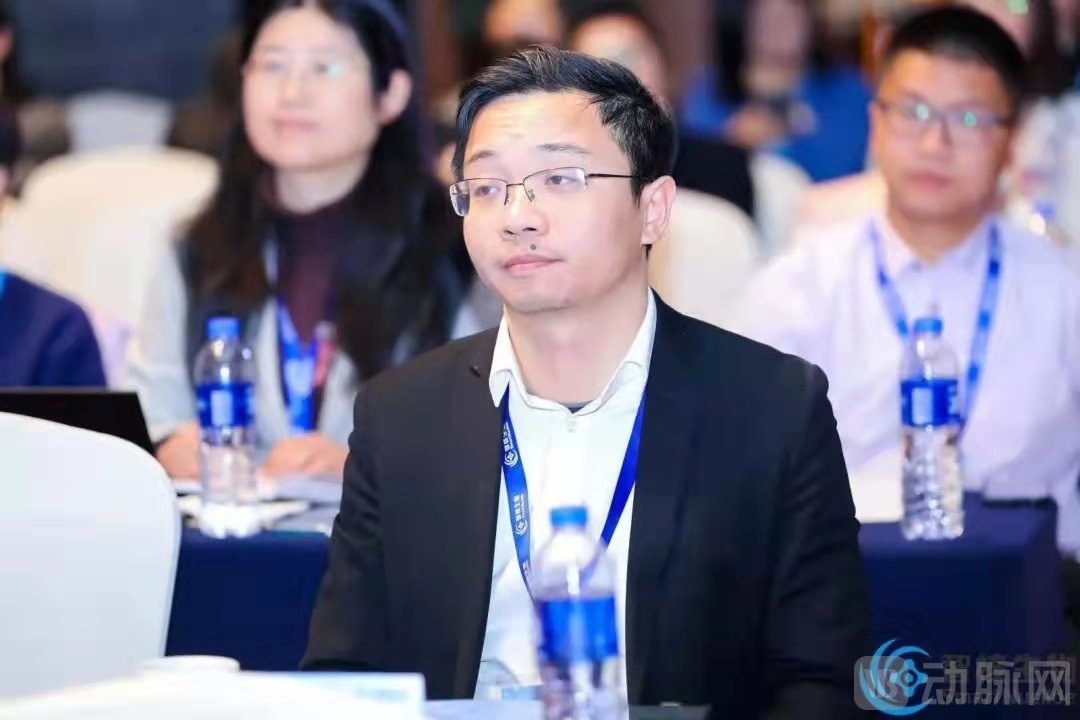
Dr. Xu Tao, Founder of SmartNuclide
SmartNuclide is one of the few nuclear medicine innovative pharmaceutical companies in China focused on the research and development of radiopharmaceuticals. It specializes in discovering and developing innovative biological drugs for tumor imaging and tumor therapy, bringing new hope to cancer patients. SmartNuclide owns a radionuclide-protein conjugation platform and a single-domain antibody development platform. Multiple products are under investigation, including recombinant human thyrotropin and whole-body PD-L1 expression radioimaging agents, covering various fields such as thyroid cancer, breast cancer, and tumor immunology.
Dr. Xu Tao, the company’s founder, holds a key position at Alphamab Oncology and previously served as Founder and CEO of Panomics Bio, where he led the establishment of a leading domestic metabolomics technology service and clinical development application platform. He also formerly served as Project Leader at the Shanghai Human Genome Center – South, where he spearheaded the National High-Tech R&D Program (863 Program) project and completed the development of GLAD, an automated genome analysis and annotation software system.
1Entering Nuclear Medicine via Recombinant Human Thyroid-Stimulating Hormone: Completing Phase III Clinical Trials and Preparing for BLA Submission
Since its establishment, SmartNuclide has taken the lead in strategically aligning its pipeline to address key pain points in nuclear medicine. Specifically, prior to the clinical use of iodine-131 for treating differentiated thyroid cancer, the company has developed relevant pharmaceutical agents capable of elevating serum TSH levels in patients, thereby establishing a clinical development pipeline for recombinant human thyrotropin (rhTSH), andPatient enrollment for the Phase III clinical trial was completed in the second half of 2020, and the company expects to submit a Biologics License Application (BLA) this year.。
Since the beginning of the 21st century, the incidence of thyroid cancer in China has surged dramatically, growing at an average annual rate of approximately 20%. It has become the fastest-growing malignant tumor, with about 224,000 new cases diagnosed each year, accounting for roughly 40% of global new thyroid cancer cases. Among these, differentiated thyroid cancer (DTC) constitutes approximately 95% of all thyroid tumors, with recurrence and metastasis rates nearing 30%, posing a significant risk of multiple recurrences.
Accordingly, the demand for iodine-131 (I-131) therapy in the treatment of thyroid cancer continues to grow steadily. Prior to administering I-131 therapy, clinicians must implement TSH suppression withdrawal protocols to elevate the patient’s serum TSH levels to those required for effective I-131 uptake (>30 mU/L), thereby enhancing the iodine avidity of thyroid tissue. However, stimulating pituitary TSH secretion relies on the negative feedback mechanism of hormonal regulation, which typically involves withdrawing thyroid hormone replacement for 3–4 weeks to stimulate the pituitary gland. This approach inevitably increases the risk of patients developing symptoms associated with hypothyroidism.
Therefore, SmartNuclide has independently developed recombinant human thyroid-stimulating hormone (rhTSH) capable of directly elevating patients’ TSH levels to above 30 mU/L. This rhTSH preparation is also strongly recommended by multiple domestic and international guidelines as a substitute therapy during thyroid hormone withdrawal.
As a glycoprotein drug, recombinant human thyroid-stimulating hormone (rhTSH) involves complex manufacturing processes, significant R&D challenges, and high technical barriers. Currently, there are no comparable marketed products in China. SmartNuclide is the first pharmaceutical company in China to develop rhTSH. The company has adopted a pre-filled syringe formulation with a stable manufacturing process, and its pharmacokinetics (PK), safety, and pharmacodynamics are highly similar to those of the originator drug, Thyrogen. At present, Thyrogen faces difficulties entering the mainland Chinese market due to manufacturing process issues, presenting SmartNuclide with an opportunity to overtake competitors.
2Radioactive Imaging Agents + Radioactive Anti-Cancer Drugs: A Dual-Pronged Approach to Deepening Expertise in Nuclear Medicine
Currently, radiopharmaceuticals in China remain a vast blue-ocean market, buoyed by a series of favorable policies, including deregulated approval processes and increased allocation of large-scale medical equipment.
In the field of nuclear medicine, SmartNuclide possesses four integrated technology platforms that combine nanobodies with radionuclide labeling: a nanobody screening and discovery platform, an in vitro characterization platform, a nanobody radionuclide labeling platform, and an in vivo characterization platform. Leveraging its globally leading nanobody-based radiopharmaceutical technology platform, SmartNuclide has systematically established a presence in multiple areas of tumor immunotherapy.Radiological DiagnosisandTreatmentProduct.
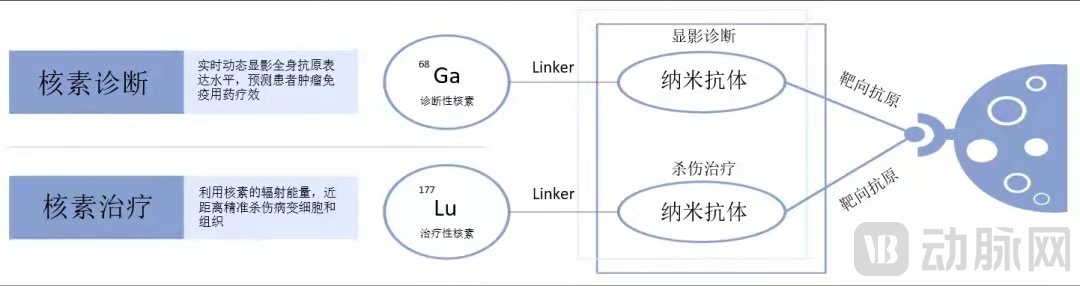
Dr. Xu Tao explained to VCBeat that SmartNuclide’s nuclear medicine strategy is analogous to that of antibody-drug conjugates (ADCs), with the toxin molecule linked via a linker replaced by a radioactive isotope. Depending on the type of isotope used, SmartNuclide categorizes its pipeline primarily into two classes: radiopharmaceutical imaging agents for tumor diagnosis and therapeutic radiopharmaceuticals for tumor treatment.
For example, when a specific monoclonal antibody binds toGallium-68 (Ga-68) IsotopeWhen conjugated, it can serve as a nanobody-based imaging agent targeting the PD-L1 antigen, which corresponds to SNA002, a pipeline candidate developed by SmartNuclide. This agent can guide medication administration during PD-1/L1-targeted antibody therapy, effectively bind to PD-L1 without competing for the binding epitopes of existing therapeutic PD-1/L1 antibodies, achieve imaging within 1–2 hours, clearly distinguish between PD-L1-positive and PD-L1-negative tumors, and demonstrate a high tumor-to-background ratio.
It is reported that SmartNuclide has submitted the pre-IND application for its drug SNA002, and has alreadyJiangsu Institute of Nuclear Medicine (The Only Key Laboratory of Nuclear Medicine under the Ministry of Health)Collaboration, inNuclear medicine Q1 journal "Journal of Nuclear Medicine" (IF: 7.354)Publish related articles.
Furthermore, the application of Gallium-68 (⁶⁸Ga) isotope labeling enables the development of nanobody imaging agents targeting the CD8 antigen. Serving as a whole-body tumor-infiltrating lymphocyte (TIL) imaging agent, this approach can also significantly distinguish between CD8-positive and CD8-negative tumors. Currently, SNA006, a drug candidate developed by SmartNuclide based on this principle, is undergoing its first-in-human clinical trial.
Compared to contrast agents, tumor therapeutics developed based on radioisotopes present higher technical barriers. Radionuclides induce the radiolysis of water molecules through the emission of alpha (α) and beta (β) particles, generating reactive oxygen species (ROS) that damage tumor DNA. Meanwhile, radiation emitted from one cell can also kill neighboring cells, thereby eliminating both surrounding tumor cells with negative target expression and cells within the tumor tissue. This demonstrates the substantial clinical anticancer value of radiopharmaceuticals. Internationally, radiopharmaceuticals have also proven their unique therapeutic mechanisms; for instance, Lu-177 PSMA has significantly improved overall survival and progression-free survival in patients with prostate cancer.
In China, SmartNuclide has also conducted radiopharmaceutical research and development based on this principle. The company choseLu (Lutetium) 177As a radionuclide label, we are exploring its potential in tumor ablation through radioactivity, with corresponding clinical pipelines strategically laid out in the oncology field, and preclinical studies are actively underway.
Radiopharmaceuticals are rare in China. SmartNuclide has secured a first-mover advantage and demonstrated originality in this field. The company has established deep collaborations with multiple universities, research institutes, and hospitals, including the Jiangsu Institute of Nuclear Medicine, Soochow University, and Shandong Cancer Hospital. It has founded the Collaborative Innovation Center for Radiopharmaceuticals, participated in the National Science and Technology Major Project on "Major New Drug Development," and ranked among the top tier of the nuclear medicine industry.