

Shen Zhi Medical Technology Files IPO Prospectus: Pioneering Digital Pathology and AI-Driven Full-Cycle Health Management
Pathology was once referred to as “the foundation of medicine” by William Osler, the “Father of Modern Medicine.” As a “bridge discipline” between basic and clinical medicine, and as the “gold standard” for diagnosing the vast majority of diseases, its importance is self-evident.
However, this science, which can elucidate the essence of diseases and further explore the patterns of disease occurrence, has long been marginalized in clinical practice.“The 2019 National Pathology Quality Report” shows that China has an average of only 0.55 pathologists per 100 hospital beds, and no province, autonomous region, or municipality directly under the central government meets the minimum requirements for pathology department construction in China.
Imbalance between supply and demand leads to structural disequilibrium. Not onlyPathology staff are generally operating under excessive workload, making it difficult to improve quality control and diagnostic standards in pathology departments.
On the other hand,Uneven Distribution of Pathology Resources(The number of pathologists in secondary hospitals is insufficient; among hospitals with fewer than two pathologists, tertiary public hospitals account for 18.3%, whereas secondary public hospitals account for only 69.2%),The prolonged training cycle for pathologists, the shortage of talent, and the advancement of tiered diagnosis and treatment policies are intertwined in conflict.
The pathology field has clearly defined pain points.The rise of digital technology offers a remedy to this challenge.。
Taking artificial intelligence as an example, this technology with deep learning capabilities can rapidly and standardly process medical images, outline and render suspicious areas, and provide diagnostic recommendations. Specifically in the field of pathology, the application of AI technology can improve the work efficiency and detection accuracy of pathologists to a certain extent, further enabling high-quality medical resources to reach grassroots levels and empowering primary healthcare facilities.
Since 2019, the consecutive regulatory approvals of AI diagnostics companies’ products have further bolstered confidence in this sector.
Shanghai Shenzhi Medical Technology Co., Ltd. (hereinafter referred to as “Shenzhi Medical”), established in August 2017, is a company that leverages digital pathology as its entry point and utilizes advanced technologies and algorithms to provide intelligent diagnosis and treatment solutions.Shenzhi Medical leverages AI and data-driven approaches to enable refined, whole-course disease management, enhancing diagnostic and treatment efficiency while improving health outcomes.
Although it has not been established for long, Shenzhi Medical has its own insights into smart healthcare—Leveraging disease progression data and medical big data algorithms, we achieve refined, intelligent whole-course management that integrates assisted diagnosis, assisted treatment, and smart follow-up. By providing more specialized and precise IT-enabled specialty care services, we help patients consult efficiently and recover effectively.
Based on this framework, in addition to its pathology workflow management software, AI-driven provincial/municipal pathology data centers, specialized transplant disease databases and intelligent diagnostics, early-stage cancer treatment protocols, intelligent pharmacopoeia, and digital pathology remote viewing and annotation systems, as well as other intelligent software and hardware products, Shanghai Shenzhi Medical Technology Co., Ltd. has independently developed and launched “Smart Specialized Diseases” (an AI-powered diagnosis and treatment platform for transplant and oncology specialties) and “Smart Health” (a comprehensive health management service featuring individual health profiling, health status assessment, and critical illness screening/risk early warning).
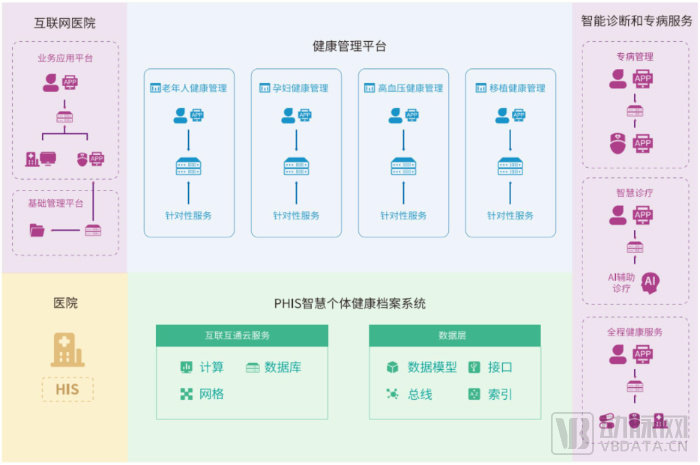
Meanwhile, Shenzhi Medical also possesses proprietary large-scale datasets, including diagnostic rules, knowledge graphs, treatment protocols, and customer information, as well as capabilities in building smart internet hospitals and providing intelligent enhancement technologies and solutions.
It is evident that the competitive advantage of Shanghai Shenzhi Medical Technology Co., Ltd. lies in its understanding of smart hospitals and its construction of related business chains.
Taking its core product, the pathology management system, as an example, In response to the current "data silo" phenomenon in hospitals and pain points such as the difficulty in quantifying the experience of pathologists, Shenzhi Medical’s pathology management system has first achieved seamless integration with the hospital’s HIS. The pathology department can extract patient information from the HIS or electronic requisition forms. After pathologists review the content of the pathology reports, diagnostic information is sent back to the HIS system, where it is displayed as pathology reports for clinicians to access.
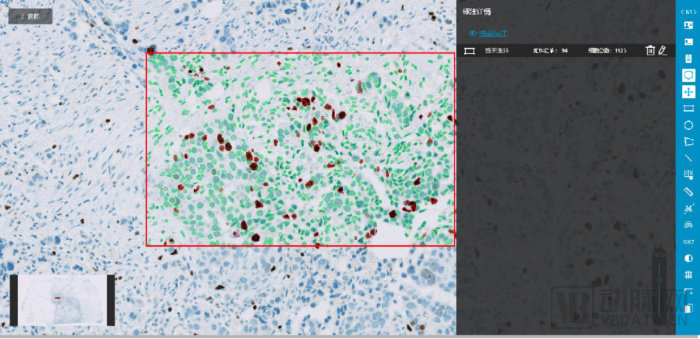
Prior to the issuance of diagnostic results, the pathology management system can transmit corresponding case status updates (e.g., registered, specimen collected, preliminary review completed, secondary review completed, report delayed with reasons) to the Hospital Information System (HIS), enabling clinicians to monitor the workflow status of each case within the pathology department. This effectively enhances the management level of pathological medical information and provides robust capabilities for the collection, storage, processing, retrieval, and data exchange of both patient clinical information and administrative data.
Furthermore, the pathology system also provides query and statistical analysis of quality control indicators (specimen standardization fixation rate, HE staining slide excellence rate, immunohistochemical staining slide excellence rate, intraoperative rapid pathological diagnosis excellence rate, histopathological diagnosis timeliness rate, cytopathological diagnosis timeliness rate, internal quality control pass rate for various molecular pathology tests, external quality assessment pass rate for immunohistochemical staining, external quality control pass rate for various molecular pathology tests, cytological pathological diagnosis quality control compliance rate, concordance rate between intraoperative rapid diagnosis and paraffin-embedded diagnosis, clinical diagnosis concordance rate, etc.).
Third, from specimen registration and collection to slide preparation and scanning, pathologists can perform all operations using pathology workflow management and quality control software. The advantage of this system lies in its ability to manage data for scanned digital pathology images within the Digital Pathology Image Management System. Furthermore, by leveraging AI-assisted diagnostic systems and structured pathological knowledge bases, physicians can directly view pathological information for various diseases on the AI-powered digital pathology review platform. The system also automatically generates quantitative pathological analysis reports and electronic pathology reports to assist clinicians in formulating diagnostic plans.
Finally, pathologists can provide feedback and annotations on the analysis reports generated by the system, thereby further enhancing the diagnostic accuracy of the system through AI training.
Currently, Shenzhi Medical primarily serves Zhongshan Hospital of Fudan University, Shanghai Pulmonary Hospital, Shanghai Public Health Clinical Center, Shanghai Children’s Medical Center, Heze Municipal Hospital, and other institutions.
During the collaboration with Shanghai Public Health Clinical CenterShanghai Shenzhi Medical Technology Co., Ltd. identified that the hospital’s existing physical examination and pathology systems were unable to meet the growing demands for data processing; there was a need to support online operations of the internet hospital; and internal system interfaces were disorganized, making management difficult and hindering integration with new business systems. By upgrading and transforming the hospital’s legacy systems, Shenzhi Medical provided end-to-end, integrated solutions for intelligent physical examinations, smart pathology, and internet hospital services. Through a unified data service interface platform, the company standardized intra-hospital data, thereby fulfilling the hospital’s requirements for informatization development.
To address the demand for informatization in regional pathology, Shanghai Shenzhi Medical Technology Co., Ltd. has established a unified artificial intelligence (AI) platform for pathology across regional hospitals. By leveraging deep learning, intelligent annotation, and intelligent recognition technologies, the company provides AI-assisted diagnostic support for pathology reports at municipal-level hospitals within the region. This initiative enables interoperability and shared access to pathology reports among municipal hospitals and facilitates the development of an AI-driven research platform based on pathological data.
Shanghai Shenzhi Medical Technology Co., Ltd. offers a wide range of other business services.At its core, it is pathology-centric and driven by smart health management, positioning the company itself as a “toolkit” for smart hospital construction to multidimensionally address the challenges of hospital informatization.
Leveraging its core business, technological expertise, and data assets, the company has developed KuPath, an intelligent pathology assistant. By constructing a vast knowledge base for differential diagnosis of disease pathology and a case library based on real-world patient data from hospitals, KuPath provides pathologists with reliable diagnostic knowledge and supports clinical diagnosis and medical education. Additionally, driven by AI and data, the company has created Maiya – Intelligent Health Management, a patient-centric, fully automated, end-to-end patient follow-up management system that precisely maps individual health profiles within the PHIS framework. While enabling real-time monitoring of patient indicators throughout the entire course of disease to assist physicians in efficient diagnosis and treatment as well as refined, full-course follow-up management, the system delivers precise, continuous, and customized health management services to users.
From AlphaGo’s 4–1 victory over world Go champion Lee Sedol in 2016, to a cervical cancer screening robot outperforming ten pathologists with 100% accuracy in 2019, humanity’s exploration of artificial intelligence has never ceased.
Riding the wave of technological advancement, a large number of enterprises have emerged. However, figuring out the right path forward and clarifying the key points in building medical scenarios may be the critical factors determining whether technology can effectively empower the industry.
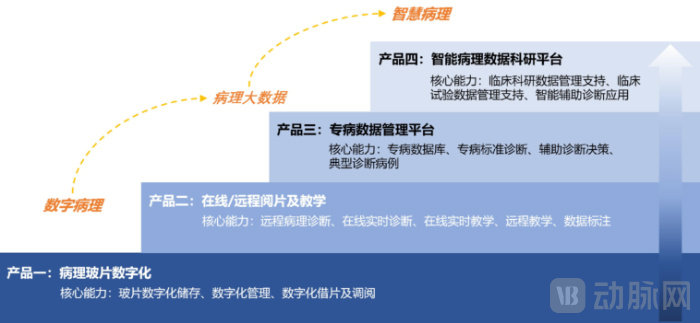
Unlike some other companies, Shenzhi Medical is driven by artificial intelligence and data. Starting from the ground up, it focuses on building foundational capabilities and meticulously decomposing and structuring its business operations. This approach enables the business to expand in a modular fashion to other diseases, further penetrate grassroots healthcare levels, and enhance the company’s influence.
How far can this company, which follows its own growth logic, go? Let’s wait and see.