

Seizing the $1.4 Trillion Opportunity: How to Capture Growth in China's Exploding Wellness and Elder Care Market
The Elderly Care Industry Is a Major Sector.
According to the results of the Seventh National Population Census, China’s total population reached 1.41 billion, with 190 million people aged 65 and above, accounting for 13.5%—an increase of 122 million compared to 1991. Based on international standards, a proportion of 7%–14% of the population aged 65 and above indicates mild aging, 14%–20% indicates moderate aging, and 21%–40% indicates severe aging.This means that China is on the verge of moderate population aging.
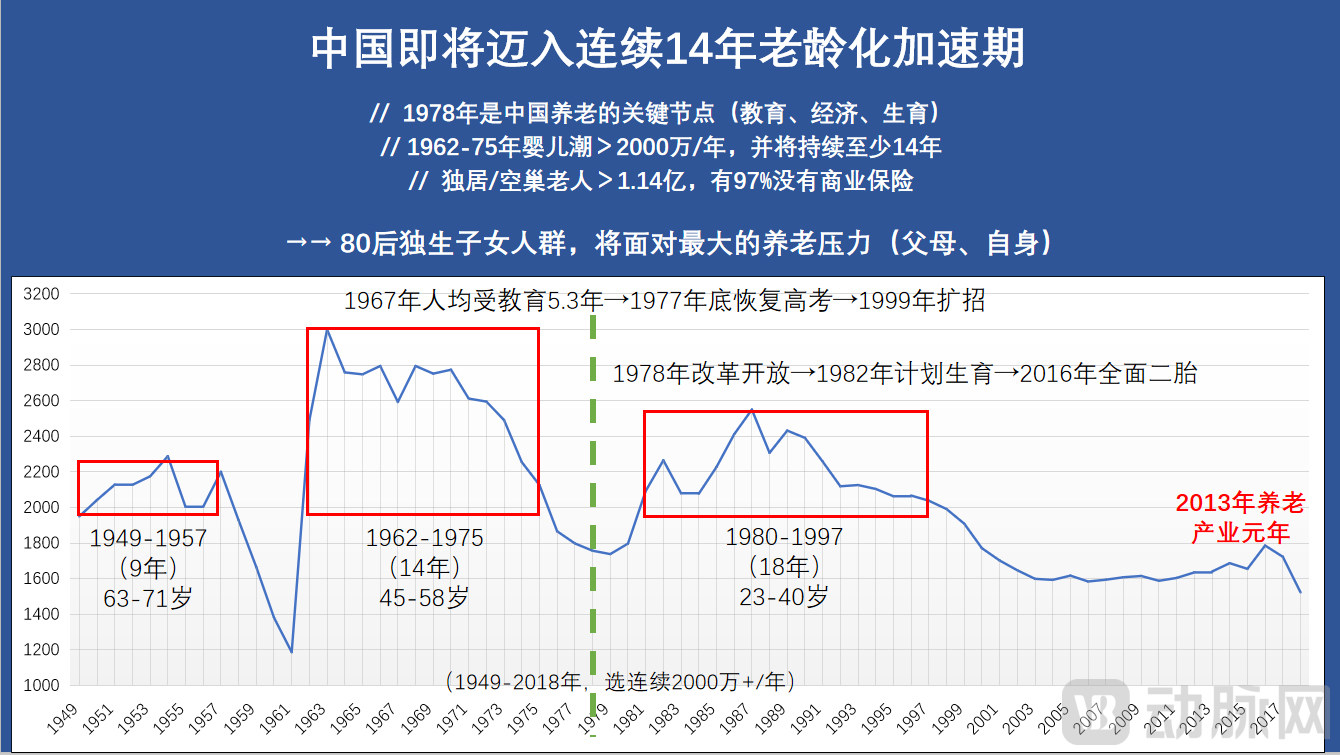
(Aging Trend Chart Source: "Research Report on China's Elderly Care Industry》)
To address the substantial demand for health-oriented elderly care, regulators have introduced a series of coordinated policy measures in recent years. As of February this year, the party committees of all 31 provinces, autonomous regions, and municipalities across China had successively reviewed and approved their local “Recommendations for the 14th Five-Year Plan.” In these local plans, elderly care has been given prominent attention, among which,"Age-friendly renovations of public spaces" and "development of the silver economy" have become key focal points for development over the next five years in multiple provinces, autonomous regions, and municipalities.
Against this backdrop, China’s elderly care industry is experiencing robust growth. According to data from iiMedia Research, the market size of China’s elderly care industry reached RMB 6.57 trillion in 2018 and is projected to reach RMB 10.29 trillion by 2022.Among these, the integration of medical care and elderly care has become a crucial component of the senior care industry.This is because, by integrating medical care, rehabilitation, health maintenance, and wellness into a unified system, the integration of medical and elderly care services can promote the deep convergence and coordinated development of medical resources and elderly care resources, thereby ensuring the full utilization of social resources.
In line with this major trend, the broader health industry is being reshaped: new business models and innovative technologies continue to emerge and evolve, driven by fresh demand and supportive policies, thereby generating new growth for the entire sector.
Amidst the changing landscape, a new blueprint for the development of the health industry is being drawn.
China’s aging challenge is becoming increasingly severe.
According to the China Statistical Yearbook, the elderly dependency ratio in China was 17.8% in 2020, whereas it was less than 9% in the 1990s. This means that, previously, each elderly person was supported by an average of 11 people, whereas now, each elderly person is supported by only about 6 people on average.The societal burden of elderly care is continuously increasing, and the pressure on children to support their aging parents is also steadily rising.
Drawing on the experience of countries that have been aging societies for many years, establishing a sound pension system is an effective measure to address the burden of elderly care. Since the 1990s, China has actively pursued innovative reforms of its old-age insurance system. After more than two decades of effort and development, a new old-age insurance system has been initially established in China, forming a multi-tiered, multi-pillar system comprising primarily basic old-age insurance, enterprise supplementary old-age insurance, and individual savings-based old-age insurance. This has significantly alleviated the pressure of elderly care in China.
However,Constrained by the rapid growth of the elderly population, the basic old-age insurance system currently faces two challenges. First, the benefit levels of the basic old-age insurance for urban and rural residents are limited.“Statistical Bulletin on the Development of Human Resources and Social Security in 2019” shows that there were 123.1 million recipients of basic old-age insurance benefits for urban employees nationwide, with total expenditure from the pension fund reaching RMB 492.28 billion, and an average monthly benefit of RMB 3,332.5 per person, which can meet basic living needs; during the same period, 160.32 million people across China received benefits under the basic old-age insurance system for urban and rural residents, with an average monthly benefit of RMB 162 per person, indicating a low replacement rate.
Second, there is significant pressure on the fiscal burden.As a key contributor to the basic old-age insurance for urban and rural residents, the government provides basic pensions to the elderly population and subsidizes resident contributions. According to the "Actuarial Report on China's Pensions 2019–2050" released by the Chinese Academy of Social Sciences in April 2019, the cumulative surplus of China’s basic old-age insurance may be exhausted by 2035, with the pension security gap potentially reaching RMB 8 to 10 trillion during the 14th Five-Year Plan period.
Not only that,The dawning era of longevity still faces the predicament of older adults living with chronic diseases.Relevant data show that 75% of individuals aged over 60 suffer from chronic diseases, and 65% of those aged over 65 have two or more chronic conditions, leading to long-term survival with illness. Consequently, there is a growing demand for elderly care, nursing services, healthcare, and wealth management.
It is against this backdrop that the RMB 10 trillion health and wellness market is calling for new solutions.
In the face of the trillion-yuan market opportunity in elderly care, in addition to policy guidance from the state, the industry sector is also ramping up its efforts.As can be seen, in recent years, insurance companies, real estate enterprises, tech giants, and innovative startups have all been actively exploring and strategically positioning themselves in this space.
For instance, Taikang, a leading insurance giant in China, has been aggressively positioning itself in the longevity economy since it foresaw profound shifts in the nation’s consumption structure.In 2007, Taikang began to transform virtual insurance into essential and scarce services for customers through business model innovation, meeting people's needs for health and longevity.
Specifically, Taikang is expanding its customer base and business scale by comprehensively strengthening its insurance payment capabilities, while simultaneously advancing the development of its physical service infrastructure to build world-class medical and elderly care communities that offer superior solutions to customers. Furthermore, through the synergistic integration of payers and providers within its closed-loop ecosystem, Taikang enhances overall operational efficiency and service quality, thereby establishing a competitive moat.
On the payment side, Taikang has innovatively launched the “Happiness Promise” insurance plan. Through continuous upgrades and iterations, this plan has evolved into a comprehensive product system encompassing Youth Edition, Young Adult Edition, and Standard Edition, covering health and wealth planning across the entire life cycle.
Specifically, the link between insurance customers and elderly care services is established through the exclusive insurance product “Happiness Promise,” which includes a guaranteed admission letter for retirement communities. By integrating a range of high-quality medical and health resources to continuously enhance service experience and provide comprehensive health management solutions, we better serve more high-net-worth and ultra-high-net-worth clients and their families.
Moreover, Taikang innovatively launched the role of Health and Wealth Planner in 2018. As a brand-new profession, Taikang’s Health and Wealth Planners have achieved three innovations.
First, a new philosophy: HWP (Health and Wealth Planner) represents a novel advisory model that disrupts traditional insurance sales. Beyond life insurance, their scope of practice encompasses health management, retirement planning, wealth management, investment portfolio construction, legal and tax advisory, and family legacy planning, thereby providing comprehensive services to high-net-worth individuals.
Second, a new model that advocates lifelong learning and lifelong service. The Health and Wealth Planner Program, jointly launched by Taikang and Wuhan University, features six core curriculum modules: insurance, wealth management, medical health, elderly care, end-of-life care, and comprehensive services. It offers a progressive four-tier certification system—entry, intermediate, advanced, and expert—aiming to create private stewards who accompany individuals throughout their entire life cycle.
Third, it represents a new profession offering cross-disciplinary services to fill industry gaps, spanning the three major fields of medical-nursing care, health, and wealth management. By integrating life insurance, financial services, and tangible services, it facilitates a transformation from a traditional seller of insurance products to a planner of health and wealth management for high-net-worth clients.
On the server side, Taikang has established Taikang Community, a professional brand dedicated to the physical construction, operation, and innovative services in elderly care, nursing, and rehabilitation. By introducing the U.S.-based Continuing Care Retirement Community (CCRC) model and aligning it with China’s characteristic integrated medical and elderly care model, the brand has built a high-quality chain of medical-nursing institutions. Its core positioning is to deeply cultivate the senior life chain industry, providing high-quality elderly care, rehabilitation, nursing, and medical health services.
How to Deliver In-Depth Services in Health and Wellness? A Case Study of the Smart Elderly Care Strategy: Taikang Community Has Invested Heavily in Capital and Talent. Specifically, during the R&D process, Taikang Community’s technical team is deeply integrated into the entire operational system, gaining a thorough understanding of business processes and residents’ actual needs, thereby achieving deep integration between its products and the business operations framework.
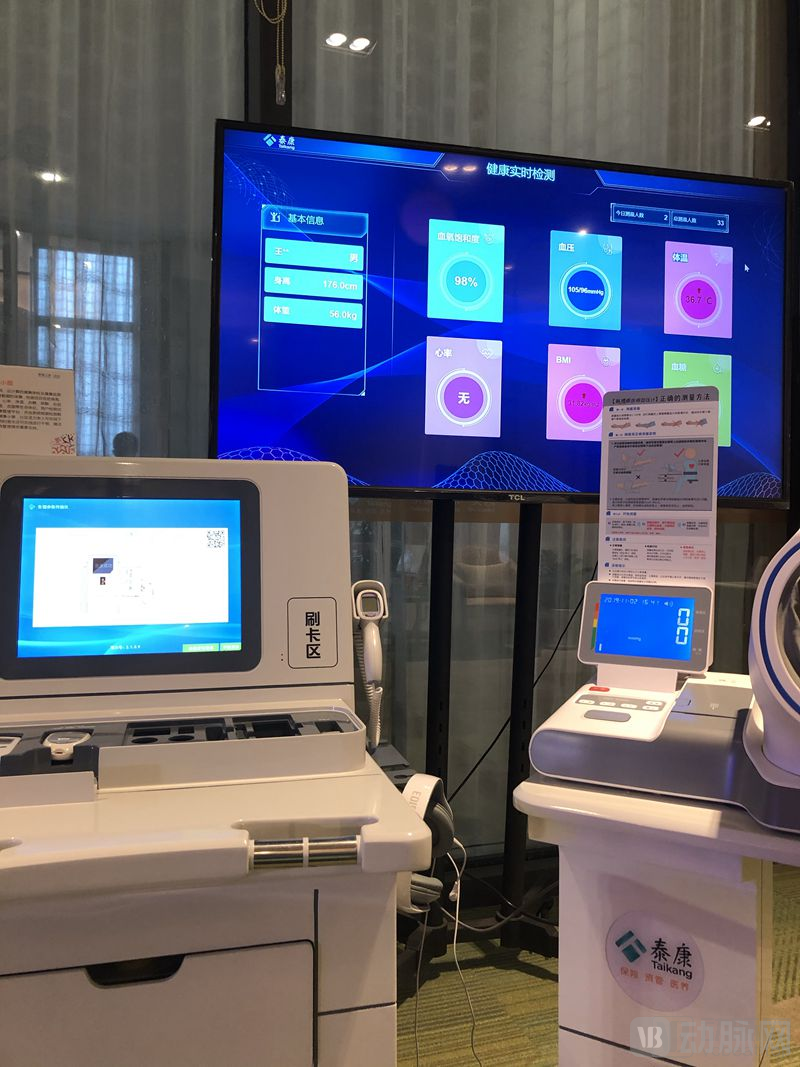
Smart Dashboard: Displays residents’ safety, health, and activity indices, along with IoT sensor data, enabling residents to gain a comprehensive understanding of their community.
To address the slow adoption of smart elderly care products among seniors, staff members conduct outreach and provide guidance to help residents quickly adapt to these technologies. Meanwhile, Taikang Community has assembled a team comprising professional butlers, social workers, doctors, and nurses, enabling timely detection and response to residents’ needs and any abnormal situations.
As of now, Taikang has established Taikang Home senior living communities in 22 cities across China, with a total above-ground floor area of 3.31 million square meters, planning for over 37,000 senior living units and approximately 2,100 medical beds. The senior living communities in seven cities—Beijing, Shanghai, Guangzhou, Chengdu, Suzhou, Wuhan, and Hangzhou—have officially commenced operations. By the end of 2021, four additional senior living communities will open.
Furthermore, Taikang has spared no effort in building a comprehensive health ecosystem. For instance, it has made strategic investments in Bybo Dental (Taikang), invested heavily in establishing multiple tertiary or specialized hospitals—including Taikang Tongji (Wuhan) Hospital—and invested in numerous companies within the broader health industry ecosystem.
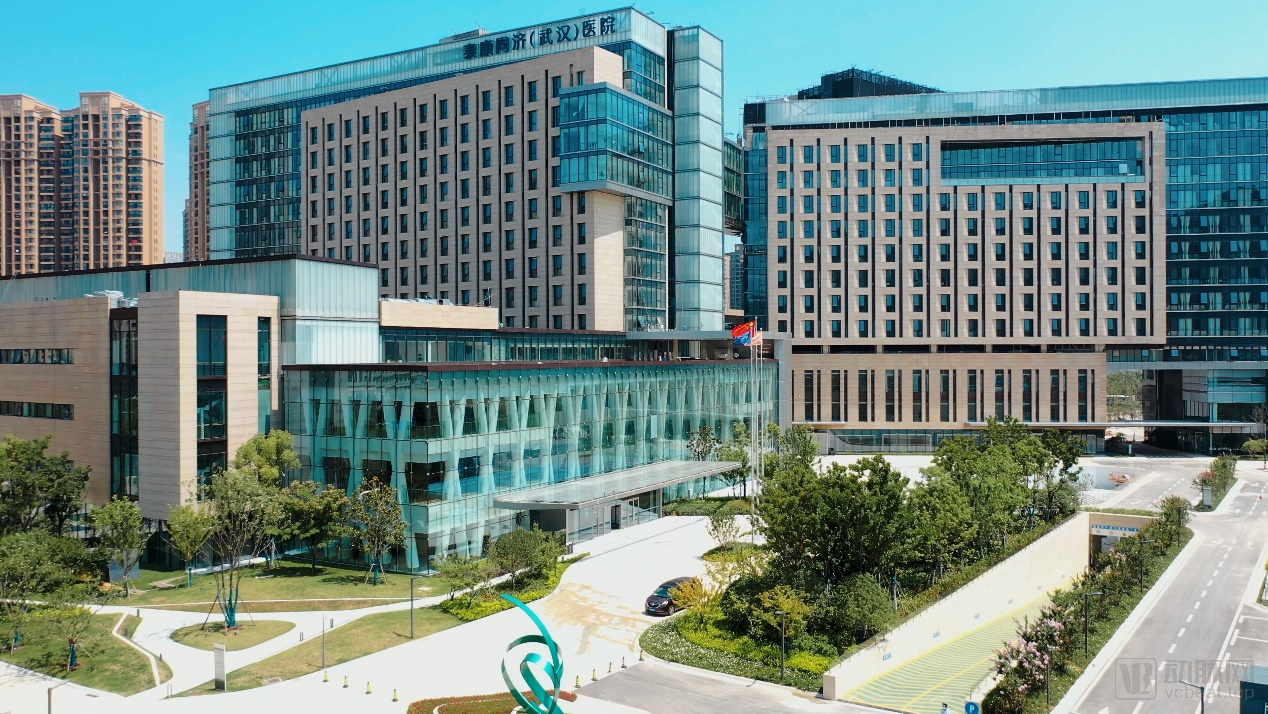
Taikang Tongji (Wuhan) Hospital
Holding the payment side in one hand and the service provider side in the other, Taikang has organically integrated the two by combining its payment system with its healthcare service system to provide customers with comprehensive health management and high-quality, value-based medical services.
In addition to deeply integrating internal resources, Taikang is also making continuous efforts to connect with external ecosystems. For instance, Taikang Online has partnered with more than 500 channels, over 2,700 hospitals, more than 700 health checkup institutions, over 60 mid-to-high-end pediatric clinics, and more than 5,000 pharmacies, laying a solid foundation for innovation in health insurance products.
As can be seen, within the framework of leveraging insurance to drive the entire health ecosystem, the role of insurance lies not only in financial equilibrium but also in the allocation of resources and services.
From a global market perspective, the “insurance + medical and elderly care” model has also seen classic success stories, such as Health Maintenance Organizations (HMOs). HMOs aim to provide health management for each member, emphasizing preventive and comprehensively coordinated medical services to improve the overall health of policyholders, thereby reducing medical costs. Super giants such as UnitedHealth (with a market capitalization exceeding RMB 2 trillion) and Kaiser Permanente have emerged in this field.
However, while UnitedHealth and Kaiser Permanente primarily collaborate with external partners on the service delivery side, Taikang has chosen to directly engage in operations, resulting in a more asset-heavy model but offering greater advantages in service quality and internal synergy.
In summary, by innovatively integrating payment and service delivery, Taikang has carved out a unique model and is gradually building a closed-loop healthcare ecosystem.
Taikang, which has deeply cultivated the health and wellness market, is continuing to develop steadily.
In the 2021 Fortune Global 500 list released recently, Taikang ranked 343rd with operating revenues of $35.4756 billion, a significant jump of 81 places from the previous year. This marks Taikang’s fourth consecutive year on the list. What lies behind its growth momentum?
First and foremost, it is essential to clarify that “The Fortune Global 500 list, as a key benchmark for assessing the development of major corporations worldwide, has long drawn attention from stakeholders across industries. This is because changes in the list’s data often reflect recent developments in various economies, industries, and enterprises.
An analysis of this year’s list reveals that Chinese companies, including Taikang, have steadily increased their presence, reaching a total of 143 firms—an increase of 11 from the previous year—making China the country with the highest number of listed companies.
The significant growth of Chinese enterprises on the Global 500 list is attributable, on one hand, to China’s status as one of the top-performing countries in COVID-19 pandemic control, which provided a solid foundation for major companies to resume production and operations; on the other hand, it is due to the ongoing transformation and upgrading of various industries in China, driven by policy and market forces, with initial results now becoming evident.
In other words, riding the wave of China’s sustained technological and economic growth, leading enterprises across various industries are rapidly ascending to the global stage by harnessing market forces. This constitutes the macro-level reason why Taikang has repeatedly been listed among the Fortune Global 500.
From an industry perspective, Taikang has capitalized on the convergence of insurance and big health. According to data from the China Banking and Insurance Regulatory Commission (CBIRC), in 2020, the original premium income from health insurance business reached RMB 817.27 billion, a year-on-year increase of RMB 110.67 billion, representing a growth rate of 15.7%. This growth rate surpassed that of major insurance categories such as life insurance, property insurance, and accident insurance, indicating that the industry is entering a period of accelerated development.
Furthermore, as the population ages at an accelerating pace, the integrated medical and elderly care industry is entering a critical phase of development. Two significant trends warrant attention. First, improvements in healthcare conditions and economic standards have extended life expectancy, heralding the arrival of a long-lived society. Second, the care needs of the advanced-age population are being increasingly met, thereby driving growth in industries related to medical and elderly care.
It is evident that China’s elderly care industry has entered a golden period of development, with niche sectors related to the longevity economy—such as health insurance and integrated medical-care services—poised for rapid growth. In these areas, Taikang has pioneered high-quality elderly care services through early exploration and practice, which constitutes the meso-level reason for its rapid expansion.
More importantly, Taikang has persisted in continuous innovation for 25 years. Since its establishment in 1996, Taikang has consistently prioritized innovation in both business models and technology, gradually evolving from a single life insurance company into a financial and insurance services group, and further integrating virtual insurance with physical medical and elderly care services to build an ecosystem for the grand health industry.
For instance, by deeply integrating payment systems with healthcare service delivery, Taikang provides customers with comprehensive health management and high-quality, value-based medical services. Through scientific and rational cost-control mechanisms, it achieves a win-win outcome for customers, the market, and hospitals, thereby fostering the coordinated development of the broader health ecosystem industry.
It is precisely this sustained innovation that enables Taikang to maintain its corporate vitality and better explore and penetrate new business areas. This is both the micro-level and the core reason behind its continuous self-breakthroughs.
In summary, thanks to the rapid rise of China’s economy and technology, as well as its timely entry into the golden period of development for the elderly care industry, Taikang has been listed in the Fortune Global 500 four times by adhering to continuous innovation, achieving constant progress and multiple jumps in its ranking.
Healthcare has always been a key national priority, closely tied to the country's economy and people's livelihood.
Since the launch of the new round of healthcare system reform in 2009, China has established the world’s largest basic medical insurance network, covering both urban and rural areas.
However, drawing on the experience of developed countries, China’s current healthcare payment structure still requires optimization, with an urgent need for commercial insurance to play a more significant supplementary role. Data show that out-of-pocket payments account for as high as 39.7% of healthcare expenditure in China, compared with only 19% in the United States and 12% in Germany.
ThusIn February last year, the State Council issued the "Opinions on Deepening the Reform of the Medical Security System," further clarifying the need to accelerate the establishment of a multi-tiered medical security system and promote reforms in payment methods and the supply side of pharmaceutical services.
Against this backdrop, companies represented by Taikang are accelerating the development of an “insurance + healthcare” model. However, the management of healthcare payments is highly complex, and the aggregation and integration of medical resources test comprehensive capabilities. As a pioneering endeavor, it requires sustained effort and validation over a considerable period, thus demanding a steadfast commitment to long-termism.
Based on this, Taikang has been committed to closely integrating its big health industry footprint with philanthropy, forming a “T”-shaped business-for-good model with horizontal and vertical dimensions.: Horizontally, we provide infrastructure for public health and medical care through a robust ecosystem in the broader health industry, striving to become a core backbone enterprise in major livelihood projects and serving the well-being of the general public. Vertically, we are committed to philanthropy, deepening our expertise in specialized fields by establishing charitable initiatives such as elderly care support, public health programs, and arts sponsorship.
As of now, the Taikang Yicai Thousand Institutions Project has provided funding to 158 elderly care institutions, trained 15,000 elderly care professionals, and benefited over 40,000 seniors.
It is not difficult to see that, in the face of the significant opportunities presented by the era of longevity, Taikang has been making steady progress, driving innovation in the “payment + service” model within the medical and broader health sector. By adhering to a long-termist approach, it has opened up new possibilities for the industry.
Final Thoughts
According to the results of the Seventh National Population Census, starting next year, the cohort born during the 14-year baby boom from 1962 to 1975 is entering old age. In other words,Over the next decade-plus, China will enter a peak period of population aging, with an incremental increase of over 200 million elderly individuals.
Faced with such vast demand and market potential, industry giants are actively exploring and strategically positioning themselves. However, the healthcare and wellness sector differs fundamentally from other industries in that it directly impacts people’s safety, life, and physical well-being; hence, it is not a “fast-paced” industry. It requires participants to understand and gain deep insights into the genuine needs of the elderly population, and to devote sufficient patience and effort to building appropriate models and services. After all,Aging is not merely a business; it is a societal responsibility.
In this process, time may be the best answer and the strongest barrier.