

Insight Health Builds Oncology Big Data Service Platform Based on Real-World Specialized Cancer Databases
As companies in the medical big data industry move toward initial public offerings, their development paths have become increasingly clear. From establishing data standards and performing data cleansing at the early stage, to enabling data-driven auxiliary drug R&D and intelligent diagnosis, and further to providing full-cycle oncology diagnosis and treatment services, these enterprises almost invariably evolve from empowering B-side (business) and H-side (hospital) clients to gradually serving C-side (consumer) patients.
Founded in 2018, Wise Healthcare, specializing in the field of oncology, leverages the China-wide real-world studies on single cancer types initiated by the United Clinical Oncology Society and a patient-centered, whole-course health database established based on evidence-based medicine. It is committed to providing closed-loop big data solutions for pharmaceutical companies, patients, and medical institutions.
Amid intense scrutiny from industry giants, where do their advantages lie? How do they view the potential development of oncology big data service platforms? We interviewed Zhu Hong, founder of Wise Healthcare.
Tapping into the Multi-Billion Yuan Big Data Market for Oncology: Building a Liver Cancer Disease Database
Zhu Hong, the founder of Wise Healthcare, has a professional background in bioinformatics. In 2014, Zhu Hong began to lead the research and development of medical big data, reached a long-term strategic cooperation with the Chinese Society of Clinical Oncology (CSCO), and jointly established a specialized disease data information bank for Chinese cancer patients.
His early experience in the medical big data industry made him realize that a data-driven transformation toward smart healthcare was quietly underway. His exposure to and exploration of cutting-edge information in medical technology further reinforced his conviction: in the era of big data, the transformation of smart healthcare is inevitable. It will constitute a disruptive innovation, requiring participants to simultaneously advance along three fronts—product innovation, business model discovery, and value network construction.
This transformation is driven by intrinsic demands. Currently, patients face not only the challenges of difficult and expensive access to medical care but, more critically, a lack of comprehensive disease management throughout the entire course of their illness. For instance, when an oncology patient is discharged, physicians often merely advise on dietary precautions, leaving a significant gap in post-discharge management. Under the current healthcare system, characterized by relatively scarce resources and a rigid structural hierarchy, it is nearly impossible for patients to effectively manage their conditions outside the hospital setting. However, data-driven smart healthcare will fundamentally address this issue. By supporting pharmaceutical companies and hospitals, it will further enhance whole-course disease management for patients, ultimately maximizing patient benefits.
Market research has further strengthened his confidence. It is estimated that by 2025, the oncology big data market is expected to surpass RMB 200 billion. This growth is driven by the demand for improved oncology treatment services and accelerated drug development. Policy developments are also trending positively: the national government has further shortened the review and approval timelines for Investigational New Drug (IND) and New Drug Application (NDA) submissions, thereby accelerating the commercialization of innovative drugs and addressing urgent, unmet clinical needs.
Ultimately, Zhu Hong anchored his focus on the research direction of real-world studies using medical big data. In his view, achieving this goal requires unwavering conviction and sound strategy:
We are confident that data-driven smart healthcare will become a reality. Zhu Hong has recruited a group of like-minded, seasoned professionals to join the team. For example, Vice President Wang Yang brings over 10 years of experience in marketing consulting for pharmaceutical companies and many years of experience in new product development in the IT sector, making him a rare innovative cross-disciplinary talent. Vice President Jin Haixin holds a degree in Pharmacy from Fudan University, is a multi-year market and sales champion at foreign pharmaceutical companies, and has long been engaged in market application research related to pharmaceutical academic studies. The Chief Medical Officer (CMO) holds a Ph.D. from Peking University Health Science Center and completed postdoctoral training at Northwestern University and the University of Mississippi Medical Center. He has more than 10 years of experience in basic medical research and six years of experience in the medical promotion of oncology academic affairs, clinical testing, and diagnostic products.
Adhere to a long-term development strategy. Zhu Hong pointed out, “The stethoscope used by clinicians underwent decades of evolution from its invention to its standardized form and widespread adoption.” In the serious field of healthcare, it is even more critical to adhere to a long-term strategy and steadily build a robust medical big data service platform.
To better facilitate the development of the medical big data service platform, Zhu Hong believed that, in the initial design, focus should be placed on developing three major modules:
1. Regarding clinical pathways, offline clinical pathways are often aligned with clinical guidelines and standard care protocols. In the process of digitalization, it is essential to consider how to build core functional components and modules that scientifically integrate standard care protocols and clinical guidelines, supported by real-world evidence. To this end, Wise Healthcare has strategically invested in real-world studies, positioning itself among the top-tier players in this field.
2. Real-time monitoring of patient data is achieved through wearable devices, enabling data acquisition and patient-centric management throughout the entire course of disease. Currently, Wise Healthcare has been accumulating real-world data during patient management and follow-up processes, thereby supporting real-world studies and laying the foundation for future digital therapeutic applications.
3. Possess algorithmic capabilities. The connection between oncology databases, clinical guidelines, and diagnostic and treatment standards needs to be established through algorithms to better support clinical decision-making. In 2019, Wise Healthcare entered into a strategic partnership with Tsinghua University to develop an AI-assisted decision support system for oncology.
Early exposure to and insights into the industry enabled Zhu Hong to recognize the importance of disease-specific databases at an early stage. Following the establishment of Wise Healthcare, the company partnered with the Chinese Society of Clinical Oncology (CSCO) to launch the China Liver Cancer Study (CLCS), a clinical registry survey for primary liver cancer. Over four years, the initiative focused on building a disease-specific database, with 643 data collection sites covering more than 95% of real-world study (RWS) data requirements. This essentially met experts’ needs for clinical research while also facilitating multi-center collaboration. Ultimately, this liver cancer disease database encompassed over 5,000 key experts, more than 250,000 cancer patients, and over 100 core hospitals.
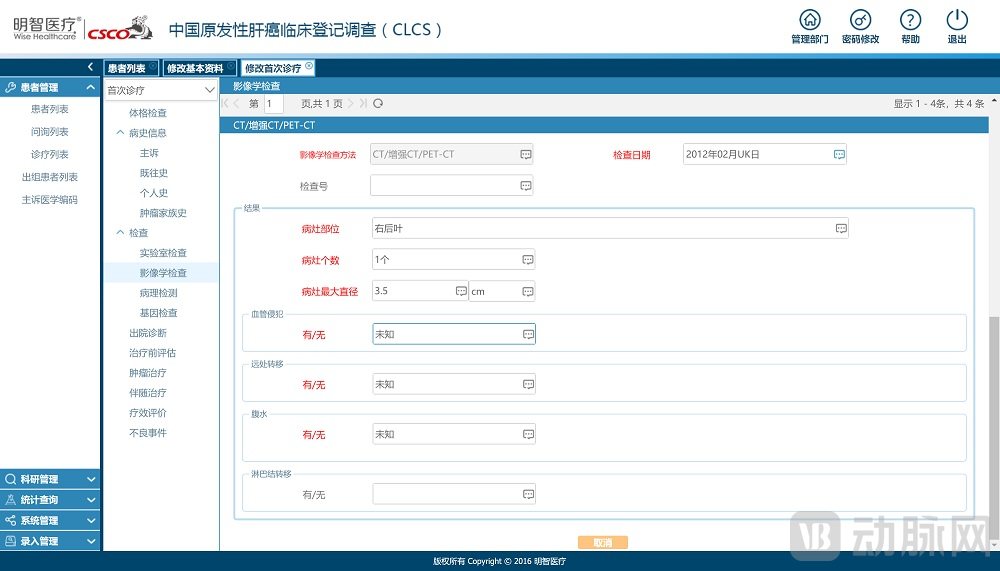
Zhu Hong pointed out, “In the past few years, although other medical big data companies could also choose to collaborate with academic societies to build disease-specific databases, few have made such attempts. This is partly because the medical databases developed in collaboration with Wise Healthcare are sufficiently professional. On the other hand, experts’ time is limited, and they would not opt for redundant development of the same resources.”
A specialized liver tumor database has enabled users to produce multiple research findings with international impact. The disease-specific academic insights published based on this database have also been widely cited in the academic community. In fact, there are still many diseases for which specialized databases need to be established. Zhu Hong stated that he hopes industry peers will place greater emphasis on the development of disease-specific databases.
In reality, the process of building disease-specific databases is far more difficult than imagined. For instance, standardizing raw data poses significant challenges: among the 100 hospitals where Wise Healthcare has expanded its operations, different institutions often use varying terminologies for the same medical concepts. If this merely entailed additional workload, it would be manageable; however, other issues present substantial frustrations and challenges.
For instance, key metric data are missing in some hospitals, and certain large hospitals are reluctant to share data with other institutions. Wise Healthcare has overcome numerous barriers by establishing communication mechanisms, such as forming a Data Use Committee to address data-sharing challenges. This has created a virtuous operational cycle that not only expands data resources but also supports clinical research.
Empowering Pharmaceutical Companies, Physicians, and Patients Through Real-World Evidence
Wise Healthcare’s core business is divided into three categories: a big data service platform based on disease-specific databases and real-world study projects, which assist pharmaceutical companies in patient recruitment, real-world studies, market insights, precision marketing, and academic promotion; an integrated research platform and intelligent patient follow-up platform for medical institutions, assisting hospitals in information technology infrastructure development and building auxiliary diagnostic models; and for patients, establishing an intelligent health management system covering the entire disease course from short-term oncology treatment management to long-term care, with digital therapeutics to be provided in the future.
Currently, Wise Healthcare has established collaborations with numerous innovative pharmaceutical companies. In fact, as early as 2018, it entered into a three-year partnership with a Japanese pharmaceutical company to empower its operations through database capabilities. At that time, the company faced challenges such as a lack of industry insights and academic promotion channels, as well as the absence of real-world evidence on the safety and efficacy of its newly launched drugs, making it difficult to gain recognition from industry experts. Wise Healthcare commissioned project experts to initiate real-world data studies on the new drug as subgroup studies within a specialized disease platform, while also providing the pharmaceutical company with database-driven industry insights. This approach ultimately helped the company achieve sales performance far exceeding expectations.
In this process, Wise Healthcare is also expanding horizontally from its initial focus on liver cancer to other types of cancer. According to Zhu Hong, the cost of such horizontal replication is relatively low. “Like an iceberg you see, the surface may appear as separate icebergs, but they are already connected beneath.” The sharing of underlying logic and resources enables Wise Healthcare to achieve further expansion even with limited resources. For instance, since liver cancer is a type of gastrointestinal tumor, other gastrointestinal cancers—such as cholangiocarcinoma, pancreatic cancer, gastric cancer, colorectal cancer, and esophageal cancer—can share certain physician department resources.
In terms of vertical expansion, according to Zhu Hong, “the top 200 specialized oncology hospitals in China diagnose and treat approximately 60–70% of the country’s cancer patient population.” Wise Healthcare is achieving scale growth alongside an increase in the number of contracted leading oncology hospitals, thereby facilitating data-driven real-world studies and supporting pharmaceutical and medical device companies in conducting precise academic marketing.
With the deepening advancement of data empowerment, Wise Healthcare will launch digital therapeutics targeted at patients. Zhu Hong emphasized that digital therapeutics point toward the future of smart healthcare. Driven by software programs and grounded in evidence-based medicine, digital therapeutics are intervention protocols used to treat, manage, or prevent diseases, inherently involving comprehensive patient management. If 90% of patient care time can be managed without direct physician involvement, it will significantly improve the current state of whole-course disease management for patients. Furthermore, digital therapeutics are helping pharmaceutical companies achieve precise pharmacotherapy, thereby further promoting precision treatment for patients.
Unlike the traditional model in which pharmaceutical and medical device companies pay for digital therapeutics, Zhu Hong believes that a patient-pay model is feasible, as patients are the ultimate beneficiaries. The current challenge lies in the lack of established payment habits among patients and companies’ uncertainty about how to effectively communicate with them to build confidence in digital therapeutics. In his view, digital therapeutics are evidence-based electronic drugs whose efficacy for patients is supported by scientific evidence. Once companies develop digital therapeutics that deliver tangible benefits to patients, academic promotion combined with the multidimensional patient experience inherent to these therapies will encourage patients to follow medical advice, pay for the treatments, and maintain good adherence.
Zhu Hong stated that there are currently two possible payment models: one is a one-time fee for expert consultations to develop personalized out-of-hospital treatment and rehabilitation plans; the other is a routine monitoring and management fee. Furthermore, the digital therapeutics sector still requires the entry of companies from diverse fields to expand the market, foster competitive synergy, and help patients better understand the tangible benefits of digital therapeutics. Only when patients, pharmaceutical companies, and physicians all demonstrate willingness can disruptive innovation emerge more rapidly. In this process, Wise Healthcare is also poised to obtain certification for the first batch of cancer digital therapeutics.
Wise Healthcare continues to expand the number of contracted hospitals, achieving coverage for the oncology diagnosis and treatment population. After obtaining its internet hospital license, the company plans to further leverage real-world data to conduct real-world studies, generate real-world evidence, and develop and secure digital therapeutics targeting various types of cancer.
Currently, Wise Healthcare’s real-world evidence (RWE) research has ascended to the industry’s first tier. It has served multiple oncology pharmaceutical companies and maintained long-term collaborations with numerous industry associations/societies and renowned domestic and international pharmaceutical enterprises. Having not previously undergone any financing rounds, the company now plans to secure external funding to expand its innovative business operations.
The company plans to allocate the funds raised toward building its database to further expand patient coverage and extend into other disease areas. Leveraging its internet hospital infrastructure, it aims to develop digital therapeutics to better enable comprehensive, end-to-end disease management for patients outside the hospital setting.